


Court TV Casefiles

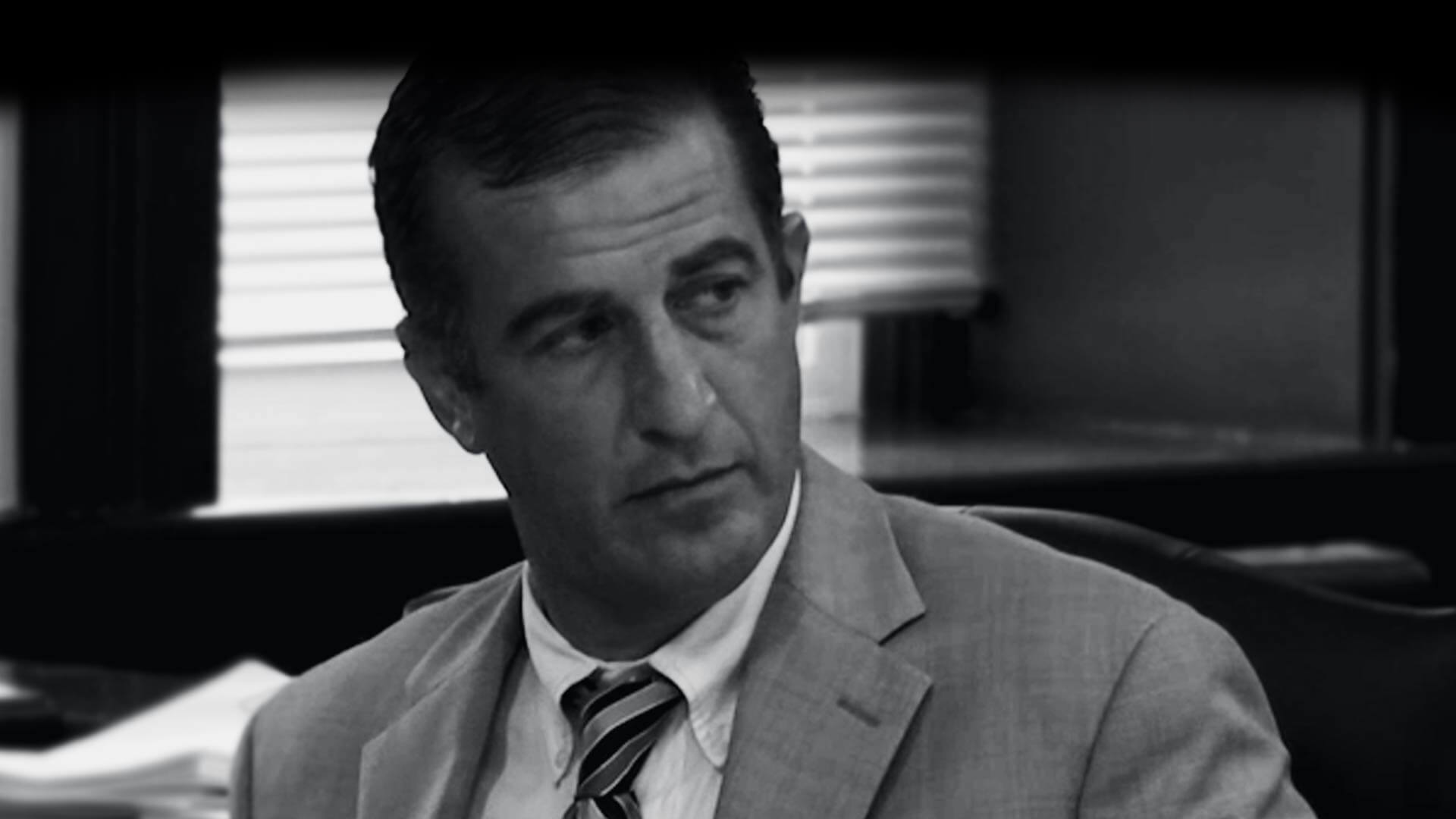
Interview with Nuremberg Trial Prosecutor Drexel Sprecher

QUESTION: What were your expectations of the Nuremberg Tribunal?

SPRECHER: My expectations of the Nuremberg Tribunal was not only that it would punish some of the worst criminals of all time, but also that it would expose in a way that people could understand how a dictatorship came to power, and how it slowly built itself to be the oppressive regime it was.

QUESTION: Did it accomplish those-- were your expectations fulfilled? Did it accomplish that?

SPRECHER: I think for the most part they were. For some time after the trial, I was a little surprised that the public attention had been diverted by one thing and another. Particularly by the Cold War. But oh, for the last 20 or 30 years, I think there's been a renewed interest. And particularly during the last year.

QUESTION: Why did Justice Jackson concentrate on the notion of aggressive war?

SPRECHER: Well, I think that Justice Jackson concentrated on aggressive war because it encompassed the whole. The atrocities, the war crimes, would not have been possible if there hadn't been aggressive war.

So I think he wanted to point out and to emphasize that the worst crime of all is the initial one, which is aggressive war. And that following it come the atrocities and the war crimes.

QUESTION: I see. Now, you were involved, in, I think, assembling and transporting to Nuremberg the Rosenberg documents.

SPRECHER: That's correct.

QUESTION: Tell me about that.

SPRECHER: Rosenberg documents were found, actually, because of a tip from a German. A German had watched Rosenberg bury them. And he told the Americans about this, and we sent a Major Coogan to retrieve them and bring them to, to Paris.

And shortly after they'd gotten to Paris, Colonel Storey, the First Executive Trial Counsel, shows them to me. Colonel Storey asked me to see if I could find something special in there. And if you want, I can tell you about that.

QUESTION: Please do.

SPRECHER: Colonel Storey said the Rosenberg documents were showing tremendous numbers of war crimes and atrocities and stealing of art. But so far they hadn't showed us anything about aggressive war.

So he asked me if I would sit down and do something, because he was flying to London the next day to see Jackson, and he wanted to take some documents along that bore on aggressive war. So I went into this huge room where we had these files lined up.

And I could only see one narrow document, one narrow book. And it was called, "A.P.A. Norway" -- "Ah Pay Ah Norvegan". So I thought, well, that, that's interesting.

Let me go in just before the Germans interview-- invaded Norway and see what there is. And sure enough, Quisling and his deputy, Haagelin, had flown into, to Germany just before the invasion of Norway and had seen Rosenberg as well as Hitler.

And so this connected them up to the aggressive war charge, relatively well. And that was one of the first things that came out of the Rosenberg documents on aggressive war. Now, later on, there was much more, because before the invasion of the Soviet Union, Rosenberg was put in charge of developing a big paper on how they were going to exploit the ser-- Soviet Union.

And he worked on that for at least several months before the actual invasion, which is another case where the Rosenberg documents were very helpful.

QUESTION: I see. Now, what were Justice Jackson's expectations of Nuremberg? How did he see it?

SPRECHER: Well, I expect that he saw it as a great means of exposing the Nazi regime as well as a means of getting the punishment of the main leaders.

QUESTION: Now, did his attitude about the tribunal change at all during the trial, during the course of the trial?

SPRECHER: About the tribunal in the sense of the judges or the whole proceeding?

QUESTION: Both. First talk about the judges. How, what were Jackson's impressions of the judges?

SPRECHER: Well, I know very little about what his impressions of the, the judges were, because he never talked to me about it. So I can't really give you much help there.

As far as the tribunal is concerned, he began to get worried after the defense case began that the tribunal was allowing the defense too much leeway. And that they weren't paying attention to relevancy or, or, or accumulation.

So at one point, he gets into quite a struggle with the tribunal, which was most unfortunate. And he lost his temper. And that was most unfortunate, too. Because he was not given to that normally speaking. And I don't think he ever lost it again.

QUESTION: Now, were you present in the courtroom for Jackson's opening statement?

SPRECHER: I was present in the balcony of the courtroom for Jackson's opening statement, but not down at the prosecution table. Because I had not won my spot at the prosecution table at that point.

QUESTION: What was the atmosphere like in the courtroom the day of Jackson's opening statement?

SPRECHER: Well, the courtroom was very crowded. And there was a certain degree of expectation that you could kind of feel floating around. Of course, the -- his opening statement did not come until after the reading of the indictment.

And so, the original tension had kind of quieted down. And the interpreters and all had gotten accustomed to, to dealing with the actual trial, even before Jackson started speaking.

QUESTION: And what was the reaction of the defendants to Jackson's opening statement?

SPRECHER: Well, there I can only speak again from watching them in the dock, and that was from a distance.

QUESTION: But how did, how did they seem in the dock when they heard the translation of Jackson's opening statement? How did the defendants seem when they were in the dock hearing Jackson's opening statement?

SPRECHER: I can't really give you information on that.

QUESTION: Okay.

SPRECHER: I can give you information on another thing that happened about three days later, which indicates something that happened in the dock, but--

QUESTION: Okay.

SPRECHER: --that's another matter.

QUESTION: Okay. What was that?

SPRECHER: About three days after the trial started, Justice Jackson asked me to accompany Senator Claude Pepper, who was visiting Nuremberg and stayed there for at least two weeks at the beginning of the trial.

So I took Pepper in and sat him down at the prosecution table. Just before the recess, break in the, the proceedings, I noticed that the defendant, Goering, had broken his pencil and thrown it down in the dock and stood their very angrily.

So I took my pencil and I went up to the guard beside the dock and said, Goering broke his pencil. And he handed Goering the pencil. I went back and sat down, and a recess came along. And Sen. Pepper and I stood up, and suddenly Senator-- Sen. Pepper said, Sprecher, this fellow Goering is trying to get hold of you. So I turned around and here was Goering. So I went up near him -- couldn't approach too close -- and the guard said go ahead. And I said, "what did you have?"

And he says, "danke viel mals, danke viel mals." And I said, "bitte sehr, bitte sehr." And that's the only conversation I had with Goering. You get the translation. I said, "I thank you very much, I thank you very much." That's what he said.

And I said, "You're-- I'm very pleased to have helped you, I'm very pleased to have helped you."

QUESTION: Now, do you know anything about Jackson's relationship with Judge Biddle?

SPRECHER: No. I -- there's something about it written up in Judge Biddle's book, as I recall. But I have no, in independent information of that at all.

QUESTION: Okay. What were the biggest problems that the U.S. prosecutors faced at Nuremberg?

SPRECHER: Well, I would say the first big problem was that we didn't have enough German speaking people there. Very few of the attorneys themselves spoke German.

And accordingly they had to rely on research analysts. And there weren't enough good research analysts to both do the finding of the documents and then their translation.

So we had a translation bog down during the first part of the trial, which was most unfortunate. And had we done what we later did under Lt. Col. Peter Eberal, and sent a whole team to England to have recruited more German speaking people of the first rank, we would have saved ourselves a lot of grief at the beginning of the first trial.

QUESTION: And as the trial went forward, as the first trial went forward, what other challenges did the U.S. prosecutors face?

SPRECHER: Well, one of the main problems of the prosecution overall was that there wasn't any great correlation between the four delegations. There was between the Americans and the British, partly because Sir David Maxwell-Fyfe was such a, a wonderful diplomacist, and a man of unusual ability and character.

But the relations with both the French and the Soviets were not that close that you could work things out very well. Had their been one overall Chief Prosecutor who could have pulled things together, it would have saved a lot of time. And there wouldn't have been as much repetition.

QUESTION: Did the Soviets perceive the -- did the Soviet prosecutors perceive Nuremberg as just another political show trial?

SPRECHER: No, I don't know what you mean by another political show trial. I think they had a great interest, a very genuine interest in having exposed what happened. Because after all, they had lost more people than anybody else had lost, due to the Nazi invasion, and due to the occupation practices after that. So they had a very good reason to want a very full exposition.

The major difference was that they tended to rely themselves on official reports, some of which were good, and some were, which were a little distended by prosecution type language, you might say.

Whereas our idea was to rely as much as possible on the contemporaneous German documents.

And as the trial went along, I think the Soviets learned more from that. And, and for that matter, the French, the French did too.

QUESTION: What were the goals of the French at Nuremberg?

SPRECHER: Well, they mainly wanted to expose what had happened to the countries in the west during the German occupation. And the main difficulty was that they were so overcome and overwhelmed by the defeat and their government hadn't really been reconstituted well.

And they sent all kinds of miscellaneous things to Nuremberg which hadn't been certified. And it was very difficult for us to, to get them to follow Anglo-Saxon standards in getting their, their documents and their other proof together.And I think some of them did. But some of them were still kind of learning about the process.

You see, there's a difference between continental law, and the Anglo-Saxon law. In the Anglo-Saxon law, the prosecutors tend to pour in their materials. The judge looks it all over. And then the judge takes the leadership in questioning and so forth.

That's quite different than in the Anglo-Saxon process, where the judge knows practically nothing before the trial starts. And it's up to the prosecution to do all the leadership in presenting the evidence.

QUESTION: What about the conspiracy charge? Wasn't that a new notion to the French and Russian and German lawyers at Nuremberg?

SPRECHER: Well, partly it was. The main problem in my view, the conspiracy charge was that we made it too broad. And we said the Nazi conspirators, meaning all the men in the dock, plus some others, did so and so.

Now, as a matter of fact, there were very great variations among the defendants and others as to what they did, and why they did it.

And the tribunal cut the conspiracy charge back a great deal, and had it start in November, 1937. And they found only ten of the de-- these defendants guilty. And many other people, of course, were therefore not involved at all in this narrower conspiracy. Our mistake was making too broad a mis-- conspiracy charge.

The -- the French, the Germans and the Russians have some notion of conspiracy, but it's a much more limited one than ours was. And so the final result was closer, moved more in their direction and less in the Anglo-Saxon direction than was the case at the beginning of the trial.

QUESTION: What were the mistakes that were made at Nuremberg?

SPRECHER: Well, there were several very large mistakes. In the first place, the in-- accusation that the Nazi leaders, the Nazi regime, had committed the Katyn massacres. That was pushed upon the prosecution during the last couple days before the indictment was filed, when they were assembled in Berlin and waiting to file the indictment with the judges.

And the other prosecutors, the Americans and the British, should have objected. But they didn't have the details. And besides, they were under some pressure. As a result, the Soviets got away with it. And it was put into the indictment.

At the trial, after the Americans and the British and the French began to see that this was probably a, a very clouded thing, they refused to put in any evidence or to mention it in any way. When the tribunal came to write its judgment, the Katyn matter is not mentioned one bit either. So it just fell out of the case. But it was a disturbing element.

QUESTION: What were some of the other mistakes?

SPRECHER: Well, one of the other mistakes was the indictment, in my view, of Hjalmar Schacht. Schacht had indicated some variations from Goering which were rather substantial, before the war. And then he'd gone into almost complete retirement.

During the last part of the war, he undoubtedly had some connections with some of the conspirators who attempted to take the life of Hitler on July 20th, 1944. Now, how close those were, we don't know. Schacht maybe later blew it up a bit.

But it was very clear that we had not gone sufficiently into Schacht's background. After all, Hitler had him thrown in concentration camps nearly a year before the trial began. And he was in several concentration camps. Because Hitler thought he was guilty of having conspired against Hitler. Well, that's not the kind of a man to put in the dock, and we made a mistake.

QUESTION: Were you present in the courtroom when the concentration camp film was introduced?

SPRECHER: Yes.

QUESTION: What was the atmosphere in the courtroom like when the concentration film was shown? And was the reaction to it?

SPRECHER: Well, the concentration camp film had been put together by a good friend of mine, Jim Donovan, from the Office of Strategic Services. So I'd even seen parts of it beforehand. I was not particularly surprised at what was shown.

But the horrors of seeing the bodies stacked up and the ditches and the movement of so many people onto trains and into the concentration camps was a shocking thing to see. And it affected the audience very much. You could feel it at the time it happened.

QUESTION: How did the defendants react?

SPRECHER: Well, I was busy watching the film at the time. And of course, the, the court was, the lights were different during that showing otherwise. So I don't know. But I think Speer revealed, the defendant, Speer, revealed later that he thought this is one of the things that helped him create some division among the defendants. Because it was so obvious that the Hitler regime had committed some of these horrible atrocities associated with the communication camps.

QUESTION: Now, why was, why was the film introduced?

SPRECHER: I think as a dramatic way of showing some of the evils that had happened. I think it was, it was perfectly legitimate to show the film for that purpose.

QUESTION: Do you, do you think the U.S. case was too reliant upon documents?

SPRECHER: No. I don't think that the U.S. case was too reliant upon documents. I think that at first, Jackson probably wanted to use documents and have very few witnesses. But he was persuaded that he ought to have at least several. And so we had several very good prosecution witnesses.

QUESTION: And, and why was he persuaded to have witnesses? What were the arguments?

SPRECHER: I think one of the main things was to get a break in the trial. And just avoid the constant repetition of things about documents. And that the live witnesses kind of brought the whole thing to life in a way that the documents did not.

QUESTION: Why did the U.S. prosecute the Nazi organizations?

SPRECHER: The hope in prosecuting the Nazi organizations was that it would save a lot of time in prosecuting individuals. And I, again, I think there we went a little far, as the tribunal pointed out in its findings. What we were attempting to do is make a prime facie case, which would be very difficult for defendants in later trials to rebut.

But the tribunal said the prosecution must prove that the defendant in a later trial knew these things that went on about the -- of a particular organization that was accused of being criminal.

The tribunal also threw out three of the cases on the, that we had, we had indicted the Reich Cabinet, that was thrown out. We had indicated the Storm Troops, the S.A., that was thrown out. A lot of people were worried about that one, but when you look back at it, the S.A. had had such an up and down history that it probably was just as well that it was thrown out.

QUESTION: Now, how much did the sort of looming Cold War tensions effect the tribunal?

SPRECHER: How it effected the tribunal, I don't know.

QUESTION: How did it effect the prosecutors?

SPRECHER: Well, the relationships between the Americans, as far as I saw it, and the Soviet prosecution became less friendly and less open as the trial went along. This is partly because of the Cattine matter.

But it was also because, well, I can give you a precise example. I was in charge of developing the Fritzsche case, one of the three defendants who was found not guilty. And as I did this, I was given a confession, which the Soviets had gotten from Fritzsche in Berlin, and which they brought down to Nuremberg.

It had in it some good materials, but it sounded a little stretched in places. So I was a little concerned about it. Dr. Kempner, a German-American who was on the prosecution, knew I was working with the British in developing Fritche's broadcasts and one thing and another.

And some of these broadcasts constantly had Fritzsche -- speaking of the Bolshevistic Internationalistic Jewish Capitalistic conspiracy. And he'd mix these things all up and, and shout them out.

And I had chosen at least twenty or so of these, and had them translated and put into documentary form. Of course, this was circulated to the Russians. So they asked to see us. And Colonel Storey had me and had Commander Albrecht and I brought together with them.

And they said, can't you cut this out somewhat? It's so awful to be charged so many times by, by Fritzsche. So I think we said, well, we could cut out one or two of them. But we thereupon went and added several more that were just like them.

But they weren't happy about having to face up to all the, the, the dirty things the Nazis had said about them. And I, I don't see why. That was stupid. It was certainly true that they asked for this conference.

QUESTION: How do you feel about Jackson's cross-examination of Goering?

SPRECHER: Well, most of it was very good. Most of Justice Jackson's cross-examination of Goering was good. He started out well and so forth. But when he got to the point where Jackson was giving him quite a few long answers and he, he lost his temper, which was unfortunate.

QUESTION: What are your thoughts on Jackson's cross-examination of Goering?

SPRECHER: I think most of his cross-examination was a very good. A lot of the things he got Goering to admit and to come out with during the first part of his exam was very good. But as he went along and tried to pin Goering down, he began to ask questions which kind of irritated Goering. And Goering started to give him very long answers.

Jackson became angry. And he showed it. And that was most unfortunate. And that's the only time I remember him getting angry in court. He never got angry when he cross-examined Schacht, nor when he cross-examined Speer. He kept his temper very well and did a good job.

QUESTION: Do you believe the defendants at Nuremberg received an adequate defense?

SPRECHER: I think that the defendants at Nuremberg received a, a very adequate defense. They had some very good counsel. I think Otto Kranzbuehler is one of the brightest counsel I've seen anywhere. He was very clever in the way he presented the case of Doenitz. And by getting an affidavit from Admiral Nimitz, our Admiral Nimitz, he in effect made the prosecution back up on some things.

And the finding with respect to illegal and unrestricted submarine warfare is a very restricted one. Had largely to do with the shooting of survivors after the submarines had been sunk and so forth. So -- he was one example.

The other thing is, the other good example is Dr. Rudolf Dix, who was the President of the German Bar Association, before the Nazis came to power. And I think he was a very capable lawyer. There were a number of others who were very good lawyers.

QUESTION: What were your impressions of Judge--

SPRECHER: Let me go back to one thing--

QUESTION: I'll start off and ask you about the first day you walked in the courtroom and sat in the balcony and so on. And then I will ask you that, the defense lawyers had some unusual resources to draw upon. Have you explain that.

SPRECHER: All right. Start me off.

QUESTION: Tell me about the first time you walked into the courtroom?

SPRECHER: The first time I came into the courtroom during the trial was just before the defendants were brought into the dock. And as they were brought in by a guard, one by one, and sat down where they knew they were going to sit, because there had been a preview for them, as I saw them coming in there, I could hardly really believe it's finally happening. And I must say, tears came to my eyes.

QUESTION: Had there been a lot of delays before the trial started?

SPRECHER: No. There hadn't been any particular delays before the trial started. We were very crowded, but once the indictment was served, I don't think anybody had any desire to have the date of trial moved backward or forward. They wanted it to come off just as it had been set forth.

It pushed us a good deal, but it really came off very well.

QUESTION: Was there a sense of history about it? Did you have the sense that you were making history?

SPRECHER: I think everybody had the sense that, what with the documents we had, and what with the drama of the trial, we were helping make history, and that we were doing it in a way which would call attention to many more people than could possibly be done if there had been no trial.

QUESTION: Now, the German defense lawyers had some unusual resources to draw upon. Tell us about that.

SPRECHER: The German defense counsel were a rather unusual bunch. And they had some difficulties traveling at first, because they were not accustomed to the difficulties in getting around Germany which existed at that time. And I must say, we gave them a lot of help, otherwise they wouldn't have gotten around.

But one of the things that most freed up the defense counsel was the fact that there were some defendants in the jail who were also lawyers. And we allowed them to use these lawyers to help them develop proposed affidavits. And particularly in connection with the accused organizations.

They really did a lot of the tabulating as to how many affidavits there were. They consolidated some of them. And they were a considerable help to the defense counsel.

QUESTION: What were your impressions of Judge Lawrence?

SPRECHER: Judge Lawrence was one of the most amazing people I ever hope to see on the bench or off the bench. He had a firmness about him, and yet a, he didn't sound, nor did he behave in a arbitrary fashion. And he seemed to listen and remember great amounts of detail as to what had gone on before, and what had been said.

And when he was wrong, he didn't hesitate to admit it. I think that between him and Sir David Maxwell-Fyfe, and Justice Jackson, you have the three big characters of the trial.

QUESTION: What were your impressions of Sir Hartley Shawcross?

SPRECHER: I didn't get to know him at all well. But his, his main contribution in my way of thinking came toward the end of the trial, when he made a closing statement which was as long as I think anybody else's statement, but it was so good that it didn't bother us very much to have it be so long.

He was a very articulate man, and he'd had a lot of good help from some very articulate British co-counsel.

QUESTION: What was the atmosphere like in Nuremberg outside the courtroom?

SPRECHER: Well, of course, the, the Germans at the time, or particularly during the early part of the trial, were having such a difficult time in getting enough food to subsist on. And Nuremberg had tremendous numbers of the people in the center of Nuremberg had moved out to the suburbs or some distance away because of the heavy bombing and the heavy shelling of Nuremberg.

They started to come on back in. And you would begin to see more Germans walking up and down the streets. And clearing the great debris, and clearing the streets and so on. There was a lot of jobs that were created for the Germans. And accordingly, the, the --downtrodden appearance of the average German tended to become less apparent. And they began more and more to, to look like restored human beings.

QUESTION: What was the attitude of the German people toward the trial?

SPRECHER: I think it was -- there was a, a set of different attitudes, in that they changed as the trial went on. At the beginning, I think a lot of the Germans felt this is just the victors over the vanquished kind of thing.

But when they began to see that there were not only defense counsel, but that the German witnesses were testifying about what they had experienced, which showed crimes by the Nazi regime, then I think there tended to be a great change and a great more recep--receptivity to listening to what was going on at the trial, both by radio and through the newspapers.

And as the Germans got better rations, why they had more chance to really think, too, about what was going on. We, during the la--the later trials, I was on a program right in the courtroom where we invited in youth groups, the leaders of youth groups, and quite a few young Germans.

And they were free to ask any questions they wanted. We put them in, right in the defendants' dock. And we put them right at the prosecution tables. And three or four of us agreed to answer any questions they asked. And this received a lot of publicity. So we did what we could to help get the word across to the Germans in more ways than just having the trial.

QUESTION: What was the city of Nuremberg like during the trial? What did it look like?

SPRECHER: The city of Nuremberg was really an unbelievable place to behold. When we flew in, when I flew in, in the middle of July, 1945, the pilot circled the city several times quite low, so that we could see the devastation. And as you got to the center part of that city, I mean, you could see from the air, it's the buil-- the remnants of buildings. Almost no paths through the streets. It was a horrible sight to behold from the air.

And then in the next couple days, when we had a little time to walk into the old city, there were places, most places you couldn't go anywhere at all. And within those first few weeks, one of the main jobs was moving debris aside, so that there was at least a pathway through some of those streets.

And seeing a shelled cathedral was a horrible experience, when you realized that that art, and that beautiful structure had been ruined by bombing and shelling. And probably never properly con-- reconstituted.

After a while, it would be very difficult to do it. A lot of art was lost because of the shelling and the bombing.

QUESTION: What was the, what was the -- let me start over. What was the most unexpected thing that happened during the trial to you?

SPRECHER: I suppose that one of the most unexpected things to me only partly showed up at the trial. And it came out partly when we heard that Speer was going to assume a certain collective guilt, because he had been associated so intimately with the regime that had done many things.

And even though he was going to say I didn't know some of the details of the horrors, he was going to take some responsibility for that. I suppose when that began to come out, during his testimony, that was as surprising a thing to me as happened during the trial.

QUESTION: What did you expect that Speer would do?

SPRECHER: Well, I hadn't known of him personally to speak of at all. I probably had been at an interrogation before the trial. But it never struck me as it had the prison psychologist, Dr. Gilbert. Dr. Gilbert damn well knew that Speer was going to assume responsibility for quite a few things.

But we never had any contact with Dr. Gilbert during the trial. He stayed away from the prosecution like mad. I mean, really. I don't, I never shook his hand. And I don't know anybody else that did. He wanted to keep that role, so that he could say to the defendants, look, I'm your psychologist. And nobody else's.

Now that his book has been out many years, I've seen how it corroborates what, what Speer was thinking. He built a kind of a opposition to Goering within and among the defendants, which was really quite substantial. It even effected one of my two defendants, Von Schirach. Von Schirach came around and finally made the statement, "I have led millions of German youth to serve a barbaric master."

I might tell you what, how I concluded my peroration in the, the Von Schirach case.

QUESTION: Go right ahead.

SPRECHER: Okay. Von Schirach, after he became Gauleiter of Vienna, drew together a number of leaders of youth groups from the occupied countries that the Germans were dominating and, and getting under their propaganda influence. And then at one point, Sherach said, if I have sent thousands upon thousands of Jews into the ghettos of the east, "I consider it a service to humanity." Well, he not only made that statement, but it was published in the "Volkische Vermachter" in the official German newspaper in Vienna.

When I found that out, I knew immediately what my peroration was going to be, when I presented the case against Von Schirach. And I said, "Your honors, I think you'd be interested in knowing, as I conclude my remarks, the words that Schirach said." And then I repeated these words. And it was quite effective.

QUESTION: Nuremberg has been called a meaningless triumph of international law. Do you agree?

SPRECHER: No. I don't agree at all. I do think that it is only beginning now to fulfill its true legacy, its full legacy. Because there have been conferences all over, and a tremendous number of legal professionals have thought about the trial and its implications. And how it is different than the situations which have arisen since.

I mean, in Bosnia we just don't have physical possession. We haven't captured the leading defendants. In Nuremberg, we had them all. So, it made a lot of difference. I, of course, think that they should have indicted the top Serbian leaders months ago, and tried them in absentia, in their absence. If they had notice, they could come. And if they didn't want to come, why we'd use what evidence we had.

And I think it would have stopped some of the crimes which have been committed since. And that it would have given a good leeway, a good headstart on having some further tri-- trials now.

QUESTION: Do you, do you think the rule of law can be effective after a trial in which the defendant isn't present?

SPRECHER: Well, take the case of Bormann in the first trial. He was, he was tried in absentia. He was the closest man to Hitler during the last couple of years of the war. This was brought out very clearly. And had he been there -- of course, he was dead we found out later. We weren't sure at the time we indicted him.

But had he-- wanted to bring out evidence, and had he been alive, he could have done this. If, by sending letters or by sending materials to his counsel. Or he could have insisted on being present.

In the case of the Yugoslavs, they could have said, well, we'll want to come and be present wherever the trial is being held. If they didn't, that's their choice.

QUESTION: What were the most fiercely debated issues within the American prosecution team?

SPRECHER: Well, now I can't, of course, speak very much about the top -- about Justice Jackson and whoever he may have had some issues with. I know that Colonel Aman, the head of the Interrogation Division, did feel there should be more witnesses. There were some disagreements about that.

As far as the assist trial counsel were concerned, I don't really recall that there was any grave scraps among them. If you have any examples, I'll be glad to respond to them.

QUESTION: Are there any--

SPRECHER: That doesn't mean we all thought the same. But I, I don't think this got to the level of being a set of issues among any of the lesser prosecutors.

QUESTION: Are there any defendants you think were treated too lightly by the tribunal?

SPRECHER: Yes. I-- I think that Fritzsche, the defendant I prosecuted, he was clearly a, a man down at the third level. And he shouldn't have been in the dock, because of that reason. But after he was there, I think that the tribunal could have tied together the in-- infuriating statements he made concerning Jews and capitalists and imperialists and so on, and found that he also contributed to the will of the total Nazi regime to liquidate Jews.

The difference between his case and the Streicher case was the Streicher had read a Swiss newspaper, the "Israeleidische Volkenblacht" in which it talked about the removal of the Jews to the east, and that they were disappearing and not being heard of again. And he printed this from the "Israeleidische Volkenblacht" and then he said, this is no goddamn Jewish lie. Well, there we had proof that he knew that they were being eliminated in the concentration camps. This was pretty thin in the case of Fritzsche. But he had been behind the Russian, the, the German armies when they went into the Soviet Union and when a million people had been killed.

He had been right next to Von Neurath, who was right next to Goebbels, who certainly knew. And why didn't he do a little more inquiring in order to find out what was happening to these thousands upon thousands of Jews that he knew were being taken out of Germany, Austria, and other places? Why didn't he?

I thought he could have been found to have been criminally negligent in that regard. The tribunal just wanted more proof on that than we gave them. And so he was found not guilty.

QUESTION: Do you think the tribunal treated Speer too lightly?

SPRECHER: I think that all depends. I think Speer was as responsible as Salko was for the fact that so many slave laborers were drawn into Germany. But I think the tribunal was moved by the fact that Speer was more contrite, and that he was more open.

And I can't help but think that that was one of the reasons why they reduced his sentence to 20 years. And I'm very glad they did. Because Speer has produced at least two books, "Inside the Third Reich," and the book about Spandau, which are tremendous contributions to world history.

QUESTION: What was Justice Jackson's attitude about the death penalty?

SPRECHER: I have no special knowledge of that.

QUESTION: Okay.

SPRECHER: I mean, I know he sought it. But I, I don't know anything more than that.

QUESTION: Okay. Okay. Were there any defendants who you felt the tribunal treated too harshly?

SPRECHER: No. I -- I didn't feel that they treated any defendant too harshly. You have a particular case in mind?

QUESTION: No. Not necessarily. Did it trouble you at all that these defendants were executed?

SPRECHER: No, it didn't. And now that has an interesting reflection back on my past, because I was against the death penalty as a student at the University of Wisconsin.

But when I began to hear about the Nazi crimes, and their extent, it did seem to me that it would be very bad to let most of these people survive all this and not to make the world know that they had paid for it with their lives. So I had a change of mind about the death penalty in that respect.

QUESTION: I want to go back to something, and that is, were you in the courtroom when the Nazi plan film was shown?

SPRECHER: Yes.

QUESTION: What, what was the impact of the Nazi plan film?

SPRECHER: Well, I, I think it was a moving film. But I, I, I didn't particularly talk about it to, to other people. I, of course, heard from Gilbert and so on that the, it -- it had quite an influence among the defendants and caused some, a lot of talk among, among them. But I don't know from -- I don't have any specific reactions of my own.

QUESTION: And it didn't have -- so far as you could tell -- a big effect on the courtroom and the, the people who were watching it?

SPRECHER: Oh, I think it had an, a considerable effect. But it was not the kind of thing which caused me or my associates to talk about a great deal. I think we were loading in so much evidence that we just assumed that another way of showing what the Nazis has done was good, in addition to the documents. And we kind of left it there.

QUESTION: What is Nuremberg's legacy?

SPRECHER: Well, I think it's a multiple legacy. I think the legacy of Nuremberg is partly to make people think at an earlier point about potential dictators and how they themselves get tied into a regime which begins to take shortcuts, and which sooner or later starts to kill its opposition. First some of its own people.

The German -- the -- as Justice Jackson said, the first victims of the Nazi regime were the German people. And then he went, went out and spread to other folks.

I think one of the legacies of Nuremberg was to make us look more at potential dictators and to try to nip them in the bud at a sooner rate.

Another thing about, another part of the legacy would be we need to have a permanent establishment that is ready to go and hunt war crimes and develop materials on war crimes very early, and not have to put together a last minute group of people.

Now, I think we did reasonably well at the end of the war, because we had so much money and people were so anxious to do things. But at the present time, for instance, to have a ten-- temporary tribunal for Yugoslavia is kind of a very laxidasical halfway measure.

And that had we had a, a permanent tribunal ready to go with trained people, of high stature, we'd have been a lot further down the road than we are today.

QUESTION: Is there, is there anything you would like to say? Any questions that we should have asked, that we haven't asked?

QUESTION: What was the funniest thing that happened during the trial?

SPRECHER: Well -- one of the funny things that happened during the trial is right on the record. A fellow by the name of Von Steingracht who was the Secretary of the s-- number two man one of the number two men in the Foreign Office, was on the stand.

And he was asked by Col. Aman if he hadn't been at Ashkan. Now, Ashkan was the name of a detention center where many of the defendants had been. And when Aman asked him about that, the translator translated, now you were in an a-- you were incarcentrated in an ash can. And he says, no, I was never incarcetrated in an ash can. And there was just this missing of the, the words in the translation. And the whole audience burst into laughter. And Lord Lawrence had a hard time not laughing himself.

And I'm told that after a while, when he got in chambers, that he laughed like mad as, as well.

QUESTION: Nuremberg has been criticized as being an instrument in which laws were applied retroactively to crimes that had already been committed. How do you respond to that?

SPRECHER: Well, the ex post facto argument has some relevance with respect to crimes against the peace. However, from 1899, 1906 and later, at the Hague, and -- there was a Hague convention, and the Geneva convention, which proscribed certain things which are not to be done during wars, or to -- treatment not to be given to prisoners of war and so forth.

So there was that body of international law that existed with respect to what we called strict war crimes. The idea that there was a crime against the peace requires, when it seems to me to go to the Kellogg-Briand pact of 1926, which was called the Pact to Outlaw War -- Outlaw War. But it didn't prescribe criminal penalties. So what Nur-- the charter at Nuremberg was a build on to that in the sense that it provided a tribunal, and a means of prosecuting persons who had out-- been a part of committing the crime against peace.

QUESTION: I see. Okay. Thank you very much. Again, is there anything else you would like to tell us--

SPRECHER: I don't think so at the moment.

QUESTION: Okay.


Copyright 1996 by American Lawyer Media, L.P. All Rights Reserved. No parts of this site may be reproduced without permission of American Lawyer Media. Nothing in this site is intended to constitute legal advice.