![]() ![]()
|
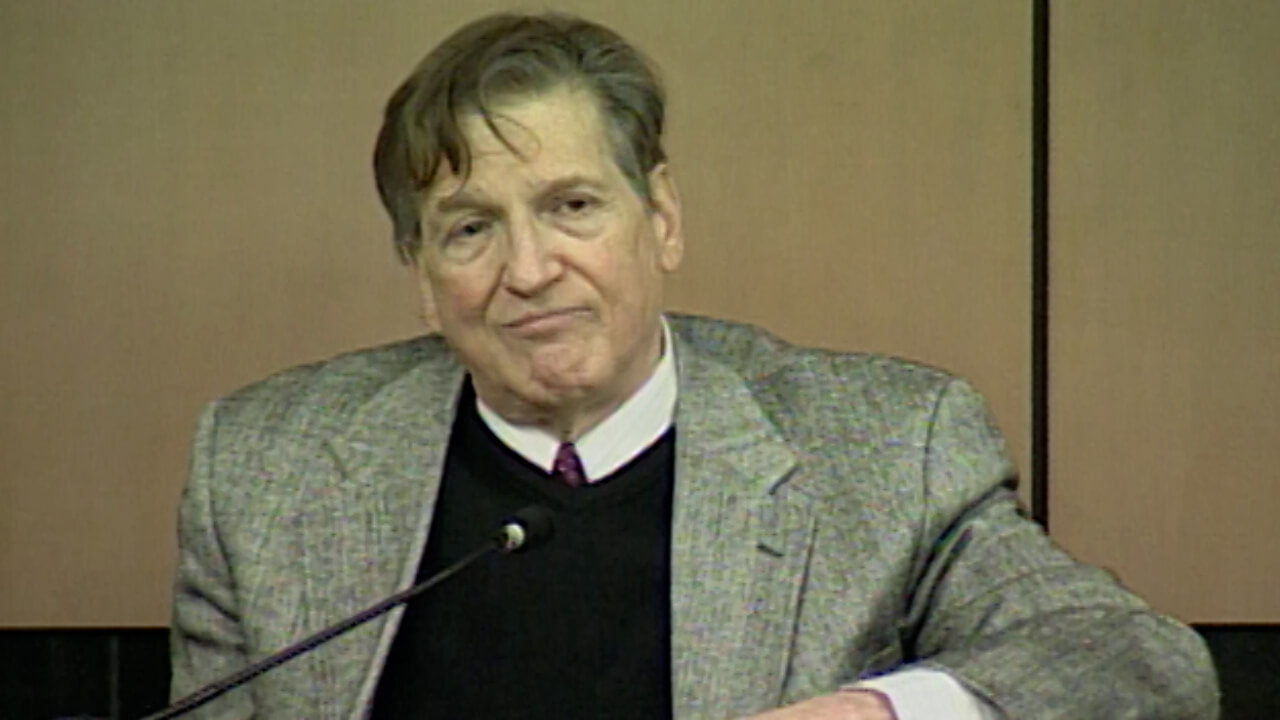
I was assigned to Vietnam to the Americal Division in July of 1968. I arrived there about the 4th of July and I was sent to the division HQ where the JAG office was. I was the deputy staff judge advocate. That is the number 2 lawyer for the division. We were stationed in Chu Lai, Republic of Vietnam, which is where the division HQ was located. I returned to the US in late June of 1969 and was assigned to the US Army Infantry School at Ft. Benning Ga as a legal team chief. I had a group of 4 other lawyers working for me teaching legal subjects to the career course officers, basic infantry officers and the OCS students, various legal subjects. Among these subjects, was the law of land warfare which we taught at the time to the career course and the basic class students.
It was about the first week of September of 1969, I was called into the office of my superior officer, at that time an infantry colonel, and at that time I was just starting my assignment at the school.
He said that you have been requested by name to defend a lieutenant that has been charged with murder. I said, well sir, I just graduated ITC [Instructor Training Course]. There is a JAG office here on post that has qualified lawyers who are assigned to defend and try cases. I am just too busy with my duties here to do this. He said, Major, you don't understand, this lieutenant has been charged with killing no less than 109 people. I knew right then that nothing I could say would prevent me from being assigned that duty. I said, How did I happen to get requested by name. He said Mr. George Latimer, do you know him? And of course I knew him by reputation, has specifically requested that you be assigned the military council in this case. That is how I became assigned to the case.
The defense team consisted of Mr. George Latimer who formerly was a military judge on the US Court of Military Appeals and had been appointed to that position by the President for 10 - 15 years term when the Court was originally created. He had left that position and was the senior partner in his own law firm in Salt Lake City.
He was the chief defense counsel. I was the chief military defense council and that was the defense counsel for well over a year.
I thought this case is unlike any other case in all my years of military service or had even heard of. The charges were so broad.
One thing that Mr. Latimer was above all else, was that he was a fine religious man, he was a man of high morals and he was a gentlemen. Over a period of time he was to become, in my opinion more than just a council for Lt. Calley he was almost like a father figure for him. I believe that the Lt. Calley that I saw that day was not the same Lt. Calley that I saw at the end of that trial. He had matured and grown and just evolved into a much more knowledgeable and better emotionally developed man. A lot of that had to do with the care that Mr. Latimer genuinely had for him.
Lt. Calley testified that he did in fact order the shooting of men, women and children and that he did in fact fire his weapon, discharge his weapon at men, women and children or at least civilians. I don't think that he specified. This means that in essence he had admitted doing the act itself, the question then became was it a criminal act. So we then had to have what we would call an affirmative defense. An affirmative defense is a defense when the person admits to the act but claims that they had some unique legal justification for doing so like self defense, obedience to orders, insanity.
If you miss on a defense like that, he is obviously going to get convicted because he has admitted doing it. The major obstacle that we had with that defense is that that defense had been used in Nuremberg war crimes trails following WW2 and the tribunals that tried those German officers for war crimes rejected that defense.
Another major obstacle was that we had very little information, the prosecution was a very thorough and professional prosecution. They didn't give us one scrap more of information than they had to.
The government put out a minimum amount of evidence, just to show that there had been some killing that had occurred in that village. Maybe I got 16 statements out of 120, say. Some of them, like with one soldier from Nebraska named Turner, the trial was well under way before I even learned about him, about to get underway of the main trial, and much of the pretrial hearings were over before I learned of him.
Many of the soldiers I learned existed because the newsmen were going around and these soldiers and ex-soldiers were calling up newsmen and saying "Hey I was there" and this newspaper would go out and interview and then I would cut that out, say well here's one, and then I would put in a demand on the govt. to give me the statement of private so-and-so or whatever, because now I knew he existed and he had said maybe in his statement that the CID [Criminal Investigation Command] had been to talk to him or something.
I thought the prosecution team was outstanding. They were a young team. Cpt. Daniel, well I say young, this was his first duty assignment was at Ft. Benning, it was his sole assignment, then he got out as far as being assigned to a judge advocate office, but he was an experienced trial counsel in the Judge Advocate office, and he was a natural trial counsel. John Partin, his assistant, it was his first trial, just like Brooks Doyle was new. They gave Aubrey a new assistant too to help him. Cpt. Daniel was just thoroughly committed to prosecuting this case and doing it right. He had bulldog tenacity and he was very intelligent. He would weigh in on something and he was a hard fighter. He would not give up any bit of information unless he absolutely had to and you had to really fight every step of the way. He fought every step of the way to keep you from getting anything that would help you. But, with all of that, he had the utmost integrity, he was 100% ethical, and his word was his bond. If he said to you, I'll give you this, I'll do this, I'll do that, there was no doubt it would be done.
One of the most difficult obstacles that we did have to overcome, in my opinion, was the magnitude of the event itself. When it became heavily reported in the press and started eliciting statements from the President of the United States, the Secretary of the Army, congressmen, senators, the Army General Counsel, and others, this had an impact on the US Army that just was almost impossible to overcome. In your average court-martial, you'll walk into a court-martial and some of these court-martials were trying soldiers for very serious offenses - murder, rape, robbery, whatever, on occasion. You'll go in that courtroom and there won't be one newspaper person present. There won't be even one spectator present, maybe at most the soldier's mother and one or two family members. The Calley trial opens up, that jury comes in no matter how shielded they are, they've got to walk through a battery of TV cameras. They see the unique precautions taken in the courtroom. They walk in there and Col. Kennedy had arranged their jury box so it looked like a civilian jury box.
Obviously, we had countless strategy sessions. We had gone through our client's testimony. We had talked about various witnesses and who should be called and could be called. We discussed this. Ultimately, as I say, Mr. Latimer made the final decision as to what witnesses would be called, what order they would be called, and who would examine those witnesses, whether it was he, myself, or Mr. Kay. He had the final word on all that. The defense strategy that evolved was that Lt. Calley was obeying orders - obedience, orders, defense. That was the true defense that we had.
The most mitigating circumstances was the nature of the war itself. The way our civilian leadership elected to measure the success of the war in terms of having our army adopt a body count report. The lack of proper training in the law of war by military soldiers, and what training was given was not hard enough and firm enough.
Our defense in the obedience to orders defense was basically that Lt Calley had received orders to go into that village and to kill every living thing or anything that moved for that matter and that he had receive them from his company commander, that was the defense. We also tried to establish that that offense may have originated at task force level, which was the next higher level of command which was higher than the company, it would be the equivalent of a battalion.
I think that one of the biggest setbacks that the Calley defense had, and it was a stroke of genius by F. Lee Bailey when he was representing Capt. Medina and that was to have Capt. Medina go on TV long before the trial at a time when even the CID was still trying to hunt down the key witness. Capt. Medina used the national TV to explain what had happened at My Lai 4. He did this in a very brilliant and eloquent manner. But TV reached out all over the US and his remarks got major coverage on every major TV station. He reached into the homes across the US and reached some ex soldiers who had not been contacted by any of us and the heard their former company commander speak saying this was what he had said and this is what he had done. Especially with men that had not thought about the incident in over three years, it tended to fix in their minds a memory of what happened and it may have effected their recall.
The Peers report focused a lot on the cover-up so it was not really that useful to us. There were some testimony in the report that gave us a little bit of inconsistent statements that were a little helpful, but overall the biggest thing that the Peers report pointed tow as that the Army did not have adequate training and it needed to do something about that. That is one thing that I really believe needs to be stressed even today here in 1998. That the Army must continue in peace time its Law of War training. It must be detailed and adequate. It is too late to train and teach a soldier when he is going into combat the laws of war and expect him to understand it and to obey it under the stresses of combat. When for months he has been receiving rigorous training, physical training basic training unit training all geared to war and effectively engaging the enemy and killing him.
I believe Lt. Calley, when he testified about his knowledge of orders, did so truthfully about what he believed he had received. I am convinced that he believed in his heart that he got those orders as he testified to them.
Lt. Calley never had any training at all about whether an order was legal or illegal and I do not believe that he knew that he had the option to disobey an order if it was patently illegal. The soldiers just were not told and that was part of the findings that the Peers report shows and that is that his company was inadequately trained as to this matter.
There are varying types of justice. I personally look at one question that the public should consider is just what is the sentence that Lt. Calley received in view of the evidence and just what should he have been convicted of. That is one issue of justice. On that side you will never have consensus.
Mr. Latimer and I were subjected by certain members of the press to a great deal of pressure to try to raise the issue of the legality of the Vietnam War during the Calley trial. Not only just by the media, but by certain special interest groups. We refused to do this. That would have been disastrous to Lt. Calley's defense.
Had we, in view of that defense, turned around and said "Well, we're attacking the policy of the United States of America as being an illegal policy", that would undermine and cut into that defense.
I believe a major lesson learned is that if you are going to send American troops into combat...in an ever-shifting situation where you are going back to the same territory day in and day out, that the stresses and strains of that combat type activity is such that if you want American soldiers to insure that the American soldiers obey fully the law of land warfare as we have by treaty agreed that this country will do, then you must train them regarding that law so that they know exactly what it is. And more important or equally important to that training is that the Army leadership at the highest level must let it be known without any reservation whatsoever that that law will be enforced so that that soldier knows right up front and without any question that if he violates the law, he will be subjected to trial and prosecution.
I believe that it is very important that the United States Army continue to give effective law land warfare training both in peacetime and in war, and that the leadership truly support and make it well known to a soldier that they intend for that training to be followed. I think anything less than that is a travesty of justice to the American soldier and I say soldier because I am an old Army man. I also think it is a travesty to the American serviceman or woman.
TRIAL STORY Copyright© 1998 by the Courtroom Television Network. All Rights Reserved. No part of this site may be reproduced in any form without permission of Court TV. Nothing in this site is intended to constitute legal advice. COURT TV is a registered trademark and COURT TV ONLINE is a service mark of the Courtroom Television Network. |