
Return To Court TV Homepage  
>>>>>>
TRIALS
ABOUT COURT TV

U.S.

Trials

World

People

On Air

Video

Talk

Search


Updated January 12, 2000 9:55 a.m.

Waitress accused of killing four in DWI crash is not a "murderer," defense tells jurors

           
MELISSA MARVIN TRIAL

            >>>> Should Marvin be tried for murder? Discuss on our message board

>>>> Background

>>>> Jan. 11 Openings

>>>> Jan. 12 Update

>>>> Jan. 13 Update

>>>> Jan. 13 PM Update
>>>> Jan. 14 Update

>>>> Jan. 14 (Closings)

>>>> Jan. 15 (Sentencing)

MANTEO, North Carolina (Court TV) — Melissa Lynn Marvin was drunk when she sped through a red light and recklessly drove her Montero SUV into a Chevy Cavalier, killing four teens and injuring another, prosecutor Robert Trivette told jurors in his opening statement Tuesday.

According to prosecutors, Marvin, a 29-year-old waitress/surfer, should be convicted of four counts of second-degree murder for each life lost.

The defense does not disagree with much of the prosecutor’s description of the April 6, 1999 accident, attorney Michael Sanders told jurors.

"There was a tragedy; I promise you it’s some of the saddest evidence you’re ever going to hear," Sander said in his opening statement.

But, the defense argued, Marvin's actions were not so reckless as to amount to murder. Sanders insisted that in order to convict Melissa Marvin of second degree murder, the jurors must determine that Marvin acted "unlawfully, feloniously, willfully, and with malice to kill and murder those young ladies."

"That’s Missy Marvin; I want you to look at her," Sanders told jurors. "She is not a murderer."

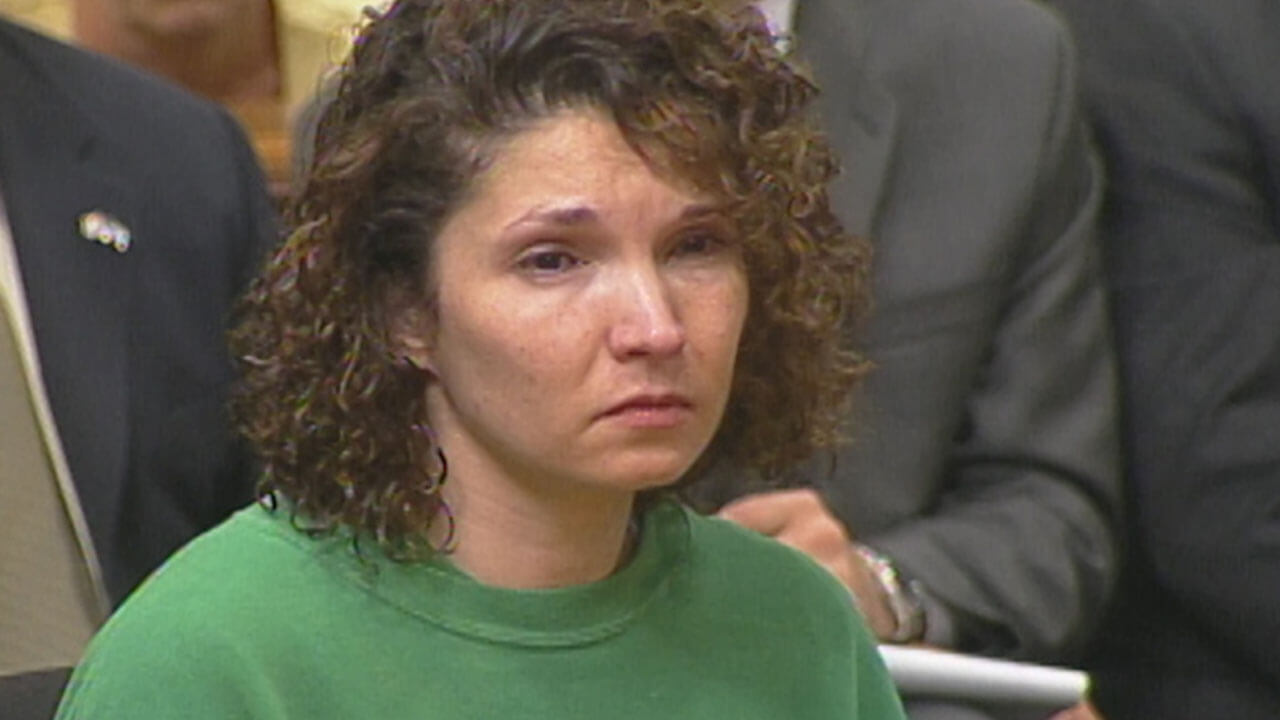
After more than a day of jury selection, Marvin's drunk driving murder trial started on an emotional note. The defendant burst into tears as the prosecution began to outline the events leading up to the accident. And she remained with her head down throughout much of the day's testimony.

Shana Lawler, of Colington Harbour, and four of Shana's friends visiting her from Medford, New Jersey — Amanda Geiger, Angela McGrady, Megan Blong, and Michael Horner — had a good time at the beach, happy to be reunited after Shana moved to North Carolina. The prosecutor contrasted this picture of the carefree innocence of the 17-year-old high school juniors by painting one of Melissa Marvin visiting several restaurants, taking down drink after drink before getting in her car.

According to Trivette, while the girls were lying on the beach, Marvin had ordered her first of two margaritas at a restaurant called Tortuga’s. Those drinks were followed by three additional shots of 100 proof liquor at Mulligan’s, another restaurant.

At that time, the teens were headed home with Blong, described as an extremely careful driver, at the wheel. However, the prosecutor argued, Megan's responsible driving could not prevent what happened next.

Prosecution witness, Michael Keeley, described the crash as an "explosion." He and his wife were driving on Highway 158 through Kill Devil Hills, N.C. on the afternoon in question when they first noticed Marvin’s red Montero coming up behind them.

Before the accident, the former CIA agent says he observed Marvin's Montero speeding on the highway and frequently changing lanes. Shortly after it passed them, Keeley said that it was obvious that "the car [was] not in control . . . it was moving too fast when the brakes were applied to come to a normal stop." Mr. Keeley testified that Marvin ran through a red light.

Mrs. Keeley testified that Marvin's left foot was even on the dashboard. "I was so aghast at seeing someone drive with their left foot on the dash that I never took my eyes off of her," Mrs. Keeley said.

According to Jeannine Keeley, "I saw the light was red, and I also saw the car go through the light . . . I heard a horrible crashing sound, and I saw the car go up . . . I did not see the children’s car . . . I saw the Montero go up in the air and come down somewhat headed in the opposite direction . . . I saw one victim’s body on the ground, and a lot of chaos . . . a lot of noise, chaos, a lot of people trying to help . . . I also saw Ms. Marvin sitting in her car. She was just looking straight ahead and wasn’t doing anything . . . she was just staring."

The next witness was Patrick Malloy, who was also in a vehicle at the intersection in question on the afternoon of April 6. As he and his wife stopped at the red light, he noticed the defendant’s Montero approaching from his rear.

"I was looking around, and in my rearview mirror I seen a vehicle coming up fast . . . it went through the intersection at the same time the other car came out with its turn signal on to make a left turn . . . it [the Montero] impacted the car so hard that I didn’t see any evidence of any braking whatsoever."

According to Mallow, "the impact made a loud noise . . . it lifted the end of the red car up in the air, and turned it around, almost 180 degrees, heading south on 158." He estimated that the defendant’s car was traveling at approximately 60 mph prior to impact [the speed limit is 50], and said he never saw the Montero attempt to brake or slow down.

According to the prosecutor, police later discovered that Marvin, a former class president was drunk. Her alcohol blood level registered as three times over the legal limit. Marvin originally refused a blood test until police got a search warrant and ordered her to take one, according to Trivette.

In a death involving an accusation of drunken driving, prosecutors in North Carolina have a choice of three charges: second-degree murder, involuntary manslaughter or felony death by vehicle. Second-degree murder is a possible charge only if the evidence shows recklessness amounting to malice.

Under North Carolina law, malice may be proven by showing that an act that caused death:
— was done with ill will, hatred, spite, or resentment toward the victim;
— was so inherently dangerous to human life and was done so recklessly or wantonly that it reflects disregard of life and social duty; or
— was done intentionally and without justification or excuse.

Prosecutors in this case are relying on the second definition — inherently dangerous to human life" or "recklessly or wantonly reflects disregard of life" — to try and win a conviction for second-degree murder.

If convicted, Marvin faces 17 years in prison.

Court TV's Latoya Hunter and Michael Christian contributed to this report.


Court TV Homepage

Site Map


<<<back Top of page  
Contact Us U.S. |  TRIALS |  WORLD |  PEOPLE |  ON AIR |  VIDEO |  TALK |  ABOUT CTV |  SEARCH 
      © 2000 Courtroom Television Network LLC. All Rights Reserved.
Terms & Privacy Guidelines