

By David Koeppel
Special to Court TV
Attorney Frederick White still shudders when he remembers the 1963 execution of his client Victor Feguer, a drifter condemned to death for the murder of an Iowa doctor in 1960.
White didn't attend the 27-year-old's hanging on March 15, 1963, but now nearly four decades later, a simple quirk of history has attracted new attention to the long forgotten case.
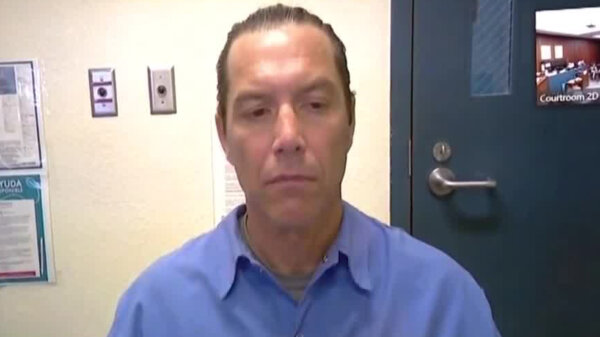
When Timothy McVeigh is executed by lethal injection on June 11, he will become the first person put to death by the federal government since Feguer, 38 years ago. In 1963, the federal death penalty was generally reserved for crimes of espionage or treason. In recent years, federal death penalty laws have been expanded to include an array of more than 40 crimes.
Besides being executed under federal death penalty laws, the McVeigh and Feguer cases couldn't be more dissimilar. The Oklahoma City bombing that killed 168 people and injured 500 others is a crime that has left permanent scars on the American psyche.
Feguer's murder of Dr. Edward Bartels and his subsequent hanging, attracted little media attention. Even those in the Iowa town of Fort Madison where the execution occurred have trouble recalling the incident.
A Random, Violent Killing
While McVeigh meticulously planned his crime and can dispassionately discuss the rationale behind it, Feguer was often incoherent, the perpetrator of a random murder, seemingly without motive.
"We couldn't get him to even speak about it, he was so remote, I thought he was very mentally ill," says White, 73, who continues to practice law in Waterloo, Iowa, after 50 years. "There never seemed to be a method to what he did. He was a career criminal, a drifter with no real connection anywhere."
The Michigan native drifted into Dubuque, Iowa, in the summer of 1960, renting a room at a decrepit rooming house in town. On the night of July 11, he phoned Edward Bartels seeking help for a woman he claimed needed medical attention. The courts believed that the doctor was chosen at random from the local yellow pages.
Feguer kidnapped the 34-year old husband and father and murdered him in Illinois with a single gunshot to the head. Several days later, Feguer was arrested in Montgomery, Alabama, attempting to sell the doctor's car. By crossing state lines, Feguer had committed a federal offense.
After his arrest, Feguer claimed another man a Chicago drug addict Feguer met in Dubuque killed the doctor. Feguer claimed he then killed that man and dumped the body in the Mississippi River. Authorities never found a trace of the alleged killer.
Feguer was tried and convicted in federal court and sentenced to hang. His appeal was denied and only clemency from then President John F. Kennedy could have spared his life.
White was with Iowa Governor Harold Hughes, when the governor phoned Kennedy to ask that Feguer's sentence be commuted. The president deemed the actions "so brutal" that the request for clemency was denied.
|
| Victor Feguer was executed here in 1963. |
'A Model Prisoner'
Feguer was brought to Fort Madison, Iowa, on March 5, 1963, to await execution and held on the state penitentiary's death row.
Jim Menke, a prison captain who has since retired, spent much of those 10 days guarding Feguer and attending to his basic needs.
Menke could recall no memorable conversations with the prisoner, and certainly no death row confession. Menke and three other prison officers assigned to Feguer made sure he was fed, bathed and received his medication. At about the same time, Truman Capote documented the Kansas murders of the Clutter family in his book In Cold Blood, and elevated a couple of drifters named Dick and Perry to near mythic status.
But Feguer seemed destined for obscurity.
"He was a model prisoner, never complained much," Menke said. "There was friendly conversation, I didn't know anything about him, didn't know if he even had a family. The execution itself was pretty uneventful."
Menke and a Catholic priest kept an all-night vigil by Feguer's cell. Between 4 and 5 a.m. on March 15, Menke gave the prisoner a suit to change into before the execution. He and another officer escorted Feguer on his final walk to the gallows, but didn't actually witness the hanging at dawn.
Feguer was buried in a small unmarked grave in Fort Madison, and quickly forgotten, until now.
Death Penalty Debate Renewed
Fast forward to 2001 and the McVeigh execution. Millions of people around the world are following the details of the case. Protesters will surround the death chamber in Terre Haute, Indiana, while family of the deceased will watch the execution on closed-circuit television in Oklahoma City. The execution has renewed debate about the death penalty and its future at both the federal and state levels.
By the time Victor Feguer was executed in 1963, the public mood had begun to swing against the death penalty.
"The last time a federal execution took place the death penalty was going out of fashion," says Burk Foster, a professor of criminal justice and author who teaches at the University of Louisiana at Lafayette. "Since the '30s state and federal prosecutions were falling off."
Foster says that between 1930 and 2001, state executions have far exceeded federal ones. Thirty people, including six Nazi saboteurs and the Rosenbergs, had been put to death under federal law, while more than 4,500 had died under state jurisdiction.
In 1972, the U.S. Supreme Court ruled in a Georgia case that all death penalty laws were unconstitutional because they allowed for "arbitrary and capricious application" and constituted cruel and unusual punishment.
Almost immediately, many states began rewriting their death penalty laws to address the Supreme Court's concerns. In 1976, the court upheld laws in Florida, Georgia and Texas, reinstating the death penalty in those states. Today, 38 states have death penalty statutes. Iowa, the state that executed Feguer, is one of only 12 states without such laws.
Rebirth of the Federal Death Penalty
In 1988, the federal government revised its own death penalty statutes. The crack cocaine epidemic and the Reagan administration's war on drugs triggered the so-called "drug kingpin law" that made a murder committed during a drug transaction a capital offense. There have been six people sentenced to death under this law, and Juan Raul Garza is slated to be the first of that group to be executed on June 19.
It was under the Clinton administration and the tough-on-crime Republican Congress of 1994 that the most sweeping federal death penalty expansion was passed. That crime bill expanded the number of death penalty offenses to more than 40.
Those opposed to the death penalty are concerned that the 1994 crime bill, the McVeigh execution and a pro-death penalty administration, will lead to more executions under the federal death penalty.
But Professor Foster believes those concerns are unfounded.
"The McVeigh execution won't have any effect on the federal death penalty," he says. "Really, the federal death penalty is inconsequential compared with the death penalty in 38 states."
Foster and Richard Dieter, the executive director of the nonprofit Death Penalty Information Center, says that federal prosecutions are much more rigorous than state cases. Dieter adds that there is generally better defense counsel provided and that the attorney general is required to approve every federal death penalty case.
Of more concern to Dieter and other death penalty experts, are charges of racial and geographic bias in meting out the federal punishment. Of the 20 inmates on federal death row, 18 are black, Hispanic or Asian. Only two are white.
Still, Dieter is reluctant to accuse federal prosecutions of being racially biased.
"It's unlikely that prosecutors or juries are deciding cases consciously on the basis of race," Dieter says. "But the majority of judges, prosecutors and juries are white and race tends to creep in."
Calls for a Moratorium
Democratic Senator Russell Feingold of Wisconsin has introduced a bill that would put federal executions on hold. Illinois has suspended all state executions, out of concern that the laws have been applied unfairly.
The American Bar Association has also called for a moratorium on executions according to Ronald Tabak, the co-chair of the association's death penalty committee. Tabak admits that while many favor the McVeigh execution, polls indicate an increasing public demand for moratoriums on all executions. But several states have defeated proposals for temporary moratoriums and many haven't even considered them.
On June 19, 43-year-old Juan Raul Garza will become the next federal inmate to be executed. Sentenced in Texas federal court in 1990, Garza was convicted under the drug kingpin law. His lawyer has told several publications that his client is a prime example of racial and geographic bias inherent in the federal death penalty system. Unlike McVeigh, Garza is praying for clemency.
Everyone seems to agree that the McVeigh execution has prompted the most public debate about the death penalty in many years.
And to the 73-year-old attorney who opposed the execution of his client Victor Feguer, public discussion is a positive thing.
"It's been a difficult experience to relive," Frederick White says. " It does bring the issue of capital punishment to the forefront. Society has the dilemma of deciding what to do with these people."
|