ctv_will: Welcome to Court TV chats.
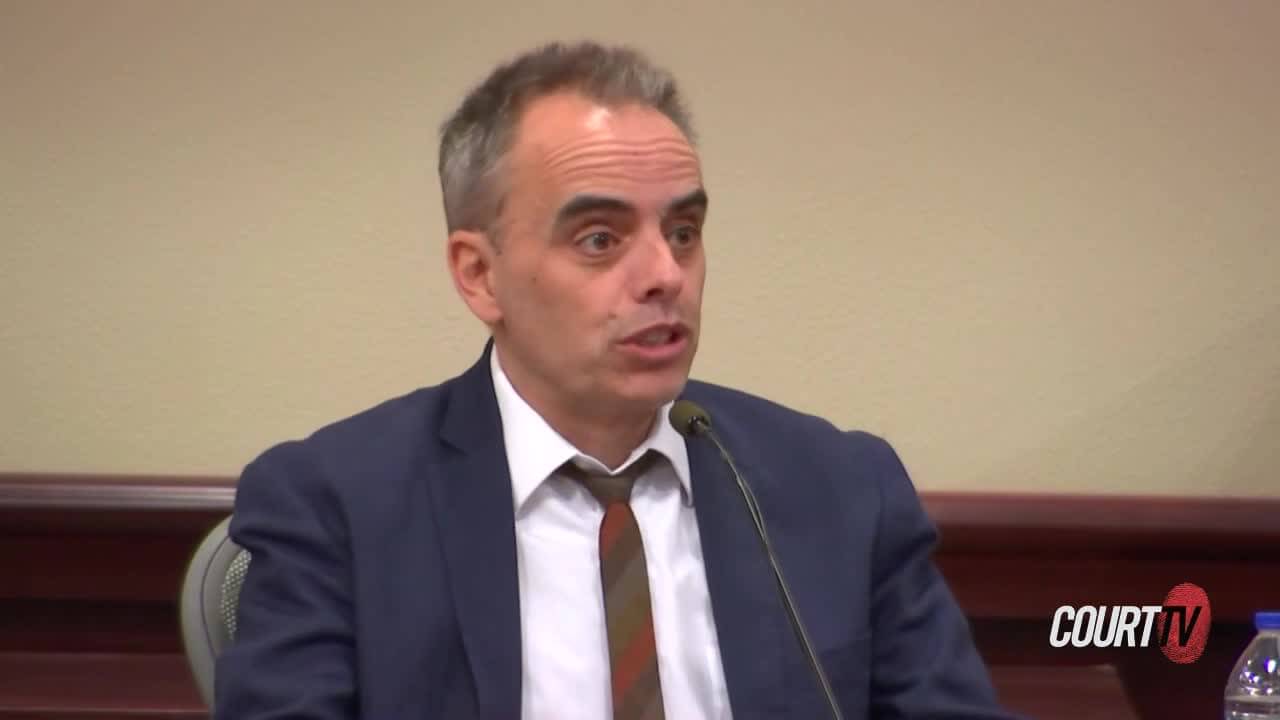
In a bit we're going to be talking to Hastings College of the Law professor David Faigman.
He's just written a boook called "Legal Alchemy"
about the use of science in the courtroom.
Do you think lawyers understand the science they're using to make major cases?
What about OJ's DNA?
That's one of the more famous ones.
And we're not just talking about how the law is enforced, but how the law is made in the first place.
Do Congress people understand the science they're using to make laws about things like tobacco?
or drugs?
or the ecology?
Tizzle27 asks: What is alchemy?
ctv_will: I think alchemy is the chemistry of turning lead to gold, but I'll hold that one for our guest to give a better answer
Someone the other day was asking about lie detectors. This is probably a good place to bring something like that up.
Some one in the Court TV Yahoo club was talking the other day about animal DNA in the Ramsey case.
I don't know how specific our guest is going to be able to get, but he can certainly talk about DNA and whether it is accurately understood in some of these cases.
That guest by the way, is David Faigman, , author of a new book with the same title as this chat,
"Legal Alchemy."
Another area that we can talk about is psychology in the court room.
Court TV just covered a case in which the defendant claimed he was not responsible for murder because he was insane and hearing God in his head at the time.
Is science being twisted to allow for something like the insanity defense?
Tizzle27 asks: What does David do?
Tizzle27 asks: Is he just an author?
ctv_will: No, actually he's a professor at Hastings College of the Law.
Keep those questions coming and we'll be starting in about 10 minutes
Tizzle27 asks: Is David a lawyer?
ctv_will: Yes. David Faigman is also a laweyer.
Another hot topic involving science and the law lately is all of this reproductive technology being developed.
They have to pass all kinds of new laws for new technology like cloning and test tube babies.
Do we really know the truth about these technologies? Or are the fact manipulated by the lawyers and the politicians?
Ok, I've got him here.
ctv_will: Welcome Mr. Faigman.
Tizzle27 asks: Does alchemy have anything to do with Forensic Science?
David Faigman: I chose "ALchemy" because it reflects one of the problems I see that lawmakers have with scientific evidence and research.
Specifically that they often times seem less concerned with the reality underlying the research and more concerned with the utility that the research might serve.
So like the alchemists, who were able to turn lead into gold becuase they were able to convince people that they had the skill.
The underlying reality of the nature of the metal was too often besides the point, and the trick was really convincing others that it was gold and not lead, and
similarly in the law the trick is to convince the fact finder that the handwriting identification or the bite mark analysis or the fiber analysis identifies the perpetreator and not the scientific question which is whether the basis for the expert testimony is valid.
Tizzle27 asks: Is there a way to beat the polygraph? Is there any gliches with the polygraph?
David Faigman: The courts have considred the polygraph question in some detail in the last few years.
Increasingly, courts see themselves as gatekeepers- and in fact, they have been instructed by the Supreme Court of the United States (SCOTUS) to be that, so they have been concerned with that very question.
It apears that the accuracy of polygraphs are highly variable and very context dependent
so that some people are able to beat them and moreover, some people are able to do quite well when they are being tested by a friendly examiner
and so what the courts have been doing increasingly is allowing polygraphs to come in, but only under certain circumstances.
The main criterion would be that both sides stipulate or agree on the circumstances under which the polygraph is to be taken, and who the examiner will be.
But even under those circumstances, some people will be able to beat it, and there is not very good research to indicate that the test is highly reliable at distinguishing truth tellers from liars.
vicxter asks: Where has responsibility gone in our legal system?
David Faigman: I think this is an interesting question.
There has been a great deal of debate in the legal system, especially in trial courts as to who has ulitmate responsibility, especially for scidntific evidence.
The SCOTUS has ruled that the judges have to take a good amount of the responsibility of ferreting out junk science in the courtroom,
but a lot of lawyers and a lot of commentators would prefer that the responability falls upon jurors.
What they want especially is their "day in court."
The problem with giving every party who has scientific evidence or "junk science" evidence their day in court is that the courts can very quickly be
drowned in the litigation.
For example, in the silicone implant cases alone there were 500,000 cases.
If the judges don't exert some control over this litigation then the litigation will not only overwhelm them, but inevitably bankrupt the defendants.
And in the silicone implant cases, it appears that the claimed relationship between silicone implants and the alleged illness, which are atypical connective tissue disorders,
has not been proven.
ctv_will: But Dow has been made to pay a lot of money right?
David Faigman: Dow Corning has gone bankrupt, just becuase of the litigation and has lost a number of suits where judges did not exert the control and did not play the gatekeeper role in evaluating the validity and reliability of the science.
desiree333 asks: difficult for lay person to decipher medical verbosity??? or presented in such a way??
ctv_will: Should jurors be specially trained?
David Faigman: The main problem right now in the law generally, and this is not limited to jurors and judges but also bureaucrats and offices of the government- is that very few of them are trained in scientific method and
very few of them are able to distinguish between verbose medical statements and genuine medical facts or any scientific facts.
For example, consider the administrator at the EPA who is considering new clean air standards. That administrator has to understand both medical and science issues in order to draft the new rules.
If we are to have new rules
without having a background or understanding in science, those rules will unlikely be effective or productive for society.
Ultimately the key is education to bring science and math and especially statistics to the audience that has to make these decisions.
Ultimately, policy very often involves science and that's what we are here calling science policy- but we should not expect the policy part of it to be good if
the science part of it constitutes malpractice.
SubZeroCool1 asks: When did science really become a big part of the courts?
David Faigman: A great question. I would say probably late 19th century.
The fist semblance of scientific thinking and forensic analysis arose with fingerprints.
In the 20th century, a number of forensic sciences developed such as trace element analysis which would be comparing carpet fibers, strands of hair, etc.
The problem was the disciplines were not that sophisticated themselves in the scientific method, and they grew up as professional societies that were interested in protecting and advancing their own members self interests, and
today a lot of forensic scientists are nothing more than the self interested guilds.
In modern times, the biggest changes occured becuase of two major changes in the law.
The first in DNA profiling, and the second are what are called mass toxic torts.
DNA profiling demonstrated to the courst first how much science they really needed to know in order to understand really what was going on in this area of molecular biology
and it also demonstated to the courts how good science is done.
More and more, the courts are expecting the other forensic sciences to be as good as DNA profiling in validating their specialty.
The mass toxic torts demonstrated to the courts how important it was for them to understand the science well enough to evaluate the cause and effect that
certain substances might have on the human body.
Cases like asbestos, agent orange, tobacco smoke, bendectin, etc.,
forced the courts to learn about toxicology and epidemiology and as the courts become increasingly sophisticated in one area,
like epidemiology or DNA, they should bring that sophistication to other areas like polygraphs or handwriting or ballistics.
legionlady2 asks: with all the science know how why the O.J .outcome ?
David Faigman: As good as DNA profiling is, or as good as any science might be, the human element is always present.
And the DNA profile is only as good as a human operator who constructed it.
And therefore, if there is fraud or incompetence in the lab, then there is fraud and incompetence in the scientific result.
And the OJ defense team never really attacked the validity of the technology, they attacked the competence and the integrity of the scientists and technicians who wielded that technology.
SubZeroCool1 asks: How much of a role in determining weater or not someone is guilty or not guilty does science really play in the court room today?
David Faigman: The problem is that almost never will science alone be sufficient to prove somebody guilty.
There is almost always other evidence, and if you have a forensic sample found at the scene of the crime, and we know beyond and reasonable doubt that that forensic sample came from the defendant,
it doesn't mean that the defendant is beyond a reasonable doubt guilty.
It is possible that the defendant was at that scene at some innocent time.
It is possible that the true guilty party planted the evidcence, or it is possible that the police planted the evidence.
So science needs a context.
And most lawyers understand that that context will ultimately be the most important link in the jury making that decision of whether the defendant is guilty or not guilty.
Tizzle27 asks: What kind of lawyer are you?
Tizzle27 asks: Are forensic scientists at a great demand?
David Faigman: I am a law professor. I have a law degree.
I also have a grad degree in psychology
and my trianing is primarily in social psychology and I have extensive background in statistics.
The future for forensic scientists is very bright, both for lawyers who specialize in the application of forensic science as well as the scientists themselves.
My job advice for someone interested in a career in forensic science is to get as much background in statistics and research methods as possible.
The future of the forensic sciences lie ultimately in their being the best science that they can be.
And the forensic science of yesterday which was essentially the correspondence school version of forensic science is unlikely to survive the next decade.
HotMLawyr asks: ctv: Wouldn't you agree that the Daubert decision though has taken a lot of discretion away from jurors?
rkfire asks: Can't the Daubert decision force infinite dispute over insignificant objections?
David Faigman: I am a big fan of Daubert.
I think that Daubert was an incredibly important decision for the court to make because it expects judges to
inquire into the quality of the science.
Perhaps even more importantly, it alerts scientific fields, or pseudo scientific fields that they are expected to be scientific.
The law has been plagued by experts-for-hire and pseudo scientists who are trying to peddle syndromes and other non-validated hypotheses.
And the Daubert decision asked courts to check that practice.
The Daubert standard asked judges to find whether the offered expert testimony is, more likely than not, valid or reliable.
That, it seems to me, is a fairly low threshold expectation, and fields that regularly come to court should be expected to do no less.
On the issue of whether this permits technical minor disputes, I am not sure that I would agree that that has so far been a problem.
I certainly agree that well meaning scientists or specialists can disagree given the state of the art of their field, but
in most cases when there is reasonable disagreement, both sides will have an opportunity to get to the jury.
For me, the more significant problem has been when the experts who come to court would never be accepted in a viable field or profession outside of their self referential group of friends.
And what used to happen is that courts would defer to particualr fields like clinical psychologists for example without truly inquiring as to whether there was any basis for the opinions those fields brought to court.
Daubert means that judges should no longer simply accept what the experts say is valid. It requires judges to have some measure of scientific sophistication so that
they can evaluate for themselves whether fields like clinical psychology or forensic science or medical doctors have any basis for thier conclusions.
After all, in the 19th century, doctors were sure that bleeding people with leeches was an effective medical therapy.
Daubert requires judges to ask what that conclusion is based on.
And more specifically whether there are any clinical trials and sophisticated research that supports that conclusion.
colibean asks: I am 16 and in the 11th grade I wan't to get in to forensics for my carrer , what would I have to do in college and what colleges offer theses types of courses
David Faigman: I don't know all of the places that have programs in forensic science, but there are certainly ones that I do know, and
it might be worthwhile to contact them and get a list of similar institutions.
For example, U.C. Berkeley and Geroge Washington University have good programs.
And there are a couple of people who almost certainly have web pages that I recommend anyone interested in pursuing an undergrad or grad education in forensic science look up.
The first is George Sensabaugh at Berkeley. And the other is a very well know forensic scientist who must have a web page and his name is Jim Starrs.
I'm sure they would both be more than happy to respond to an e-mail.
And I wish you good luck.
JackHotchkiss asks: Someone may have already asked this but why is handwriting analysis allowed in court when it is clearly a pseudo science. Why not allow astrology as well?
David Faigman: LOL
The answer is that soon it might not be allowed in court.
There was a recent decision in Masschusettes that held that a handwriting expert could not testify that the writing came from the defendant.
Virtually all courts since Daubert who have visited this issue have concluded that the research does not exist to support that handwriting experts can do what they purport to do.
If I were a judge, I would tell handwriting experts in my opion that they have a set period of time, maybe two years, to produce the research to support their testimony.
I would be inclined to let it in for now, probably with instructions to the jury regarding its weaknesses, but at the end of that two year period, if the research were not forthcoming, they would never get into my courtroom again.
asher1971 asks: when talking about science which science is admited in court the practical or the reserch science?
David Faigman: As a general matter, both kinds of research, both the general and the specific or practical finds its way into court.
The general typically does not speak specifically to this case where as the practical more often does.
Take for example the question presented in the book written by Jonathan Parr "A Civil Action"- the one with John Travolta in the movie.
The question was whether trichloroethylene caused childhood lukemia.
The general research in that case was the epidemiological research. The question that the epidemiological research answered was whether there was an increased incidence of
childhood lukemia in the population that was drinking the water in Woburn, Mass.
The practical question that the law always needs to ask is whether the plaintiff's lukemia was caused by the TCE (trichlorl....)
After all, many people get lukemia who are never exposed to TCE.
And many people exposed to TCE never get lukemia.
So the problem for the law is to find those people individually who are likely to have gotten their lukemia from the defendants dumping of TCE.
So the law needs to operate at two levels of science .
One is general, almost academic, and the other is specific or practice.
The same would be true of polygraphs.
The general question or research question is whether polygraphy can distinguish liars from truth tellers.
The practical question is whether in this case, this polygraph operator was able to distinguish truth from falsity in this defendant's examination.
ctv_will: How does science effect law making beyond the trial courts? Like in congress?
David Faigman: One of the things I was trying to accomplish in writing the book- becuase my training and expertise tends to be in the area of trial courts- was
to look at Congress and administrative agencies to see how they deal with science.
What I wanted to do was to understand how law makers at every level of the system integrate research into their decision making.
So I think it is possible to learn from the EPA or the National Fish and Wildlife agency, how to better deal with complex science.
I also think it valuable to learn from Congress the great costs of being ignorant about science.
They don't understand it, and they don't seem to care to understand it.
The administrative agencies have the best technical advisory teams available but probably labored under the most complex questions of science policy of any of the branches
and courts are just beginning to increase their level of sophistication and probaby have the best prognosis for the future.
And the reason I think that the courts are going to get better and perhaps someday will be the best is because they have a tradition of writing the reasons of their decision.
Thus, they must take responsiblity if they are ignorant.
Congress, on the other hand, has no such tradition of explaining the reasons for their decisions.
Thus, they can be duplicitous with impunity.
ctv_will: Ok, that's the end of our hour.
Thank you very much Dr Faigman
David Faigman: Ok, you're welcome.
ctv_will: Another very educational chat.
Thanks also to those of you who joined us today.
Pardon me while I roll some credits.
Dr. Faigman's book is called "Legal Alchemy"
You can get it at Amazon or B&N or any good bookstores.
I'll have this transcript up tomorrow at the CTV site if you missed anything.
This chat is brought to you by the good folks at Court TV Online www.courttv.com
Keep up on Court TV Online chat at the CTV talk page www.courttv.com/talk
aka message board mecca.
Also, if you have some time, check out the Court TV Yahoo club
clubs.yahoo.com/clubs/theofficialcourttvclub
Next week I'm planning a chat with a First Amendment specialist to talk about freedom of expression and the art world.
Sort of on the theme of what's going on in Brooklyn right now-- you've probably seen it on the news.
Keep an eye out for that, I'll have the date posted probably tomorrow on the CTV talk page
www.courttv.com/talk/
This chat has ended, you may go in peace. :)
|