
![]() |
||
|
|
|
|
|
|
Profile: Sandy Murphy
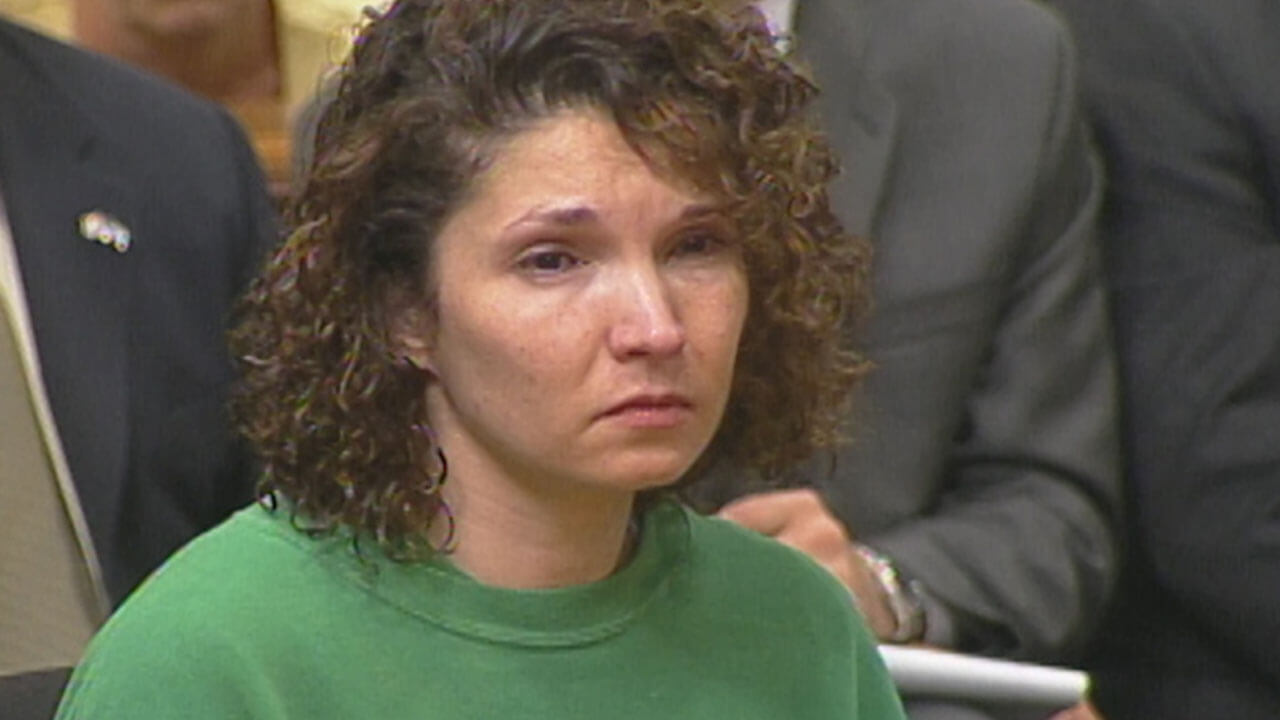
Sandy Murphy, along with her supposed lover, Rick Tabish, was convicted on May 19, 2000, of murdering Ted Binion in his Las Vegas home two years ago. Originally from southern California, Sandy Murphy is the daughter of a repo man. She was known in her hometown as the pretty blonde surfer girl who dropped out of high school and moved to the beach with a man 10 years her senior. In 1995, at age 23, she made her first trip to Las Vegas and lost over $10,000, her life savings, playing blackjack at Caesar's Palace. Murphy took a job she says selling costumes at Cheetah's, a topless bar in Las Vegas, to cover her losses and soon met Binion, 55, who immediately offered her a drink. Cheetah's was Binion's favorite haunt, where he would often pick up women, usually topless dancers. Murphy and Binion reportedly grew close quickly, and on March 7, 1995 she moved into his palatial Palomino Lane home and began to share his rich Vegas lifestyle. Murphy, arguing that she was never after Binion's money, claims that she knew nothing about his reputation on the Las Vegas scene. "I really didn't know who Ted Binion was or what the Binion family was," said Murphy. But she learned quickly, and plunged into a life full of violence, sex and drugs. Tom Loveday, Binion's gardener, tells stories of constant partying and fighting at the Binion estate. He said Binion beat Murphy "quite a bit" and that the older man once joked that she put up a pretty good fight.
According to prosecutors, Murphy and Tabish tried to convince Binion in the months before his death to liquidate nearly $7 million in silver coins and bars that the wealthy man had stashed in the basement of his family's casino money that Binion didn't want his sister to have. But Binion rejected the idea, and instead hired Tabish to construct him an underground vault on vacant land he owned near his hideaway ranch in the Nevada desert town of Pahrump. Binion had Tabish fill the vault with silver on July 4, 1998. Two months later, Binion was dead. Prosecutors believe that on Sept. 17, 1998, Murphy and Tabish force-fed Binion a mixture of heroin and the prescription sedative Xanax and then suffocated the drugged man until he died. Murphy called 911 an estimated four to 10 hours after Binion's death, and cried to paramedics that her "husband" wasn't breathing, before hanging up. Binion's death was originally labeled a self-inflicted overdose, and in December 1998 a judge granted Murphy $300,000 and the home she shared with the former casino owner as ordered in his will. But James Brown, a lawyer representing Binion's estate, had filed a petition to amend the will in October of that year, saying that Binion told him over the phone that he wanted to revoke Murphy's entitlements. More specifically, Brown says Binion told him the day before he died, "Get Sandy out of the will if she doesn't kill me tonight. If I'm dead, you'll know what happened to me." One day after Binion's death, Murphy is captured on a videotaped tour of Binion's home, in which she points out which possessions she wants to keep from the estate and accuses the Binion family of removing items in her absence. Initially playing the part of a grieving widow, the video shows Murphy apparently pocketing a wine glass that investigators speculate may have been used to pour the potent drug concoction down Binion's throat. Two days after Binion's death, Tabish and two assistants were found using an excavator to retrieve the silver from the desert vault. In Tabish's briefcase, police reportedly found a combination to a safe and a handwritten note from Murphy professing her love for him. Murphy, whose lawyer, John Momot, argues Binion died of a self-administered overdose, was arrested on June 24, 1999 and charged with murder, robbery, assault with a deadly weapon, conspiracy to commit burglary, and conspiracy to commit grand larceny. After her arrest, an elderly gentleman, whom Murphy describes only as a friend, put up $300,000 for her bail and she was released. She was placed under house arrest and was required to wear an electronic ankle bracelet. She often painted the anklet to match her outfits. Her new benefactor, William Fuller, president of Eldorado Mining Inc., also loaned Murphy $125,000 to help pay her legal fees and reportedly offered $2 million to mob-lawyer-turned-Las-Vegas-Mayor Oscar Goodman to help with the case. (Goodman turned down the offer). When Fuller put up Murphy's bail he testified that he met her at a restaurant, became friends with and wanted to help her. On Feb. 28, Judge Bonaventure refused to dismiss the charges against Murphy stemming from the death of Binion and the removal of his silver. However, the judge did dismiss five charges related to the alleged July 1998 torture and kidnapping of businessman Leo Casey. Binion's maid, Mary Montoya-Gascoigne, testified last August that Murphy showed her a pair of thumbcuffs and said she was planning to lend them to a friend who needed to collect on a debt. Judge Bonaventure ruled that there was insufficient evidence to show that Murphy had ever mentioned Tabish or Casey to the maid or that she even knew who Casey was. The same charges, however, remained against Tabish and two of his associates, Steven Wadkins and John Joseph. According to Casey, Tabish and Wadkins assaulted him until he signed papers admitting he embezzled from Joseph, a business associate. Judge Bonaventure allowed the jury deciding Murphy and Tabish's fates to hear testimony about the Casey charges, but gave instructions that this evidence applied only to Tabish who was convicted on the Casey counts. Less than two weeks before the start of trial, police arrested Murphy for lying to officials about her whereabouts a month earlier. Officials said Murphy told them on Feb. 17 she was at her attorney's office, but witnesses placed her at a furniture store. It was the second time in five months that she was jailed for violating the terms of her house arrest. Last October, after her arrest for being AWOL, Judge Joseph Bonaventure told her he would not tolerate her "cavalier attitude" toward her house arrest conditions. After that jail stay, Murphy complained that her black panties were never returned to her. Momot, her lawyer, filed court papers arguing that the panties were illegally seized and demanded their return. Judge Bonaventure ruled that if and when they are found, no tests would be done on them without his permission. Momot argued in Murphy's defense that she was a victim of the "Binion money machine," which refused to accept that one of its own died of an overdose, and that Murphy was the only one who tried to save Binion from his drug habit. Momot also accused investigators of maliciously insinuating that Murphy was a topless dancer when in fact, he maintains, she was merely selling costumes at the club. Finally, the same videotape that prosecutors say shows Murphy removing evidence, Momot used to show that the crime scene was most certainly contaminated. Laura Barandes |
|
|
|
| Contact Us | U.S. | TRIALS | WORLD | PEOPLE | ON AIR | VIDEO | TALK | ABOUT CTV | SEARCH |
|
© 2000 Courtroom Television Network LLC. All Rights Reserved.
Terms & Privacy Guidelines
|