By Rochelle Steinhaus
Court TV
CHARLOTTE, N.C. (Court TV)Rae Carruth may have escaped a death sentence, but he faces a minimum of 10 years in prison, after a jury that acquitted him of capital murder found him guilty of other charges stemming from the shooting of his pregnant girlfriend.
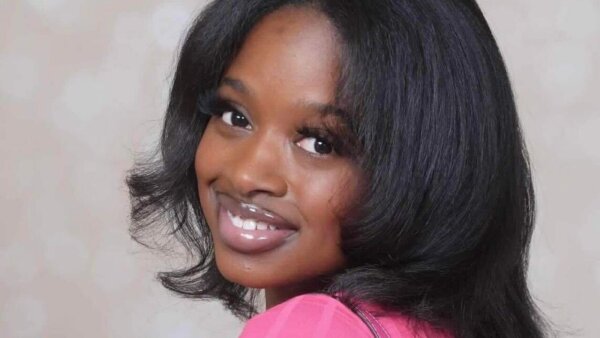
The jury of five women and seven men took more than 18 hours to find the former Carolina Panther guilty of conspiracy to commit murder, shooting into an occupied vehicle and using an instrument to destroy an unborn child in connection with the Nov. 16, 1999, shooting of Cherica Adams. Adams was seven months pregnant with Carruth's baby at the time.
|
| Cherica Adams |
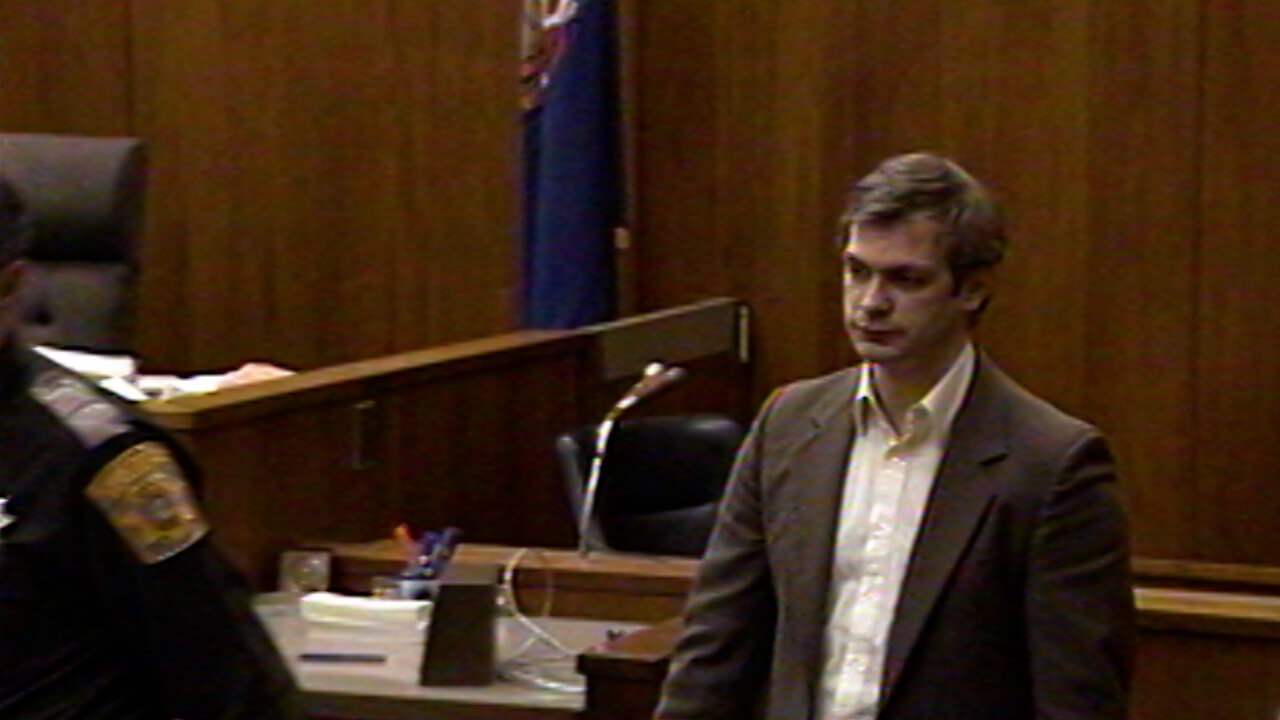
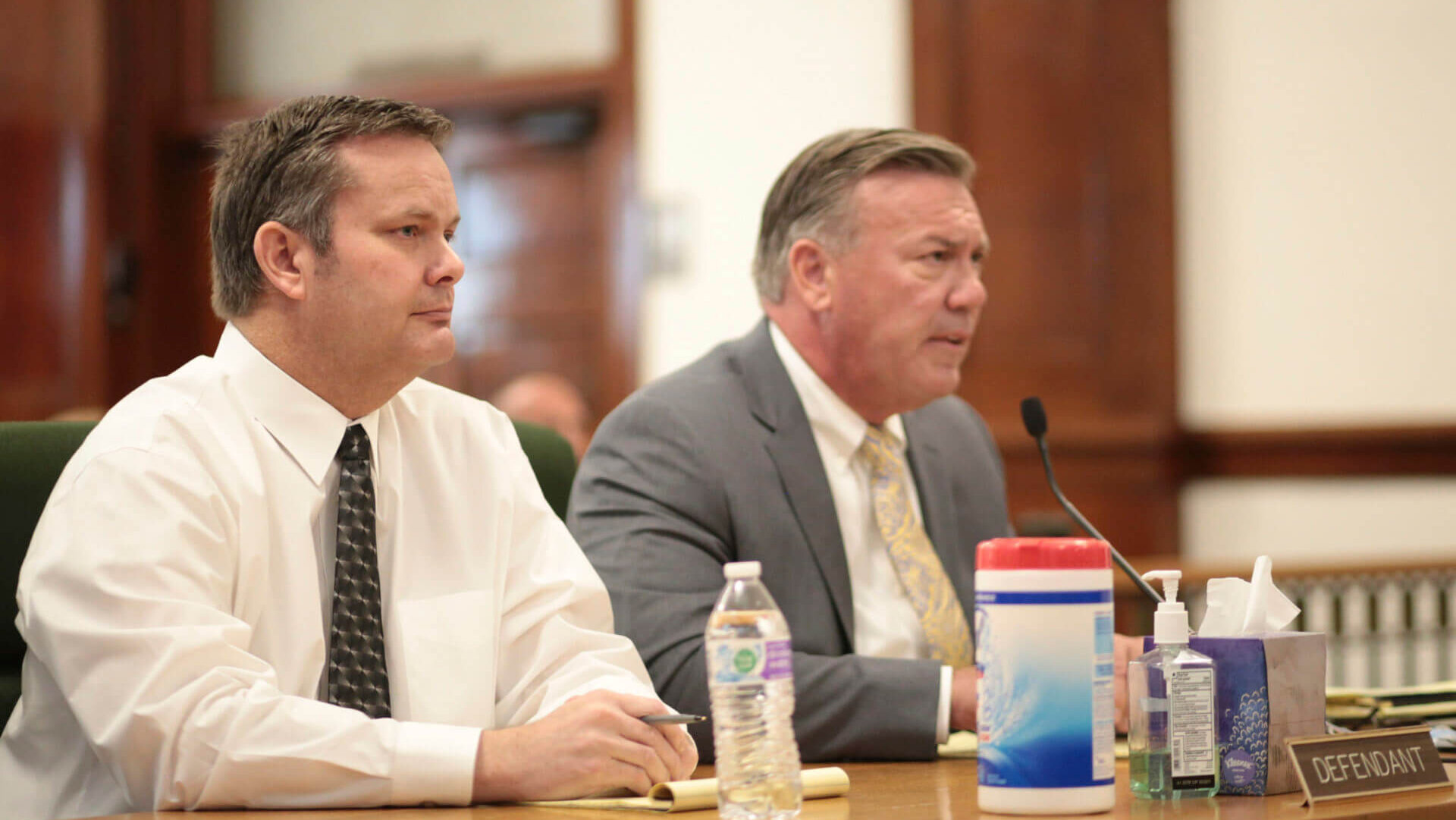
As Judge Charles Lamm read the verdict in the courtroom, Carruth appeared emotionless as he stood next to his lawyer, David Rudolf. Adams' relatives cried as they heard the verdict, a mixture of good and bad news for both sides.
The verdict, rendered by a jury that returned to deliberations Thursday after informing Lamm they were deadlocked, appeared to be a compromise. The jury could have convicted Carruth of first-degree murder based on either conspiracy or felony murder with the underlying felony being shooting into an unoccupied vehicle.
While Adams' relatives declined to comment until after Carruth's sentencing, Rudolf admitted after the proceeding that he was upset by the verdict.
"I think it's logically inconsistent and that's something that troubles me greatly," said Rudolf of the verdict outside the courthouse.
The defense lawyer was optimistic about the possibility of winning an appeal. If successful, Carruth would stand trial again, but only for the three charges of which he was found guilty.
"The first degree murder charge is gone forevermore," Rudolf said. "When we come back on appeal, we're not going to have a death-qualified jury ... and it's going to be a very different looking jury pool."
"I think two-thirds of the battle has been won," concurred defense investigator Ron Guerette, who called the verdict "a major win."
Rudolf declined to comment on what Carruth's initial reaction to the verdict was, citing that Carruth was entitled to his privacy.
Carruth now faces between 10 and 25 years in prison, but he could have received a death sentence had he been convicted of first-degree murder. Unlike a capital murder sentence, his prison term will be determined by Lamm and not the jury. Carruth is scheduled to return to court for a sentencing hearing Monday at 11 a.m.
Also expressing relief that Carruth escaped the possibility of a death sentence was the former wide-receiver's ex-girlfriend, Michelle Wright, the mother of Carruth's first child.
"I'm glad they didn't decide to do that because I wasn't prepared to tell my son about that," said Wright, who testified for the prosecution.
During the eight-week trial, prosecutors argued that Carruth masterminded the shooting to avoid paying child support and rid himself of his relationship with Adams. Adams survived for nearly a month before succumbing to four gunshot wounds. The baby, Chancellor, was delivered by an emergency Caesarean shortly after the shooting and lives with Adams' mother.
The defense maintained that Carruth was looking forward to the birth of his second child and could easily afford child support. Carruth's lawyers also contended that the shooting was the result of a drug-related dispute. In his opening argument, defense attorney David Rudolf said that admitted gunman Van Brett Watkins and wheelman Michael Kennedy were trying to pressure Carruth into financing a drug deal for them.
When Carruth ultimately refused, the two men, with co-defendant Stanley Abraham, followed Carruth and Adams from a movie theater, Rudolf contended. The couple was originally en route to Adams' apartment, the defense said, but Adams changed her mind about Carruth coming over and the two parted directions. Carruth was already headed to teammate Hannibal Navies' house and on the phone with another woman in Atlanta by the time Kennedy pulled up alongside Adams' BMW and Watkins opened fire, according to the defense.
But prosecutors said that Carruth was in front of Adams' vehicle when the shooting occurred and that phone records showing a flurry of calls between the cell phones of Carruth and Kennedy around the time of the shooting were indications of a hit being arranged.
Testimony from 72 witnesses took 27 days in court to complete, but drama kept the trial moving at a face pace.
Voices from the Grave
The first pieces of evidence introduced to the jury were arguably the most powerful. They were the words of Cherica Adams herself. Through a host of medical and emergency personnel called to the stand, the prosecution admitted into evidence the 911 recording in which Adams moaned in pain as she tried to guide paramedics to her location.
During the call, she said Rae Carruth's car was in front of hers at the time of the shooting and speculated that he was responsible for it.
"I don't know what to think," she said.
She also wrote three pages of notes at the hospital, further implicating Carruth in the shooting.
"Cherica Adams wasn't supposed to be an eyewitness to what the defendant had done to her and to her son. She wasn't supposed to, but she did," prosecutor Gentry Caudill told the jury in a powerful opening statement.
Defense attorney David Rudolf attempted to refute the reliability of Adams' claims, saying that she was traumatized by the shooting and later heavily medicated. Dr. Elizabeth Loftus, a defense memory expert, called changes between the 911 call and the hospital notes significant, and Dr. Gary Pellom, an anesthesiology expert, testified the medication Adams was on could have impaired her memory.
But their testimony may not have been strong enough to outweigh the power of Adams' own words.
The Co-defendants
Adams wasn't the only one to implicate Carruth. The man who pulled the trigger said that Carruth commissioned him to kill Adams. "I did it because he made me do it," Van Brett Watkins testified, gesturing toward Carruth. "He dragged me into something I didn't want to be involved in."
During his testimony, the hulking ex-convict ranged from threatening, fiery exchanges with Rudolf to quiet tears.
Although Watkins had hatched a deal last year with the prosecution to avoid a death sentence in exchange for his testimony, prosecutors didn't call him to the stand. After his deal was made, a sheriff's deputy came forward claiming that Watkins had admitted to her that Carruth was not involved in the shooting. When Rudolf was unsuccessful in his bid to admit Riddle's statement as an exception to hearsay, he called Watkins to the stand.
The sheriff's deputy, Sgt. Shirley Riddle, also took the stand for the defense, reiterating her claim that Watkins said he shot Adams in a moment of rage after a drug deal with Carruth went sour, not because the former football player hired him.
Prosecutors did call another co-defendant, however. In a surprise move, they brought Michael Kennedy to the stand without immunity to say that he drove the car as Watkins shot Adams and that he had purchased the murder weapon according to Carruth's orders.
Like Watkins, Kennedy told a similar story about Carruth wanting Adams and their unborn baby dead so he wouldn't have to pay child support.
"He was there," Kennedy insisted. "He stopped his car and she stopped behind him."
The other co-defendant in the case, Stanley Abraham, was seated in the passenger seat of the car when the shooting took place. He did not testify and has not cut a deal with prosecutors. According to his lawyers and Kennedy's testimony, Abraham was just in the wrong place at the wrong time.
In his closing argument, Rudolf suggested to the jury that Abraham was the least culpable in the crime and that had Carruth really hired Kennedy and Watkins, Abraham surely could have cut a deal for himself. But prosecutor Gentry Caudill countered in his rebuttal closing that, like Watkins and Kennedy, Abraham is evil but that none are as evil as Carruth.
The Women in Carruth's Life
A parade of beautiful women took the stand during the trial, some to sing Carruth's praises but others to discredit Carruth as a womanizer who wanted to kill the women he impregnated.
One ex-girlfriend, Candace Smith, testified that Carruth admitted involvement in the shooting as the two stood in the hospital waiting room where doctors were working to save Cherica Adams and Chancellor.
"He said, 'I can't get in trouble, can I? Because I didn't actually pull the trigger,'" testified Smith, a former stripper who did not wish to have her face on camera. She also said that after Adams refused to have an abortion, Carruth told her "he would have someone go over and kick her in the stomach and make her have a miscarriage," she testified.
Another ex-girlfriend said that Carruth threatened to kill her if she didn't abort his unborn child. Amber Turner, testifying as a rebuttal witness for the state, said that Carruth also joked about having his first child, Rae Jr., and Michelle Wright, the boy's mother, killed.
Wright also testified during the rebuttal case, saying that Carruth joked that she would get into a car accident.
But Carruth had his share of female supporters on the stand. Starlita Walker, a platonic female friend said Carruth loved kids and regularly took her 7-year-old son on outings.
Carruth "doesn't have a mean hair on his head," according to one ex-girlfriend, Dawnyle Willard, who also testified that Carruth broke down when he heard Adams died and that he believed she was his only hope for exoneration.
Monique Young, Carruth's friend, testified he was the "sweetest person I knew," and his own cousin, Tiffany Adams, said Carruth gave her the chance to go to college after he was drafted by the NFL. Tanya Ferguson, who dated Carruth's teammate Hannibal Navies, cried as she described Carruth as a "very loving person."
Even Wright, though maintaining that Carruth was not a good father to their son, acknowledged that Carruth was a good person. Turner's own mother testified that she never heard him raise his voice, and she even mouthed "I love you" to him after stepping down from the witness stand.
Calling All Sports Fans
A host of professional athletes took the stand on Carruth's behalf. Leonard Wheeler, William Floyd and Muhsin Muhammad, all fellow Panthers, painted the wide receiver as a soft-spoken jokester who enjoyed playing video games, loved kids and volunteered his time in the community.
Navies, a teammate with Carruth both on the Panthers and at the University of Colorado, testified that Carruth seemed fine when he arrived at his house after his date with Adams.
Even a former professional basketball player took the stand, but his testimony wasn't as positive as that of Carruth's ex-teammates. Charles Shackleford, who played for the Charlotte Hornets, also took the stand. The married athlete admitted to having an affair with Candace Smith, during which time she told him that Carruth admitted responsibility in the shooting, he testified.
Poor Neighbor Relations
Prosecutors also called an ex-neighbor with whom Carruth had a scuffle to the stand. Donald Kim testified Carruth grabbed him by his shirt on his wedding day over a parking space and wrestled with him in their apartment complex hallway.
"He first caught me off guard, charged at me, grabbed my lapels and he was pushing me backwards," said Kim, who claims Carruth blocked his driveway and then attacked him when he complained.
Conspiracy Theories
Though prosecutors said that the murder of Cherica Adams was a plot hatched by Carruth and carried out by Abraham, Watkins and Kennedy, the defense had their own theories of coverups and conspiracies.
Rudolf charged that police investigated the case with "tunnel vision," deciding first that Carruth was responsible and then seeking only confirmation of their theory, not information that might reveal the truth.
Rudolf tried to prove this to the jury by calling a host of police witnesses and even a former prosecutor to show that investigators didn't dig very deep whenever they encountered a fact that might hurt their case. One investigator testified that prosecutor David Graham told him not to ask Kennedy about his alleged involvement in a drug case information that, if obtained, would have to be turned over to the defense. On the stand, Riddle said that her superiors discouraged her from filing a report about Watkins confession to her.
The defense also called a former prosecutor who refuted Kennedy's testimony that he was cleared in an unrelated shooting because the incident captured the culprit on video. Assistant District Attorney Thomas Porter testified that no such videotape ever existed, leading Rudolf to suggest in his closing argument that prosecutors intentionally did not ask about the videotape.
Reach Out and Touch Someone
Phone records also played a pivotal role in the case. Prosecutors presented records of calls made between Carruth's and Kennedy's cell phones around the time of the shooting.
But through the testimony of private investigator Ron Guerette, the defense contended the pattern of calls reflected a drug deal, not a contract killing. The defense also said that Carruth was on the phone with another girlfriend, Alondia Cheney, at the time of the shooting, proving that he was not directly in front of Adams' car.
The Final Score
In the end, it seemed the jury believed Carruth capable of committing criminal acts more than they believed the glowing portrayals painted by his allies.
The drug-deal theory was not mentioned much by the defense after opening arguments, and several witnesses were conspicuously absent from the stand.
Among those who did not take the stand were Alondia Cheney, the Atlanta woman the defense says was on the phone with Carruth at the time of the shooting; Wendy Cole, the woman who drove Carruth in the trunk of her car to Tennessee after Adams died and Carruth was due to turn himself in; and Stanley Abraham, who not only had no immunity deal but may not know as much as his co-defendants about the shooting.
Perhaps the witness jurors wanted to hear from most was Carruth himself, who elected not to testify during the trial.
|