By Steve Irsay Court TV
NEW YORK According to crime figures, Central Park is as safe as it is scenic. But over the years a handful of violent crimes have raised fears about safety in the 843-acre urban oasis:
The Preppie Murder Case
Just after six on the morning of Aug. 26, 1986, a bicyclist pedaled along her usual morning route down a winding tree-lined path. As she made a final turn, something caught her eye. It was a young woman, her pink and white miniskirt hiked up past her waist and her bra and white blouse pushed up around her neck.
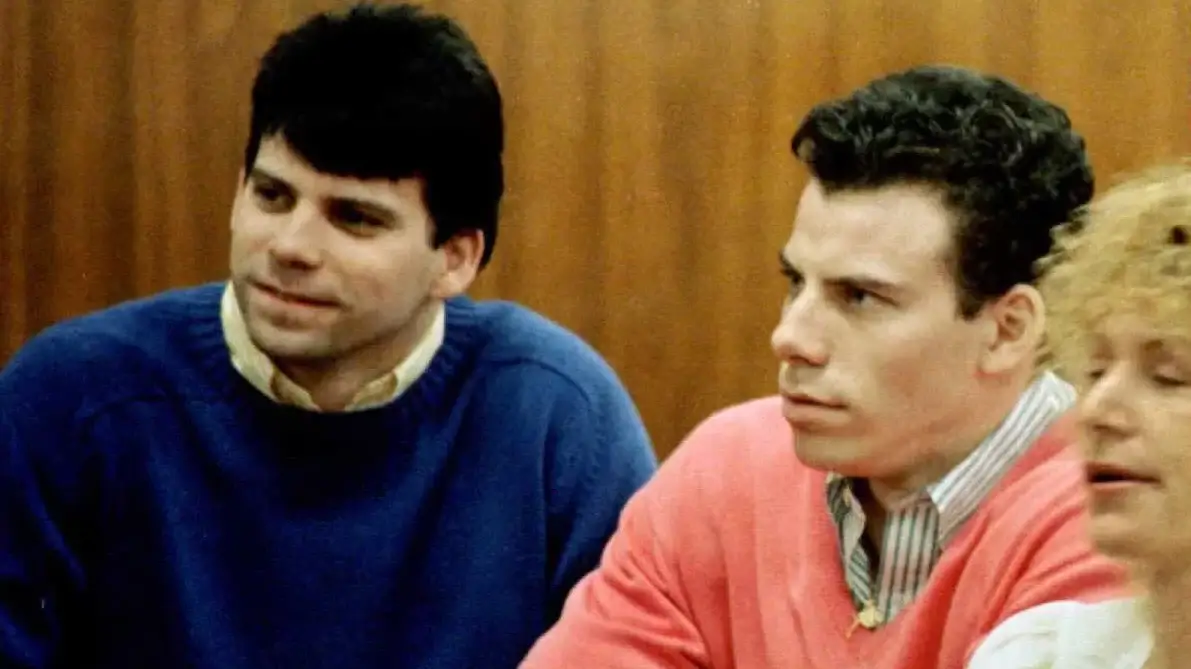
 | | Robert Chambers, known as the 'Preppie Killer,' pleaded guilty to killing 18-year-old Jennifer Levin in 1986. |
While dead bodies in public places were not entirely uncommon in a year when New York City notched nearly 1,600 homicides, the discovery of Jennifer Levin's body under a leafy elm tree behind the Metropolitan Museum of Art instantly drew attention.
Levin, an 18-year-old college bound prep school graduate, was beaten and strangled to death by wealthy 19-year-old college dropout Robert Chambers, later dubbed the Preppie Killer. Chambers claimed that the death occurred by accident during "rough sex." He eventually pleaded guilty to manslaughter after a jury deadlocked on a murder charge and he was sentenced to five-to-15 years in jail. He is scheduled to be released on Valentine's Day 2003.
Zodiac Shooter Strikes
Larry Parnham had been sleeping peacefully on a park bench just before dawn on June 21, 1990. Suddenly, falling to his hands and knees, he screamed. The 30-year-old homeless man had been shot once in the chest.
The shooting was the latest by the so-called Zodiac shooter, known for leaving astrological notes at the crime scenes. It was the first shooting to take place in Manhattan, along Literary Walk, a pastoral stretch of Central nestled in a grove of oak trees.
"This is someone who is searching for attention," said one investigator at the time. "Few crimes get more attention than ones that happen in Central Park."
Parnham survived and a massive manhunt in the summer of 1990 failed to yield the gunman.
Another Jogger Attack
Maria Isabel Monteiro Alves usually woke up around 4:30 a.m. so she could be out jogging in Central Park by 5:30. The rainy morning of Sept. 17, 1995, was no different and Alves, a 44-year-old immigrant from Brazil, set out in a yellow rain slicker and blue hat.
 | | Jogger Maria Alves was killed in the park in 1995. |
Shortly after 9:20 a.m. two other runners discovered Alves' battered body face down in a brook under a stone archway a few hundred yards from the infamous 1989 jogger attack. Her face was slashed and her skull was crushed. A number of homeless men were rounded up but two early leads fizzled. The case remains unsolved.
The Central Park Pianist
There was no identification found on the young woman's body and her face was too battered to recognize. As she lay in a coma, police struggled for two days to identify the victim of the brutal beating and sexual assault in Central Park. Finally, neighbors recognized a police reconstruction sketch of a talented 32-year-old pianist and music teacher.
The woman was attacked in broad daylight along a well-trafficked pedestrian path near a playground on the afternoon of June 4, 1996. John Royster, a 22-year-old drifter, confessed to attacking the pianist. He was later found guilty of attacking three other women and murdering a fourth and is currently serving life with the chance of parole.
Killing Field
Real estate broker Michael McMorrow liked to have a beer or two as he strolled home through Central Park after work. Sometimes he would stop to sit and drink with a few co-workers. On May 23, 1997, he spent the evening with Daphne Abdela and her boyfriend Christopher Vasquez, both 15.
 | | Wealthy teen Daphne Abdela pleaded guilty to first-degree manslaughter in the gruesome 1997 stabbing death of Michael McMorrow in Central Park. |
The innocent night of boozing turned brutal when Abdela told her boyfriend Vasquez to slash McMorrow's throat from ear to ear. The teenager then stabbed McMorrow 34 times, disemboweled the body and dumped the corpse into the lake near Strawberry Fields, the picturesque John Lennon memorial.
Abdela pleaded guilty to first-degree manslaughter and was sentenced to 3-to-10 years in prison. A jury acquitted Vasquez of second-degree murder but convicted him of first-degree manslaughter and a judge sentenced him to 3-to-10 years.
Murder Mystery
Matthew Herman was an accomplished athlete in high school but he had let himself go a bit. The 33-year-old Fortune magazine executive decided that walking in Central Park would be a great way to start getting back in shape.
About a week later his body was found face down in a patch of mud in a small open field a few hundred feet from a busy park entrance.
Investigators immediately suspected natural causes: there was no sign of a struggle or robbery and Herman had a medical history that included brain surgery and a three-week hospital stay just weeks before his death.
The day after the body was found the coroner ruled the death a homicide. Herman had been strangled, apparently in plain sight. There were no witnesses and very few leads and to this day the case remains unsolved.
Screams Unanswered
Residents across the street from a northwestern part of Central Park know as The Great Hill were awakened by a woman's screams early on the morning of July 22, 1999.
Hours later a passerby found the body of 39-year-old Susan Fuchs in a wooded area, her head bashed so severely that police could not immediately discern her hair color. She was stripped almost bare and had been sexually assaulted.
Fuchs, a former school teacher, suffered from severe mental illness and spent most of her adult life in and out of psychiatric wards and homeless shelters. She was homeless at the time of her death. Her killer, Orlando Rodriguez, 31, had a history of mental illness as well and was on parole at the time of the murder. He was convicted of first-degree murder and attempted rape and sentenced to life in prison earlier this year.
"Wilding" Returns
In scorching 90 degree heat, thousands took part in the celebration of the National Puerto Rican Day Parade on June 11, 2000. In the hours after the parade ended, the revelry turned ugly in and around the northeastern end of Central Park.
Reports of women being harassed and sexually assaulted began to pour in. Police began gathering local news footage and amateur video of the parade's chaotic aftermath. Amidst allegations that the 4,000 officers on duty at the parade failed to assist the victims, some 30 men were arrested in the rampage that included dousing nearly 50 women with water and fondling them.
Eighteen men were eventually convicted in the melee and the longest prison term handed down was five years.
|