


By Harriet Ryan Court TV
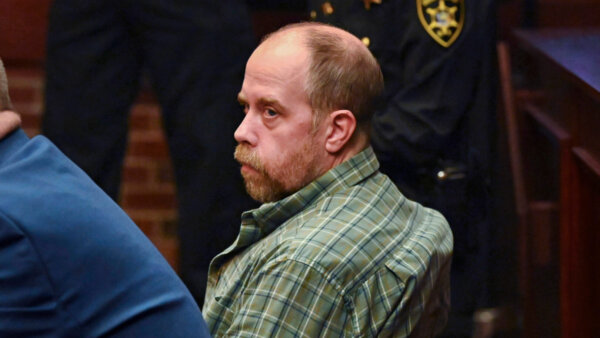
ANN ARBOR, Mich. Were it not for a spot of blood the size of a fingernail, Gary Leiterman's story would fall into a mildly interesting, but familiar category of cold case: The seemingly upstanding citizen linked to an old murder by new forensic testing. Leiterman, a 62-year-old retired nurse, was arrested last year for the 1969 shooting of Jane Mixer, a Michigan law student who went missing on her way home for spring break. Leiterman had no known connection to the victim, and in the 36 years since the crime, he had never crossed investigators' radar screens. But the state police detectives who arrested him had forensic evidence that seemed airtight: DNA on the victim's pantyhose perfectly matched Leiterman's genetic profile. Those who know him as a doting grandfather, school board member and Little League organizer were surprised by his arrest, but it seemed difficult to argue with scientists who said the particular strand of DNA occurred in only one in every 170 trillion individuals.
Leiterman's trial, which is now underway in state circuit court here, would likely have been a fairly straightforward proceeding if the smudges on Jane Mixer's pantyhose were the only evidence the lab turned up. But there was also a small drop of blood, scraped from Mixer's left hand almost four decades ago, and its analysis turned the case into a mystery so great even prosecutors say they can't fully solve it. DNA in the drop belongs to a violent killer, but one who could not possibly have committed the murder. His bloody clothing was being tested in the lab at the same time as the old evidence from the Mixer case. The finding has led to accusations of contamination at Michigan's chief crime lab and put the state police in the uncomfortable position of defending their scientist's lab work even as they acknowledge their investigators cannot account for the results. "We can't really explain it, but we're confident [contamination] did not happen in our environment," said Shannon Akans, a state police spokeswoman. Blood drop Mixer's body was found March 21, 1969, sprawled on her back in a cemetery outside Ann Arbor. Her pantyhose were pulled down, exposing her genitals, and she had been shot twice in the head. At least one detective on the scene noticed the drop of blood on her hand and during the autopsy, he flaked it off into an evidence envelope. "This was a singular spot all by itself. I didn't know what value it would be, but I took it," retired detective Don Bennett recalled on the witness stand last week. Using DNA to solve crimes was a development 20 years in the future, and the blood drop was simply stored at the police station with the pantyhose and other evidence. In 2002, cold case investigators sent several pieces of evidence, including the stockings and the blood drop, to the state police crime lab in Lansing, the largest and most state-of-the-art of the department's seven labs. Scientists there isolated a DNA profile in the blood drop and ran it through a database of felons, who under state law are required to give a DNA sample. To the initial joy of investigators, the scientists matched the blood to John Ruelas, a convicted murderer from Detroit who was already serving a life sentence for killing his mother. As detectives looked closer, they realized Ruelas could not be Mixer's assailant. He was 40 years old, making him just 4 years old at the time of the murder. Still, detectives were convinced the DNA results were significant. The killer must have had some contact with the preschooler, they reasoned. They interviewed Ruelas in jail and his relatives and pieced together a family tree. He had lived a nomadic and chaotic childhood with an abusive mother and her string of lovers. "We'd have to go ask for food at the Salvation Army or we'd have to go to the store to buy bread or to steal it," his half-sister, Ramona Delira, recalled in testimony Tuesday. When their mother wanted privacy to entertain men, she would force them to drink enough cold medicine to knock them unconscious. "I remember her giving us Vicks Formula 44," Delira said. "The men, I never saw their faces." As a child, Ruelas had nose bleeds, and on at least one occasion his mother drove him to the hospital. Detectives targeted his uncles and father as suspects, but in the end, none of them seemed to know Mixer or have a motive to kill her. Another break in the case At about the same time, the lab isolated DNA in stains on Mixer's stocking. The spots were not blood or semen, but could be saliva or sweat, according to lab tests. They ran the DNA profile though the felon database a year later and came up with the name Gary Earl Leiterman. His profile was in the database because he had pleaded guilty in 2002 to forging prescriptions, apparently as part of a pain killer addiction. Detectives investigated Leiterman's background and found that at the time of the murder, he was a 25-year-old pharmaceutical salesman living about half an hour from Mixer's dorm. He owned a .22-caliber gun, the same caliber that killed Mixer, and his roommate at the time remembered him collecting news articles about a string of murders of young women in the area. He also bragged to the same man that he had drugs that could render a woman unconscious or even kill her. Police arrested Leiterman soon after and charged him with murder. He faces a life sentence if convicted. Since his trial began July 12, both sides have focused on DNA and Ruelas. Steven Hiller, the deputy chief prosecutor in Washtenaw County, acknowledged in his opening statement that he could give jurors no answer for the presence of Ruelas' blood. It was a mystery "lost" in time, he told them in his opening statement. But, he said, "we also know that a four-and-a-half-year-old did not shoot Jane Mixer twice in the head, knot a stocking around her neck and drag her into the Denton Cemetery." Jeffrey Nye, the manager of the DNA lab, told jurors that he had personally investigated the testing of Mixer's evidence and concluded there was no possible way contamination could have occurred. Different scientists tested the items, using separate tools, separate work benches and in some cases separate labs. Ruelas' bloody clothing was tested a month before evidence from Mixer's case was removed from storage for analysis. At the time, he said, the lab was brand-new and had every possible safeguard against contamination, including a ventilation system that cleaned the air eight times an hour. "It was probably the best forensic laboratory in the country," he said. He said that while all the DNA found on the evidence from Ruelas' mother's murder either belonged to her or was a mixture of hers and a man's, the DNA from the blood drop was purely Ruelas. "To be perfectly honest, I'm not sure it's even feasible [to have contamination] when you look at the two different make-ups of the mixture," he said. Leiterman's lawyer, however, has told jurors that the thorough and ultimately fruitless investigation by police to find a link between Ruelas and Mixer indicates that there was contamination. He told jurors that the young boy's blood made every conclusion reached by the lab suspect. "We cannot just say there is something lost over time," Gary Gabry said. "Do we just blow off the lost boy theory and disregard John David Ruelas' blood? Or is contamination and the fact there was a problem in the lab more feasible to explain why his blood shows up?" Ultimately, jurors will have to decide that question. The panel could get the case by the end of the week. |