Updated May 24, 2002, 2:00 p.m. ET
 
Opening statements


STATE OF NEW YORK BRONX SUPREME COURT

---------------------------------------------

THE PEOPLE OF THE STATE OF NEW YORK

-against-

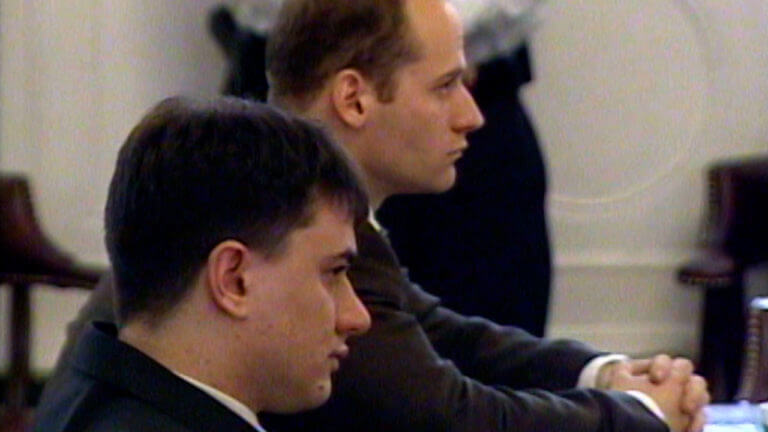
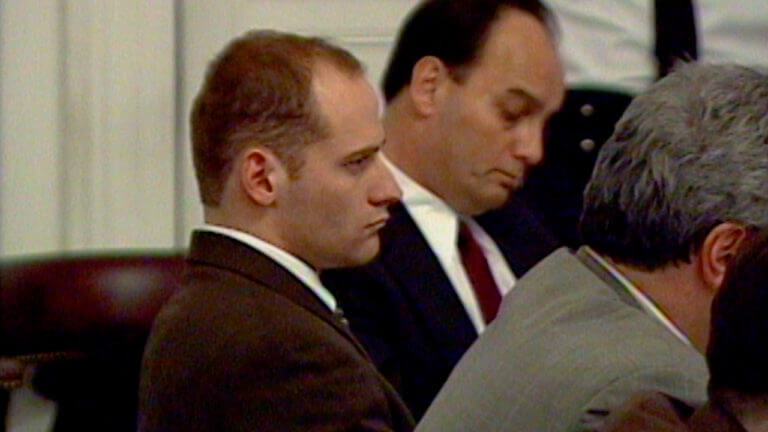
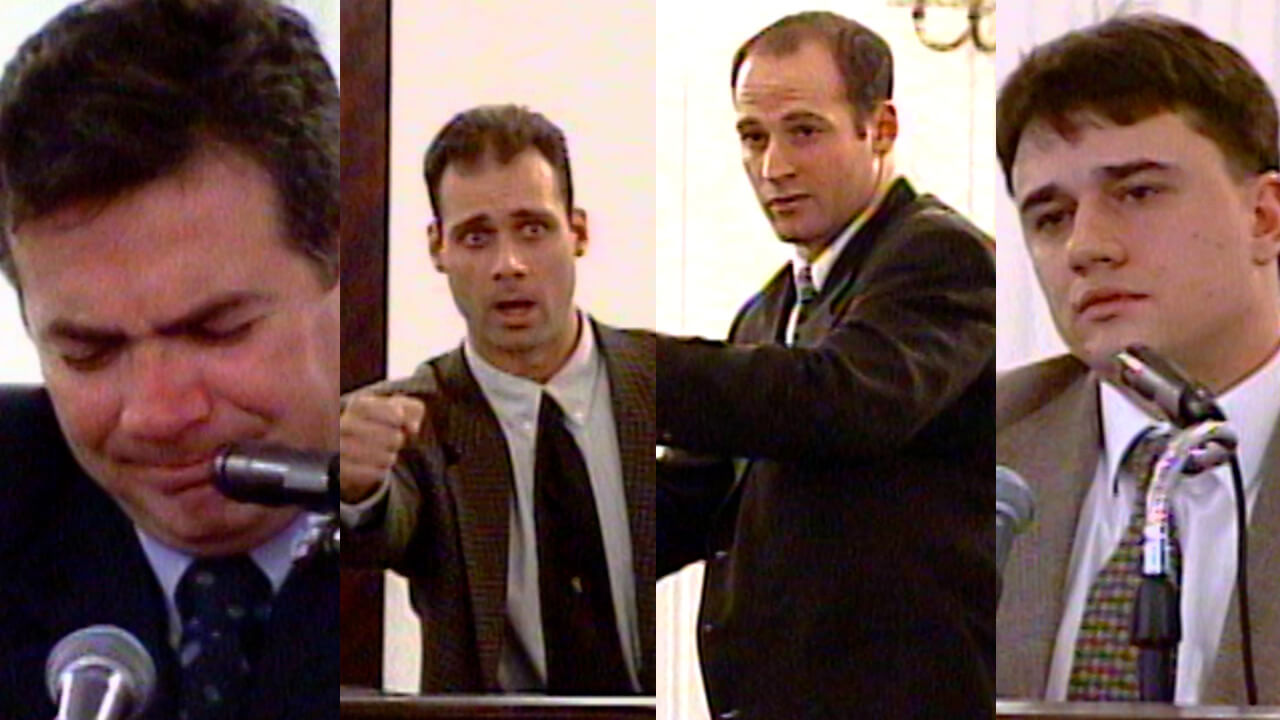
KENNETH BOSS, SEAN CARROLL, EDWARD McMELLON and RICHARD MURPHY,

Defendants.

--------------------------------------------

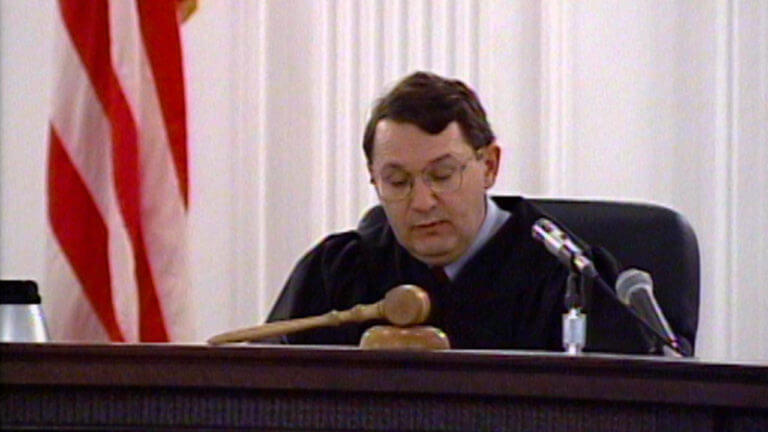
BEFORE: HON. JOSEPH C. TERESI

Justice of the Supreme Court.


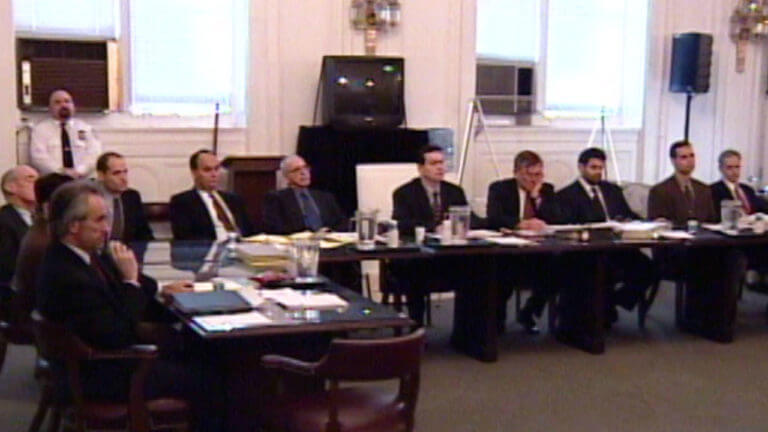
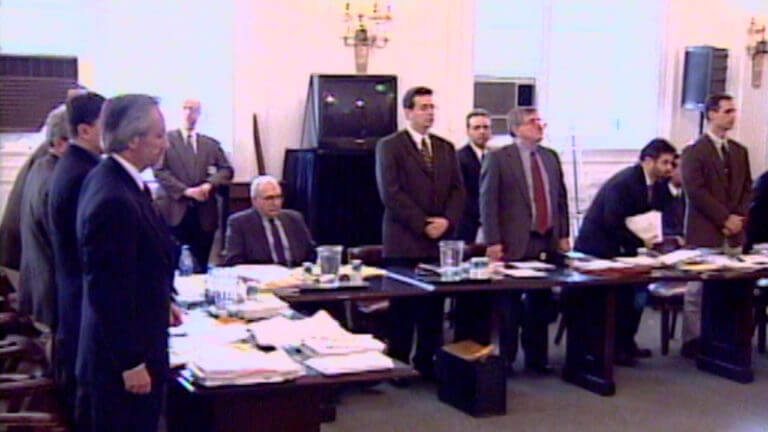
TRANSCRIPT OF PROCEEDINGS in the above-entitled matter held at the Albany County Courthouse, Albany, New York, commencing on February 2, 2000.

APPEARANCES:

For the People: HON. ROBERT T. JOHNSON

Bronx County District Attorney

198 East 161st Street Bronx, NY 10451

By ERIC WARNER, ESQ.

Senior Executive Assistant

District Attorney

-and-

DONALD LEVIN, ESQ.

PAUL ROSENFELD, ESQ.

Assistant District Attorneys.

APPEARANCES: (continuing)


For Defendants: PAPA, DEPAOLA & BROUNSTEIN, ESQS.

163-10 Northern Boulevard, Suite 301

Flushing, NY 11358

By STEVEN L. BROUNSTEIN, ESQ., of Counsel;


-and-

BEN HERZWEIG, ESQ.

20 Church Street

P.O. Box 110

Patchogue, NY 11772

Appearing on behalf of Defendant Boss.

JOHN D. PATTEN, ESQ.

30 Vesey Street, PH Suite

New York, NY 10007

-and-

BENNETT M. EPSTEIN, ESQ.

41 Madison Avenue

New York, NY 10010

Appearing on behalf of Defendant Carroll.

WORTH, LONGWORTH, BAMUNDO &

LONDON, LLP

111 John Street, Suite 640

New York, NY 10038

By STEPHEN C. WORTH, ESQ., of

Counsel;

Appearing on behalf of Defendant McMellon.

CULLETON & MARINACCIO, ESQS.

245 Main Street

White Plains, NY 10601

By JAMES J. CULLETON and MICHAEL A. MARINACCIO, ESQS., of Counsel;

Appearing on behalf of Defendant Murphy.


February 2, 2000 - a.m. session

People v. Boss, et al.

(The proceedings were convened in open court absent the jury at 9:15 a.m. as follows:)

MR. WORTH: Your Honor, we have one application before the jury --

THE COURT: Give me a chance to get unpacked here.

MR WORTH: Absolutely.

THE COURT: All right. Go ahead.

MR. WORTH: Your Honor, with the Court's permission, we have informed the District Attorney's Office that we would like to vary the order of our openings.

THE COURT: Okay. Do you have any objection to that?

MR. WARNER: No, sir.

MR. WORTH: Shall I give you the order?

THE COURT: Sure.

MR. WORTH: I will be going first on behalf

of the defendant McMell-on. Mr. Epstein will be going next on behalf of Mr. Carroll. Mr. Brounstein will be going next on behalf of Mr. Boss. And Mr. Cul'Leton will be going last on

behalf of Mr. Murphy.

THE COURT: Mr. Culleton seems to always get to go last.

MR. CULLETON: Thank you, Judge.

THE COURT: All right. I'm just waiting for the jury to be ready. Then they are going to signal me and we will bring them down.

Bring the jury in. Can everybody hear all right in the back of the courtroom? Okay. The spectators can remain seated while the jury comes in.

There is another podium over on the side there. If you want to use that, you are free to move that anyplace you wish. You don't have to use the one that's in front of the jury box. It's right behind you, Mr. Epstein.

MR. EPSTEIN: Thank you.

MR. WORTH: Thank you, your Honor.

THE COURT: And so that you know, the lawyers know, the microphones are along the jury box. There are no microphones at counsel table. The microphones at the witness and I think on the other side of the witness. on the face of the wood there, there is one. All right.

(Opening by Mr. Warner)


(The jury entered the courtroom.)

THE COURT: When you come in, ladies and gentlemen, you can just sit down. They are standing for you. Good morning.

People can go ahead and make their opening statement.

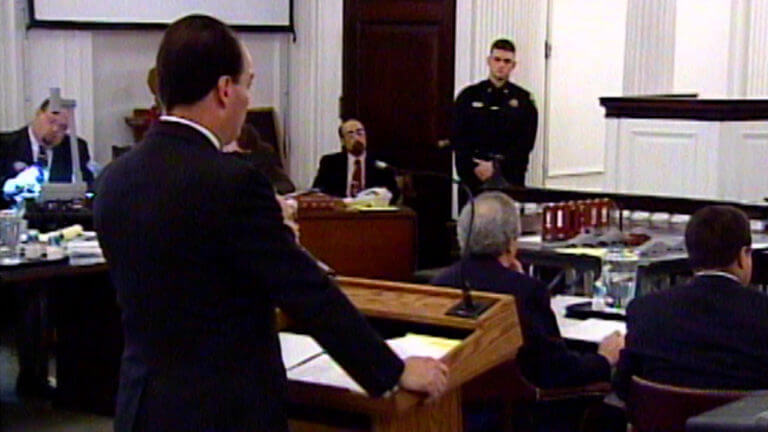
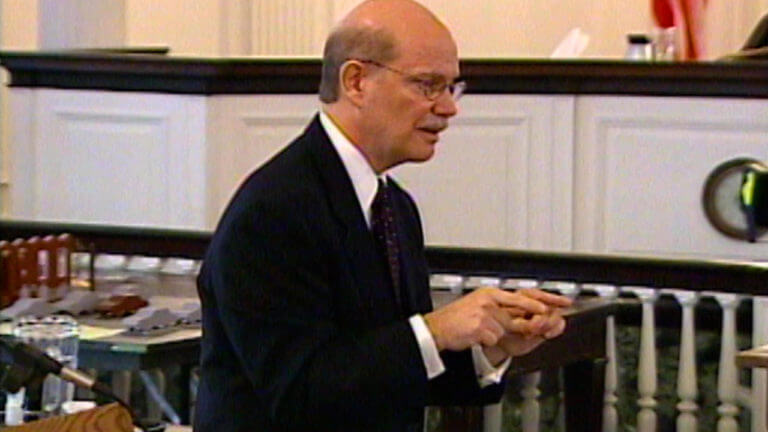
MR. WARNER: Thank you, Judge. Good morning, ladies and gentlemen of the jury, your Honor, defense counsel.

In the 1990s in Bronx County, in Albany County, or anywhere else a human being should have been able to stand in the vestibule of his own home and not be shot to death, especially when those doing the shooting are police officers sworn to protect innocent people.

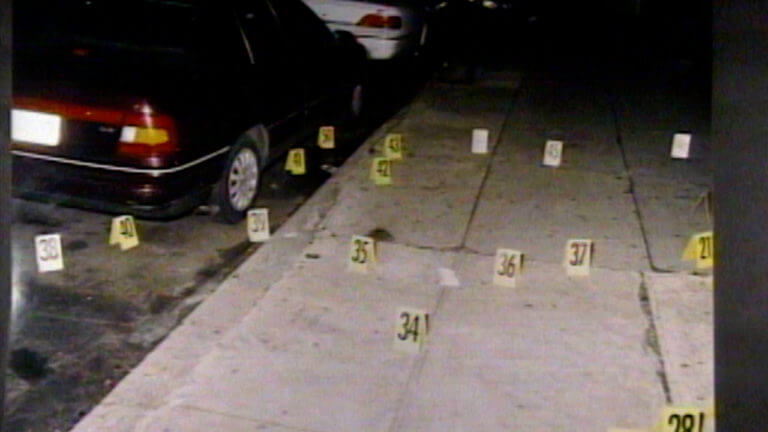
When these four defendants, Kenneth Boss, Sean Carroll, Edward McMellon, and Richard Murphy killed Ahmed Diallo in a hail of 41 bullets in the early morning hours of February 4, 1999, at his home at 1157 Wheeler Avenue in the Bronx, Amadou -he was also called Amadou -- was just 22 years old. He was five feet six inches tall and he weighed 150 pounds. Physically, he was not an imposing man.

And he lived a very simple life. Amadou lived with two roommates, apartment

1R, on the first floor of a two-story building at 1157 Wheeler. He worked 10- to 12-hour days, six days a week, sold videotapes and things like that from a table directly in front of a convenience store in lower Manhattan. He had the consent of the owner to do that.

On February 3, 1999, at about 10:30 p.m., just hours before he was killed, Amadou left the store. He took the subway and he arrived in the Bronx shortly before midnight. Shortly after that he arrived at his apartment, where he spoke with his roommate, one of his roommates, about their utility bill.

Less than an hour later, Amadou Diallo would be dead. Less than an hour later, he would be standing in the cold, clear night air in the vestibule of his home, unarmed, minding his own business and doing nothing wrong. These four defendants, Boss, Carroll, McMellon and Murphy, were in plainclothes and driving an unmarked car, would pull up outside of his building. They would get out of the car. They would not call out any commands, like, "Stop.'l "Police." "Don't move." They would then fire a total of 41 shots at Amadou Diallo, and Amadou Diallo would die.

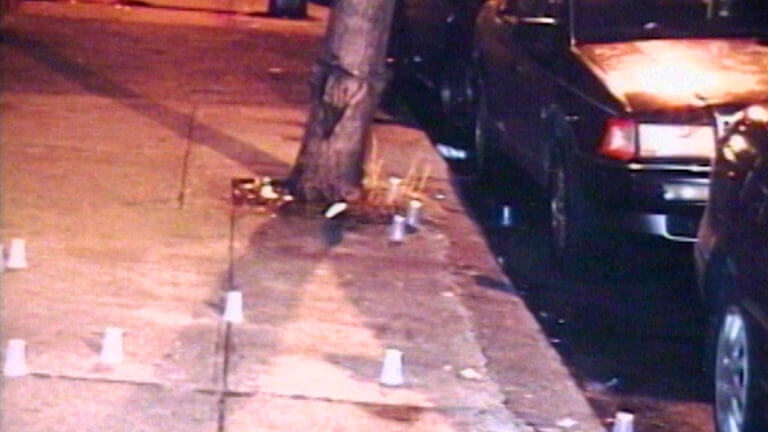
Now, we do not believe that these four defendants woke up that morning or came on duty that night with the intent to kill Amadou Diallo or anybody else. We don't say it. We don't believe it. But when they got out of the car, we will prove when they got out of the car in front of Amadou Diallo's home in the early morning of February 4 they made the conscious decision to shoot him. They made the conscious decision to shoot a man standing in a confined space of a vestibule that was not much bigger than an elevator. They made the conscious decision to shoot into the vestibule of an occupied apartment building where people lived in the early morning hours, when most of them would be home.

Let me just give you the sense of how this shooting took place. The evidence will show that on Wheeler Avenue at that time Richard Murphy pulled the trigger of his nine millimeter pistol four times. Kenneth Boss pulled the trigger of his nine millimeter pistol five times. Sean Carroll and Edward McMellon pulled the triggers of their nine millimeter

pistols 16 times each. The shots were fired at very close range from in front of the vestibule. And let us be absolutely clear. Each shot required a separate pull of the trigger.

One bullet went through Amadou Diallo's chest, his aorta, his left lung, his spine, and his spinal cord. Another bullet went through his spleen, his left kidney and his intestines. Three more bullets went through his left hip, causing perforations of his pelvis and his intestines. Another bullet went through the left side of his back, his spine, his spinal cord, his liver, and his right lung. Another bullet broke the bone in his right arm above the elbow. Another bullet fractured both bones in his left shin. Another bullet went through his thigh, exited his groin and grazed the scrotum. Another bullet went into his right leg, traveled upward and lodged behind his knee. Nine more bullets struck him from the torso to toe.

4L bullets were fired by these four defendants. 3.9 bullets struck Amadou Diallo. A number struck him while he was falling down or actually on the ground.

We will prove by the number of shots fired at very close range that this man, who was cornered and killed in the vestibule of his home, that these four defendants intended to kill him and, therefore, did kill him. We will also prove by the number of shots fired at this man at very close range into the vestibule of an occupied dwelling that. these four defendants acted recklessly and with depraved indifference to Amadou Diallo's life and the lives of the people who lived there. For that, they are guilty of murder and reckless endangerment.

Now, during jury selection you heard some talk about justification. When all of the evidence is in it will be clear to all of you beyond a reasonable doubt that these defendants were not justified in firing all of those shots that penetrated an occupied dwelling, let alone in killing Amadou Diallo, who was armed with nothing more than his wallet, his. beeper and his keys.

At the end of this case we will ask you to return a verdict based on the evidence. We ask you to find these defendants guilty of their intentional, depraved, reckless, unreasonable and unnecessary conduct that jeopardized the lives of Amadou Diallo's neighbors and destroyed Amadou Diallo's life.

THE COURT: Mr. Worth, the defense -- I will address each defendant separately

-- has no obligation to make an opening statement. Do you wish to make an opening statement?

MR. WORTH: Yes, I do. Thank you.

THE COURT: Go ahead.

MR. WORTH: Thank you, your Honor. Good morning. First, I want to thank you for your patience and attention so far. And we can see how seriously you have been taking this case. And certainly on behalf of my client, Ed McMellon, we appreciate it. And we appreciate the effort that you are going to put in as this case goes along. This case was thrust upon the City and County of Albany in general and on you people individually. And we appreciate you accepting the duty and responsibility to hear the case.

The other bit of housekeeping I wanted to say is you see we are changing the order that we have gone in before. And we may do that from time to time because what we are going to try to do, and I'm sure you can appreciate this, is not stand up and say the same things

to you all over, repeat the same things. So we are going to try to vary how we go, which works the best way, the most efficient of your time. So don't think anything more of it than that. Okay. That takes care of the housekeeping.

Well, I have to tell you. I'm disappointed.

And I'm disappointed because I have been waiting for a year to hear what the motive is for this shooting, for this charge of murder. And I have sat and I promise you I listened carefully, as carefully to Mr. Warner's opening as you did, and I guess I'm going to have to wait a little longer before I find out what the motive is and before you find out what the motive is for this shooting.

MR. WARNER: Objection.

THE COURT: Overruled.

MR. WORTH: Now, while the People don't have to prove motive to you, they only have to prove intent, you are entitled to find the absence of motive to be compelling.

THE COURT: Now you are getting into the law, counselor. Stay away from the law. Tell the jury what you believe the proof will be.

MR. WORTH: Well, Mr. Warner just said to you before, now, we don't believe that these officers got up that day to shoot Amadou Diallo and cause his death. And he's got to say that because that's common sense. But while we are on common sense, at the end of this case, as at the beginning of this case, you, as people with common sense, say to yourself f the following: There is really only one of three possibilities here.

The first possibility is just that, that these cops got up in the morning and decided that somebody needed to be killed and found somebody and killed them. That's one possibility, which even Mr. Warner rejects.

The second possibility is when they got to Wheeler Avenue that night they all went crazy at the same moment and for no good reason at all killed this man, each one of them individually firing their weapon for no good reason. It doesn't sound like much of a possibility, but we will see what the evidence is.

And the third possibility is the following: That these four officers arrived at Wheeler Avenue on the night of -February 4 and these four officers individually, individually, as officers with training, experience and knowledge and common sense, made the decision, the very important decision and a last-resort decision, that they had to fire their weapons to remove a threat. Those are really the only three possibilities in there.

So how did this case get here? If those are the only three possibilities, and we can agree as people of common sense that the first two are ridiculous, how did we get here? We got here because there was a furor created by people who have their own agendas to forward over this shooting and who wanted --

MR. WARNER: Objection.

THE COURT: Sustained. Confine your comments to what you believe the proof will be.

MR. WORTH: We believe the proof will show the total absence of any motive in this case other than self-defense, other than a well-founded fear that these officers had to fire to protect their lives and the lives of one another.

The reason we are here is it got out in this collective wisdom, as to motive and as to why these officers shot, that they were racists, that there is racism here and that's why they fired their weapons. And today, as we begin this case, that lie, that lie, begins to die. And when this case ends and the evidence is over, that lie, that racism nonsense, will be put to rest once and for all.

You are going to hear that these officers made the decision to fire their weapons based on their training, based on their experience, and based on the facts as they were then known to them, based on their training. This is not the first stop these officers ever made of anybody. And you will hear testimony to that. This isn't the first time they ever confronted a civilian and had an encounter with one.

You will hear evidence that they had hundreds of encounters, thousands of encounters with civilians and made between them hundreds of arrests. Recovering weapons. Edward McMellon six days before-e this wrestled with an individual and recovered a nine millimeter weapon from him. No shots were fired. These are not untrained officers. These are officers who were assigned to an elite unit that you had to volunteer for, that you had to be screened for, that you had to have the training and the experience to be in.

Police officers in the City of New York have six million encounters with civilians every year. There are something on the order of approximately 300 shootings. Things like this don't happen all the time, because it takes a confluence of events to all go wrong at one time and lead to a tragedy like this. And you will hear those confluence of events as we go through the testimony.

Experience. As I have said, these officers didn't start out as this was their first tour of duty. They did this work all the time and they did it well. You will hear that as to Edward McMellon, he had been in a shooting before -- he will tell you that -- when he fired one shot because under the circumstances of that occasion, that's what was required. And he is the one who in this case fired 16 shots.- And you will hear why, because the why is the facts that are then known, at the time of this shooting. And as long as you, as members of the jury, are willing to put yourself in that place and make a decision about their conduct based on the facts then known to them, we are confident of the result.

I'm not going to go into as much detail about the facts then known as some of my colleagues, and that's what I want to avoid the overlap on. But what we do know and I can tell you about Edward McMellon is that when the stop was made on Wheeler Avenue and the decision was made to get out of the car, identify themselves as police officers, in plainclothes but wearing shields around their neck, challenge or approach Mr. Diallo, which is how police officers are trained to make an inquiry of someone and what their job is to do, based on Mr. Diallo's actions that you will hear about in greater detail, that based on the actions of Mr. Diallo, as they approached him and as they identified themselves as police officers and as his conduct became more suspicious, not wrong, not improper, not evil, just suspicious under the-circumstances as then known to the police officers, that Ed McMellon made a decision to close the distance between himself and Mr. Diallo as quickly as possible, as he had done on many, many other occasions with other individuals that he had arrested or searched.

That unfortunately, as he got almost as close as I am to you in the front row and maybe even closer, of Mr. Diallo, Mr. Diallo produced what he believed to be a gun. And you will hear all of the circumstances under which and you will decide whether it was reasonable for Edward McMellon and the other officers to believe that Ahmed Diallo had a gun at that time.

And given now that critical go/no go moment that he was now in, he had one of two decisions. He was not close enough to grab him and subdue him, so he had one other option -- believe me, he was believing he was about to be fired on, reasonably believing he was about to be fired upon -- which is to take out the weapon that is issued to him by the New -York City Police Department, which carries a clip of 16 bullets, issued to him by the New York City Police Department, and use the weapon, in the way in which he had been trained by the New York City Police Department to defend himself and his brother officers who were with him. And that's what he did.

And you know that's the way this happened because the evidence -- we didn't make this up. These are the objective, scientific facts that you will see -- will show you that the two officers closest to Mr. Diallo fired the most. And that shows you, because they were in the greatest danger of being shot, that their reason for shooting, their motive for shooting, was because they felt themselves in immediate danger of being shot. And that was a reasonable belief on both of their parts at the time. That's what the evidence will show.

The evidence, scientific, undisputed, will show that the two officers further away shot less, both to protect their brother officers and because they were in less of a threat zone than the first officers up front. Reason, common sense, training and experience. That's what the evidence will show took place in this.

Yes, it turned out later that Mr. Diallo did not have a gun. That can happen. But it so rarely happens because it took a series of events to all go wrong at one time, much like in a plane crash or in a train wreck or in a power failure where human beings were involved, where not just one thing goes wrong or comes together but there is a convergence of things that all come together at one time that lead to a tragedy.

And there is no doubt that this is a tragedy. There is no doubt that losing a son who is 21 years old is a tragedy. There is no doubt that Ahmed Diallo did not deserve to die and that it is a tragedy that he is dead.

And there is also no doubt that that's a tragedy that's felt by everyone. You, his family, his friends, us, and the officers involved in this first and foremost. But when you sit as a jury in a criminal case, you are asked to decide the conduct of the person at the time that they did the conduct, not to sit as a referendum board or as a board to second-guess and Monday morning quarterback. And that's why we talked about-that so much during the course of this case.

Just one other aspect I want to talk to you about, and that's this indictment. This indictment charges alternative theories; that they intentionally killed Ahmed Diallo, meaning that they meant to fire their weapons and kill him, unjustifiably, without justification, the right to self-defense, or in the alternative that they, with depraved indifference to human life, recklessly caused his death, something I have never understood as a theory but the prosecution is allowed to plead in the alternative; if you don't believe that, you can believe this.

And then finally a charge of reckless endangerment, which I suggest to you, ladies and gentlemen, was thrown in to grab a bone if nothing else can be grabbed out of this indictment or out of this incident, because they recklessly fired into a building. And the answer to that is if a police officer has the right to fire, he has the right to fire. And, frankly, in the City of New York, being the populated area that it is, if you fire a weapon somebody, somewhere, is going to be behind where you are shooting at. So it is a stupid and inappropriate and improper charge, but nonetheless it is here. But you will have the right to rule on that and render a verdict as to that charge. And I will ask you at the end of this case to find that neither count of murder or certainly this count has been proved at all.

At the end of this case, ladies and gentlemen, you are going to find that all

the evidence presented in this case is our evidence. The witnesses that are called by the People in support of their case would be called by us if they didn't call them. All of the evidence in this case, primarily scientific, and you will-be able to rely on that, will lead you to know with a feeling beyond a reasonable doubt that these officers were justified in their shooting. Thank you.

THE COURT: Mr. Epstein, you have no obligation to make an opening on behalf of the defendant Carroll. Do you wish to do so?

MR. EPSTEIN: Yes, your Honor. Thank you.

THE COURT: Go ahead.

MR. EPSTEIN: Good morning, ladies and gentlemen. May it please the Court, co-counsel, members of the prosecution.

I have to confess that I'm a little nervous. It's not the camera. The cameras are here today and gone tomorrow. It is you 16 people or 12 of you who will be jurors that are really the only audience that matters. And you have my client, Sean Carroll's, fate in your hands. So I hope you will forgive me if I stand at the podium

and sometimes if I appear to be reading from notes, I probably will be, because I have an awful lot to tell you and I don't want to have to leave anything out.

Ladies and gentlemen, this is a case about five good men. One of them was named Ahmed Diallo. The other four are named Sean Carroll, Kenneth Boss, Edward McMellon, and Richard Murphy. My name is Bennett Epstein. I'm co-counsel for Sean Carroll, together with my colleague, John Patten, who is seated next to Mr. Carroll, who is right behind me.

Ladies and gentlemen, I listened to the prosecutor's opening statement and I thought to myself, and as I have thought to myself since I first heard that this indictment existed, that what they are trying to do, the prosecution, is to take a tragic accident and find a way to charge it as a crime, to take an accident and make it a murder. It is not that simple. The prosecutor in doing so has left out a lot of important details.

They have lost sight of the fact that in certain ways this accident was inevitable. I'm not talking about fate, but I am talking about destiny. I am talking about conditions that would make this kind of accident destined to happen and that would take good officers like Boss, Carroll and McMellon and Murphy and put them in a no-win situation in a dimly lit vestibule.

The facts will show, ladies and gentlemen, that four good officers are being prosecuted for something that happened while doing what we, the people, train them to do, with the weapons that we, the people, gave them, going where we, the people, wanted them and expected them to go. For, members of the jury, the proof in this case is that these four officers were sent into the breach by us. Ladies and gentlemen, we are going to try to put you in the shoes of those four officers, of these four officers, so that you can understand that situation.

Members of the jury, you are going to hear about crime in the south Bronx, the Soundview section of the Bronx, one of the most dangerous neighborhoods in New York City. You are going to hear about robberies and rapes and drug dealing and a lot about illegal guns. You are going to hear about police officers shot and killed, including an

officer named Kevin Gillespie, a member of the Street Crime Unit whose locker was kept as kind of a monument about three lockers away from Sean Carroll's, and an officer named Stephen McDonald, who is now a paraplegic.

You are going to hear how police officers like Sean Carroll are trained to take guns off the street in order to keep them out of the hands of criminals who prey on the citizens of Bronx County. And that means, ladies and gentlemen, those officers have to put themselves in harm's way to confront armed criminals. That means that they are trained to focus on certain signs, including a suspect's hand and body movements. That means that they are trained to try to close the gap as quickly as possible in order to attempt to seize the gun off of a real suspect, a live criminal.

But you will also learn, ladies and gentlemen, that asking them to take such risks means that if they believe, God forbid, that they are about-to be fired upon, they are trained that they don't have to wait for the glint of steel, because then it is too late and then they wind up like Kevin Gillespie and then they wind up like Stephen McDonald.

Members of the jury, you are going to hear about how the danger to police officers from the number of illegal guns and automatic weapons that were getting into the hands of criminals caused the NYPD just a couple of years ago to switch from the standard .38 revolver, six-shot police .38 special, that New York City police officers used to carry and to now require that the officers carry nine millimeter semi-automatic pistols with 16 shots in the magazine and the first trigger pull being a conventional trigger pull and all subsequent trigger pulls being a hair trigger pull, and to further require that the ammunition that they carry be known as pointed full-metal jacket ammunition, as opposed to the other kind of ammunition, which is called hollow point, hollow-point bullets.

It was determined by the NYPD that the full-metal jacket ammunition went more smoothly through the gun mechanism of these new nine millimeter automatics. But you will also hear, members of the jury, that this was extremely controversial because the entire 16-shot magazine can be fired by the average officer in less than four seconds. And, furthermore,

that the full-metal jacket ammunition tends to go through the body of someone who is shot, which leaves him standing as a threat to the officer rather than stopping the threat by bringing down the suspect.

This ammunition was so controversial that after this case the police department switched the ammunition, took away the full-metal jacket -- took away the pointed full-metal jacket. And, ladies and gentlemen, the experts predicted, and you really don't have to be an expert to understand that a faster gun, with more bullets and less stopping power, equals more shots. A lot more shots are destined to be fired in certain situations.

Ladies and gentlemen, you are going to hear in this case that a unit known as the Street-Crime Unit of the New York City Police Department was formed in order to get the illegal guns away from the armed criminals, particularly in places like Soundview, the 43 Precinct, where 1147 Wheeler Avenue is located. And you are going to hear how police officers like Sean Carroll were trained by the NYPD and armed by the NYPD and given the most dangerous assignment imaginable. They were sent in to protect the poorer neighborhoods, which turn out to be the high-crime neighborhoods, by taking guns off the street. And they were taught that the gun that they took off the street today could not be used against a citizen or a police officer tomorrow.

And you will hear, ladies and gentlemen, how these officers of the Street Crime Unit and these four officers sitting in the courtroom today believed in what they were doing and thought that it was noble and thought that it was brave. And it was. And you will hear how on a regular basis these four reasonable, good officers disarmed people, armed criminals in Bronx County, risking their lives for the citizens of places like Soundview.

Members of the jury, you are going to hear from Officer Sean Carroll. And you are going to hear about Officer Sean Carroll, and all the evidence w-ill show you that Sean Carroll is a good, decent, reasonable, honorable police officer. He is the kind of dedicated officer that you would be proud of if he were your own son or brother or if

he were a member of your community.

Let me tell you a little bit about what you will learn about him. Sean is 36 years old. He is married for 14 years. He has two children, a daughter 11 and a son seven. He is the oldest of six children. He has been working since the age of 14 to support his family. He started working as a busboy. He attended SUNY College of Farmingdale. He studied aeronautics. He worked two jobs, one as a dispatcher at a small airport and the other as a waiter at night, and eventually he joined the Naval Reserve and seven years ago joined the NYPD.

You will learn that in approximately 14 months in plainclothes patrol duty in the Street Crime Unit, Sean, in addition to numerous felony arrests for other crimes, took or was present and helped to take with his partners more than 30 guns off the street, sometimes actually wrestling the gun out of the hands of an armed criminal. You will learn that often that gun was a small black automatic, the weapon of choice in Bronx County.

And you will learn that in all that time that he was a police officer and a member of the Street Crime Unit prior to February 4, 1999, Sean

Carroll fired his gun exactly once, when he was shot at and, thank God, not shot, but shot at eight times from a rooftop and returned the fire briefly and missed, incidentally.

Members of the jury, this is what the evidence will show as the background against which this case must be judged. And the evidence will further show, ladies and gentlemen, that the case that you Are being asked to reflect upon in the warmth and safety and splendor of this courtroom took place in just a few short seconds, in the middle of the night, in the middle of the winter, in a dimly lit vestibule, in a dangerous area.

Members of the jury, the evidence will show that these police officers honestly and reasonably believed that they were confronting an armed criminal in the vestibule that night. They didn't know and they had no reason to know that they were confronting Ahmed Diallo, peddler. And all the hindsight and all the Monday morning quarterbacking in the world is no substitute for being in the shoes of those four police officers.

Now, ladies and gentlemen, you will hear some evidence about Ahmed Diallo. Now, Amadou Diallo, I'm sure, was loved and I'm sure he was a terrific son. And I'm sure that his parents miss him and that they had suffered greatly. I'm sure that to them he was a saint. But, ladies and gentlemen, the evidence will show that he was a saint who felt compelled, for reasons best known to him but that we hope to go into, to avoid the police. And that reaction caused a chain reaction that caused this tragic event to happen.

Ladies and gentlemen, we are going to prove to you what it was like to be in Sean Carroll's shoes that February night shortly before 1 o'clock in the morning. And we are also going to try to prove to you what was running through Sean Carroll's mind before, during, and after that tragic event.

First, what was running through his mind before, and I have given you a little bit of background, but I want to tell you a couple specifics. Sean had some familiarity with that area of the Bronx. He knew, for instance, that the next block over from Wheeler Avenue was Elder Avenue, a street that was so rife with drug dealing that the police department had to close it off for a year with barricades on either side of the block in order to close down the drug market and keep the citizens in that area at peace. And Sean knew that the drug dealers on Elder Avenue had felt the pressure of the police enforcement and had filtered their operations into the surrounding blocks.

And Sean was also familiar with and he carried with him when he went out on patrol police department bulletins about patterns of crime in the area, one of which was a serial rapist reported many times to be armed with a small black gun who was wanted for having raped 52 women, often African-American women who were jumped late at night as they walked home in the 43 Precinct where 1147 Wheeler Avenue lies and also one precinct over, in the 47 Precinct. And before Sean went out on patrol with his partners that night, he was also briefed about a series of armed robberies in the same area.

Members of the jury, the evidence will show that a few hours earlier, while on that same patrol but before the tragic event, prior to arriving in the vicinity of 1147 Wheeler Sean and his fellow officers stopped the person who they believed was a

suspect in a homicide. They required him to identify himself, which he did. It turned out they had the wrong person. They apologized to him and they walked away.

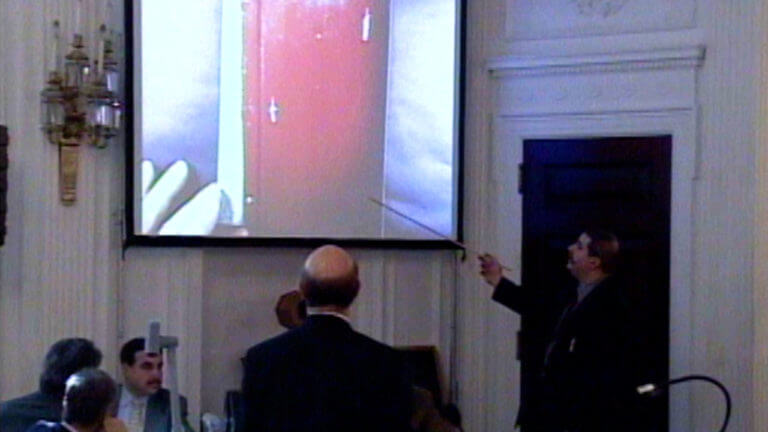
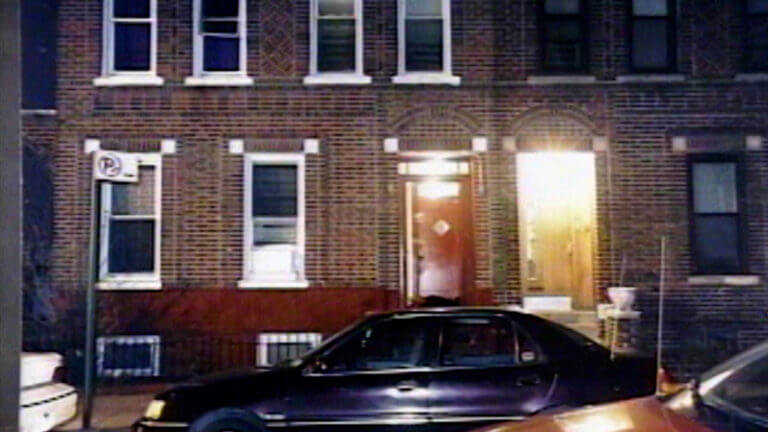
And then eventually there came a time that they turned down Wheeler Avenue. And the evidence will show that 1157 Wheeler is a walk-up building, talking about the place where this occurred, is a walk-up building with the stoop out front that has five steps going up, they are irregular steps, and a front door with a glass panel that opens to the right and then a dimly lit vestibule and then an inner door painted dark red with a small diamond-shaped window leading into the building itself, into the inner stairway. And on either side of the stoop there are two platforms, one higher as you look into the building on the left and one lower as you look into the building on the right.

And the evidence will show that Mr. Diallo attracted-the suspicion not only of the officers but we believe several other people on the block because he was alternately standing out on one of the platforms and peering down the street towards Westchester Avenue and then ducking back into the building, standing on the platform peering down towards Westchester and ducking back into the building. And as the officers passed, he peaked out and looked back again. And Sean Carroll spotted this. And so began the chain reaction.

The officers identified themselves with their shields out, as they are trained to do and as they do in every situation. Mr. Diallo doesn't listen to their clear orders to stop, which they are trained to give. He runs back into the vestibule. More orders to stop and to show his hands. "Show us your hands," something the officers are trained to do for their own protection.

Again, Mr. Diallo does not comply. The officers pursue him with weapons drawn, as they are trained to do. He turns his back to them and runs for the inner door and tries to enter the building. He reaches into his Docket. He turns quickly towards the officers and he extends his hand forward with a black object.

Members of the jury, we believe that the evidence will show that had Mr. Diallo stopped to answer the officer's questions, like the fellow that they had an encounter with about an hour before, the whole thing would have ended peaceably moments later and we wouldn't be here.

Now, ladies and gentlemen, we are going to prove to you what was going through Sean Carroll's mind as he sees this reaction from Mr. Diallo and as he sees the series of events unfold and the black object coming out of Mr. Diallo's pocket toward him. His training is going through his mind. His experience is going through his mind. He is full of fear. And we will prove to you, ladies and gentlemen, exactly what was going on in his mind, because he verbalized it. When the black object came out of Mr. Diallo's pocket in that dimly lit vestibule, he yelled, "Gun!"

Members of the jury, we are going to be spending the next several weeks analyzing what took place in the ensuing few seconds, because that's how long it took. The officers didn't stand there for several minutes firing 41 shots into Mr. Diallo or at Mr. Diallo. Several seconds is all that transpired. Each of the officers fired his gun because he believed that he and his brother officers were in danger.

Mr. Diallo had taken the officers into the no man's land that's every police officer's nightmare. The evidence will show that Sean Carroll fired 16 shots, scrambling for cover because he believed he would never see his wife and children again. The evidence will show that altogether 41 shots were fired in a total of a few seconds from the officers' 16-shot nine millimeter weapons that were all capable of being emptied in less than four seconds.

And, ladies and gentlemen, we believe that the fact that 41 shots were fired indicates the fear that the officers had of being shot. And the physical evidence from the scene will confirm for you that the officers fired defensively.

Ladies and gentlemen, if you could slow down that few seconds frame by frame and view it through Sean Carroll's eyes, here is some of what you would see. You would see on the periphery one of your brother officers falling backwards out of that vestibule and down on his fanny as if he had been shot from inside that vestibule. He was scrambling for cover. And you would see what turned out to be the reflection of your own muzzle shots and you would hear what turned out to be the ricochet of your own bullets, but you didn't know it at the time, coming back at you. And you would hear the roar of your own gun echoing back at you as if somebody from inside the vestibule were firing at you.

And you would see and realize that in the horror of those few terrible seconds more than half the shots that these officers fired missed, proving the tension that they were under, proving the fear that they were under. And you will also hear that because of this full-metal jacket pointed ammunition, 16 out of the 19 shots that hit Mr. Diallo passed through nonvisceral areas of the body, passed clean through. And what the experts had predicted would happen had come true. He remained standing, with a black object in his pocket, until that fatal final moment.

Members of the jury, the evidence will show that the officers didn't have the luxury of reflection that we have now. They didn't know that Mr. Diallo was unarmed and that he had pulled out his wallet. He didn't say to them, "Guys, I live

here." It would have ended right there peaceably. He didn't keep his hands in view. It would have ended right there peaceably. If only he did. if only he did, we wouldn't be here today.

Ladies and gentlemen, the evidence will show that Sean Carroll ran into that vestibule after he believed that the threat had ended. He ran over to Mr. Diallo and attempted to give him CPR and he pleaded with him, "Don't die. Please, don't die." And that when the superior officers came onto the scene, Sean Carroll was so traumatized and remained so traumatized to this day. This is the person who the prosecution charges intended to kill Mr. Diallo and had a depraved indifference to human life.

Ladies and gentlemen, Mr. Diallo clearly deserved a much better fate. And the evidence will show that Sean Carroll deserves a much better fate than being charged with a crime for being put into a situation that is every good cop's nightmare and is now his-. And I hope that you will listen to the evidence and end his nightmare. Thank you very much.

THE COURT: Mr. Brounstein, you have no

obligation to make an opening statement on behalf of the defendant Boss. Do you wish to make an opening statement?

MR. BROUNSTEIN: Yes, sir, I do.

THE COURT: Go ahead.

MR. BROUNSTEIN: Thank you, your Honor. Your Honor, members of the Bronx DA's Office, my esteemed counsel, Richard Murphy, Ed McMellon, Sean Carroll, Ken Boss, Madam Forelady, ladies and gentlemen of the jury, good morning.

Much of what I have to say to you, and I have thought long and hard about this, comes from here, not from here (indicating). But I tell you now what you will find and what you will determine is that on February 4, 1999, at 1157 Wheeler Avenue in the Bronx no crime was committed. Amadou Diallo died as a result of four police officers' legally justified conduct that occurred while patrolling the dangerous streets of the Bronx.

You will hear that Ken Boss, the young man sitting right there, fired his weapon five times. He did so based upon reasons and factors that will not be proved to be unjustified beyond a reasonable doubt.

A mistake happened. A mistake caused by fear, fear of losing your life, fear that your colleagues had been shot, fear of having to make a decision in a split second, a split second, whether to shoot in defense of yourself and your colleagues or take the risk of being shot yourself. This is a tragedy, not a crime. And you will hear that.

Why are we here? We are here because there was an indictment. But there are other reasons which I will not go into. They play no part in this courtroom. The only thing that matters is what you hear here, and it is ultimately your decision.

The defense is a simple one; that Ken Boss and his colleagues believed that they faced in a split second a deadly threat. What I'm going to ask you to do -- and I tell you now I'm breaking. one of the rules, one of the rules in law school. One of the rules they always tell you when you are a young lawyer is never commit to say that your client is-going to testify. I tell you right now as we stand here you are going to hear from Ken Boss. He will testify.

And what I will ask you to do, to try and do, is to try and step inside his shoes

and try and view what he viewed and hear what he heard that night. When you do that, you will find in your heart and in your head that his conduct was justified. And when I say it was justified, it is important for me to impart to you that our position is that Mr. Diallo broke no laws. He did nothing wrong that night.

You can find his actions justified, or actually really better said, as the District Attorney cannot prove justification beyond a reasonable doubt. And I tell you now, it's important again for me to impart this to you, that in no way belittles or denigrates the precious life of this man. It does not. It just simply says that these officers acted reasonably based upon what they saw.

I tell you what is important, and I say this from my heart, is that all human life unquestionably is precious and important. Mr. Diallo's life is not just important to himself. He had a family who loved him, friends. He was trying to get on and make a living just like the rest of US. But I also tell you that these four guys, Ken Boss, his life is also precious and important. And the members of society, the people who live in the Bronx, their lives are important.

In furtherance of that, we as a society, because there is violence, because it is far from a perfect world, far from a perfect world, we hire people, we ask people to protect us, to protect our lives, to try to make it safe for us to live and raise our families. That's what these four young guys do. They protect the citizens of the City of New York. But they are also entitled to when they believe, reasonable believe, they face a threat, they are entitled to protect themselves and their own lives, as well.

We refer to them as police officers, and some people will call them cops. But just like us, they wake up in the morning. They put their-pants on one leg at a time. They say goodbye to their parents, their families, their kids. And they go to work. Their families love them, care for them. You will hear that. Hopefully, you will feel that. More than see, you will feel.

There is a major difference between those guys and the rest of us, at least to me, is that when I get dressed in the morning I put on my tie, do the best I can with --

MR. WARNER: Objection. No.

MR. BROUNSTEIN: They put on a bulletproof vest, a bulletproof vest that's part of their work. And unlike the rest of us, for the most part, God willing, we're coming home. We don't face a threat of violence like they do every single day.

What happened that night? Why did that tragedy occur? What you won't hear is eyewitnesses. Mr. Warner's case, I suggest to you, will be based upon speculation and guesswork. But in a sense you will hear it because we are going to show it to you.

When I said Ken Boss wants to testify, you will hear why. And when I say wants to, he does want to and he does need to, because he needs, he needs, to tell you, to tell you and to tell the world what happened that night and why he took the action he took. And he will tell you.

Mr. Epstein made a comment about time. And the anomaly, the puzzle of all this, is that we are going to sit here for a number of weeks. We are going to hear expert witnesses. We will hear other witnesses. We are going to analyze an event that took less than ten seconds. We are going to pick it apart and we are going to look at it. And you will realize that this incident happened in a very, very brief moment in time and these officers had to make a very, very difficult decision in a very brief moment in time.

Ken Boss is assigned to the Street Crime Unit. He was assigned to the Street Crime Unit. He works at night. He works from 9:30 in the morning -- at night, I'm sorry, to 6:00 a.m. His job in the New York City Police Department is one of the most dangerous jobs in the police department. He is called upon to stop the violent criminals before they commit violence, get their guns and arrest them before they use them against other people.

I'm not talking about people who lawfully carry guns or store owners or cab drivers. I'm talking about violent criminals who have used their weapons indiscriminately, without compunction, against any of us. And that's a dangerous job. And that's his overriding mission of what he does, is to get them before they hurt others. Go into those neighborhoods and stop the violence. It is a terrible thing that we have to have people do that, but it is a necessity in the Bronx.

He had other missions that night. When sent into a neighborhood and told to get the violent criminals, they were also told to look out that night for someone who was performing gunpoint robberies, cab drivers, taking that gun, sticking it to some poor cab driver's head and robbing and taking his money. They also were looking after someone, and Mr. Epstein alluded to this, involved in a homicide, a murder. But they were also looking for somebody else, someone who committed 52, 52, gunpoint rapes, rapes of mothers, friends, wives and daughters who live in these neighborhoods. And that's just part of what he was looking for that night. That's a day's work-in the life of Ken Boss.

At that time he worked in Street Crime in the Bronx for several months. He wasn't familiar with -- you will hear this -- all the streets and all the names in this area. He was in a car. He was driving. Next to him in the front passenger's seat was his colleague, Sean Carroll. In the rear

passenger's seat was Ed McMellon. Seated behind Ken was Richard Murphy.

You will hear they turned down Wheeler Avenue, which at night is quiet but on this block people are not out at night walking the street there because it is dangerous. And they drive past 1157 Wheeler Avenue. He is then alerted by Officer Carroll to back up. They just wanted to go and talk to someone.

You will hear that Carroll and McMellon left the car and in a split second he hears shouting and there is a gunfire. And Ken jumps out of the car. He sees Ed McMellon down on his back. He sees muzzle flashes. He hears gunshots. He sees Sean Carroll running out of the vestibule, shooting as if he's in a firefight, scared for his life.

Ken immediately runs to Ed McMellon to give him aid. Looks into the vestibule. A split second, in a split second you will hear that he sees a man with his right arm out and what he believes to be a gun, a black object in his right hand. Looks at him and says, "oh, my God. I'm dead." He fires five times. He believes he only fires twice. He steps out of the way. Again he is looking for Ed. He thinks Ed is down. He thinks Ed is shot.

He says "stop" because he wants to get Ed out of the way. When he says "stop," the shooting stops. He and Sean Carroll cautiously go into this vestibule. The vestibule -- Mr. Warner spoke about this. It's seven feet deep and five feet wide. The only way you can see inside it is basically from straight on. Very hard to see in from an angle.

He runs in cautiously and he sees a man down and Ken says -- man slumped up against the corner. He sees the wallet and he says, "Where's the gun?" He realizes that there is a wallet there. He grabs his radio. Sean goes down to help this man. Ken doesn't even know what block he is on., He runs down and gets on his radio. You will hear this. And in a frantic voice, a scared voice, he says, "Get me a bus and a boss," which means send an ambulance and send a sergeant, a superior officer. This is all within seconds. And they arrive.

And Ken realizes that Mr. Diallo did not have a gun, that what he saw

and heard was not a gun. It's a terrible tragedy. An awful thing. But his conduct was based upon palatable real factors, what he observed of Mr. Diallo and his fellow officers.

His conduct will never prove to be unjustified. The District Attorney will not meet that burden. This is a tragedy, not a crime. No crime was committed. At the end of this case I will stand before you again and ask you to return a verdict of not guilty. I thank you all very much for listening to me.

THE COURT: Mr. Culleton, the defendant has no obligation to make an opening statement. Do you wish to make an opening statement on behalf of the defendant Murphy?

MR. CULLETON: I do, your Honor.

THE COURT: Go ahead.

MR. CULLETON: Thank you very much. May it please the Court, counsel, Mr. Murphy, Mr. Boss, Mr. Carrol-1, Mr. McMellon, Madam Forelady, ladies and gentlemen of the jury.

What happened on February 4, 1999, at about 12:40 a.m. in the vestibule of 1157 wheeler Avenue in Bronx County, it was a terrible, terrible tragedy. my heart goes out to the Diallo family, as does my client's heart. And I am sure that all of you feel the same way. But as we begin this trial, I want to remind you of the oath that you took when you were sworn in as jurors and when you promised me and my client that you would put aside your natural feelings of sympathy that you should have in this case and concern yourself solely with the facts and judge this case based upon the evidence that comes out in this courtroom.

Now, you just listened to Mr. Warner's opening statement. And his whole opening statement was about sympathy. And, as I said, this was a tragedy. But you will learn from the evidence in this case that no crime was committed on February 4, 1999. There are no villains seated in this courtroom. All you see here are victims. Four young men, very frightened, who would desperately like to turn back the hands of time but they just can't.

I represent one of those men, Richard Murphy. You are going to learn about Richard Murphy during the course of this trial, a 26-year-old man on February 3, he's married, had a little son, Robert Moses, just two months old at the time. He joined the New York City Police Department in 1994 full of ideals, determined to make a difference. Day after day he placed his life on the line, taking guns from the street, trying to help people. Trying to make their quality of life better.

You will learn during the course of this trial that not one time, not once during those five years on the force did Richard Murphy ever fire his weapon. You will learn during those five years on the police force and in making over 80 arrests, not once did a civilian file a complaint against him. He was a good cop. He is a good cop. He is a fine young man. He was determined to make a difference.

On February 3, 1999, you will learn during this trial that he was a member of the Street Crime Unit and on that day he reported for duty. He was going to be working a 9:30 p.m. to 6:00 a.m. tour. He, along-with the other officers, were assigned to the 43 Precinct in the Bronx because there were a pattern of robberies in the area and, as you have heard, they were looking for a serial rapist who was wanted in the rape of over 50 women.

You know, nothing unusual happened that night before they turned down Wheeler Avenue at about 12:40 a.m. But at that time Richard Murphy's life changed.

You heard, and I'm not going to repeat it at this time, what happened that night, what Mr. Diallo's actions were. And, you know, ladies and gentlemen, I can't explain to you and you will not learn during the course of this trial why he acted that way. We have no idea. But the fact of the matter is he was acting that way.

And you will hear from a civilian witness who observed Mr. Diallo before the police officers even came on the scene, telling you that he was acting suspicious, peeking in and out of this vestibule. That's going to be the evidence in this case,. The witnesses that they interviewed are our witnesses. The witnesses that they call will also be our witnesses.

Now, despite Mr. Warner's assertions during his opening statement that he was going to prove to you beyond a reasonable doubt that my client intentionally killed an unarmed man, you are going to learn that the truth of the matter is that a series of events occurred in front of Mr. Murphy's eyes that night which all combined to lead him to reasonably believe that his life and the life of his fellow officers were in danger and that they were being shot at by Mr. Diallo.

What happened? Well, Richard Murphy is going to testify in this case and he is going to tell you what happened. He is going to tell you that when Officer McMellon and Officer Carroll exited the vehicle and approached Mr. Diallo, he saw Mr. Diallo acting the way he was, turning, fumbling, rushing to the door. He then got out of the car and started approaching the steps.

He didn't have his gun out. He couldn't see then what was happening inside the vestibule, because Carroll and McMellon had reached the-top steps. But as he approached the steps, what he heard was Carroll say, "Gun! He then heard shots. And as he backed up, in fear, he saw Officer MiaMellon fall off the top steps onto his back, apparently shot. What else could Mr. Murphy have thought?

Took out his gun. And when he looked into the vestibule, he saw Mr. Diallo with a black object in his hand. He fired four times, and he will tell you he only thought he fired twice. And then he jumped out on the side, to the right, he jumped to the side, to the right, out of harm's way, out of the line of fire.

A civilian witness will come in and testify during this case and corroborate my client's testimony, that he went to the side, to the right, while shooting was still going on. When the shooting stopped, he rushed to officer McMellon and asked him, "Where are you shot?"

Ladies and gentlemen, does that sound unreasonable? The prosecution told you that they are going to prove beyond a reasonable doubt that my client, without any justification whatsoever, fired his weapon at Ahmed Diallo on February._4, 1999, And I say to you this whole incident, his whole involvement, which took approximately one to two seconds, seeing what he did in front of him, watching RcMellon on the ground, thinking he was shot, hearing what was said, hearing the gunfire, I submit to you that any reasonable person in his position would have acted the same way.

How could you sit in judgment of this young man at this time and reach a conclusion that, based upon those facts, he intentionally killed Ahmed Diallo? His conduct, ladies and gentlemen, I submit to you, was not unreasonable.

I want you to listen carefully to Officer Murphy when he testifies. And he will tell you that when he looked into that vestibule and saw Mr. Diallo standing, not on the ground, as Mr. Warner would have you believe, standing with his right hand up -- with his left hand up and in his right hand had a black object, which he saw to be a gun, which he believed to be a gun, which he perceived to be a gun, he had that sick feeling in his stomach that he was about to be shot. And he reacted. He fired four times.

Under our law, although

MR. WARNER: Objection.

THE COURT: Stay away from the law.

MR. CULLETON: I won't go into the law, Judge. Clearly, that gun proved to be a wallet. But I would ask all of you when you listen to the evidence in this case, wait until you hear the Judge's charge on justification. Don't rush to

judgment, because that's the problem with this case; too many people are rushing to judgment.

Ladies and gentlemen, I just listened to Mr. Warner make an opening statement and I was amazed. I think I could best describe it as probably being arrogant, because he told you that no commands were made. It was arrogant. The District Attorney wasn't on Wheeler Street on February 4 at 12:40 a.m. The FBI wasn't there. His medical examiner wasn't there. These four police officers were present.

And, ladies and gentlemen, I'm going to -he says to you that he is going to prove that four New York City police officers, on duty, for no apparent reason shot an unarmed man and he is going to prove that beyond a reasonable doubt. Well, I'm going to ask you at the end of this case to look into.-your hearts, to wait until you hear all the evidence, to follow the law. And when you do that, I'm going to ask you to end Richard Murphy's nightmare-and send him back to his family. Thank you very much.

THE COURT: Call your first witness. Have somebody go get them.

MR. WARNER: Your Honor, we are going to call Detective Joseph Flannino. May we have a few minutes to get our evidence in here and set up?

THE COURT: Yes. All right. We are going to take a short recess, ladies and gentlemen. Give you time to stretch and use the facilities. Don't discuss the case among yourselves or with anyone else. We will bring you back in a very short time. Please retire to the jury room.

(A recess was taken in the proceedings at 10:-30 a.m.)

(The proceedings were reconvened in open court absent the jury at 10:55 a.m. as follows:)

THE COURT: Mr. Warner.

MR. WARNER: Two things. First, we have a model. It is one of the stipulations. I would like to read that stipulation into the record. it has been agreed upon, so it can be in evidence and established.

THE COURT: Go ahead.

MR. WARNER: The stipulation as to the scene model, which is People's Exhibit I for identification, which I ask to be marked in evidence as a result of this stipulation, all


Comprenhensive case coverage
 
©2002 Courtroom Television Network LLC. All Rights Reserved.
Terms & Privacy Guidelines

Small Court TV Logo