![]() |
||
|
|
|
|
|
Full coverage of the Diallo shooting case Can the officers get a fair trial? Should the trial be in Albany or the Bronx? Discuss on our messsage board |
Updated February 4, 2000 12:05 p.m. Diallo officers' self-defense case hinges on light and autopsy evidence
By Bryan Robinson
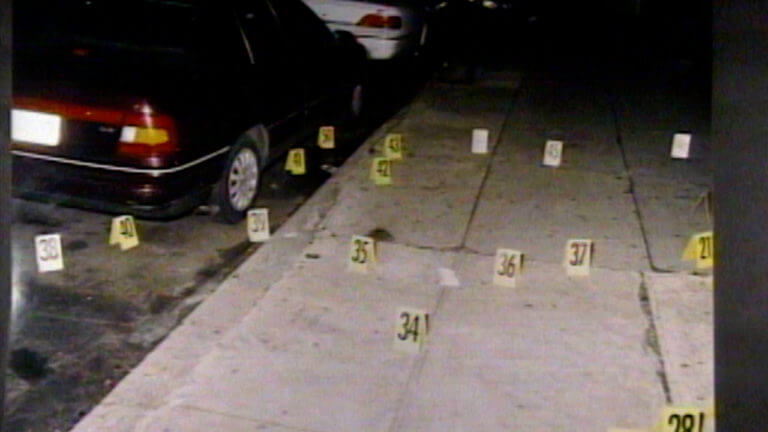
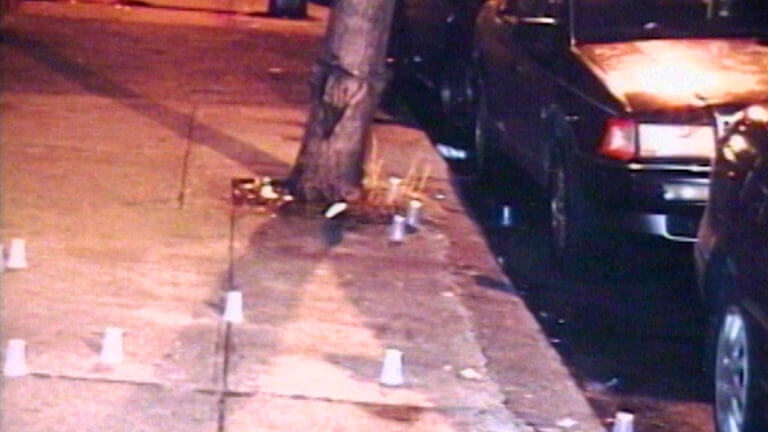
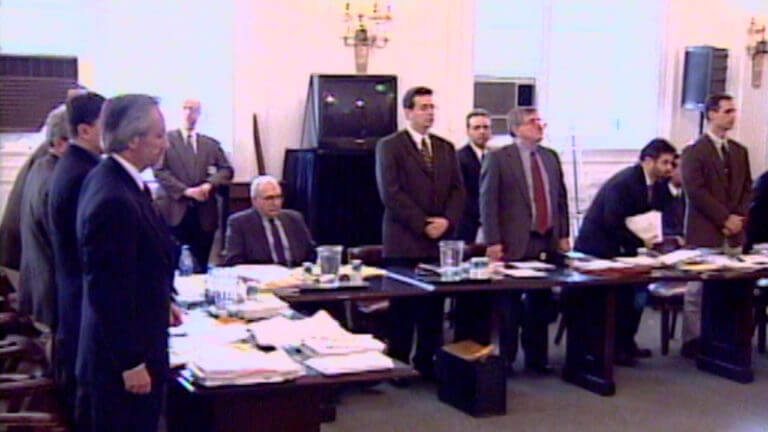
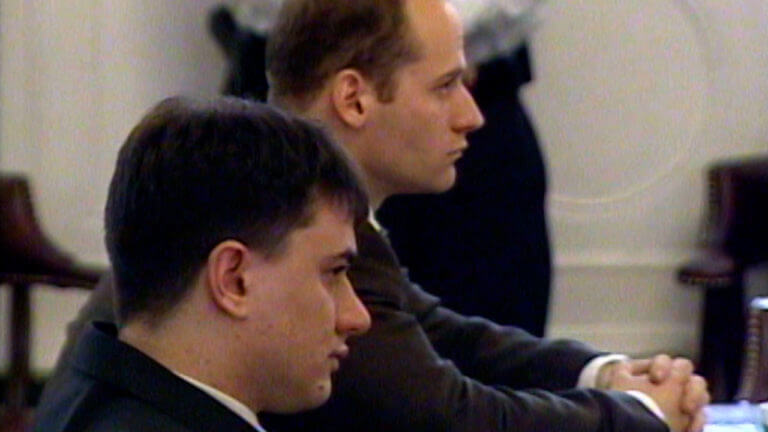
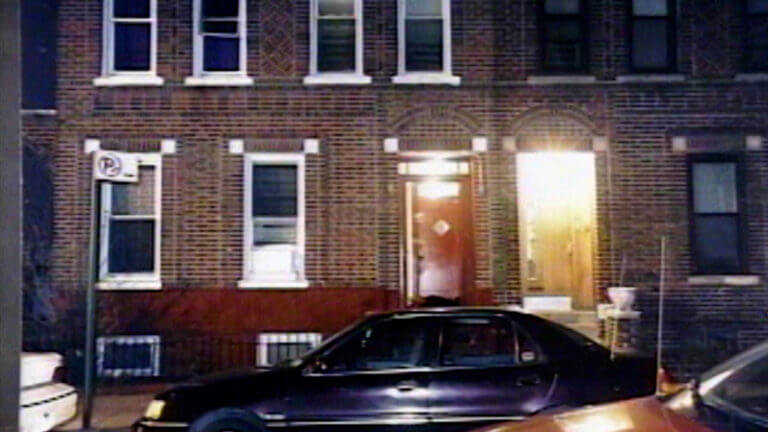
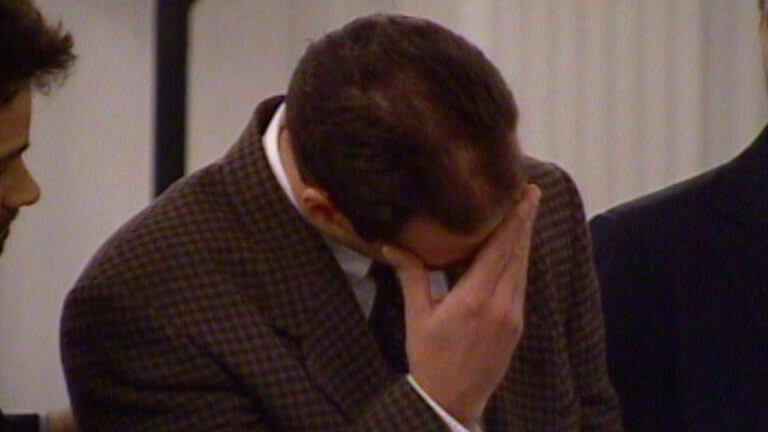
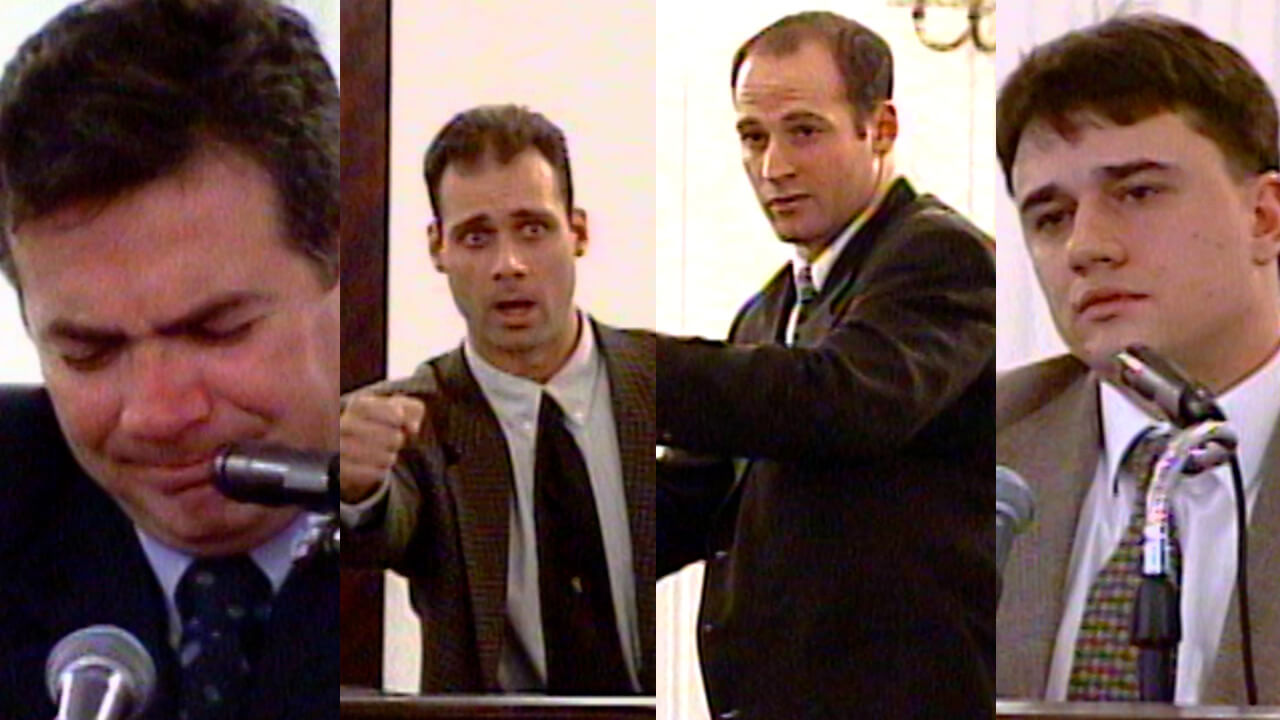
NEW YORK (Court TV) Was it reasonable for the four NYPD officers who killed Amadou Diallo last February to believe their lives were in danger? Or did the Street Crime Unit officers want to prove, with a flurry of 41 bullets, that they, as their motto says, "own the night"? These are just a few of the questions that may make or break the defense of Edward McMellon, Sean Carroll, Kenneth Boss and Richard Murphy as they go on trial for murder Monday. In a yet another racially-charged NYPD case that has sparked several protests, all four officers are charged with intentional second-degree murder, second-degree murder with depraved indifference to human life and reckless endangerment in Diallo's shooting death. They face up to life in prison if convicted. Though hundreds of Albany residents will be summoned as potential jurors when jury selection begins Monday, the Diallo murder case began in the Soundview section of the Bronx. [Citing pretrial publicity, an appellate court decided to move the trial out of the Bronx to Albany, causing more outrage and protests. Read the officers' change of venue motion.] McMellon, Carroll, Boss and Murphy were patrolling the Soundview neighborhood February 4, 1999 in an unmarked car in search of a serial rapist. All four were in plainclothes and wore bulletproof vests; two carried more than one gun. The officers had been told that the serial rapist was suspected in dozens of rapes, robberies and at least one murder since August 1993. As the officers began patrolling their beat, Diallo was wrapping up a 12-hour day of selling videos, CDs and tapes on his corner of E. 14th Street in Manhattan. A 22-year-old immigrant from West Guinea, Diallo had taken the No. 6 train to Elder Ave. as he always did and walked to his home nearby on 1157 Wheeler Ave. Both of Diallo's roommates were home in their first floor apartment: Momodou Kujabi and he discussed bills while his cousin, Abdou Rahman, was asleep in another room. It is not very clear how Diallo and the four officers first came into contact. There is speculation that Diallo had gone to either a nearby restaurant or grocery to get food and was returning home at the time of the fatal encounter or that he was leaving his building to go to the store. Investigators believe he was stopped by the officers as he was leaving his house. According to the prosecution, McMellon, Carroll, Boss and Murphy were travelling southbound on Wheeler Avenue when they saw him standing in front of the vestibule to his building. Noting that Diallo appeared to be acting suspiciously, the officers claim they identified themselves as police and ordered Diallo to freeze. Their guns drawn, officers approached Diallo. McMellon and Carroll crossed the sidewalk in front of the building and mounted the steps, reportedly coming within 5 feet of Diallo. Murphy stayed on the sidewalk while Boss crouched behind a parked car on the street. According to the defense, Diallo either did not fully understand the officers or moved in a way that they perceived as threatening. Noting the darkness that surrounded the vestibule that night, they have claimed that Diallo grabbed his beeper, and they thought mistakenly that he was reaching for a gun. At that point the shooting began various "earwitnesses" told investigators that they heard three or four shots, followed by a brief pause, and then several shots. [Besides the officers, there are no reported eyewitnesses to the shooting.] There is speculation that McMellon and Carroll fell backward off the steps after the first, more brief, string of shots. The defense may argue that the falls may have given the officers the impression that they had been hit, triggering the second, more extended, firing of bullets. In the end, McMellon and Carroll, the officers who fell off the steps, had each emptied their 16-bullet semiautomatic pistols; Murphy fired on Diallo four times, Boss five times. Diallo was dead on the scene, having been struck by 19 of the 41 bullets. He was unarmed and had $169 in his wallet.
Though there is a great difference in the number of shots fired among the officers, all are presenting a united defense for now. They insist that the shooting was a horrible mistake they believed that Diallo was reaching for a gun and thought their lives were in danger. The key to their defense may lie in two issues: the lighting in the vestibule and the autopsy report on Diallo.
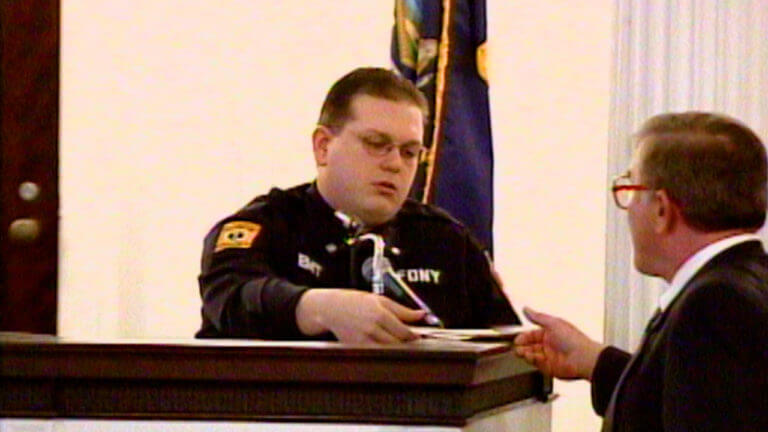
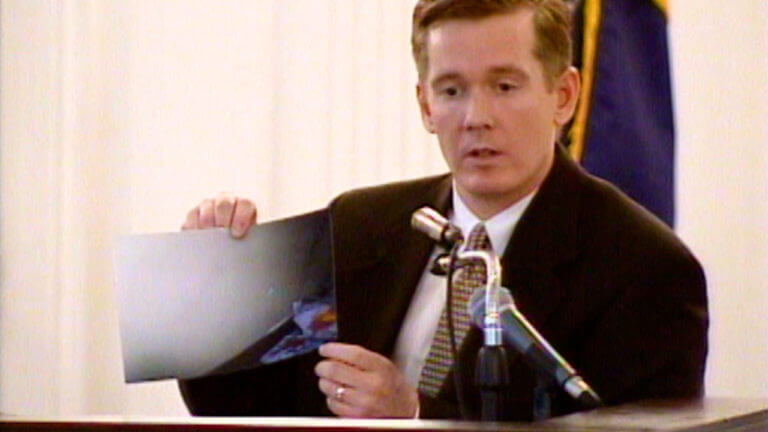
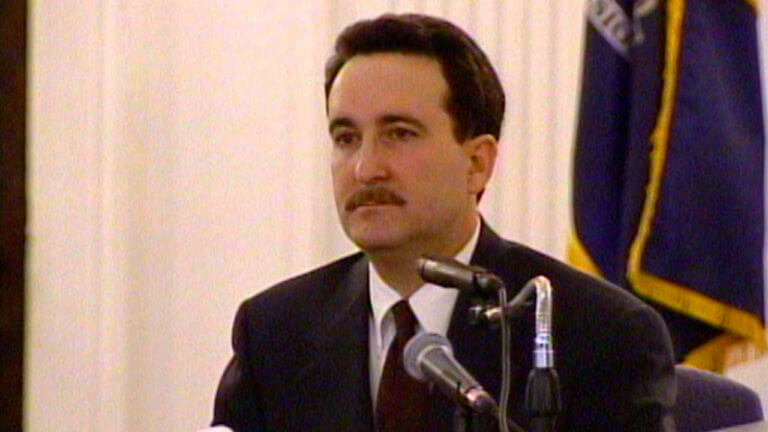
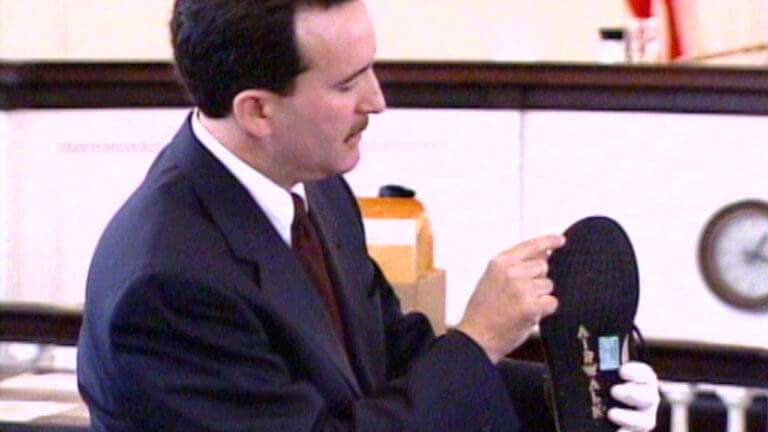
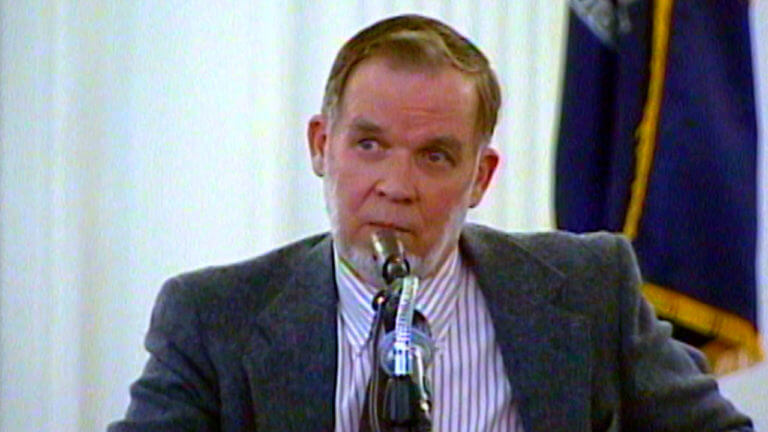
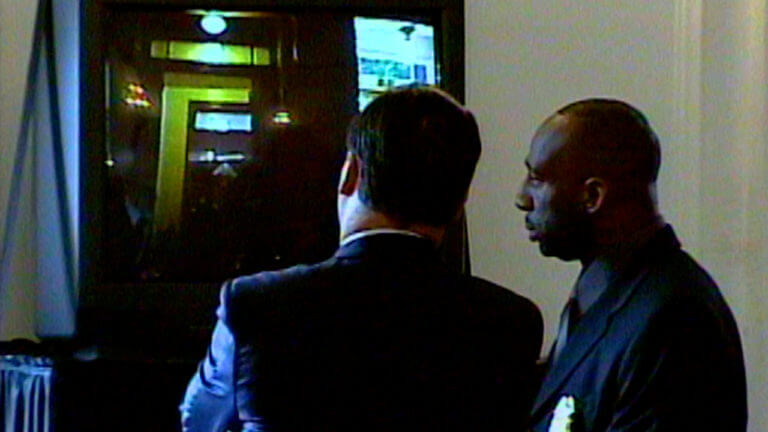
However, there may be conflict among police investigators about the quality of the lighting. One reportedly said early in the case that the vestibule's light was off, making the entrance to Diallo's building completely dark that night. Another, however, claimed the light was on. Still, the testimony of an EMS worker who claims she needed a flashlight while she tried to revive Diallo may help buffer the officers' defense. Another key issue at trial will be whether Diallo was down at any time during the shooting barrage. According to the defense, Diallo never fell during the shooting. Stephen Worth, who represents McMellon, has said that the officers continued to fire because Diallo was standing as he was hit 19 times. He did not fall down until the shooting stopped, Worth has claimed. However, autopsy reports prepared by the New York City medical examiner's office and Dr. Cyril Wecht, a Pittsburgh pathologist hired by Diallo's family, suggest otherwise. Two bullets went through the base of his right foot, one entering through the ball of the foot, the other hitting the bottom of the middle toe. Another bullet hit Diallo's right ankle. One wound may truly and vividly show that the officers continued to shoot Diallo while he was down. Doctors found that a bullet entered Diallo's calf muscle just above the right ankle, traveled up his leg and lodged in the back of the knee. If Diallo had been standing up, the bullet may have traveled horizontally from the shin to the back of the leg, not directly up the leg. Other shots shattered bones in Diallo's left leg, suggesting that he would not have been able to stand. In addition, the bullets struck him in the aorta and perforated his spine at least two places, suggesting that he would have been downed by paralysis.
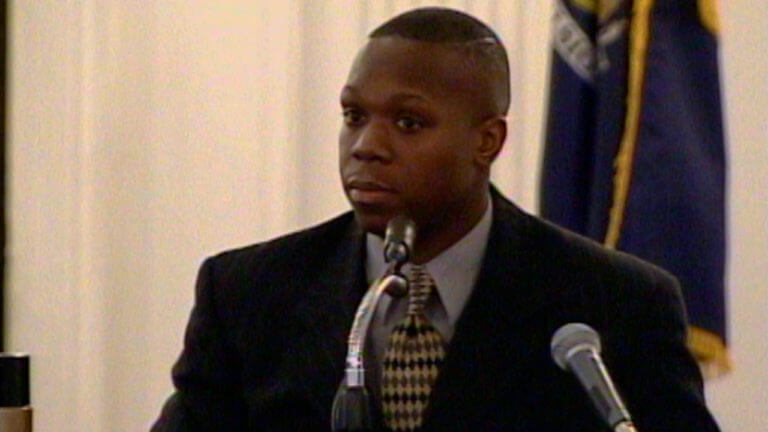
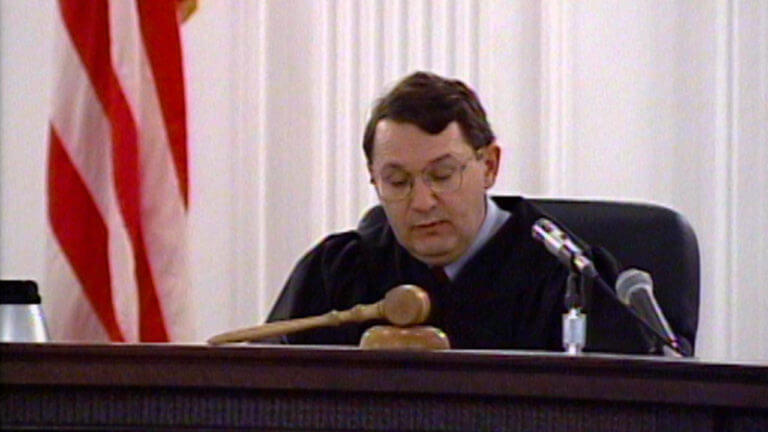
Various defense experts are set to refute prosecution allegations that the officers acted with depraved indifference. According to court documents, ballistics expert and former officer James Fyfe, may tell jurors how long it takes to fire 16 rounds from a semiautomatic pistol. John Cerar, another former officer, could testify about general police department training and tactics, particularly those of the Street Crime Unit. Psychologist Lynn Cooper could discuss the different ways people react in stressful situations and how the eyes can play tricks on the brain. Prosecutors filed a motion urging Albany Supreme Court Justice Joseph Teresi to bar the testimony of Fyfe, Cerar and Cooper. They believe the witnesses would try to give opinions on whether the shooting was justified and that they are not qualified to give testify on that subject. But Teresi rejected the prosecutors' motion with prejudice, giving them the option of refiling the request during the trial.
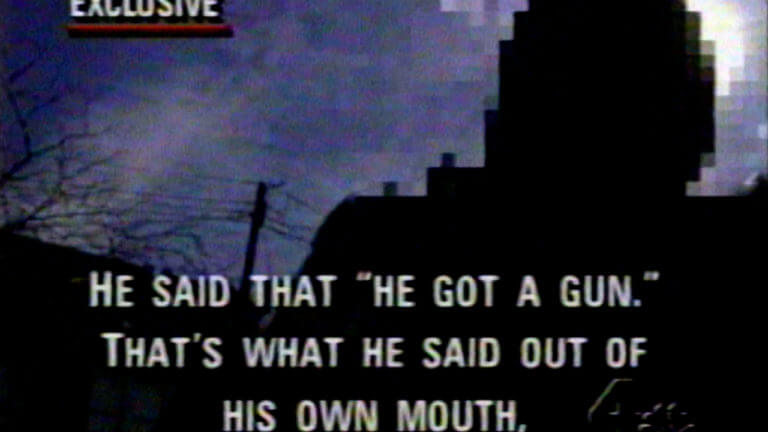
In what may prove to be a key pretrial ruling, Teresi barred testimony about the four officers' involvement in previous shootings from the trial. The judge felt their on-the-job past was irrelevant and would compromise their right to a fair trial. Richard Murphy is the only officer in Diallo's killing who had never had civilian complaints filed against him before the shooting. He also had never fired his weapon. But that is not the case with McMellon, Carroll and Boss and jurors will never know. Sean Carroll came under investigation in August, 1998 for firing his weapon during an incident in the Bronx. He explained that he heard a bullet pass over his head, and the discharge was deemed justifiable. In addition, three unsubstantiated complaints have been filed against Carroll with the Civilian Complaint Review Board. Kenneth Boss was involved in the October 1997 fatal shooting of a man police claimed was threatening people with a shotgun in front of an apartment building in Brooklyn. Pat Baily's shooting death was investigated by the Brooklyn District Attorney's office, and Boss was cleared on any wrongdoing. Three complaints also have been filed against Boss with the Civilian Review Board, but none have been substantiated. Edward McMellon came under investigation when he shot and wounded a man with a loaded 9 mm handgun in June, 1998. He was cleared of any wrongdoing. McMellon has had five unsubstantiated complaints filed against him with the Civilian Complaint Review Board. Though the officers' on-job history is off-limits, the defense wants to attack Diallo's past at trial. Since the shooting, investigators found out that Diallo won political asylum by falsely claiming in immigration forms that he and his family were victims of ethnic cleansing in Mauritania. There is also speculation that Diallo sold pirated videotapes in his street-vending business. These factors, the defense lawyers believe, may explain why Diallo may have acted suspiciously when he was approached by the officers. Teresi still has to rule on the admissibility of Diallo's past. However, not all of Justice Teresi's rulings have helped the officers. On January 20, he barred attorneys from seeing and using a grand jury statement a Bronx woman allegedly made that supports the officers' defense. In the alleged statement, given several weeks after she first spoke to investigators, the unidentified woman tells investigators that she heard someone presumably one of the officers shout, "He has a gun!" before gunshots erupted. The woman did not see the shooting. But Bronx Supreme Court Justice Patricia Williams, who handled the case until it was moved to Albany, ruled that the woman's statements were not vital to the officers' defense. Despite defense requests to see the statements, Justice Teresi refused to reconsider Williams' ruling. To get the statement in, the officers' attorneys may have to get in contact with the woman and convince her to testify.
Along with the Abner Louima case, the shooting death of Amadou Diallo has only increased distrust between the NYPD and the people they are bound to serve, particularly minorities. The case sparked so much outrage that thousands of whites and blacks united and converged on police headquarters at 1 Police Plaza until the officers were indicted in March. Nearly 800 people were arrested in March 1999 alone including actress Susan Sarandon, former mayor David Dinkins, the Rev. Jesse Jackson, NAACP President Kweisi Mfume, former Rep. Floyd Flake (D-Queens) and the Rev. Al Sharpton. The appellate court's decision to move the trial up to the predominantly white Albany from the Bronx has only increased some Diallo supporters' suspicion that their version of justice a murder conviction cannot and will not be served. However, even if Edward McMellon, Sean Carroll, Kenneth Boss and Richard Murphy are convicted of second-degree murder, the tarnish to the NYPD's image and the gap between African-Americans and police may still remain. A conviction would condemn police brutality before a national audience, but the Diallo family will still be without their loved one. Shortly after the officers were indicted, Diallo's aunt, Fatoumta Diallo, told the New York Daily News, "We're glad for the indictments, but we're not happy. ... We lost Amadou." The four officers have said that they feared for their lives when Diallo reached for what they apparently thought was a gun. But one must wonder what Diallo must have thought when he was surrounded by four plainclothed men with guns. |
|
|
|
| Contact Us | U.S. | TRIALS | WORLD | PEOPLE | ON AIR | VIDEO | TALK | ABOUT CTV | SEARCH |
|
© 2000 Courtroom Television Network LLC. All Rights Reserved.
Terms & Privacy Guidelines
|