Return To Court TV Homepage  
>>>>>>
U.S.
ABOUT COURT TV

U.S.

Trials

World

People

On Air

Video

Talk

Search


Updated March 19, 1999, 4:00 p.m.
Justice Dept. joins state attorney general in civil rights probe of NYPD
           
The Shooting of Amadou Diallo

            >>>> Full coverage

>>>> Chronology of events

>>>> Articles in the archives

>>>> Biographies of Diallo and the officers

>>>> Discuss the case on our message board

>>>> Mar. 31: Officers charged with second-degree murder

>>>> Mar. 16: Giuliani's popularity plummets after shooting

>>>> Feb. 16: Protests spread to Guinea

>>>> Feb. 12: Thousands attend memorial service

>>>> Feb. 5: New York awaits answers in police slaying

NEW YORK (Court TV) — The Justice Dept. and New York's attorney general announced Thursday that their offices will investigate whether the New York Police Department's "stop and frisk" practices violate the civil rights of minorities.

New York Attorney General Eliot Spitzer said numerous complaints of unreasonable police searches, particularly from minorities, who say they have little confidence in the police as a result of their experiences, prompted him to begin the state's investigation.

"This is the pre-eminent civil rights issue facing New York City right now," he said.

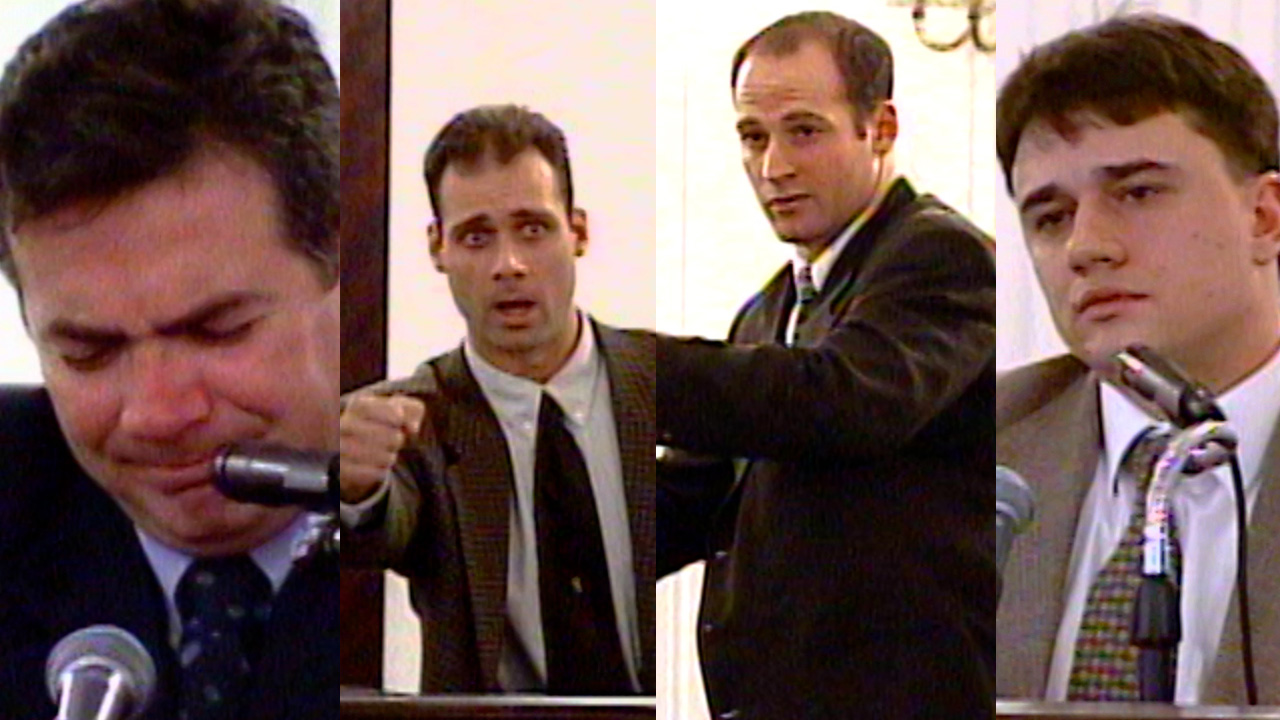
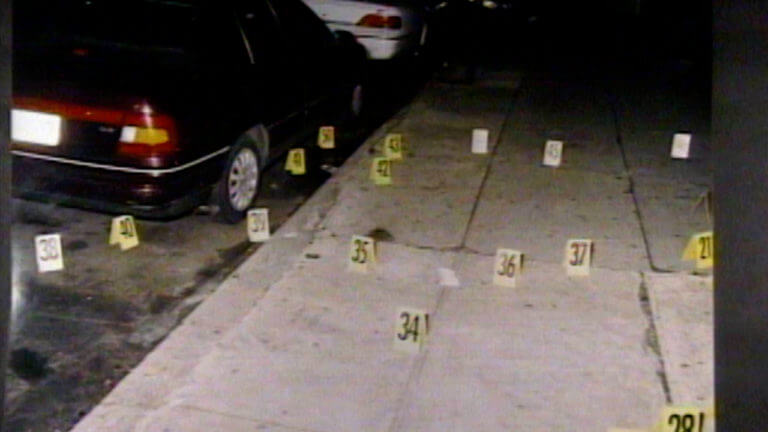
The Justice Dept. also announced Thursday its 18-month-long investigation of NYPD tactics will be expanded to give increased scrutiny to the Street Crimes Unit, according to The New York Times. The elite squad counts among its members the four white officers who fired 41 shots at African immigrant Amadou Diallo.

Mary Jo White, the U.S. attorney in Manhattan, will conduct the federal inquiry. She will focus on whether Unit members have systematically deprived people of their constitutional rights through "stop and frisk" tactics.

Mayor Rudolph Giuliani said he welcomed the state investigation. The police department pledged to cooperate.

Michael Meyers, executive director of the New York Civil Rights Coalition, said city officials have cause to worry.

"I think they're really fearing this investigation because the attorney general has the staff and consulted with people in the civil rights community and police community who know where the bodies are buried and where the data is," Meyers said.

Spitzer's office will ask the police department for data from the last five years relating to "stop and frisks," and interview officials and people who claim they were unreasonably stopped. Spitzer said he has a full range of remedies to choose from, including issuing recommendations for changes in the department and litigation.

Improper searches are a common complaint made to the Civilian Complaint Review Board, which investigates alleged police misconduct. Last year, there were 565 such complaints, a 6 percent increase over 1997, when there were 531 complaints.

In an effort to find illegal guns, the New York police frisk, or "toss," tens of thousands of people every year that they perceive as suspicious.

Only about one in five is actually arrested, but police say it's worth inconveniencing five people to find that one gun and prevent its future use in a crime.

Many minority residents say the police target blacks and Hispanics, particularly young men, but the police say they simply concentrate their efforts on high-crime neighborhoods, which have few white residents.

Meanwhile, the president of the NAACP, Kweisi Mfume, and several dozen demonstrators were arrested Thursday at a Diallo rally outside police headquarters in Manhattan.

The Rev. Al Sharpton has organized daily protests and sit-ins outside One Police Plaza since Diallo's death. Two Congressmen and former Mayor David Dinkins have been among the dozens arrested. Sharpton has promised more protests and arrests until the four officers who shot Diallo are arrested.

Scores of sign-waving protesters shouted, "Arrest the killer cops" and "No justice, no peace" as two smaller groups, including Mfume, splintered off, marched shoulder-to-shoulder to the entrance and sat down.

"I'm young, I'm black, and I was stopped in the middle of the night," said Jackson Winters, a 22-year-old Harlem resident who attended the protest Thursday.

"When I asked why I was being stopped and frisked, I was told I resembled a police sketch," Winters said. "But I wasn't told anything else." Police said 59 people were charged with disorderly conduct.

Mayor Rudolph Giuliani, whose approval ratings have plummeted since the shooting, has accused activists of exploiting Diallo's death to gain media attention and engage in unfair blanket condemnations of the police department.

Praising the police department as the "finest in the country," Giuliani has criticized Sharpton's protests as a "publicity stunt" and chastised the African-American leader for keeping police officers from more important duties by staging the daily sit-ins.

"I think this is getting to be a truly abusive situation," said Giuliani. "I think they're over the top now."

The family of Amadou Diallo, a native of Guinea, is expected to file its own civil-rights suit, just as Haitian immigrant Abner Louima did after police officers allegedly beat him and sodomized him with a wooden stick in a Brooklyn precinct station in 1997.

Federal authorities have taken over the prosecutions of the officers involved in the alleged Louima beating, which put him in the hospital for two months with internal injuries. The trial of the four white officers indicted in that case begins next month.

Court TV's Catherine Heins and The Associated Press contributed to this report.


Court TV Homepage

Site Map


<<<back Top of page  
Contact Us U.S. |  TRIALS |  WORLD |  PEOPLE |  ON AIR |  VIDEO |  TALK |  ABOUT CTV |  SEARCH 
      © 2000 Courtroom Television Network LLC. All Rights Reserved.
Terms & Privacy Guidelines

Copyright© 1999 Associated Press. All rights reserved. This material may not be published, broadcast, rewritten or redistributed.