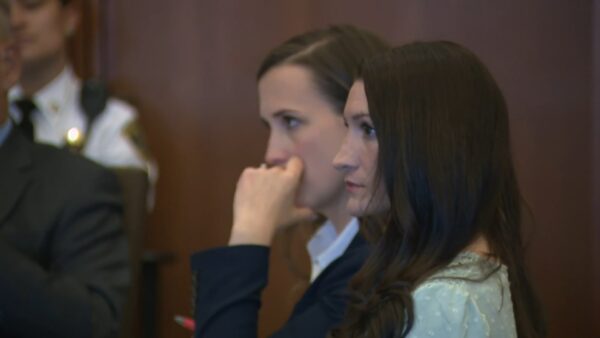

PLYMOUTH, Mass. (Court TV) — A Massachusetts judge dealt Lindsay Clancy and her legal team a blow on Monday, denying Clancy’s motions to dismiss and to question the holdout juror in her case.
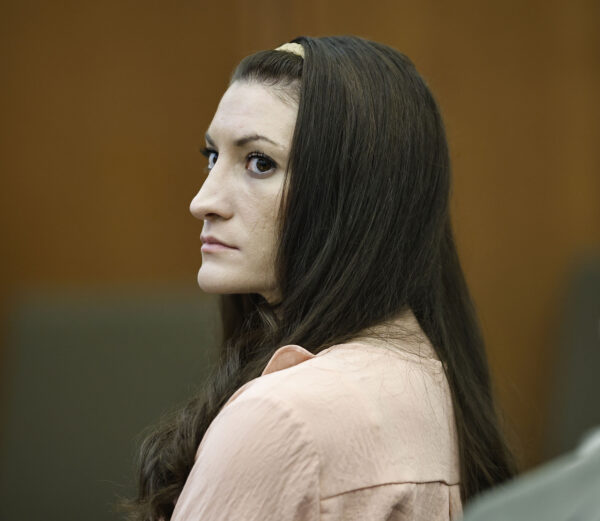
Lindsay Clancy sits in court on Aug. 25, 2026. (Greg Derr/The Patriot Ledger/POOL)
After deliberating for more than 24 hours over four days, a panel of 12 jurors was unable to reach a unanimous verdict for Clancy, who was charged with the murders of her three young children. Clancy, through her attorney, had admitted to strangling Cora, 5, Dawson, 3, and Callan, 8 months, using exercise bands in her family’s home. Her trial attorney, Kevin Reddington, told the jury that the defendant wasn’t legally responsible for her behavior because she was suffering from postpartum psychosis.
The jury’s foreperson reported, in a series of notes, that the panel was deadlocked 11-1, with the majority saying they believed that Clancy was not guilty by reason of insanity. When the sole holdout refused to change the vote, Judge William Sullivan declared a mistrial.
In orders signed on Monday, Sullivan denied a defense motion to dismiss the murder charges and a motion to question the holdout juror.
Reddington had argued in the motion to dismiss that Clancy should not have to face a retrial because there was no manifest necessity for the mistrial. Clancy’s defense argued that the holdout juror, who they said ignored Sullivan’s instructions on reasonable doubt, should have been removed from the panel and replaced with an alternate. But removing a juror, Sullivan wrote in his order, “requires good cause … which means only reasons that are personal to that juror, having nothing to do with the issues in the case or the juror’s relationship with the other jurors.”
The foreperson’s notes said that “a member of the jury is unable to follow the instructions regarding reasonable doubt,” and that the juror “has made statements acknowledging doubt but refuses to apply it to the verdict as the law states.” Those statements, Sullivan said, “strongly suggest a disagreement among the jury with respect to the substance of deliberations rather than Juror Doe’s inability to deliberate. The foreperson’s notes did not plausibly suggest that Juror Doe refused to consider the trial evidence or disagreed with the law as explained by the Court in its instructions.”
To support his motion to dismiss, Reddington requested access to Juror Doe’s questionnaire and phone records and asked the court to inquire into the juror, but Sullivan denied the request, saying, “Clancy is not entitled to any of the materials sought in this motion.”
Sullivan reasoned that the requests for cellphone records and similar materials stemmed from allegations that Juror Doe had a cellphone in the deliberation room, but because the information didn’t come out until after the mistrial was declared, the documents wouldn’t be relevant to determining whether there was manifest necessity for the mistrial. “The allowance of this request without the proper basis or justification would be an improper intrusion into this juror’s privacy and would serve to discourage citizens from being willing to serve as jurors in the future,” Sullivan wrote.
Sullivan also denied a motion filed by the Commonwealth asking him to restrict Reddington or Clancy’s other attorneys from speaking to the media. “A prior restraint can only be justified by a compelling State interest to protect against a serious threat of harm. The Commonwealth has not sufficiently demonstrated that defense counsel’s extrajudicial speech poses a serious threat of harm by materially prejudicing the jury venire or the outcome of any trial,” Sullivan said. The order, however, did note, “the Court trusts that defense counsel will adhere to the ethical obligations” laid out in the Massachusetts Rules of Professional Conduct.