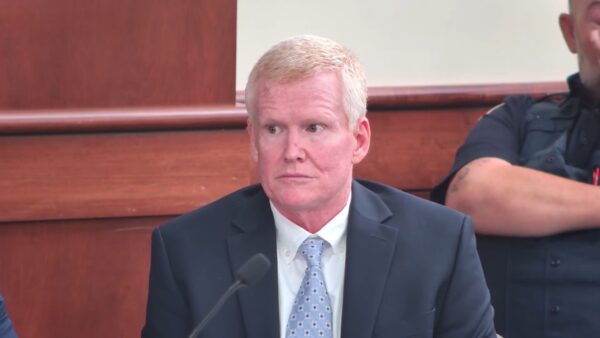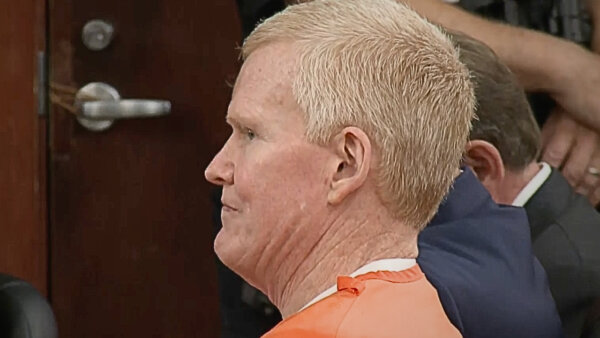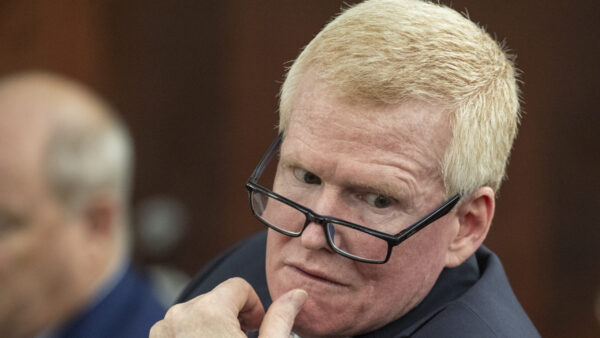

HAMPTON, S.C. (Court TV) — A lawsuit claiming that documentaries produced about a double murder in South Carolina defamed the victims’ surviving family will move forward after a judge refused to dismiss it.
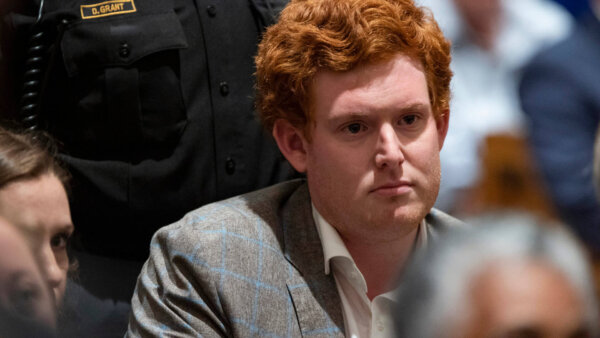
Buster Murdaugh, the son of Alex Murdaugh, listens as Alex Murdaugh’s verdict is read on Thursday, March 2, 2023. (Joshua Boucher/The State via AP, Pool)
Buster Murdaugh, Alex Murdaugh‘s sole surviving son, filed the lawsuit against several media companies, including Netflix, Cinemart LLC and Gannett Co., after the release of “Murdaugh Murders: A Southern Scandal.” The documentary was released in 2023 after Alex Murdaugh stood trial and was convicted of murdering his wife and elder son.
Maggie Murdaugh and Paul Murdaugh were shot to death on the family’s property in South Carolina’s Lowcountry in June 2021. Alex Murdaugh maintained his innocence throughout his trial; prosecutors argued that he killed his family to distract from the fact that he had stolen millions of dollars from his law firm and clients to fund his drug addiction.
The documentaries went far beyond just focusing on Alex Murdaugh’s trial; they also focused on the investigation into the unsolved death of Stephen Smith, a 19-year-old whose body was found along a rural road in Hampton County in 2015. His death, which was initially classified as a hit-and-run, was reclassified as a homicide years later after investigators uncovered new evidence while investigating Maggie and Paul’s deaths.
Buster Murdaugh’s lawsuit, initially filed in 2024, accused the producers of multiple documentaries of defaming him by suggesting that he was somehow involved in Smith’s death.
Netflix and Cinemart LLC argued in their motion to dismiss that the documentary’s content was protected by several facets of the law, including the First Amendment, which protects freedom of the press, and the fair report privilege, which allows media to use public records and documentation to report. In their oral arguments asking the court to dismiss the case, Netflix attorneys said the documentary merely invited the public to draw its own conclusions. “Defendants explicitly argued that the purpose of the documentary was to pose questions as to why the investigation of Stephen Smith’s death unfolded in the manner it did and to encourage viewers to draw their own conclusions from watching,” Judge Heath Taylor wrote in his order denying the motion to dismiss. “The creative liberties taken by Defendants Netflix, Inc. and The Cinemart LLC in the production of the documentary present the information in a manner that can be reasonably interpreted by a viewer as answering the questions posed, mainly the speculation of Plaintiff’s involvement in the death of Stephen Smith.”
Addressing the issue of the fair report privilege, Taylor wrote that it “only extends to a report of the contents of the public record.”
“Plaintiff alleged that Defendants selectively crafted and interposed interviews from law enforcement, community members and media personnel with those law enforcement reports to create the defamatory implication that Plaintiff is responsible for Stephen Smith’s death,” the judge added.
In the Netflix documentary, Michael DeWitt Jr., editor of the weekly newspaper “The Hampton County Guardian,” makes several statements about the Murdaugh family and the Smith case. “We were hearing all of these rumors about a possible connection,” he said. “I began to have a bad taste in my mouth about the members of the Murdaugh family, as many people in the community did.”
Taylor also found those statements unprotected, and determined that Gannett Co., which publishes the newspaper, had liability for the editor’s comments, even though they were not made as part of his ordinary duties at work. “Mr. DeWitt did not appear in the documentary as ‘private citizen’ DeWitt, but as editor of the Hampton County Guardian, presumably to lend the imprimatur of legitimacy to his statement,” Taylor wrote, saying that any arguments from the plaintiff regarding DeWitt individually apply to Gannett Co. as well.
Buster Murdaugh previously settled with Warner Bros. and Blackfin, which produced the documentary “Murdaugh Murders: Deadly Dynasty.” The terms of that settlement were sealed.
Alex Murdaugh is currently awaiting a retrial after his convictions and life sentence were overturned following a finding by the South Carolina Supreme Court that the clerk of court improperly interfered with the jury during his trial.