
PLYMOUTH, Mass. (Court TV) — Lindsay Clancy‘s defense rested its case on Friday after calling a psychiatrist who testified that the defendant suffered from psychosis.
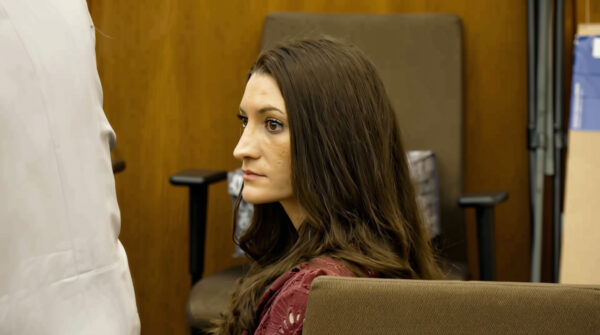
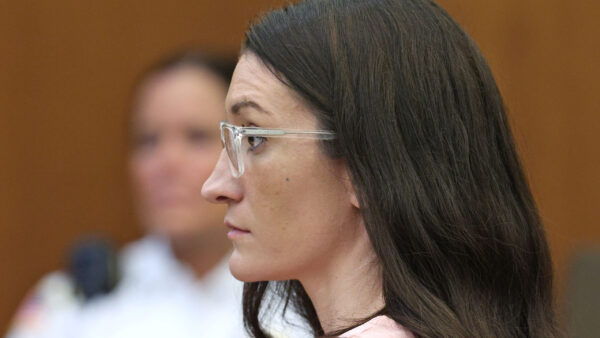
Lindsay Clancy appears in court on Aug. 21, 2026. (Court TV)
Clancy, 36, has pleaded not guilty to three charges of murder in the deaths of her young children. Cora, 5, Dawson, 3, and Callan, 8 months, were strangled to death in the basement of the family’s home on Jan. 24, 2023. Clancy has not denied killing her children, but has claimed that she was suffering from postpartum psychosis at the time.
Clancy’s final defense witness, Dr. Phillip Resnick, a psychiatrist involved in some of the United States’ most notorious trials, testified virtually Friday morning. He testified that he met with the defendant in May, approximately four months after the killings, and spent three hours interviewing her. He also interviewed her parents and studied her medical records. “She had suffered major injury and was paralyzed,” Resnick said. “During the interview, she appeared somewhat matter-of-fact, but at the time she was still grieving. The nurses told me that she was crying daily about the loss of her three children.”
Resnick said that Clancy was medicated when he met with her and presented a flat or “blunted” affect. While prosecutors have argued that Clancy’s behavior in the hours before her children’s deaths — calling restaurants, using the internet and sending texts — indicates she was sane, Resnick told the jury it’s not that simple. “Psychosis can indeed wax and wane,” he said. “For example, on the day of her crime, I’m not suggesting she was frankly psychotic every minute. She … was functioning at a level that was not frankly psychotic until she had a command hallucination while her husband, Patrick, was out doing a couple of chores.”
Clancy reported to another psychologist, her husband and a chaplain that she had heard a voice that compelled her to kill the children before attempting to take her own life. Resnick called that phenomenon a “command hallucination” and said that Clancy not only suffered from that delusion, but also “what is known as a delusion of influence,” meaning that she thought her body was being controlled by an external force. “She was in a dream state and did not have control over her own body,” he said. “It was almost like she was a puppet and someone else was pulling the strings.”
Prosecutor Jennifer Sprague challenged Resnick’s conclusions, recalling an article he’d previously published in which he wrote, “command auditory hallucinations are easy to fabricate. Persons experiencing genuine command hallucinations do not always obey the voices, especially if doing so would be dangerous.”
Resnick previously testified in both of Andrea Yates’ criminal trials. Yates was found not guilty by reason of insanity after drowning her five children in a bathtub in 2011. Sprague invoked Yates’ case during cross-examination, asking, “Ms. Yates, in fact, committed herself to a hospital five times and tried to kill herself twice, all while trying not to kill her children, correct?”
The defense rested its case without calling Clancy to the stand. Prosecutors immediately began presenting rebuttal evidence, calling psychiatrist Dr. Avram Mack to the stand. Mack testified that he interviewed the defendant twice, on April 10 and 12, 2026. She told him that she spent most of her day in bed: “She wasn’t very interested in the physical therapy that she was getting there. She wasn’t interested in the food,” he said.
Mack disagreed with Resnick’s diagnosis of psychosis and said that he had diagnosed the defendant with only a major depressive episode. “I can appreciate that she felt side effects and a degree of change from the medications she took,” Mack said, responding to Clancy’s comments that she felt her body was “damaged” from the medications she was prescribed before killing her children. “I don’t know that that feeling or that belief is necessarily psychotic,” Mack said.
While other doctors at the psychiatric facility where Clancy is currently being treated diagnosed her with bipolar disorder, Mack disagreed with that diagnosis as well, saying he saw no evidence of sustained mania.
Prosecutors are expected to call three witnesses for their rebuttal case.