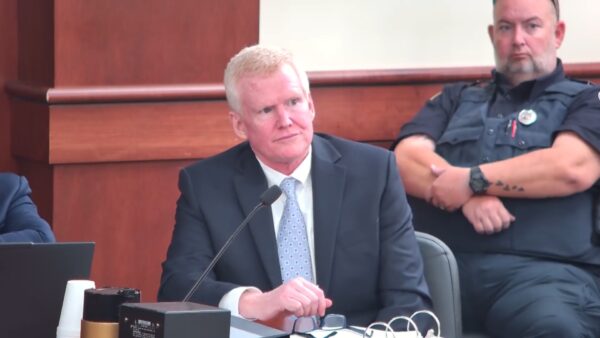

BELMONT, Ohio (Court TV) — A felon took the stand during an Ohio trial on Monday, telling the jury that he had helped the defendant plot the murders of two people.
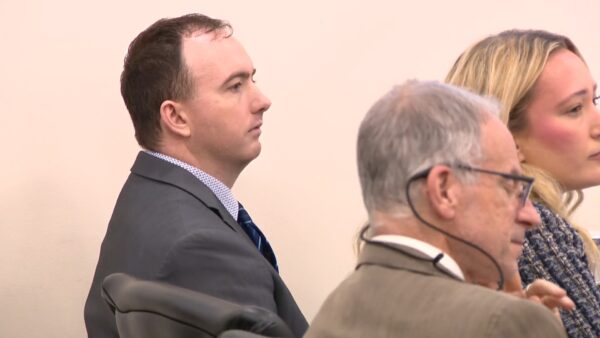
Andrew Griffin sits in court on Nov. 2, 2026. (Court TV)
Andrew Griffin, 34, has pleaded not guilty to arson and multiple counts of murder in the deaths of Thomas Strussion, 52, and Angela Strussion, 49. The victims were found shot to death in their home on Sept. 21, 2021. Prosecutors have said that after shooting the Strussions, Griffin set their home on fire, killing the family’s two dogs and a cat.
On Monday, prosecutors called Brett Cole to testify; Cole described himself as a lifelong friend of the defendant who grew up with him. Cole, who is currently serving three life sentences in federal prison for unrelated sexual crimes, testified under an immunity agreement. In exchange for his truthful testimony, prosecutors agreed not to file charges against Cole and promised to try to move him to a federal facility closer to his home in Texas.
“He’s like a little brother,” Cole said of the defendant. Cole said that he didn’t particularly want to testify in the case, noting that in prison a snitch “can get killed,” but agreed to answer questions truthfully.
Cole testified that he had never met the victims, and only heard about them through Griffin, who had become the couple’s business partner in a bid to open a Salsa Joe’s restaurant in West Virginia. While things started off well, Griffin began complaining about the partnership—specifically Tom Strussion, Cole said. “[Griffin] had talked about Tom trying to put a hit out on him. So it was pretty much a kill-or-be-killed situation,” Cole testified. Cole said that Griffin told him that “the building they rented for the store was owned by some mobsters and that Tom had owed them a big debt. But he said Tom was trying to put the debt off on him to make it look like Andrew owed the debt, so then the people would go after Andrew instead of Tom.”
“We planned it for a while,” Cole said of the killings. “He wanted to just jump in the truck and drive up there; he asked me to borrow my truck to drive up here and I told him ‘no.'” Cole said that he laid out all the steps Griffin needed to take to kill Tom Strussion. First, Cole suggested Griffin buy a motorcycle, because it would be easy to hide the license plate with a bag hanging off it, and police would be unlikely to pull him over.
Cole: Also, if you’re speeding, usually the cops will just flash their lights at you. They won’t pull you over. And I kind of was hoping he’d wreck on the way, you know what I mean?
Prosecutor: Why was that?
Cole: To keep him from doing it.
Prosecutor: So you planned this with him, but you didn’t want him to do it.
Cole: Absolutely not.
Cole continued to assist Griffin, even going to Texas to buy the motorcycle on his behalf. He described helping Griffin plan, even agreeing to keep the defendant’s phone while Griffin headed to the victims’ home, taking pictures on Snapchat and texting Griffin’s wife. But he said the plan was never to kill Angela Strussion. “The plan was just to kill Tom,” Cole said.
Cole said that Griffin entered the victims’ home as they were having drinks. Cole testified that Griffin told him that he first shot Tom Strussion in the arm, prompting Angela Strussion to jump up and run at him. Griffin then allegedly shot Angela Strussion multiple times before turning the gun back toward Tom Strussion and killing him as well.
Cole said that Griffin tried to stage the house to look like a robbery, but then deviated from the plan again by setting the house on fire. Cole testified that he had specifically addressed the issue before Griffin left and warned him not to do it. “The main thing is, he likes to set everything on fire,” Cole said.
During cross-examination, Griffin’s attorney suggested Cole changed his story only after prosecutors put money into his commissary account. Cole initially told investigators he knew nothing about the killings. Cole said the money he was paid was only to make up for the money he was losing from selling extra commissary goods to other inmates in prison while he was away from the facility.