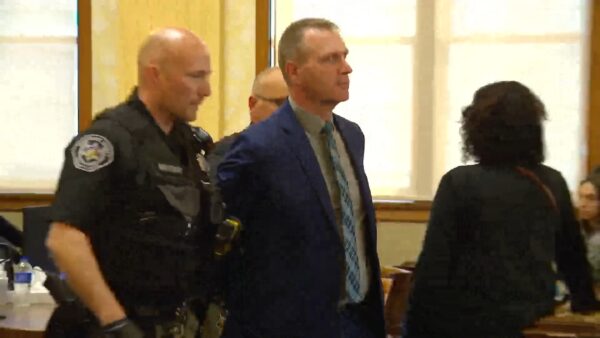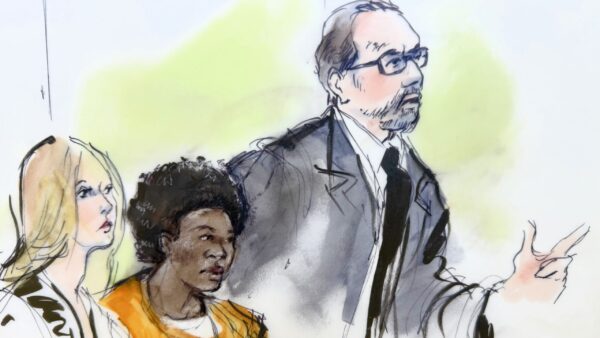
LAS VEGAS — After arriving two hours late for trial smelling of tequila, and getting tangled in lie after lie trying to explain his tardiness, a defense attorney caused his client, an accused kidnapper, to get a mistrial last week.
The judge hearing the case rejected attorney Joe Caramagno's claims that a car accident that morning left him with a concussion and caused him to be late, slur his words and tell conflicting stories.
"I don't think you have a concussion," District Judge Michelle Leavitt said. "I think you are dazed and confused and can't tell a straight story because you are too intoxicated."
The judge's comment came in the minutes after a bailiff gave Caramagno a breathalyzer test in open court.
The test showed the attorney had a blood-alcohol content of .075, just below the Nevada legal driving limit of .08. Leavitt noted that the test was taken close to an hour and a half after Caramagno arrived at court.
"I think you probably had more to drink then you're saying. I wish it would have said zero," Leavitt said.
The presence of the alcohol, which Caramagno attributed to shots of tequila he had done at home at about 5 a.m. after working late on his case, belied Caramagno's contention that he was "as sober as a judge."
"Was I wrong to take a couple of shots before I went to bed? Yes," Caramagno said. "But I'm not impaired or intoxicated. I'm ready to go forward with this case."
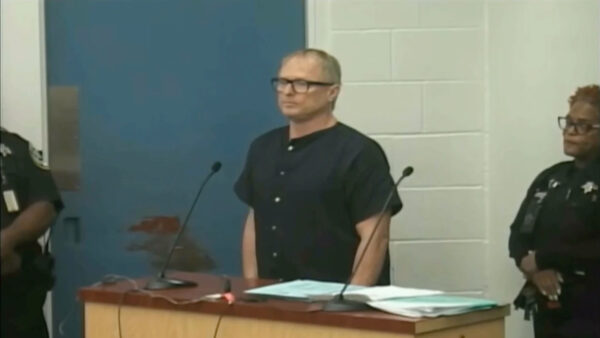
The defense attorney said alcohol would not prevent his ability to defend his client. Dale Jakuchunas is being tried for first-degree kidnapping and coercion, and faces life in prison if convicted.
".075, .05, .02. It's immaterial, Judge. I'm ready to try the case," Caramagno said. "I will never compromise my client's position ever."
The judge responded, "Well, you did today, extremely."
As proof that he could try his case under the influence of a little alcohol, Caramagno freely admitted that he had drunk a beer during lunch the day before, the first day of Jakuchunas' trial. Prosecutors chimed in that they had seen him spill water on himself and have difficulty locating files when he returned to court.
"That's bizarre, to me," Leavitt said. "When you're in a jury trial, you need to be on your A game, especially when your client is facing a life sentence."
Caramagno told the judge he was driving to court that morning, Aug. 3, when his car was hit from behind, causing him to hit another car. The attorney said neither of the drivers would exchange insurance information with him, and his car wouldn't start. He said a "good Samaritan" picked him up and drove him to court.
Caramagno said he didn't call police to report the accident because he was "not in favor of dialing 911."
This was the first in a string of fabrications the judge later caught.
One of the courtroom bailiffs told Leavitt that, when Caramagno entered the court, the attorney said he was late because he had called police and waited two hours for them to show up.
The bailiff's recollections were later confirmed by a prosecutor who also overheard the comments.
"I know why you didn't call 911," the judge commented. "You were intoxicated and worried about being arrested."
Caramagno also said he was afraid the judge would hold him in contempt and throw him in jail for being so late. He claimed a bailiff had told him it was common for Leavitt to jail lawyers for tardiness.
Leavitt responded indignantly that she had never jailed an attorney in all her years on the bench, and doubted that anyone had said so.
During the judge's increasingly exasperated questioning, Caramagno changed the name of the road he had the accident on, the time the accident happened and the time he drank the tequila before going to bed for "a solid five hours."
Caramagno later blamed his actions and subsequent lies on his inability to get over the death of his grandmother in June and his brother in 1999.
Leavitt, who noted that she smelled alcohol on Caramagno during a sidebar, said she was left with no choice but to grant a mistrial to protect the interests of Jakuchunas.
"I think there is a manifest necessity to grant a mistrial," Leavitt said. "I think proceeding would be extreme injustice. I'm confident that the case would come back if I proceeded."
Leavitt did not sanction Caramagno and, despite her obvious anger, appeared to express sympathy for him.
"I don't know you that well, and maybe you have a problem, and so my only desire is to see that maybe you can get some help," Leavitt said.
This was not the first time Caramagno's conduct in court has gotten him in trouble.
Caramagno made a name for himself as one of Rick Tabish's attorneys in the retrial of Tabish and Sandy Murphy for the death of millionaire casino figure Ted Binion on Sept. 17, 1998.
Both Tabish and Murphy were found not guilty of murdering Binion but guilty of burglary charges.
Caramagno received a reprimand from District Judge Joseph Bonaventure in January 2005 after a letter written by Caramagno to Tabish's brother surfaced as part of Tabish's former lead attorney J. Tony Serra's motion to withdraw from the case.
The letter included disparaging remarks about Bonaventure and laid out a strategy to hire a high-profile attorney to pressure Bonaventure into making a mistake.
CourtTVnews.com is a part of the Turner Entertainment New Media Network.
Terms & Privacy guidelines