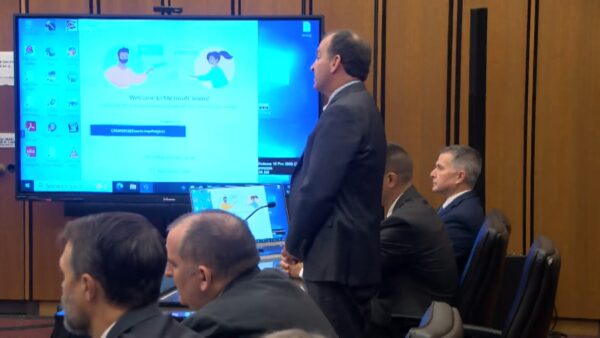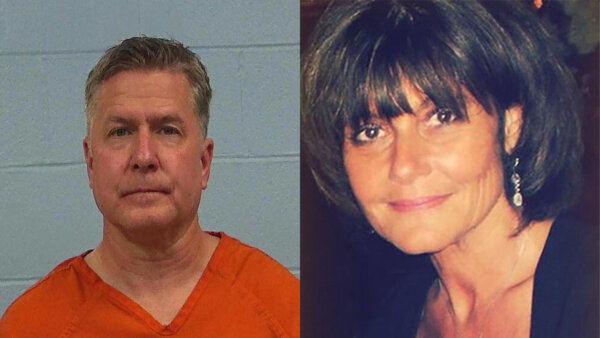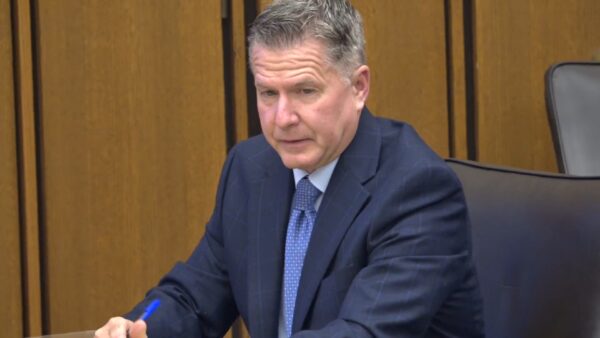

CLEVELAND (Court TV) — A divorce attorney accused of killing his client appeared in court on Wednesday as his defense tried to shift suspicion to other suspects in the case.
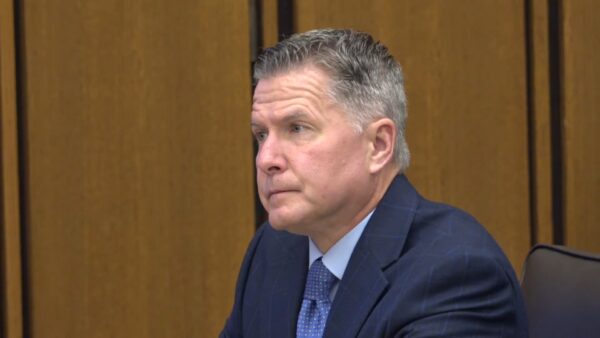
Gregory Moore appears in court on July 29, 2026. (Court TV)
Gregory Moore, 52, is charged with six counts of murder, kidnapping and conspiracy in the death of his client, Aliza Sherman, 53, who was stabbed to death outside Moore’s law office in March 2013 after prosecutors said she was lured there by the defendant. While she waited outside the office doors, someone approached her and chased her down before stabbing her more than 10 times, killing her.
At the start of a multiday hearing on Wednesday, Moore’s attorneys began working to convince Judge Kira Krivosh that evidence in the case should be suppressed ahead of trial.
Moore’s defense claims that police illegally obtained evidence before securing a search warrant at Moore’s law office, but prosecutors say that’s not what happened. On April 22, 2013, police received a text from a confidential informant working at the law firm that “the place was going crazy,” and that the employees were shredding documents, prosecutor Kevin Filiatraut said in court. Believing that the employees may have been destroying evidence, officers responded to the office, where they stopped everyone from taking further action until a judge could sign off on a search warrant. Former FBI special agent Gregory Curtis, who was present for the search, said he and other officers did not perform any search until they had the warrant in hand.
When the warrant came through, Curtis said officers found a document on the desk of one of the office’s partners revealing that Moore had inadvertently been sent paperwork showing he was the target of an investigation into a bomb threat that had been called in to Cuyahoga County Domestic Relations Court in June 2012. Investigators said evidence led them to believe Moore had been the one to call in the threat in an effort to avoid having to appear in court.
The investigation into Aliza Sherman’s killing went cold until 2023, when officers uncovered a document that they say proved Moore’s involvement in his client’s death. “A lot of times, cold cases are broken through DNA testing,” Filiatraut said. “You know, you find some DNA on an item that was never tested, or you have advancements in DNA that sort of thing. That is not what happened here. What happened here was the obtaining of certain documents, one of which was these customer notes, which had not been obtained by any law enforcement until 2023. And they gave an understanding as to the timing of when things were happening and what was actually happening behind the scenes that nobody knew until 2023.”
Filiatraut said the notes show that Moore got a new phone that was used to transfer 1 GB of data on the day of the victim’s death, and was then never used again. That phone’s service was officially canceled much later, but records obtained by prosecutors, they say, show that someone called to try to cancel the service the day after Aliza Sherman was killed. A receipt found on Moore’s desk during the April 22 search revealed the device had only recently been put into his name.
Moore’s attorney, Jon Paul Rion, argued that the prosecution intentionally prejudiced the defense and put them at a disadvantage by waiting so long to bring charges. Filiatraut pushed back, saying they still have access to any pertinent witnesses and information. But Rion said that’s not true — and pointed to the 2024 death of Aliza Sherman’s estranged husband, Sanford Sherman.

FILE – Aliza Sherman (Scripps News Cleveland)
At the time of her death, Moore had been representing Aliza Sherman in her divorce from Sanford Sherman. Rion said that the victim was “terrified” of her ex and reported a strange phone call left on her answering machine at work. Mary Alice Rigdon, who worked with the victim, testified Wednesday that she heard the message, which said “We’re gonna find you, don’t think you can hide,” in a menacing voice. Filiatraut countered that the phone number on which the message was left was not specific to Aliza Sherman and did not mention her by name.
Larry Shank, a former police officer who was friends with Sanford Sherman, testified for the defense on Wednesday that his friend had asked him for advice on how to commit the “perfect murder.” Sanford Sherman allegedly asked him, “If you were going to commit the situation, how would you do it and get away with it?” Shank testified that he responded, saying not to use a gun — because it would be too loud — and to make sure no car he used could be traced.
MORE | Judge refuses to dismiss case against Ohio divorce attorney charged with client’s murder
Sanford Sherman’s death created prejudice for the defense, Rion argued. “It’s a fundamentally different trial when you can’t put a man on the stand and see how they deal with that question,” he said. “How can we have a trial where a man can spend life in prison, when we have to deal with the fact that the information they’re trying to argue to a jury may not have any basis at all in fact. And that’s why it’s fundamentally unfair to have a trial in this case, because the evidence now is not what the evidence was, or could have been at that time.”
Filiatraut threw Rion’s own words back at him, quoting a press conference the defense attorney held after Moore’s arraignment, where Rion said “multiple times” that he was “ready” to try the case in court. “The day of the arraignment, they said, ‘We have evidence today that can prove what they’re saying is not true,'” Filiatraut said. “So I ask you, Judge, when you watch this press conference, ask yourself, ‘What changed between the arraignment and now such that they cannot go to trial?’ They promised a trial then, how is it possible they can’t go to trial now? And you will find that they won’t prove that to you.”
The parties are due back in court on Aug 6.