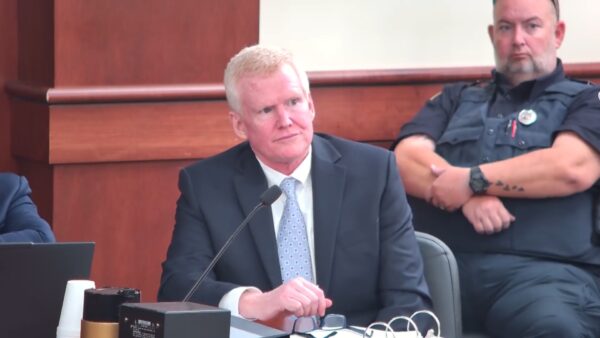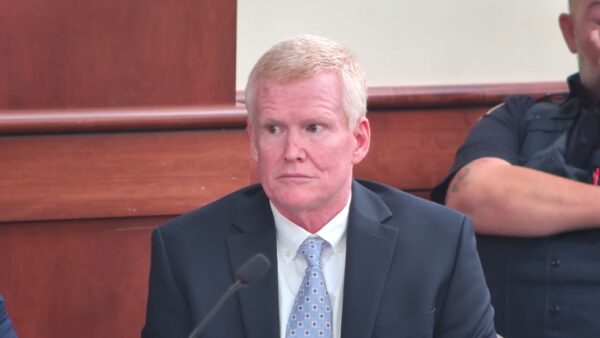

LEXINGTON, S.C. (Court TV) — A South Carolina judge refused to dismiss murder indictments in Alex Murdaugh‘s case, despite acknowledging that the lead case agent had failed to review a critical document before testifying before the grand jury.
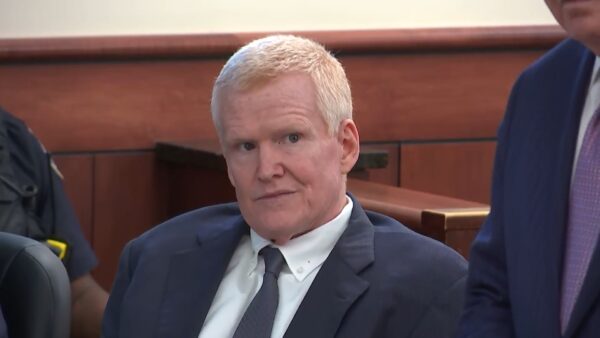
Alex Murdaugh appears in court on Nov. 13, 2026. (Court TV)
Once a prominent attorney in the Lowcountry, Alex Murdaugh, 58, was convicted of murdering his wife, Maggie Murdaugh, and their son, Paul Murdaugh, following a trial in 2023. The South Carolina Supreme Court overturned that verdict and the two life sentences he was given, citing comments the clerk of court made to the jury during the trial.
As Murdaugh’s defense and prosecutors prepare for a retrial in 2027, his attorneys fought to have the entire indictment dismissed, alleging that South Carolina Law Enforcement Division (SLED) Special Agent David Owens, the case’s lead investigator, lied to the grand jury. Among the statements Murdaugh’s defense cited at a hearing on Nov. 13, 2026, was that Owens told the grand jury that human blood was found on a T-shirt the defendant had been wearing.
Judge Debra McCaslin ruled that Owens did not intentionally mislead the grand jury and testified based on his knowledge at the time. “Although the report [indicating there was no human blood on the shirt] was addressed directly to Special Agent Owens, the record indicates he was unaware of its existence at the time of the grand jury,” she said. “The Court does not take lightly Special Agent Owens’s failure to recognize and account for a laboratory report addressed directly to him prior to presenting testimony in this case. Law enforcement bears a fundamental duty to thoroughly review and accurately represent the complete evidentiary record. Oversights of this nature undermine public confidence in the integrity of the criminal justice system. Nevertheless, the Court finds this failure does not rise to the level of bad faith warranting dismissal of indictments.”
McCaslin noted that because grand jury proceedings are secret, “no transcript or recording exists” of the session that led to Murdaugh’s indictment. “In the absence of an official record, the precise substance of the testimony presented to the grand jury cannot definitively be established,” McCaslin wrote. “Mere inaccuracies, mistaken testimony or discrepancies in the evidence do not, standing alone, establish grounds for dismissal.”
McCaslin also ruled that even if Owens had given the jury correct information, independent evidence sufficiently established probable cause for an indictment.
Murdaugh’s retrial is scheduled to begin on April 5, 2027, in Sumter County.