
PLYMOUTH, Mass. (Court TV) — A psychiatrist who treated Lindsay Clancy in the weeks leading up to her children’s deaths outlined a treatment plan that did not appear to be working.
Dr. Jennifer Tufts testified on Friday for the Commonwealth and provided details about the medications Clancy, 35, was taking and her consistent depression. During her testimony, Tufts spoke about Clancy’s mood, how she acted, what she shared, and how she did not seem to be in any danger to herself or others — including during their appointment on Jan. 23, 2023, the day before Clancy strangled all three of her children and attempted to take her own life.
Prosecutors questioned Tufts about the sessions she held with Clancy beginning in September 2022. She said Clancy was seeking treatment for anxiety, and Tufts prescribed Zoloft and recommended therapy. At another appointment a week later, Clancy told Tufts she had not taken the medication but felt better.

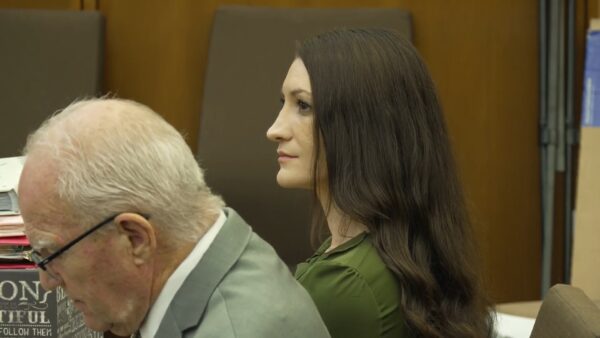
Dr. Jennifer Tufts testifies during Lindsay Clancy’s trial on Aug. 7, 2026 (Court TV).
In October 2022, Tufts testified that she prescribed Ativan for Clancy for her to take as needed due to her still having “significant symptoms,” noting that she was “depressed.” Clancy had told Tufts that she had an appointment with a therapist. At an Oct. 26, 2022, appointment, Tufts recommended Buspar, which was more “well tolerated” than Zoloft, and hydroxyzine, which is a “safer medicine” to take for anxiety than Ativan. Clancy was “apprehensive” about trying another medication, but she agreed to the plan. There was no change in her mental status.
At an appointment on Nov. 2, 2022, Tufts said Clancy was “too afraid” to start the Buspar, but continued taking Ativan. Clancy’s mood was reported as being “euthymic,” or neutral and calm, and still no suicidal ideation or psychosis. Tufts testified that they discussed alternatives to Ativan because it was meant to be a short-term medication, and about Clancy reducing her intake of Ativan. No new medications were added.
By Nov. 22, 2022, Clancy had enrolled in the South Shore Perinatal Health clinic and told Tufts she was going to start taking Prozac. She said she was currently taking Ativan and Benadryl to help her sleep. Tufts was not aware whether she was tapering off the Ativan, as they had discussed. Still, Tufts said, Clancy showed no suicidal ideation or psychosis. Clancy planned to transfer care to the perinatal clinic, which Tufts supported.
Tufts said that during a Dec. 1, 2022, appointment, Clancy said she was not doing better and not having luck tapering off Ativan. Clancy was now taking medications prescribed while she was at the South Shore clinic, including Trazodone. She said Benadryl, Ativan, and Prozac were helping her sleep.
Clancy then tried Remeron and Seroquel, but had not started the Seroquel. The two drugs were part of the treatment at the clinic and were not prescribed by Tufts. Clancy reported having “intrusive thoughts” — “a feeling like I was going to die” — on the Remeron, Tufts said. Clancy denied having suicidal ideation, but said she was “close to” having suicidal thoughts and felt “very hopeless.” The defendant said she was not having any active thoughts of hurting herself.
Tufts confirmed that she wrote a quote from Clancy in her notes that read, “I think it’s my problem. I keep reaching out to different people and not sticking with the plan.” Tufts suggested that Clancy have one person managing her medications.
By December 2022, Tufts said Clancy “was really having a hard time” and suggested a “partial hospitalization” program, which would entail “all-day care” while being able to go home to her family.
Tufts said she did not try to get the records from South Shore because Clancy “was very aware” and “medically sophisticated” concerning her medications and treatment. Clancy continued to see Tufts for treatment.
At a Dec. 16, 2022, appointment, Clancy was still not feeling well and said she was “having a really rough time.” She said she was taking Valium and Seroquel for sleep, but felt very depressed during the day and started having suicidal ideation. She went to the emergency room at Massachusetts General Hospital but declined inpatient treatment. Tufts asked about the suicidal ideation; Clancy said she had a “fear of never getting better,” but did not have a plan to harm herself. She said she was considering increasing her Seroquel and joining another partial hospitalization program in Rhode Island focused on postpartum symptoms.
Clancy told Tufts that she believed her depression was related to the Seroquel based on the timing. Tufts noted that she was not sure if the Seroquel was making her worse because she was depressed to begin with. Clancy was prescribed Lamictal and was told to continue the Seroquel prescribed by South Shore while tapering off the Valium. She said that Clancy was “so good” about keeping her updated about her treatment plan.
In January 2023, Tufts said Clancy was still feeling depressed and still felt it was related to the Seroquel. She wanted to go to McLean Hospital to be “safely” taken off the Seroquel, which she did. After that, Tufts prescribed Trazodone, Ativan, and melatonin. Clancy said she had no suicidal or homicidal ideation and no psychosis.
Clancy said she felt more anxious when the Ativan wore off. She said she was feeling “numb,” which caused Tufts concern. Tufts testified that Clancy still seemed very depressed. The plan was to increase her Trazodone dosage and monitor her depression, so no new antidepressant was prescribed. While Tufts noted that Clancy was not improving, she testified that she saw no signs of imminent danger and did not feel that Clancy would meet the need for a “Section 12,” or immediate hospitalization.
At a Jan. 16, 2023, appointment, Tufts said Clancy’s concentration was “fine,” but told Tufts that her “bonding felt forced” with her baby. They discussed tapering off the Valium again, and Clancy’s mood and affect were “depressed and flat.”
On Jan. 23, 2023, Tufts testified that Clancy showed no signs of suicidal or homicidal ideation and no psychosis. While Tufts appeared skeptical when Clancy continued to cite her medications as the reason for her depression, she said her speech, dress, and behavior were all “appropriate,” with no “deficits” in her cognitive abilities. Clancy reportedly did not make any statements about her killing herself or her children, and there were no grounds to file a Section 12.
The next day, all of Clancy’s children would be dead.
Tufts is expected to be cross-examined by the defense when the trial resumes.