
NASHVILLE, Tenn. (Court TV) — A former pro football scout was sentenced to life in prison after being convicted of killing his girlfriend and her unborn child.
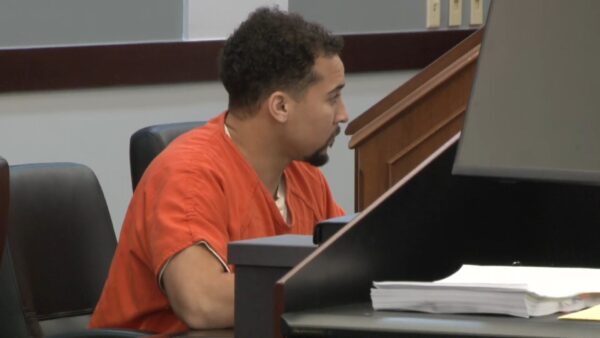
Blaise Taylor appears in court on the first day of his trial. (Court TV)
Blaise Taylor, 30, was found guilty of two counts of felony murder and one count of premeditated murder in the death of his girlfriend, Jade Benning, who died on her 25th birthday in 2023. At the time of her death, Benning was pregnant with a girl.
Benning was rushed to the hospital on Feb. 25, 2023, after Taylor called 911 to report that his girlfriend appeared to be having an allergic reaction. After her arrival at the hospital, the alleged victim’s condition continued to decline. Her unborn baby died on Feb. 27; prosecutors say Benning “lingered” and “languished” for days before ultimately dying on March 6.
A toxicology report reviewed by Court TV revealed Benning had cocaine in her system when she died. The medical examiner testified at a hearing in Taylor’s case that Benning had more drugs in her system than could be accounted for by recreational use, WSMV reported.
Nearly one year later, after months of investigation, Taylor was taken into custody. In a news release announcing the charges against Taylor, prosecutors said Benning was poisoned “without her knowledge” while Taylor was visiting her apartment.
At a bond hearing in 2024, Benning’s best friend testified that she got a late-night phone call from the alleged victim the night she got sick, WTVF reported. On the call, the friend reported hearing Benning tell Taylor, “My drink tasted funny, I can’t even walk straight, you did this to do something to the baby.”
Taylor was released from custody on a $2.5 million bond pending trial.
At the time of his arrest, Taylor was a senior defensive analyst for the Utah State University football team. Before traveling to Utah, Taylor worked as a scouting assistant and then a pro scout for the Tennessee Titans; he left Tennessee shortly after Benning’s death.
In college, Taylor was a defensive back and punt returner at Arkansas State, where he was team captain. He earned both a Master of Business Administration and a bachelor’s degree from the school in less than four years.
On Sept. 9, Taylor was sentenced to two consecutive life sentences for the murders.
DAILY TRIAL HIGHLIGHTS
DAY 8 – 7/1/26
DAY 7 – 6/30/26
- LIVESTREAM: TN v. Blaise Taylor – Day 7 | The Poison Playbook Murder Trial
- Janci Chun Lindsay – Toxicologist
- She reviewed extensive case materials, including toxicology reports, EMS records, autopsy materials, investigative files, and prior testimony.
- She explained testing on the victim’s comforter, including detection of cocaine, fentanyl, benzoylecgonine (cocaine metabolite), and cocaethylene (cocaine + alcohol metabolite).
- She described lab methods (GC/MS, chromatography) and said some results were below reporting/quantitation limits, making them difficult to definitively quantify.
- She testified that cocaethylene indicates simultaneous cocaine and alcohol use, formed through liver metabolism, and discussed half-lives of cocaine, metabolites, and fentanyl.
- She stated that fentanyl presence in “case blanks” suggested possible contamination or limitations in the testing process.
- On cross-examination, she acknowledged limits in her calculations, including uncertainty about ingestion method, timing, and inability to reliably back-calculate dosageShe disputed
- Defense questioned her assumptions and calculations, highlighting that she did not provide a definitive dose calculation for the prosecution’s theory.
- She reviewed extensive case materials, including toxicology reports, EMS records, autopsy materials, investigative files, and prior testimony.
- Kelly Larkin, Emergency Physician
- She reviewed case materials, including 911 calls, EMS/fire records, toxicology reports, and hospital records.
- She has extensive experience treating hundreds of overdose cases and emergency deaths over her career.
- She testified that in the 911 call, the victim exhibited concerning symptoms, including “snoring” respirations and secretions from the mouth.
- She explained that “snoring” in this context can indicate airway obstruction and impending respiratory failure, not normal sleep.
- She stated that these symptoms are consistent with severe medical distress that can lead to cardiac arrest if untreated.
- EMS records indicated the patient was initially dispatched as a possible overdose case.
- She testified that succinylcholine (a paralytic) was administered to assist with intubation, which is standard emergency procedure.
- She confirmed review of records showing administration of fentanyl during hospital treatment.
- She walked through medical chart entries showing timing and documentation of medications given during resuscitation efforts.
- She supported that the patient experienced a serious respiratory emergency requiring aggressive airway management and life-saving intervention.
- She reviewed case materials, including 911 calls, EMS/fire records, toxicology reports, and hospital records.
- DEFENSE RESTS
- STATE REBUTTAL
- Erin Carney, Center for Forensic Medicine/ Chief medical examiner
- No evidence of fentanyl in Benning’s system before she arrived at the hospital
- Extremely high cocaine levels were most consistent with oral ingestion, not snorting or injection, citing toxicology levels, cocaine-positive vomit on the comforter, and testimony that Benning questioned what had been put in her drink.
- Dr. Carney said toxicologists cannot determine exactly how much cocaine was ingested, because illicit drugs vary widely in purity and concentration.
- She testified liquid cocaine can be absorbed more rapidly than pills or capsules, making it potentially lethal even in smaller volumes.
- Dr. Carney testified she found no physical evidence that Benning was a chronic cocaine user, such as nasal damage, needle marks, or other signs of long-term drug abuse.
- During cross-examination, the defense highlighted that Dr. Carney did not specifically test the earliest blood sample for fentanyl, while she responded that fentanyl testing was unnecessary because the initial urine screen was already negative for fentanyl.
- Dr. Carney maintained there was no evidence of habitual cocaine use and said she could not determine exactly how the cocaine was administered.
- On redirect, Dr. Carney clarified that her cause-of-death opinion was based on the autopsy, toxicology, and medical findings
- No evidence of fentanyl in Benning’s system before she arrived at the hospital
DAY 6 – 6/29/26
- LIVESTREAM: TN v. Blaise Taylor – Day 6 | The Poison Playbook Murder Trial
- James Smith, Metro Nashville police dept (recalled)
- The testimony centered on whether Smith gave Jade Benning’s family permission to enter her apartment after police decided not to seek a search warrant.
- During cross-examination, the defense emphasized that police never secured the apartment with officers or crime scene tape.
- Smith agreed that once police released the scene and chose not to obtain a search warrant, they had no legal authority to stop family members from entering the apartment.
- Lynsey Fish – Patrol Officer
- She responded to an incident at Vanderbilt Medical Center around February 25, 2023, involving the scene connected to Miss Jay Benning.
- The bodycam footage depicted the emergency room entrance at Vanderbilt Hospital.
- While on scene, she spoke with family members of the victim, including Andrea Brown (stepmother) and Mrs. Burks (mother, on the phone).
- She told them the scene should be “frozen” (no one entering or leaving the apartment) due to the investigation.
- On cross-examination, she clarified she was not certain about the later legal status of a search warrant or whether the scene remained officially secured after that point.
- She responded to an incident at Vanderbilt Medical Center around February 25, 2023, involving the scene connected to Miss Jay Benning.
- Nia Gutierrez – Licensed Private Investigator
- She visited the Ontario Apartments and photographed the property, including the entrance marquee displaying the apartment complex’s address.
- She confirmed she never entered the apartment, only viewed it from the outside.
- On cross-examination, Gutierrez acknowledged she was not familiar with the apartment complex before being hired.
- She visited the Ontario Apartments and photographed the property, including the entrance marquee displaying the apartment complex’s address.
- Sheila Peters, Tennessee Titans clinical physician/ Knew Blaise Taylor
- She knew Blaise Taylor and interacted with him.
- March 3 and March 8 she interacted with him. (First interaction) He was concerned about the situation. (Second interaction) He seemed troubled and she counseled him.
- She never had any personal problems with Taylor.
- She knew Blaise Taylor and interacted with him.
- Melissa Giguere, Forensic Toxicologist/ Consultant
- She explained forensic laboratory accreditation standards (ANAB/ISO) and emphasized the importance of chain of custody, documentation, and unbiased scientific analysis.
- Testified she had concerns about the chain of custody of Jade Benning’s hospital blood sample before it reached the forensic laboratory.
- She said she could not determine who had access to the blood sample between its collection at Vanderbilt Hospital and its arrival at the Medical Examiner’s Office and later NMS.
- She also criticized the use of a clear plastic blood tube without preservatives, saying forensic toxicology typically uses gray-top tubes that better preserve blood and reduce bacterial growth and drug degradation.
- The blood testing detected cocaine and cocaine metabolites, including benzoylecgonine and ecgonine methyl ester.
- Giguere criticized the laboratory review process, testifying that she spent nearly an entire day reviewing one 1,900-page litigation packet and believed it would be impossible to thoroughly review such a file in less than an hour before signing off on it.
- She explained that processing a toxicology case involves multiple analysts, with different people receiving, preparing, extracting, analyzing, reviewing, and approving the evidence before a final report is issued.
- Giguere criticized the laboratory review process, testifying that she spent nearly an entire day reviewing one 1,900-page litigation packet and believed it would be impossible to thoroughly review such a file in less than an hour before signing off on it.
- She explained forensic laboratory accreditation standards (ANAB/ISO) and emphasized the importance of chain of custody, documentation, and unbiased scientific analysis.
- Alyssa Smith, Critical care paramedic
- She did not remember Benning specifically, but reviewed the medical records before testifying.
- Records showed Smith dispensed fentanyl at 11:27 p.m., but she testified it was never administered.
- The fentanyl was discarded (“wasted”) because the patient’s condition changed, according to the records.
- Smith testified only a physician can order medications like fentanyl, and paramedics cannot decide what to give a patient.
- On cross-examination, Smith confirmed she did not decide whether fentanyl would be given and, to her knowledge, Jade Benning never received fentanyl.
- She did not remember Benning specifically, but reviewed the medical records before testifying.
- Rebecca Bruccoleri – Toxicologist
- ICU team consulted her because there was concern Benning may have been poisoned.
- Her role was to provide medical toxicology recommendations and assist with extended drug testing.
- Helped order additional testing on urine samples already collected and later ordered arsenic testing near the end of Benning’s hospitalization.
- ICU team consulted her because there was concern Benning may have been poisoned.
- Mario Sanbartolome – Addiction Medicine Specialist
- Looked at the medical records regarding this case.
- Talked about drugs and how pregnant mothers sometimes hide their addictions because they know that it is bad.
- Asks him what right co-ethylene/ coca ethylene was and its relation to cocaine.
- Looked at the medical records regarding this case.
- Eric Devlin, Digital forensics
- He was able to review the digital download from Jade’s phone. Found a variety of messages about drugs/ narcotic activity.
- Asked someone for weed in Jan 2023.
- Feb 3 2023- apple fritter and then prices for them.
- Asked to look for conversations about Blaise Taylor. Also looked at communications with Blaise. Went over messages regarding plans with Blaise.
- Goes over messages between Jade and Porter Jarius.
- He was able to review the digital download from Jade’s phone. Found a variety of messages about drugs/ narcotic activity.
DAY 5 – 6/27/26
- LIVESTREAM: TN v. Blaise Taylor – Day 5 | The Poison Playbook Murder Trial
- Kari Midthun, forensic toxicologist, NMS Labs
- A major focus of cross-examination was the reliability of certain findings.
- Also addressed concerns about chain of custody and labeling discrepancies in urine samples.
- Mical Johnson – Worked for the Tennessee Titans
- Worked for the Tennessee Titans from 2020–2025 and knew Blaise Taylor as a co-worker.
- She describes the work environment and roles.
- She details the close daily working relationship, including sitting near Taylor in a shared cubicle space.
- Noticed changes in Taylor’s behavior in fall 2022 into early 2023, noting he became quieter, was sometimes on his phone, and occasionally slept at his desk or arrived late.
- Recounts key events in late February to early March 2023, including Taylor unexpectedly missing work during NFL Combine week, returning without explanation, and later disappearing again after March 3rd before eventually contacting coworkers briefly by phone with vague explanations.
- Adam Reese – Homicide Detective
- Assigned after the case was upgraded from a medical emergency to a likely homicide investigation.
- He conducted initial interviews with witnesses, including Nyjaia Jackson, who provided a detailed timeline and consistent statements.
- Investigators executed a search warrant at Benning’s apartment and collected items believed relevant to a possible poisoning investigation.
- Reese reviewed digital evidence, including Benning’s phone and iCloud data, focusing on communications with Blaise Taylor and others.
- Cross-examination focused on crime scene handling, possible contamination, and failure to collect or test certain items (like drinkware) early in the investigation.
- Defense also questioned investigative assumptions and inconsistencies between reports, witness statements, and later evidence findings.
- The defense questioned Detective Reese about text messages suggesting Jade Benning may have been communicating with another man after her relationship with Blaise Taylor had ended. Reese acknowledged the messages appeared “flirtatious,” but noted they were from after the relationship had already ended.
- The defense suggested Taylor’s version of events had remained consistent throughout the investigation. Reese responded that while Taylor had maintained the same story, the totality of the investigation contradicted his account.
- On redirect, Reese testified investigators found no evidence Jade Benning was attempting to harm herself or her unborn baby.
- Assigned after the case was upgraded from a medical emergency to a likely homicide investigation.
- Apple Dennie – Ex Girlfriend of Blaise Taylor
- Former girlfriend of Blaise Taylor testified she dated him in college starting around 2016 when she was 18, and their relationship was on-and-off for a couple of years.
- Became pregnant in January 2017, felt scared and unprepared, and ultimately chose to have an abortion; Taylor accompanied her to both appointments.
- After their relationship continued, Taylor later told her that another woman he knew became pregnant and was considering whether to keep the baby.
- She alleged Taylor became “erratic,” searched online for ways to induce an abortion, and asked her if she could obtain abortion pills so he could potentially put them in the other woman’s drink.
- She said she did not obtain anything for him, but did schedule an abortion appointment by pretending to be the other woman; she also testified she later learned that the pregnancy ended in abortion and only had limited social-media knowledge of the current victim in the case.
- She alleged Taylor became “erratic,” searched online for ways to induce an abortion, and asked her if she could obtain abortion pills so he could potentially put them in the other woman’s drink.
- Former girlfriend of Blaise Taylor testified she dated him in college starting around 2016 when she was 18, and their relationship was on-and-off for a couple of years.
- Bridget Benning Burke – Mother of Jade Benning
- The mother of Jade Benning testified that she was her only child and they shared a very close relationship, communicating almost daily.
- She said Jade moved to Nashville in late 2021 to begin working as a chef and was very excited about her new life.
- The mother testified that Jade told her in November 2022 she was pregnant and immediately began sending photos, videos, and updates throughout the pregnancy.
- She said Jade was happy and actively preparing for the baby, including shopping for nursery items and planning baby showers.
- The mother testified that when she first arrived at the hospital, there were no police present and no one immediately explained there was a criminal investigation.
- She testified that, based on medical explanations, Jade’s unborn baby had been without oxygen long enough that it was not viable.
- The family ultimately had to make the decision to withdraw life support, which she said was especially painful given the timing around Jade’s birthday.
- She confirmed she had never met or spoken directly with Blaise Taylor before this case.
- On cross-examination, she agreed she did not know whether he was aware of pregnancy-related plans or public announcements.
- She clarified that the Blink camera system only provided a live feed and could not show past footage or when the camera was moved.
- The mother of Jade Benning testified that she was her only child and they shared a very close relationship, communicating almost daily.
DAY 4 – 6/26/26
- LIVESTREAM: TN v. Blaise Taylor – Day 4 | The Poison Playbook Murder Trial
- Kari Midthun, forensic toxicologist, NMS Labs
- Examined a blood vial for Benning.
- The vial tested positive for a cocaine metabolite.
- She had no idea who took the blood or who dropped it off.
- Erin Carney, Chief Medical Examiner
- Performed Benning’s autopsy.
- Learned that Benning had a positive urine sample for cocaine, so she ordered a “cocaine and products panel” and a screen for “designer opioids” on her blood.
- The results showed 7878ng/mL of cocaine in her blood, which is not a common amount.
- She had never seen a number that high in an autopsy; a typical level for a cocaine overdose would be under 1000 ng/mL.
- The baby looked healthy.
- The cause of death was acute cocaine toxicity. The manner of death could not be determined.
- Cocaine is one of the only drugs that can cause pregnancy loss and disrupt the blood flow from mom to baby. This did not happen in this case.
- Alex Krotulski, forensic toxicologist
- Looked at studies for information about people ingesting liquid cocaine.
- Liquid cocaine would work faster than a capsule or a tablet, getting peak effects within 50-90 minutes.
- The first urine sample was from before they gave Benning drugs in the hospital. There was no fentanyl found in the urine, meaning the drugs were “medical grade.”
- Det. Adam Reese, Metro Nashville Police Department
- Went to Benning’s hospital room and found her unconscious.
- Showed the jury the property evidence bag with the urine in it.
DAY 3 – 6/25/26
- LIVESTREAM: TN v. Blaise Taylor – Day 3 | The Poison Playbook Murder Trial
- Colin Feeney, Metro Nashville Police Department
- Arrived at the scene, deployed patrol officers and oversaw entry before homicide detectives processed the residence.
- During a search of the home, he observed a handgun in the bedroom but did not collect any evidence himself.
- The warrant execution was delayed after another division failed to carry it out earlier.
- Jason Terry, Metro Nashville Police Department (Retired)
- Worked as a crime scene investigator and responded to the home to process evidence.
- Photographed the entire apartment, including the kitchen, bedrooms and bathrooms.
- Collected key items, including a comforter, washcloth, drinking glass with liquor and bottles found in the kitchen.
- Later discovered baby-related items in a second bedroom, including diapers, formula and infant care equipment.
- Nicole Dowell, forensic scientist
- Tested evidence collected from Benning’s apartment, including drinking glasses, bottles and liquid samples.
- Lab performed multiple tests to detect controlled substances, including cocaine, and found nothing in any items she examined.
- The comforter and washcloth were not tested by her because they contained suspected biological material; they were sent to an outside laboratory.
- If a drinking glass containing drugs had been washed before testing, it could potentially remove evidence.
- Detective Thomas Miller, Metro Nashville Police Department
- Extracted and analyzed data from Benning’s cellphone.
- Data recovered from the device included pregnancy-related images and communications relevant to the case.
DAY 2 – 6/24/26
- LIVESTREAM: TN v. Blaise Taylor – Day 2 | The Poison Playbook Murder Trial
- James Smith, Metro Nashville Police Department
- Observed Benning in the hospital; described her as intubated, unresponsive and unable to communicate, making it impossible to interview her.
- Before speaking with Taylor, he interviewed Nijaiha Jackson, whom he described as worried and concerned about Benning’s condition.
- Smith located Taylor at the hospital, sitting alone near the ER entrance on his cellphone, and brought him to a private room for a recorded interview.
- During that interview, Taylor told investigators that he and Benning had recently gotten back together, denied any significant arguments, discussed her becoming ill that evening and said she had not directly accused him of harming her.
- Jennifer Barrett, Department of Emergency Communications
- Played the 911 call Taylor placed, in which he said Benning may be suffering an allergic reaction.
- Dr. Michael Olushoga, Vanderbilt University Medical Center
- Was working the overnight shift and treated Benning when she was brought to the ER.
- There were no signs of life when she arrived at the hospital. After performing chest compressions, they were able to restart her heart; she was then intubated.
- Lauren Weber, victim’s coworker
- Benning was excited about her pregnancy; she had stopped drinking and using marijuana and was actively preparing to become a mother.
- Saw Benning at work on Feb. 25; Benning said that she was leaving early to go home, cook dinner, paint and spend the evening with Taylor. Benning appeared happy and excited about the plans.
- After learning something had happened to Benning, Weber went to her apartment at the request of Benning’s mother to retrieve her keys and lock the property.
- The apartment looked as if cooking and painting had taken place, but she felt that something was “off” because it smelled of cleaning products rather than freshly cooked food.
- She took photographs of the property, retrieved Benning’s keys, blew out a candle in the apartment and then went to the hospital.
- At the hospital, Weber described Jackson as distraught and upset, while Taylor showed little emotion and sat apart from others.
- Stephanie Franklin, mother of victim’s friend
- A longtime friend of the victim’s family, she had known Benning since she was 4 or 5 years old.
- Went to Benning’s apartment after being asked to help “figure out what happened’ in the case of her death.
- She used her phone to take photos and videos of the apartment to document the scene.
- Followed her son’s advice, a police officer, to wear gloves while inside.
- She removed one item from the apartment and turned it over to the victim’s family.
- Nijaiha Jackson, victim’s friend
- Met Benning as a young child and the two girls grew up together.
- Described Benning as loyal, outgoing and charismatic.
- Jackson testified that she was closely involved during Benning’s relationship with Taylor, including learning about their dating and Benning’s pregnancy; Jackson would accompany her to medical appointments.
DAY 1 – 6/23/26
- LIVESTREAM: TN v. Blaise Taylor – Day 1 | The Poison Playbook Murder Trial
- Jan Norman delivered opening statements for the prosecution.
- Taylor didn’t know the victim was five months pregnant.
- She arrived at the hospital and she was dead.
- The concentration of cocaine in her blood was the highest the medical examiner’s office had ever seen.
- She orally ingested cocaine dissolved in liquid while drinking a pink drink that night.
- Benning met Taylor on a dating app.
- She called her best friend, but wasn’t talking to her and was talking to someone else; she heard her say, “I knew my drink tasted funny.”
- Letitia Quinones-Hollins delivered opening statements for the defense.
- Taylor met Jade in Tennessee; he never drank and never did any drugs while he was in college, while Benning drank and did drugs.
- Met on Hinge in January 2022; they didn’t talk again until August 2022, when they met and had dinner. The two began a relationship but were not exclusive.
- At the end of September, Benning thought she might be pregnant. On Nov. 4, she told Taylor the child was his.
- She wanted to keep the child but he did not. She suggested she go her own way and he go his and he did not have to be involved. He gave her the space she asked for — by then abortion was no longer an option.
- Told his parents he had met a woman and might be having a child.
- On Dec. 31, he contacted Jade and on Jan. 1, 2023, they met up at a park and talked for hours. They decided to get to know each other so they could co-parent if the child was his.
- Benning was involved with marijuana, mushrooms, Adderall and drank a lot.
- On Feb. 25, Benning planned a spontaneous date night with Taylor but they weren’t going to have alcohol because he didn’t drink.
- Sometimes Benning infused her foods with marijuana.
- The medical examiner could not come to the conclusion that she died at the hands of another; it was ruled undetermined.
- Taylor was the one who called 911 and stayed with the victim in the hospital.
- Marisol Baldwin, Nashville Fire Department
- Responded to a call on Feb. 25, 2023, which was initially reported as an “allergic reaction.”
- Upon arrival, found Benning unresponsive in a bedroom, lying face down, with no signs consistent with an allergic reaction (such as swelling or hives).
- Benning had fluid around her mouth, was not responsive and was later treated for cardiac arrest with CPR, airway support, IVs and cardiac monitoring.
- Taylor was present and appeared frantic.
- Taylor attempted to assist by moving the patient, which interfered with their ability to properly treat her.
- Andrea Browning, victim’s stepmother
- Benning moved to Nashville in 2022 to work as a chef and appeared excited about her life and pregnancy, which she disclosed around Thanksgiving 2022.
- Benning stopped drinking after learning she was pregnant and remained focused on preparing for the baby, including attending OB-GYN appointments.
- Attended sonogram appointments with the victim, where she learned she was having a baby girl and described her stepdaughter’s demeanor as consistently happy and stable.
- Dr. Alison Mullaly, OBGYN
- Benning’s pregnancy was progressing normally with no health concerns for mother or baby.
- Benning attended all of her prenatal appointments, appeared happy and engaged about the pregnancy, never expressed hesitation about becoming a mother and reported no use of drugs, alcohol, smoking or vaping.
- A minor ultrasound finding prompted additional genetic testing, but the results came back normal and there were no concerns about the baby’s development.
- Keyaunte Jones, Victim’s classmate
- One of the last people to see and speak to the victim before her medical emergency, she was described as “happy and normal” when he left her apartment earlier that evening.
- Later that night, received frantic calls from Najah Jackson and joined a brief three-way call in which Benning’s voice sounded faint, weak and distressed.
- Taylor repeatedly denied harming Benning and said he didn’t know what was happening, though Jones said he heard panic and uncertainty in Taylor’s voice.
- Andrea Rose, Paramedic
- Responded to the victim’s apartment on Feb. 25, 2023.
- Described Benning’s condition as critical, noting pink frothy vomit, no vital signs and a GCS score of three, indicating severe unresponsiveness.
- Taylor appeared frantic, anxious, and physically interfered with medical efforts, including not allowing EMTs to properly assess the victim inside the apartment.
- The scene was considered unsafe for immediate CPR, leading EMS to use a “load and go” approach and begin full resuscitation efforts in the ambulance.
- Officer Jack Pfeiffer, Nashville Police Department
- Dispatched to the hospital after police received a report of a possible poisoning incident.
- Identified Taylor in the ER area and saw him standing outside in a busy area, on his phone, before later interacting with him as part of the investigation.
- Officer Jerrod Kallinsky, Nashville Police Department
- Dispatched to ER for a possible drugging. His interactions were recorded on bodyworn camera.
- Encountered Taylor in the ER waiting room. Video from his bodyworn camera was played in court.
- Taylor says in the video that he went over to Benning’s for date night, and then she cooked food and her friends came over. She began feeling sick, then he called his dad, who told him to call 911.
- Benning’s friend seemed more upset and distraught than Taylor did.