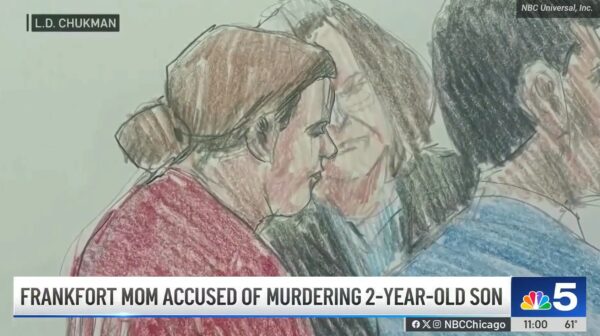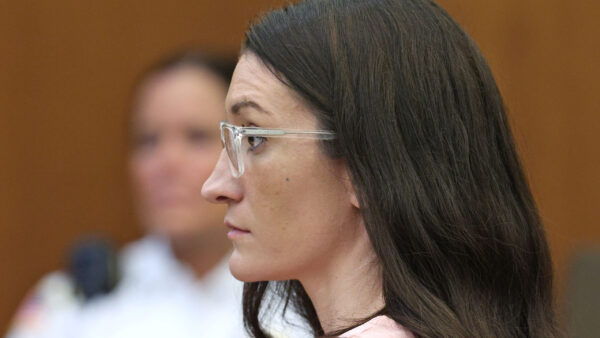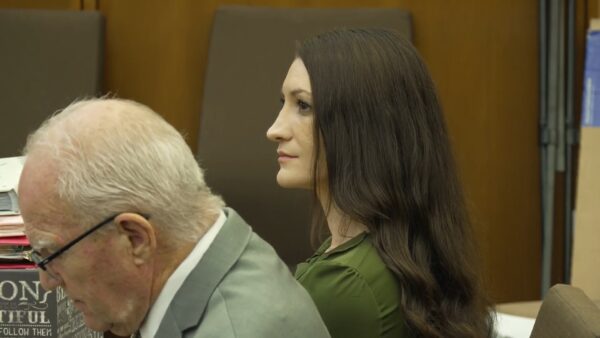

PLYMOUTH, Mass. (Court TV) — The fourth week of Lindsay Clancy‘s murder trial was packed with explosive moments inside and outside the courtroom as the defense began presenting its case.
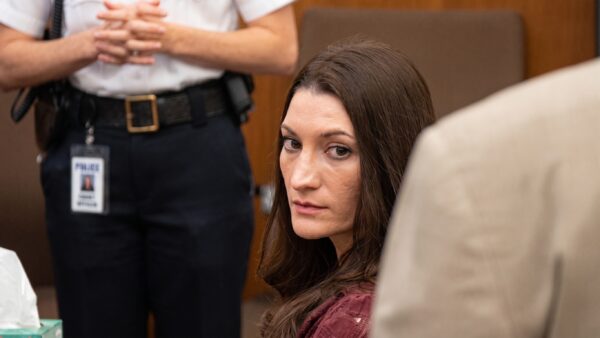
Lindsay Clancy appears in court on Aug. 21, 2026. (Court TV)
Clancy is charged with the murders of her three children — Cora, 5, Dawson, 3, and Callan, 8 months — who were strangled to death in the basement of the family’s home in Duxbury, Massachusetts, on Jan. 24, 2023. Clancy has not denied her role in her kids’ deaths, but has pleaded not guilty, arguing that she was suffering from postpartum psychosis at the time and was not legally responsible for her actions.
After weeks of prosecution witnesses, the defense began presenting its case on Monday, bringing in a mix of friends, family and expert witnesses to illuminate Clancy’s behavior in the weeks and months before her children’s deaths.
“Murder is considered a mortal sin”
Clancy’s mother-in-law was the first witness called to the stand. A nurse herself, Susan Clancy said that the defendant had been suffering and desperately seeking medical help after giving birth to her third child.
When Susan Clancy testified that the entire family, including the defendant, had gone to church for Christmas the month before the killings, prosecutor Shanan Buckingham asked her, “Are you an active member in the Catholic Church?” When the witness answered yes, Buckingham responded, “So you’re aware that murder is considered a mortal sin?”
Religion and references to religious beliefs are generally inadmissible at trial; Judge William Sullivan immediately stopped the line of questioning, ordered the jury to disregard it and called the attorneys to a sidebar.
Lindsay Clancy’s first phone call
After killing her children, Lindsay Clancy used a knife to cut her own neck and wrists before jumping out of a second-story window, fracturing her spine and leaving her paralyzed. For days in the hospital, she was unable to speak or move. Her room was guarded by police officers 24/7, and she was not allowed to have any visitors.
Defense witness Dr. Paul Zeizel, a forensic psychologist, was hired by Lindsay Clancy’s attorney to visit her in the hospital and was able to do so via a court order on Feb. 4. During that visit, Lindsay Clancy asked to call her husband and Zeizel allowed her to use his phone to do so.
Lindsay Clancy’s husband, Patrick Clancy, didn’t answer the phone that day, but he did answer two days later when Zeizel had returned to the hospital for a visit and allowed the defendant to use his phone again. Zeizel testified that during that phone call, Lindsay Clancy said that she loved him and that she heard a “male voice ordering her, telling her that she didn’t have any choice, but she had to kill her children and then kill herself.”
Lindsay Clancy said her kids were “safe in Heaven”
Chaplain Sheila Cavenaugh also visited the defendant during her stay at Brigham and Women’s Hospital. Cavenaugh testified that during those visits, Lindsay Clancy repeated her story about hearing a voice that compelled her to kill her children. She also prayed with Cavenaugh and told the chaplain that she was glad they were “safe in Heaven.”
No TikTok testimony
Emily Thorndike, who posted a viral TikTok video saying she previously worked at McLean Hospital, where Lindsay Clancy was treated, appeared on the witness stand outside the jury’s view.
Lindsay Clancy’s defense wanted Thorndike to appear as a witness to counter prosecutors’ claims about the quality of care the defendant received during her brief hospitalization three weeks before taking her children’s lives.
Ultimately, Sullivan did not allow Thorndike to testify before the jury, but said staffing records from the defendant’s time at the facility could be entered as evidence.
Silent show of support
The courtroom drama extended to the street on Thursday as hundreds of women wore pink and stood outside the Plymouth County Courthouse. Some held flags, representing countries where people have shown support for the defendant.
Lindsay Clancy’s supporters, who say they believe the defendant was suffering a mental health crisis, said they were not there to rally or protest, but to “silently stand and let her know we’re behind her.” A separate online fundraiser benefiting Lindsay Clancy’s parents, who have funded her legal defense, had reached more than $1 million on Friday morning.
The prosecution will continue presenting its rebuttal case on Monday.