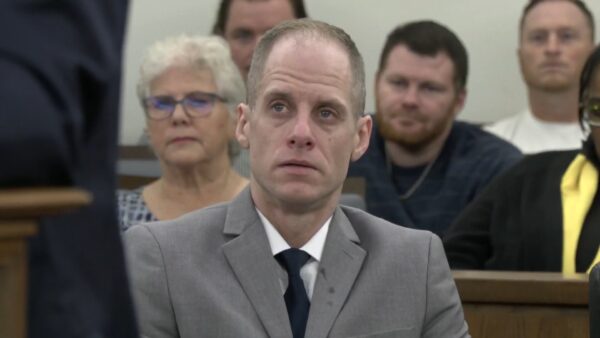

TROY, Ohio (Court TV) — Both the prosecution and defense say they’re concerned about pretrial publicity ahead of the murder trial for a former contestant on “American Idol” — but both sides have very different proposals to address the problem.
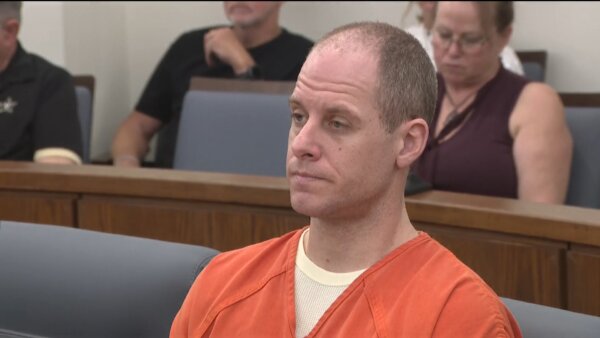
Caleb Flynn appears at a pretrial hearing on April 23, 2026. (Court TV)
Caleb Flynn, 40, has pleaded not guilty to charges of aggravated murder, murder, felonious assault, tampering with evidence and intimidation of a witness, attorney or victim in a criminal case. Prosecutors say the defendant killed his wife, Ashley Flynn, 37, on Feb. 16, 2026, and then called police claiming there was a burglary and that the intruder had shot his wife. Investigators determined there was no break-in and said that Caleb Flynn pulled the trigger himself.
In a motion filed on Monday, Caleb Flynn’s defense asked Judge Jeannine Pratt to move his upcoming trial out of Miami County. “Miami County residents have been consumed by news reports, internet articles, social media commentary and broadcast segments from courtroom proceedings,” the motion read. “The volume, tone and pervasiveness of this coverage over these past six months have entirely saturated the jury pool to such an extent that a fair and impartial trial cannot be held in this county.”
Caleb Flynn’s defense argued that Miami County has a small population of only 113,396 across “five primary cities.” The publicity was exacerbated, the motion argued, by “the Defendant’s and Victims’ status within the community.” The defendant described himself as a “music pastor” when he appeared on the 12th season of the reality series “American Idol.” He was eliminated after the first rounds in Hollywood, California. Ashley Flynn worked as a substitute teacher and a seventh grade volleyball coach.
The defense motion named Court TV alongside local television stations in Dayton, Cincinnati and Youngstown, saying “much of the coverage has contained information that is highly inflammatory and prejudicial.”
The motion did not suggest any alternative locations for the trial.
Prosecutors did not file a response to the defense motion, but instead filed their own motion on Monday asking for Pratt to order the jury to be sequestered during the trial to protect from the same publicity the defense cited in their motion. “This case has generated substantial pretrial publicity across the State of Ohio and the United States,” prosecutors wrote. “This publicity creates the opportunity for speculation in the form of comments on the articles and social media posts. Most of these articles and social media posts have included pictures of the Defendant in a jumpsuit, bellyband, handcuffs and shackles. At trial, the Court will take great care to ensure the Defendant is not seen by the jury in anything but street clothes. Not sequestering the jury could cause the jury to be exposed to this information, creating the risk of a mistrial.”
MORE | ‘American Idol’ alum charged with wife’s murder loses fight to get his trial moved
The state motion argued that ongoing media coverage through the trial “creates a substantial risk that jurors, if permitted to return to their homes and communities each evening, will be exposed to television news reports, newspaper articles, social media commentary, and conversations with friends or family members about the case.”
No hearing date has been scheduled; the trial is slated to begin on Sept. 17.