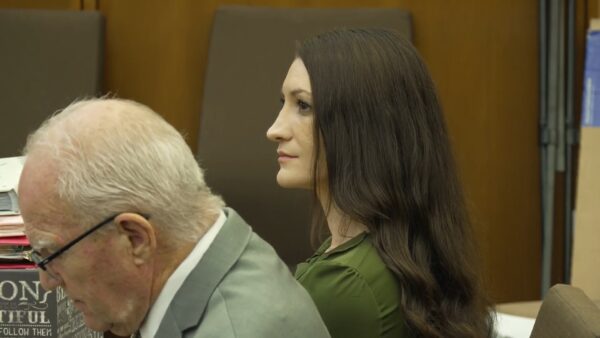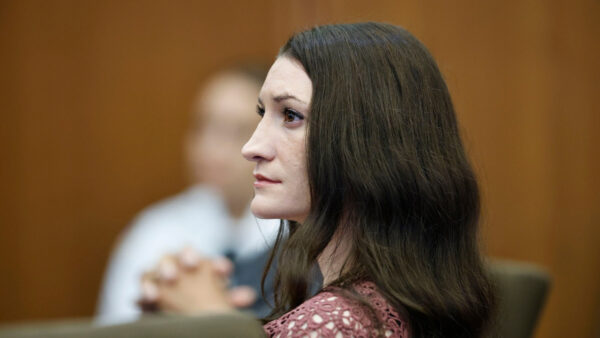

PLYMOUTH, Mass. (Court TV) — The attorney for a woman charged with murdering her three young children grilled the defendant’s psychiatrist Monday, questioning her experience and arguing she failed to treat her patient appropriately.
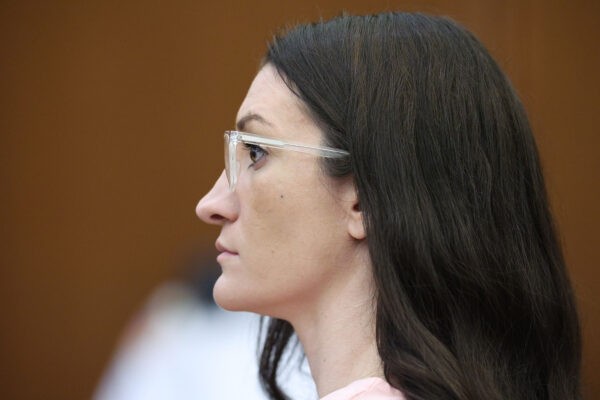
Lindsay Clancy appears in court on Aug. 10, 2026. (Gregory Derr/The Patriot Ledger)
Lindsay Clancy, 35, has pleaded not guilty to three charges of murder in the deaths of Cora, 5, Dawson, 3, and Callan, 8 months; while she has not denied using exercise bands to strangle her three children to death, Clancy has maintained that she was suffering from postpartum psychosis at the time. After killing her children, Clancy cut her wrists and neck with a knife and jumped from a second-story window at her family’s home.
On Monday, Clancy’s psychiatrist, Dr. Jennifer Tufts, returned to the witness stand to face cross-examination; on Friday, she told the jury that the defendant had been anxious and expressed some signs of depression, but did not present a risk to herself or others. She denied seeing any signs of psychosis in Clancy during any of their appointments.
When pressed by Clancy’s attorney, Kevin Reddington, on Monday, Tufts admitted that she had never actually met Clancy in person. Every one of their appointments had been conducted via telehealth. While there was a video feed for the appointment, Tufts conceded that she could not see her patient’s hands or legs to detect any further symptoms. “I couldn’t see her legs, but I knew she was under stress,” she said.
Clancy first reached out to Tufts and filled out an intake questionnaire on Sept. 12, 2022. Reddington revealed that on the same date, Tufts received her board certification in psychiatry, allowing her to see patients and prescribe medications without supervision. Reddington pointed out that wording on Tufts’ website suggested she was a “specialist in postpartum,” which may have misled the defendant. “Would you consider that to be negligent or misrepresentation?” Reddington asked Tufts. “I do not believe that I have been negligent,” Tufts said, noting that she referred to perinatal psychology as an “interest” and denied calling herself an expert in the field.
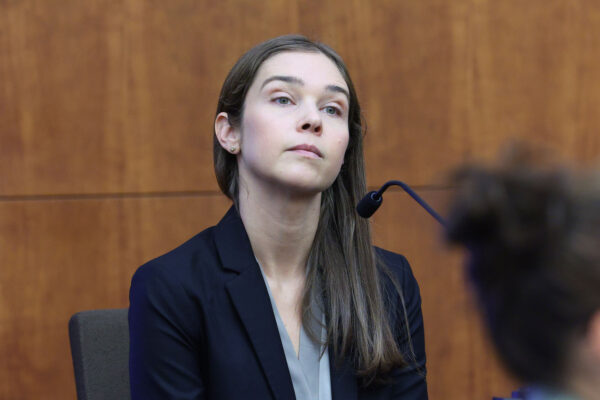
Jennifer Tufts testifies on Aug. 10, 2026. (Court TV)
In a malpractice lawsuit naming Tufts as a defendant, Clancy alleged that her telehealth therapy appointments with the doctor only spanned 17 minutes. When asked about that on Monday, Tufts said that the sessions were 25 to 30 minutes long. “It says the therapy component was for 17 minutes,” she said. “It doesn’t say the entire duration is 17 minutes.” When asked what she did for therapy, Tufts said, “I listened to her; I listened to her concerns and provided support. I tried to provide her with hope that eventually things would improve.”
Tufts said Clancy had “denied feeling suicidal but said that she was close to feeling suicidal,” but her notes did not indicate how frequently those thoughts occurred. She was also unaware that Clancy allegedly called suicide hotlines twice before the incident. In the weeks leading up to the children’s deaths, Clancy attempted to check herself into multiple hospitals for inpatient treatment for her worsening symptoms. After Clancy’s release, Tufts admitted that she had never looked at the hospital medical records.
“I did not feel like it was necessary, because [Clancy] provided all the relevant information about her treatment there,” Tufts said. Tufts agreed that she could have asked Clancy to sign HIPAA forms that would have allowed her to see the defendant’s records and treatment history, but said, “It didn’t seem necessary.”
Tufts has denied any malpractice in the civil lawsuit, which also lists Tufts’ employer and other doctors who saw Clancy as defendants.