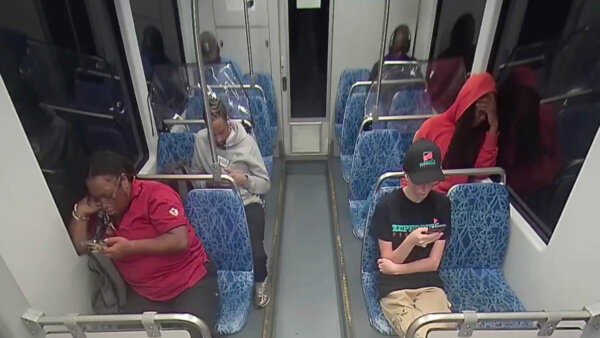

CHARLOTTE, N.C. (AP) — A federal grand jury indicted a man on a charge that he fatally stabbed a Ukrainian refugee on a Charlotte, North Carolina, commuter train

Decarlos Brown Jr. faces state and federal charges after allegedly stabbing Iryna Zarutska on a train. (Mecklenburg County Sheriff’s Office)
Wednesday’s indictment on a charge of causing death on a mass transportation system keeps a possible death sentence on the table for Decarlos Brown Jr. if prosecutors decide to seek it.
Brown stabbed 23-year-old Iryna Zarutska in an apparently random attack captured on video. Brown is also charged with the killing in state court, but federal prosecutors stepped in after growing questions about why Brown was on the street despite 14 prior criminal arrests.
MORE | Man accused of killing woman on commuter train incompetent to stand trial
Video from the commuter train showed Zarutska entering a light-rail train on Aug. 22 and taking a seat in front of Brown, who was seated behind her. Minutes later, without any apparent interaction, he pulled out a pocket knife, stood up and slashed her in the neck, investigators said. Passengers screamed and scattered as she collapsed.
Zarutska had been living in a bomb shelter in Ukraine before coming to the U.S. to escape the war, according to relatives, who described her as determined to build a safer life.
The indictment indicates the charge against Brown is eligible for the federal death penalty.
Brown had cycled through the criminal justice system for more than a decade, including serving five years for robbery with a dangerous weapon in Mecklenburg County, according to court records. He was arrested earlier this year after repeatedly calling 911 from a hospital, claiming people were trying to control him. A judge released him without bail. His mother told local television she sought an involuntary psychiatric commitment this year after he became violent at home. Doctors diagnosed him with schizophrenia.
MORE | Video shows fatal stabbing of woman on NC commuter train
The federal case will run parallel with the state case charging Brown with first-degree murder.
The death penalty is also a potential punishment for people convicted of first-degree murder in North Carolina. However, the state has not carried out an execution since 2006. Legal challenges over the use of lethal injection drugs have, in part, delayed action.
North Carolina’s legislature passed a package of criminal justice bills last month in response to the killing that limits bail and seeks to ensure more defendants undergo mental health evaluations.
It also could restart the state’s death penalty by calling for the state Adult Correction Department secretary to find another form of execution if lethal injection is not available.