PUBLIC NOTICE RE: ELECTRONIC TRANSCRIPT COPY CERTIFIABILITY
WARNING: This electronic transmission of the official transcript of proceedings is deemed certifiable only to the extent that the reader of this message is viewing a first-generation authorized transmission. All subsequent transmissions of this first-generation electronic copy and all copies printed therefrom are unauthorized and non-certifiable, and the Official Reporter assumes no responsibility for consequences stemming from the use of such unauthorized non-certifiable copy. Responsibility for such consequences is that of the person or organization whose use of a non-certifiable unauthorized transmission or printed copy creates those consequences, including civil liability arising therefrom. No portion of this file may be redistributed or resold without permission, pursuant to California Government Code Section 69954(d). Authorized certifiable transcript copies are protected by digital signature. If you would like to purchase an official transcript of the proceedings, contact NetCourt, 1316 Harding Place, Charlotte, North Carolina, 28204 or click here.


           SUPERIOR COURT OF THE STATE OF CALIFORNIA

                 FOR THE COUNTY OF LOS ANGELES

     DEPARTMENT NO. WEQ        HON. HIROSHI FUJISAKI, JUDGE


     SHARON RUFO, ET AL.,                     )
                                              )
                                 PLAINTIFFS,  )
                                              )
               VS.                            )NO. SC031947
                                              )
     ORENTHAL JAMES SIMPSON, ET AL.,          )
                                              )
                                 DEFENDANTS.  )
     _________________________________________)


                  REPORTER'S DAILY TRANSCRIPT

                        JANUARY 8, 1997

                           VOLUME 38


                  REGINA D. CHAVEZ, CSR #8446
                       OFFICIAL REPORTER


     APPEARANCES:


     FOR THE PLAINTIFFS: DANIEL M. PETROCELLI ESQ.,
                         THOMAS LAMBERT, ESQ.,
                         PETER GELBLUM, ESQ., and
                         EDWARD MEDVENE, ESQ.
                         Firm:  MITCHELL SILBERBERG & KNUPP
                                11377 West Olympic Blvd.
                                Los Angeles, CA 90064-1663
                         For: Plaintiff Goldman

                         JOHN QUINLAN KELLY, ESQ.
                                330 Madison Ave.
                                New York, NY 10017-5090.
                         For: Plaintiff the Estate of
                              Nicole Brown Simpson


                         MICHAEL A. BREWER, ESQ.
                         Firm:  HORNBERGER & CRISWELL
                                444 South Flower St.
                                Los Angeles, CA 90071.
                         For:  Plaintiff Rufo


                        PAUL F. CALLAN, ESQ.
                        Firm:  CALLAN, REGENSTREICH,
                                KOSTER & BRADY
                                One Whitehall St.
                                New York, NY 10004
                        For:  Plaintiff Estate of
                              Ronald L.  Goldman


     FOR THE DEFENDANTS: ROBERT C. BAKER, ESQ.,
                         MELISSA BLUESTEIN, ESQ., and
                         PHILIP BAKER, ESQ.
                         Firm: BAKER, SILBERBERG & KEENER
                               2650 Ocean Park Blvd., #300
                               Santa Monica, CA 90405-2936.

                                       -and-

                         DANIEL LEONARD, ESQ. and
                         ROBERT D.  BLASIER, ESQ.
                         Firm:  BAILEY, FISHMAN & LEONARD.
                                6355 Riverside Blvd.
                                Suite 2-F
                                Sacramento, CA 95831


                    CHRONOLOGICAL INDEX OF WITNESSES
     DEFENDANTS' WITNESSES:                           PAGE
     ----------------------                          -----

     KAELIN, BRIAN
            DIRECT (B)                                   16

     MERRIN, STEPHEN
            DIRECT (B)                                   37
            CROSS (M)                                    39
            REDIRECT (L)                                 41
            RECROSS (M)                                  42
            REDIRECT (L)                                 42

     FUNG, DENNIS
            DIRECT (B)                                   44
            CROSS (TL)                                   80
            REDIRECT(B)                                  84
            RECROSS(TL)                                  89

     MERRILL, JIM
            DIRECT (L)                                   95

     MERRILL, JAMES
            CROSS (P)Reading of deposition              117
            REDIRECT (L)Reading of deposition           129
            RECROSS (P)Reading of deposition            132

     KILDUFF, RAYMOND DAVID
            DIRECT (L)Reading of deposition             133
            CROSS (P)Reading of deposition              149

     PARTRIDGE, MARK
            DIRECT (L)(Reading of Deposition)           154
            CROSS (P)                                   169

     FIATO, LAWRENCE
            DIRECT (PB)Reading of trial transcript      194
            CROSS (K)                                   203
            REDIRECT (PB)                               206

     Legend:  (B) = Mr. Robert B. Baker
             (BL) = Mr. Blasier
             (BR) = Mr. Brewer
              (C) = Mr. Callan
              (G) = Mr. Gelblum
              (K) = Mr. Kelly
              (L) = Mr. Leonard
              (M) = Mr. Medvene
             (MB) = Ms. Bluestein
              (P) = Mr. Petrocelli
             (PB) = Mr. Philip Baker
             (TL) = Mr. Lambert


     DEFENDANTS'
        NO.                DESCRIPTION               PAGE
     ----------             ------------              -----

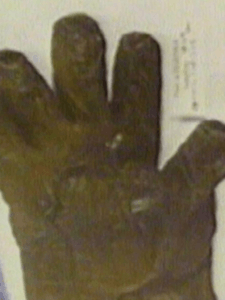
     2309        Photograph of glove                  60

     2310        Photograph of glove                  60

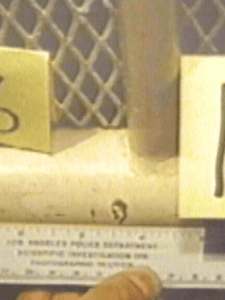
     2311        Photograph of close-up of            61
                 fourth finger of glove

     2312        Left-hand glove                      67

     2313        Right-hand glove                     77

     847        Notes of Mark Fuhrman                93


     SANTA MONICA, CALIFORNIA; WEDNESDAY, JANUARY 8, 1997

                             8:30 A.M.

     DEPARTMENT NO. WEQ    HON. HIROSHI FUJISAKI, JUDGE

            APPEARANCES: (Per Cover Page)


            (REGINA D. CHAVEZ, OFFICIAL REPORTER)


            THE COURT:  Morning.

            MR. PETROCELLI:  Good morning, Your Honor.

            THE COURT:  We have a defense declaration

     regarding witness Fiato.

            MR. PETROCELLI:  Yeah, I guess Gary Randa has

     yet to serve anyone.

            MR. LEONARD:  Not true.  He served Dr. Shipp

     yesterday.

            MR. PETROCELLI:  This guy is in the witness

     protection program, and we're going to object to his

     testimony, but not on this ground.

            THE COURT:  Okay.

                  The Court, at this time, will make its

     rulings on the objections filed by plaintiff on

     December 12, 1996, with regards to the video

     deposition of Henry Lee.

                  The Court has heretofore proceeded to

     make rulings prior to the December adjournment and had

     gone up to page 31 -- 33, page 33, line 19.

                  The Court's rulings on the objections are

     based upon the written objection and grounds stated in

     the plaintiffs' motion which I have referred to as the

     one filed December 12, 1996, and the Court

     incorporates into its rulings today without further

     repetition and incorporates by reference in the

     grounds for the objections stated in the written

     objections.

                  The Court also has considered the

     argument of counsel made yesterday in support of the

     objection and in support of opposition to the

     objections.

                  The Court has gone through the transcript

     of Dr. Henry Lee, two volumes taken September 7 and 8,

     1996; there are approximately 388 pages.

                  The Court is disappointed in the fact

     that counsel was not able to work out these

     differences as counsel had indicated they would.

                  So the Court has had to go through these

     yesterday afternoon and yesterday evening.

                  The Court's rulings are as follows:

                  I will read the page number -- I'm sorry,

     the page number and line number and indicate that the

     objection is either sustained which means that it will

     be excised and excluded from the videotape, or

     overruled in which case it will be permitted to be

     shown to the jury.

                  Starting with lines -- page 34, line 10

     through 17, sustained.

                  Page 34, 22 to 35, page 35, line 12,

     sustained, except that page 35 line 7 through line 18

     the objection is overruled.

                  Page 35, line 15 through line 19,

     sustained, remainder is overruled to page 36, line 6.

                  Page 36, line 10 through line 20,

     sustained.

                  I think for simplicity in as much as the

     written objections are in the form of a first number,

     for example, 37, indicating page, colon O2, indicating

     the line, I'm going to read it in that fashion so that

     counsel have the written objections before them and

     will be aware of the Court's ruling.

                  37:02, sustained.

                  37:08 to 37:19, sustained.

                  39 -- I'm sorry 37:20 to 39:06,

     overruled.

                  39:10 to 39:12, overruled.

                  39:18 to 41:12, overruled.

                  41:17 through 43:13, overruled.

                  43:18 through 44:11, overruled.

                  44:18 through 45:13, overruled.

                  45:16 through 46:13, overruled.

                  51:15 through 54:06, overruled.

                  54:13 to 55:10, overruled.

                  56:22, overruled.

                  58:03 through 58:05, sustained.

                  58:08 through 58:15, sustained.

                  58:21 through 59:11, sustained.

                  59:14 through 60:09, sustained.

                  60:12 through 60:18, sustained.

                  60:19 through 60:20, overruled.

                  60:25 through 61:03, sustained.

                  61:06 through 61:11, sustained.

                  61:15 through 61:21, sustained.

                  61:24 through 67:12, overruled.

                  67:15 through 68:18, overruled.

                  69:01 through 70:18, overruled.

                  70:24 through 71:13, sustained.

                  71:17 through 72:07, sustained.

                  72:12 through 73:11, sustained.

                  73:21 through 74:08, overruled.

                  74:09 through 74:14, sustained.

                  74:17 through 75:05, sustained.

                  82:10 to -- through 82:25, overruled.

                  83:03 through 83:08, sustained.

                  83:11 through 95:5 -- 05, sustained.

                  95:14 through 100:19, overruled.

                  102:12 through 106:02, overruled.

                  106:15 through 106:25, overruled.

                  108:21 through 109:07, overruled.

                  109:09 through 109:10, overruled.

                  109:13 through 110:03, sustained.

                  110:14 through 111:01, overruled.

                  111:02 through 111:08, sustained.

                  111:11 through 111:12, sustained.

                  111:13 through 112:01, overruled.

                  112:20 through 115:08, overruled.

                  115:11 through 117:14, overruled.

                  117:17 through 117:19, sustained.

                  117:21 through 117:23, sustained.

                  117:24 through 118:07, overruled.

                  118:12 through 119:23, overruled.

                  119:24 through 120:19, sustained.

                  120:20 through 121:19, overruled.

                  121:21 through 124:19, overruled.

                  125:04 through 127:12, overruled.

                  127:13 through 127:20, sustained.

                  127:24 through 129:12, objection was

     withdrawn.

            MR. PETROCELLI:  Withdrawn as to violate

     stipulation, Your Honor, but as not to the motion in

     limine.

            THE COURT:  127:24 through 129:12, sustained.

                  129:15 through 130:20, objection

     withdrawn.

                  130:23 through 131:01, overruled,

                  Sustained as to 131:02 through 131:04.

                  And overruled as to 131:05 through

     132:16.

                  Overruled as to --let's see, 132:19

     through 133:06, overruled.

                  Sustained as to 133:07 through 133:16.

                  133:17 through 133:18, overruled.

                  134:22 through 136:21, overruled.

                  138:04 through 138:21, withdrawn.

            MR. PETROCELLI:  Prior one is withdrawn also,

     Your Honor.

            THE COURT:  Excuse me.

            MR. PETROCELLI:  The prior objection is also

     withdrawn at line 14.

            THE COURT:  Okay.

                  136:24 through 137:24, withdrawn.

                  140:20 through 141:15, overruled.

                  141:16 through 142:04, sustained.

                  142:07 through 142:12, sustained.

                  144:01 through 144:15, sustained.

                  Remainder of line -- Of that portion

     between 142:13 through 143:25 and 144:16 through

     146:23 are overruled.

                  147:01 through 148:07, overruled.

                  148:10 through 149:03 are overruled.

                  149:06 through 149:08, overruled.

                  149:11 through 149:16, overruled.

                  149:17 through 150:22, sustained.

                  150:25 through 151:09, sustained.

                  151:13 sustained.

                  151:14 through 153:07, sustained.

                  153:10 through 154:01, overruled.

                  154:05 through 154:07, sustained.

                  154:11 through 155:07, sustained.

                  156:16 through 157:06, overruled.

                  157:10 through 157:14, overruled.

                  157:15 overruled.

                  157:18 through 157:20, overruled.

                  157:22 overruled.

                  157:25 through 158:05, overruled.

                  158:08 through 158:22, overruled.

                  159:01 through 159:08, overruled.

                  159:13 through 160:23, overruled.

                  160:24 through 161:05, sustained.

                  161:08 through 161:16, sustained.

                  164:21 through 166:15, overruled.

                  166:18 through -- I'm sorry, 166:18

     through 171:01, overruled.

                  171:06 through 175:08, overruled.

                  175:16 through 178:09, sustained.

                  178:15 through 179:09, sustained.

                  179:16 through 180:22, sustained.

                  181:09 through 183:04, sustained.

                  183:07 through 184:17, overruled.

                  184:18 through 184:20, sustained.

                  184:21 through 185:23, overruled.

                  187:04 through 187:22, overruled.

                  187 -- 187:25 through 189:01, overruled.

                  189:03 through 189:06, overruled.

                  189:09 through 189:22, overruled.

                  189:23 sustained.

                  190:02 through 190:04, sustained.

                  190:07 through 190:21, overruled.

                  190:24 through 190:25, sustained.

                  191:02 through 192:06, sustained.

                  192:09 through 192:22, sustained.

                  192:25 through 193:03, overruled.

                  193:05 through 193:16, overruled.

                  193:22 through 194:06, overruled.

                  194:07 through 194:11, sustained.

                  194:13 sustained.

                  194:16 through 194:18, sustained.

                  194:20 through 194:21, sustained.

                  194:22 through 195:24 through 196:02,

     sustained.

                  196:01 through 196:06, sustained.

                  196:07 through 198:15, overruled.

                  198:18 through 203:23, overruled.

                  204:12 through 209:17, overruled.

                  209:20 through 210:24, overruled.

                  211:02 through 211:12, overruled.

                  211:15 through 212:09, overruled.

                  212:15 through 214:04, sustained.

                  214:08 through 214:11, sustained.

                  214:14 through 215:09, sustained.

                  This next one I don't quite understand

     the pagination of the objection.  It would appear to

     me if there was going to be an objection it ought to

     run from 354 through 357:18.

            MR. BAKER:  We need to -- then we need to

     object to more stuff.

            THE COURT:  Otherwise the objection makes no

     sense.

            MR. PETROCELLI:  Through what line, Your Honor?

            THE COURT:  Well, the objection as posed runs

     from 356:01 through 357:18 which looks like a non

     sequitur on this is it starts as page 354, I don't

     understand the objection.

            MR. PETROCELLI:  Actually, Your Honor, why

     don't you just omit that line.

            THE COURT:  Excuse me?

            MR. PETROCELLI:  Just omit it.

                  We will withdraw the objection on line 6

     of page 8, okay.  The objection is to lines 1 through

     19 on page 356, and I think that's an error there

     because it's in relation to Mr. Medvene's

     cross-examination.

            MR. GELBLUM:  No, it's not.

            MR. PETROCELLI:  According to mine it is.

            THE COURT:  On your -- are you withdrawing the

     entire objection on line 6 of your page 8?

            MR. PETROCELLI:  One second, Your Honor.


                         (Mr. Petrocelli and Mr. Gelblum

                         converse sotto voce.)


            MR. PETROCELLI:  Okay.

                  Here's the explanation, Your Honor.

     Because of the direct exam on the new work which I

     believe Your Honor has excluded on lines 1 through 19

     on page 356, that's the cross on that point, so that

     would come out as well, that's why it's in there.

            THE COURT:  Well, what about -- what's the

     material from 354 through --

            MR. PETROCELLI:  We don't have any objection to

     page 354.  I don't see it on here.

                  They didn't designate that part of the

     transcript to be played, so therefore --

            THE COURT:  Oh, is that what it is?

                  All right.

            MR. GELBLUM:  The left column is their

     designated.

            MR. P. BAKER:  We designated all the direct.

            MR. PETROCELLI:  354 is in cross.

            MR. P. BAKER:  Okay.

            THE COURT:  So that's not included.

                  All right.

                  So what are you asking for a ruling on?

     On your line 6 of page 8?

            MR. PETROCELLI:  That's the new work on the --

     on the imprint.

            MR. GELBLUM:  It's on both.  It starts out --

            THE COURT:  Well --

            MR. PETROCELLI:  Your Honor, we're going to

     withdraw that objection right there.

            THE COURT:  All right.

                  Withdrawn then.  That's 356:01 through

     357:18.

            MR. PETROCELLI:  One second.  We want to

     make -- are you intending there to designate our --

     you've designated 19 lines of our cross-examination or

     so.

            MR. P. BAKER:  We're not going to play any of

     your cross.

            MR. PETROCELLI:  Okay.  So based on that

     representation we're omitting the objection to their

     designation that appears on line 6, page 8.

            THE COURT:  Withdrawn.

            MR. PETROCELLI:  Picking up again at page 358,

     358:15 - 24 is where we pick up.

            THE COURT:  358, line 19 through -- 358:19

     through 358:24, sustained.

                  359:03 through 359:07, sustained.

                  359:10 through 359:15, sustained.

                  359:18 through 359:23, sustained.

                  360:01 through 360:05, sustained.

                  360:13 through 360:18, sustained.

                  361:04 through 361:14, sustained.

                  361:18 through 361:22, sustained.

                  362:19 through 363:05, overruled.

                  363:10 through 363:23, overruled.

                  364:02 through 364:09, sustained.

                  364:16 through 366:02, sustained.

                  366:04 sustained.

                  366:07 through 366:17, sustained.

                  366:21 through 367:14, sustained except

     as to 367:04 through 367:10, that's overruled.

                  367:20 through 367:22, that's overruled.

                  367:23 through 368:03, sustained.

                  368:06 through 369:07, sustained.

                  369:10 sustained.

                  372:01 through 372:06, overruled.

                  374:24 through 375:11, overruled.

                  375:22 through 376:11, sustained.

                  376:15 through 376:19, sustained.

                  376:21 through 377:21, sustained.

                  377:25 through 378:14, sustained.

                  378:17 through 379:14, sustained.

                  379:18 through 379:22, sustained.

                  379:25 through 380:05, sustained.

                  380:08 through 381:01, sustained.

                  384:20 through 385:03, overruled.

                  385:08 through 385:14, overruled.

                  385:17 through 385:18, overruled.

                  385:20 through 385:25, sustained.

                  386:03 through 386:06, sustained.

                  387:03 through 387:07, sustained.

                  And 387:10 through 387:25, sustained.

            MR. PETROCELLI:  Thank you, Your Honor.

                  Your Honor, very briefly, the next

     witness is Kato Kaelin, and I have a couple of issues

     I want to take up with the Court.

                    First of all, I want to reiterate that

     the Court permitted Mr. Baker to, in effect, take this

     witness out of order when I examined him, and

     Mr. Baker was permitted to go way, way beyond the

     scope of the cross, on the representation that he

     wouldn't have to come back again.  And I just would

     like to make sure that we're not going over the same

     ground again.

                  Secondly, Mr. Baker has indicated to me

     in prior conversations, that one of the topics of

     examination might involve television appearances by

     Mr. Kaelin following his civil trial testimony.

                  And as the Court will recall, in

     connection with the prior examination of Dr. Baden, we

     were not permitted to play any of those tapes unless

     there was a foundation for it, for a particular, for

     example, inconsistent statement that was made, or

     something to that effect.

                  I've asked Mr. Baker before Your Honor

     took the bench whether he intended to play any of the

     tapes, and he would not disclose that to me.  So I

     just want to make sure that if the defense intends to

     play any of these TV tapes, that we have an

     opportunity to be heard with regard to the relevance

     and an offer of proof.

                  And lastly, Your Honor, on the issue that

     came up yesterday when Mr. Tippin was on the stand and

     he was shown a police report that he had prepared --

     of handwritten notes, I should say, that had reference

     to alleged drug use, and I suspect that Mr. Baker may

     question Mr. Kaelin about any alleged drug use by

     Nicole Brown Simpson.  And we objected to that

     yesterday, but the police report was admitted.

                  I submit, Your Honor, that there's

     absolutely no relevance at all in regard to any issue

     of drug use by Nicole Brown Simpson.

                  First of all, there's no proof of it.

                  And secondly, even if it could be

     established, under the case of People versus Kaurish,

     there has to be some direct link-up, either directly

     or through circumstantial evidence, that had anything

     to do with her murder.  And just throwing out that

     somebody does drugs doesn't do it.

                  The Court, in that case, in fact, went

     even farther and said mere evidence of motive or mere

     evidence of opportunity is not enough.

                  If you're trying to suggest drug use

     because you want to paint the picture that a person is

     involved with unsavory characters, therefore, there's

     a third party out there who might have killed her,

     you've got to have more than that; you've got to have

     some direct evidence or some circumstantial evidence

     linking any drug use to her death.

                  And there were other motions in limine

     that were made in which the Court, for example,

     excluded any reference of Faye Resnick's drug use on

     this issue.

                  So I would ask that the witness not be

     questioned in regard to that issue, Your Honor.

            MR. BAKER:  Your Honor, the plaintiffs have

     tried to paint the picture that Mrs. Simpson --

     Ms. Simpson was not pursuing Mr. Simpson, and that

     that's why he was enraged.

                  We have suggested that the evidence will

     show that her behavior was erratic.  And my

     understanding is that this goes not only to the

     erratic behavior that she exhibited in April, May, and

     the early part of June of 1994, but it also goes to

     the -- the cross-examination that the plaintiffs put

     on, their own witness, in effect, as Tippin was an

     employee of theirs, that they -- that he never said --

     that is, Kaelin never said that Nicole Brown Simpson

     was the person who was the drug -- using drugs and

     listed in the Tippin report, Exhibit 2190.

            THE COURT:  Okay.

                  The Court will preclude examination of

     Kaelin with regards to drug use.

            MR. BAKER:  With respect to what?

            THE COURT:  Drug use by the decedent.

            MR. BAKER:  And whether he ever mentioned it

     to --

            THE COURT:  That's irrelevant, really.

                  Okay.  May we proceed?

            THE CLERK:  That exhibit is 2198, for the

     record, not 2190.

            MR. PETROCELLI:  In regard to the television

     tapes, can we have some advance notification before a

     tape is played in front of the jury?

            THE COURT:  All right.  So ordered.

                  Bring in the jury.


                         (Jurors resume their respective

                         seats.)


            THE COURT:  Good morning, ladies and gentlemen.


            JURORS:  Good morning, Your Honor.

            THE COURT:  You may proceed.

            MR. BAKER:  Brian Kaelin.

            THE CLERK:  Just have a seat.

                  You've been previously sworn.  You are

     still under oath.

                  Would you please state your name again

     for the record.

            THE WITNESS:  Brian Kaelin.


                          BRIAN KAELIN,

     called as a witness by the Defendants, having been

     previously duly sworn by the Clerk, testified further

     as follows:


                       DIRECT EXAMINATION

     BY MR. BAKER:

            Q.    Good morning, sir.

            A.    Morning.

            Q.    How many television shows have you

     appeared on, with or without your attorney, since you

     left the witness stand in this case?

            MR. PETROCELLI:  Objection.  Relevance.

            THE COURT:  Sustained.

            Q.    (BY MR. BAKER)  Well, in terms of -- you

     have made a career out of this case, haven't you?

            MR. PETROCELLI:  Objection.  Relevance.

            THE COURT:  Overruled.

            A.    No.

            Q.    (BY MR. BAKER)  You -- let me ask you

     this, sir:

                  You met with the plaintiffs' attorneys

     this morning, did you not?

            A.    No, I did not.

            Q.    You went over a statement, a police

     statement that you had given Detective Tippin before

     you got on the witness stand today, did you not?

            A.    No, I did not.

            Q.    Have you at any time gone over the

     witness statement that you gave Detective Tippin on

     June 13, 1994?

            A.    Is that the one that -- last time I was

     here?

            Q.    No.  June 13, 1994.

            A.    No; I never went over anything.

            Q.    You know, about two and a half years ago?

            A.    No, never.

            Q.    You were interviewed at the West L.A.

     station at 1330, or about 1:30 in the afternoon by

     Detectives Tippin and Carr.  You recall that?

            A.    Correct.

            Q.    And you indicated various things about

     your relationship with Nicole Brown Simpson and O.J.

     Simpson, correct?

            A.    Correct.

            Q.    And you indicated, for example, that O.J.

     had never indicated to you he had any problems with

     Nicole Brown Simpson, correct?

            A.    I don't -- I don't recollect that.

            Q.    O.J. mentioned no problems between Nicole

     and himself.  Did you tell Detective Tippin that on

     June 13, 1994, sir?

            A.    I don't recall.

            Q.    Don't have any reason to disbelieve it if

     it's in the report of Detective Tippin?

            A.    Correct.

            Q.    Don't have any reason to disbelieve

     anything that's in the report of Detective Tippin as

     relative to what you told him on June 13, 1994 and he

     recorded as you were being interviewed by him?

            MR. PETROCELLI:  Objection, Your Honor.  Lack

     of foundation.  He's never seen a report.  It's not

     his report.  He can't vouch for everything that's in

     it.

            THE COURT:  Sustained.

            Q.    (BY MR. BAKER)  This is 2198, Mr. Kaelin.

                  Is that the document -- strike that.

                  Have you ever never seen that?

            A.    No, I never saw this.

            Q.    All right.

                  But that is the time you were at West

     L.A. station when you gave the report, correct?

            A.    I think I was there a lot earlier than

     1:30, but. . .

            Q.    You were there earlier; that's when that

     statement was taken.

                  And you recall being interviewed by

     Detective Tippin, right?

            A.    Yes.

            Q.    And do you recall that you, in fact,

     answered some questions of him?

            A.    Yes, I did.

            Q.    And you recall that it took a period of

     time, correct?

            A.    Correct.

            Q.    And you told him the truth as you

     understood it on that day, true?

            A.    True.

            Q.    And I take it that your memory was more

     fresh concerning the events of the prior evening than

     at any time thereafter when you testified, true?

            A.    Yeah, probably.

            Q.    And you were trying to be true and honest

     as you could in giving Detective Tippin the

     information that you did on June 13, 1994, correct?

            A.    Correct.

            Q.    Now, was it your understanding when you

     told Detective Tippin that O.J. Simpson was wearing a

     sweatsuit, that he was wearing a sweatsuit when he

     entered the limousine?

            A.    Yeah.  I always thought he was wearing a

     dark suit.

            Q.    A dark suit when he entered the

     limousine?

            A.    Sweatsuit.

            Q.    And when -- after Mr. Simpson came out of

     the house around 11 o'clock on the evening of

     June 12, 1994, you were with him when you were talking

     about the thumps, right?

            A.    Repeat the question.

            Q.    Sure.

                  After Mr. Simpson came out of the house,

     you were with him when you were talking with him and

     Alan Park concerning the thumps that you heard earlier

     in the evening, correct?

            A.    Correct.

            MR. PETROCELLI:  Your Honor, it's all been gone

     over.  Page 181, et seq. of the transcript of November

     19.

            THE COURT:  Sustained.

            Q.    (BY MR. BAKER)  Now, you had occasion to

     view Mr. Simpson for a -- for about five to seven

     minutes, and you thought he was in a dark sweatsuit

     when he entered the limousine, correct?

            A.    In my minds's eye, I always picture him

     in that dark suit.

            Q.    You didn't picture him in Levis or Levis

     jacket; he was in a dark pants -- dark suit, correct?

            A.    Yes.

            Q.    And he had dark or white shoes on?  Don't

     recall?

            A.    I don't recall.

            Q.    You don't recall any types of shoes he

     had on?

            A.    I don't recall.

            Q.    Now, you were talking to Rachel Ferrara

     the night of June 12, 1994, when you heard the thumps,

     correct?

            A.    Correct.

            Q.    And you, in your conversation with her,

     you talked to her and told her at 10:30, that it was

     approximately 10:30, correct?

            MR. PETROCELLI:  Objection.  It's all been gone

     over.

            THE COURT:  Sustained.

            Q.    (BY MR. BAKER)  You have no reason to

     disbelieve Rachel Ferrara if she said that you told

     her the thumps occurred at about 10:40, correct?

            MR. PETROCELLI:  Objection, Your Honor.  Same

     thing.

            THE COURT:  I'll permit that.

            A.    I don't know.

            Q.    (BY MR. BAKER)  Well --

            A.    I don't -- I mean -- say the question

     again.

            Q.    Sure.

                  Rachel Ferrara testified at the criminal

     trial.  You're aware of that?

            A.    Correct.

            Q.    And she testified that you told her that

     the thumps occurred at 10:40?

            MR. PETROCELLI:  Objection, Your Honor.  That

     absolutely misstates the testimony.

            MR. BAKER:  The testimony was read into the

     record.

            MR. PETROCELLI:  It misstates the testimony.

                  I wish you would ask a question, not make

     any representations.

            MR. BAKER:  You're making a representation.

            THE COURT:  Well, approach the bench and show

     me where it's wrong, Mr. Petrocelli.

            MR. PETROCELLI:  He should have to show where

     he testified to this, Your Honor.

            THE COURT:  You're making the objection.  I'll

     see the basis for your objection.


                         (The following proceedings were

                         held at the bench, with the

                         reporter.)


            MR. PETROCELLI:  Ms. Ferrara's testimony was

     that the only time that was ever mentioned to her in

     her conversation with Kaelin was the time of 10:30,

     when she asked Kaelin what time it was, and Kaelin

     said 10:30.  And everything beyond --

            THE COURT:  Show me.

            MR. PETROCELLI:  -- beyond that were estimates.

                  I'm looking for it.

            MR. BAKER:  2462.

            THE COURT:  Do you have a copy of Kaelin's

     testimony?

            MR. BAKER:  Yeah.

                  (Court reviews transcript.)

            THE COURT:  Okay.

                  Objection sustained.

            MR. BAKER:  Wait just a second.

            MR. PETROCELLI:  What does that say?

            MR. BAKER:  10:30.

            MR. PETROCELLI:  Kaelin didn't say it was

     10:30.

            THE COURT:  Sustained.

                  You may rephrase the question.


                        (The following proceedings were

                         held in open court, in the

                         presence of the jury.)


            Q.    (BY MR. BAKER)  Do you recall in your

     conversation with his Rachel Ferrara, that you and she

     talked about at 10:30, that it was, in fact, 10:30?

            A.    No.

            Q.    And if she testified to that, you'd have

     no reason to disbelieve her, correct?

            MR. PETROCELLI:  Objection.  Argumentative.

            THE COURT:  Overruled.

            A.    I don't know if she had a clock when she

     was talking to me.

            Q.    (BY MR. BAKER)  You said that you and she

     discussed at 10:30 that it was, in fact, 10:30.  You

     have no recollection of that?

            MR. PETROCELLI:  Objection.  There was nothing

     about that it was, in fact, 10:30.

            THE COURT:  Sustained.

            Q.    (BY MR. BAKER)  Then it was about 10:30

     when you and she discussed -- about the time, at

     10:30, in a telephone conversation you had with her,

     before you got off the phone and went to look for what

     made the noises, correct?

            A.    Not correct.

            Q.    You have no recollection of that, right?

            A.    I don't remember saying -- if there's a

     time mentioned, it wasn't a time involving, I'm sure,

     the thumps.

            Q.    In the conversation you had before you

     got off the phone to go look to where the noises may

     have come from, Rachel Ferrara says that you and she

     discussed that it was approximately 10:30, when it was

     approximately 10:30.

                  Do you recall that having occurred at

     all, sir?

            MR. PETROCELLI:  I'm going to object, Your

     Honor.  It really misstates the tenor of the testimony

     of Ms. Ferrara.

            MR. BAKER:  Your honor -- Your Honor, at

     20462 --

            MR. PETROCELLI:  We're not talking about the

     time.

            MR. P. BAKER:  20462.

                         (Court reviews realtime computer

                         screen.)

            THE COURT:  Are you asking about when the

     conversation occurred, Mr. Baker?

                  I can't understand from the way this

     question looks on the computer exactly what the nature

     of your question is.

            MR. BAKER:  Let me see if I can rephrase it to

     make it clear.

            Q.    (BY MR. BAKER)  Do you have any

     recollection whatsoever that, during the first

     conversation you had with Rachel Ferrara on

     June 12, 1994, that you mentioned or she mentioned any

     time of the evening?

            A.    There might have been some mention of

     time during the evening, yes.

            Q.    And do you have a recollection that at

     approximately 10:30 in the evening, in your -- during

     your telephone call with Rachel Ferrara, that you and

     she discussed that it was about 10:30?

            A.    I don't recollect that.

            Q.    And do you have any recollection that,

     about ten minutes later -- well, strike that.

                  Do you have any recollection, at

     approximately 10:40, ever telling her that you heard

     thumps outside your bedroom wall?

            MR. PETROCELLI:  Objection.  This was the

     subject of --

            THE COURT:  Overruled.

            MR. PETROCELLI:  -- extensive testimony, Your

     Honor, page 168.

            MR. BAKER:  You can answer that.

            A.    No, I don't.

            Q.    (BY MR. BAKER)  Now, if -- Rachel

     Ferrara, as far as you're concerned, is a pretty

     honest person, isn't she?

            A.    Yes.

            Q.    And if she testified that, at

     approximately 10:30, you and she discussed that it was

     about 10:30, and ten minutes later, when you told her

     about the thumps and asked her about the earthquake,

     you'd have no reason to disbelieve that, either, would

     you?

            A.    I don't know if she has a clock there.  I

     can't tell you.

            Q.    I didn't ask you whether she has a clock

     there.

                  I said, you have no reason to disbelieve

     her, would you, sir?

            A.    No.

            Q.    Now, let's go back for a moment, to

     the -- your testimony relative to the clothing

     Mr. Simpson was wearing.

                  You believed that Mr. Simpson was

     wearing -- and you testified in the preliminary

     hearing and you testified here in this courtroom that

     Mr. Simpson was wearing a dark sweatsuit when you went

     to the McDonald's, right?

            A.    Correct.

            Q.    And it had a white zipper down the front,

     right?

            A.    Right.

            Q.    White, both sides of the zipper?

            A.    Something that contrasted to the suit,

     right.

            Q.    It had white on both sides of the opening

     in the front, correct?

            A.    There was a zipper that stood out.  I

     believe it could have been white.

            Q.    You testified it was white, and it was a

     white zipper that went down the front, didn't you,

     sir?

            A.    I said that.

            Q.    And you testified that's exactly the same

     clothing that he was in when you watched him get into

     the limousine, when you came out of the front of his

     house; isn't that true?

            A.    I don't remember.

            Q.    Well, let's go back.

            A.    Okay.

            Q.    You were in Mr. Simpson's house with him,

     were you not, in the foyer, when you were going to go

     look for a flashlight?

            A.    Correct.

            Q.    And Mr. Simpson said to you, "it's late;

     I got to go," went out the foyer, into the limousine,

     and you went out behind him, correct?

            A.    Not immediately.

            Q.    You followed him.  Mr. Simpson went out

     the front door, and you went out after him, correct?

            A.    Correct.

            Q.    And you watched Mr. Simpson get into the

     limousine, correct?

            A.    At some point I did, yes.

            Q.    And Mr. Simpson -- and you say

     Mr. Simpson was in a dark sweatsuit, true?

            A.    It's always been that way in my mind's

     eye, yes.

            Q.    If you were the only one that testified

     that he was ever in a dark sweatsuit in that

     limousine, or on the airplane, or at the airport,

     you'd agree you're wrong, true?

            MR. PETROCELLI:  Objection, Your Honor.

     Argumentative.

            THE COURT:  Sustained.

            Q.    (BY MR. BAKER)  And you're equally wrong

     about what he was wearing when you went to McDonald's

     on the night of June 12, 1994.  You don't recall any

     better what he was wearing when he went to get a

     hamburger at McDonald's than what you recall when you

     observed him get in the limousine, do you?

            A.    I recall the dark suit.

            Q.    You recall with specificity the dark

     suit, both at -- going to get the hamburger and he

     going into the limousine, because you were a couple

     feet behind him and looked at him, right?

            A.    I've always said it was a dark suit, sir.

            Q.    And it wasn't, was it?

            MR. PETROCELLI:   Objection, argumentative.

            THE COURT:  Sustained.

            Q.    (BY MR. BAKER)  Did you tell anybody on

     television that when you testified here on November 19

     that the jurors all believed you, they sat up straight

     in their seats and believed you?

            MR. PETROCELLI:   Objection, outrageous.

            THE COURT:  Sustained.  Jury is to disregard

     that question.

            MR. PETROCELLI:  Ask that the question be

     stricken.

            THE COURT:  Question stricken.

            Q.    (BY MR. BAKER)  Now, when Mark Fuhrman

     was in your room on the night of -- morning of

     June 13, 1994, did he ask you to inspect your boots?

            MR. PETROCELLI:   Objection, Your Honor, all

     this has been gone over.  Starting at page 197.  Mr.

     Fuhrman's conversation starts at 197 and pretty much

     goes through 207 about 10 pages.


                         (Pause for Court to read

                         transcript.)


            THE COURT:  Sustained.

            Q.    (BY MR. BAKER)  Detective Fuhrman went

     into your bathroom and looked around in your bathroom

     on the night of June 13 -- the morning of June 13,

     1994, correct?

            MR. PETROCELLI:   Objection.  You just

     sustained it and he asks the same question, Your

     Honor.

            THE COURT:  Sustained.

            MR. PETROCELLI:  He's just arguing to the jury

     right now.

            Q.    (BY MR. BAKER)  If Detective Fuhrman

     testified --

            MR. PETROCELLI:   Again, Your Honor.

            THE COURT:  Let him finish the question.

            MR. PETROCELLI:   He's referring to Detective

     Fuhrman's testimony that's been subject of a lot of

     rulings.

            THE COURT:  I haven't heard the question.

            Q.    (BY MR. BAKER)  If Detective Fuhrman

     testified in the criminal trial that he inspected your

     bathroom, the shower area and the closet, would you

     agree that he in fact did that?

            MR. PETROCELLI:   Calls for hearsay, calls for

     a conclusion, argumentative.

            THE COURT:  Overruled.

            A.    I didn't see that.

            Q.    (BY MR. BAKER)  Now, that room, as I

     recall it, is about 14 feet across to maybe 20 feet,

     and it's 20 feet long, correct?  Do you know?

            A.    I don't know but you're probably -- you

     know, if you measured it -- I didn't measure.

            Q.    Well, the approximate size.  I'm not

     saying -- it wasn't a big room, let me put it that

     way.

            A.    Right.

            Q.    And from where your bed was in that room,

     the bathroom adjoins it, and it's not exactly a master

     bathroom, is it?

            A.    Correct.

            Q.    I mean a small little area, true, the

     bathroom?

            A.    Yeah.  I don't know what the measurements

     would be.

            Q.    It's got?

            A.    Shower, bathroom sink.

            Q.    Sure.  But it's not exceptionally

     spacious, is it?

            A.    No.

            Q.    And you were standing at the doorway when

     Mr. Fuhrman came in, correct?

            A.    Correct.

            Q.    And then Mr. Fuhrman went over and

     inspected your clothes, true?

            MR. PETROCELLI:   Objection, Your Honor.

            THE COURT:  Sustained.  That's completely gone

     over, page 202.

            Q.    (BY MR. BAKER)  You never saw Detective

     Fuhrman in your bathroom or in your closet, ever?

            THE COURT:  Objection sustained.

                  He was asked that question and he

     answered that.

            MR. BAKER:  Nothing further.

            THE COURT:  Anything else of this witness?

            MR. PETROCELLI:   No, no questions.

            THE COURT:  You may step down.

            THE WITNESS:  Go ahead.

            THE COURT:  You're excused.

                  Call the next witness.

            MR. LEONARD:  Your Honor, we're checking to see

     if he's here.

            MR. PETROCELLI:  If the Court please, may we

     approach before the witness.


                         (The following proceedings were

                         held at the bench with reporter:)


            MR. MEDVENE:  If the Court please, our

     understanding is this witness is being called to see

     whether or not he told Officer Tippin --

            MR. LEONARD:  Tippin?

            MR. MEDVENE:  -- Tippin, on or about June 15

     that he received a phone call from a news reporter on

     June 12 sometime between 10 and 10:30 with respect to

     a double murder, and this witness said he didn't have

     any such information.

            MR. LEONARD:  What?

            MR. MEDVENE:  Mr. Tippin already was questioned

     about this.

                  We object to Officer Merrin's testimony

     because it's hearsay, what questions he was asked by a

     news reporter.  But more importantly, it's irrelevant

     because under Your Honor's ruling, clue evidence

     cannot be admitted unless the defense can show some

     tie-in to the offense in question.

                  And all they're trying to establish here

     is that there was a call by a news reporter asking

     Officer Merrin if he had heard about a double murder

     being committed on June 12 and -- and about 10, 10:30,

     and he said no.

                  So unless there's some tie-in to the

     murders of Ms. Brown and Mr. Goldman, Detective -- or

     Officer Merrin's testimony is not relevant under Your

     Honor's prior ruling.

            THE COURT:  Mr. Leonard?

            MR. LEONARD:  Your Honor, this is a person who

     was holding themselves out to be some type of a

     reporter, a woman called between 10:30 -- 10 o'clock

     and 10:30 on June 12 asking if there had been a

     report -- a report of a double homicide.

                  That is completely inconsistent with

     their theory of the case, particularly their time

     line, the time of the murders.

                  It's also inconsistent with the murders

     having been committed by a single assailant.

                  Obviously, there was -- first of all,

     this witness will testify there was only one double

     murder that night anywhere in West LA.  So he's

     someone who has knowledge of a double murder being

     committed.

                  That's completely inconsistent with their

     theory, No. 1, that only one person was involved and,

     No. 2, the time line, and I think it's highly

     relevant, Your Honor.

                  I think there's no reason that we

     shouldn't be able to get into this at this point.

                  Also, this was not -- this was not -- as

     far as we know, this witness was not followed up at

     all.  This is before the jury.

                  I think we have a right to corroborate

     what Sergeant Merrin has already -- excuse me, what

     Tippin has already testified to.  I think it's

     relevant for the reasons I stated.

            MR. MEDVENE:  Your Honor, if we -- they want to

     call a witness, I don't think the witness to call,

     Officer Merrin, is relevant.  I think that's what they

     want to do, but I think that's irrelevant.  They

     can't --

            MR. LEONARD:  How could we?  They didn't follow

     up on it.

            MR. MEDVENE:  They can't show that the call

     from a news reporter, whether what -- whatever the

     news reporter was talking about had anything to do

     with this case.  There's no indication it has anything

     to do with the murders of Goldman or Nicole Brown.

                  They have to show under Your Honor's

     ruling some connection or --

            THE COURT:  What's the connection?

            MR. LEONARD:  Your Honor, it's a circumstance.

     Just like -- Just like Nancy Ney.

                  I mean, here we have a caller named

     Nicole.  It's the same -- it's the same kind of

     evidence.

                  Why should they be able to put in Nancy

     Ney's statement and we can't put this in.  It's the

     same type, it's a circumstance; it's a circumstance

     that's inconsistent with their circumstantial case.

                  I can't think of anything that would be

     more relevant.  I mean, you allowed the Nancy Ney

     hearsay in.  That was total hearsay, not connected

     other than by circumstance.

            THE COURT:  Touche.

            MR. LEONARD:  Thank you.


                         (The following proceedings were

                         held in open court in the presence

                         of the jury.)


                       STEPHEN R. MERRIN,

     called as a witness on behalf of the Defendants, was

     duly sworn and testified as follows:


            THE CLERK:  You do solemnly swear that the

     testimony you may give in the cause now pending before

     this court shall be the truth, the whole truth and

     nothing but the truth, so help you God?

            THE WITNESS:  I do.

            THE CLERK:  Please state and spell both your

     first and your last names for the record.

            THE WITNESS:  Stephen R. Merrin.  First name

     with a P-H, last name M-e-r-r-i-n.


                       DIRECT EXAMINATION

     BY MR. LEONARD:

            Q.    Good morning.  Is it Sergeant Merrin?

            A.    Yes, sir.

            Q.    Are you employed?

            A.    Employed by the Los Angeles Police

     Department.  I'm a Sergeant.  I'm in charge of the

     West Valley vice unit.

            Q.    How long have you been employed by the

     Los Angeles Police Department?

            A.    24 and a half years.

            Q.    Directing your attention to June 12,

     1994, particularly on the evening of that night, were

     you assigned to the West LA division?

            A.    No, sir, I was not.

            Q.    Where were you assigned, sir?

            A.    I was the patrol watch commander for

     Wilshire community police station.

            Q.    Now, just explain in brief terms what a

     watch commander is?

            A.    Basically that's the individual that's

     responsible for that particular watch, that particular

     time frame.

                  I was the p.m. watch commander.  I was

     responsible for the officers that were patroling

     Wilshire from approximately 2 in the afternoon 'til

     10:30 at night.

            Q.    Now, again, directing your attention to

     June 12, 1994, in particular around the time of 10 to

     10:30 p.m., did you receive a phone call from a woman

     who asked you if a double homicide on the west side

     was being handled?  Do you recall that, sir?

            MR. MEDVENE:  Objection, Your Honor, calls for

     hearsay.

            THE COURT:  Overruled.

            A.    I received a phone call from a female.

     It basically -- with that line on the conversation.

            Q.    (BY MR. LEONARD)  She asked you if a

     double homicide on the west side of Los Angeles was

     being handled, correct, sir?

            A.    Not a double homicide.  She said that --

     she asked me if we were sitting on two bodies on the

     west side?

            Q.    What does a double 187 mean, sir?

            A.    It means that there was two people that

     had been killed.

            Q.    What does a 187 term mean in police

     jargon?

            A.    Murder.

            Q.    Homicide, right?

            A.    Right.

            Q.    Did you tell a Detective Tippin on

     approximately July -- on July 7, 1994, that a woman

     had called at about 10 to 10:30 p.m. on June 12 and

     asked if a double 186 was being handled on the west

     side.

            THE COURT:  Do you know what a 186 is?

            Q.    187.  Excuse me.

            MR. LEONARD:  Thank you, Your Honor.

            A.    During the conversation, yes, it did get

     around to that, but the original portion of the

     conversation was she asked me if we were sitting on

     two bodies on the west side.

            Q.    Now, the woman represented to you that

     she was -- was somehow associated with Channel 4; is

     that correct?

            A.    That's correct.

            Q.    Were there any double homicides on the

     west side other than the one that occurred at 875

     South Bundy on the evening of June 12, 1994, sir?

            A.    Not to my knowledge.

            MR. LEONARD:  Thank you.

            THE COURT:  Cross.


                       CROSS-EXAMINATION

     BY MR. MEDVENE:

            Q.    You have no information of any kind, do

     you, Sergeant Merrin, that whatever the call was about

     had anything at all to do with the murders of Ron

     Goldman or Nicole Brown?

            MR. LEONARD:  Objection, calls for speculation.


                         (Court reviewed realtime computer

                         screen.)


            THE COURT:  In the form in which it is asked,

     sustained.

            Q.    (BY MR. MEDVENE)  You have no personal

     information that whoever called was referring to the

     murders of Nicole Brown or Ronald Goldman, do you?

            MR. LEONARD:  Same objection.

            THE COURT:  Sustained.

            Q.    (BY MR. MEDVENE)  Do you have any idea or

     any personal knowledge what the caller was referring

     to?

            MR. LEONARD:  Same objection.

            THE COURT:  Overruled.

            A.    No, sir, I do not.

            Q.    (BY MR. MEDVENE)  And you received calls

     as watch commander several times a day asking whether

     or not you've heard of any murders or crimes that have

     gone on in the area that you have any association

     with?

            MR. LEONARD:  Your Honor, I object as

     irrelevant and vague.

            THE COURT:  Overruled.

            A.    Yes, sir, I do.

            Q.    (BY MR. MEDVENE)  You receive many calls

     a day asking if there are any murders by the police

     reporter's?

            A.    At least 12.

            MR. LEONARD:  Objection, irrelevant and vague.

            THE COURT:  Overruled.

            A.    At least 12 calls a day from the news,

     the press, different news rooms.

            Q.    (BY MR. MEDVENE)  Does the Wilshire area

     cover Brentwood?

            A.    No, sir, it does not.

            MR. MEDVENE:  Nothing further.


                      REDIRECT EXAMINATION

     BY MR. LEONARD:

            Q.    Mr. Medvene asked you if you received

     calls on occasion from reporter's about murders,

     correct?  If there are any murders reported, right?

                  Remember him just asking you that?

            A.    Yes, sir, I certainly do.

            Q.    This caller didn't ask you if any murders

     had been reported.  She asked you if you had been

     sitting on two bodies that had been found on the west

     side; isn't that correct, sir?

            A.    That's correct.

            MR. LEONARD:  No further questions.


                      RECROSS EXAMINATION

     BY MR. MEDVENE:

            Q.    And you had no knowledge as you took the

     call of any murders in the Wilshire area that you have

     anything to do with; is that correct?

            A.    That's correct.

            Q.    And you have nothing to do with -- the

     watch commander shift of Wilshire has nothing to do

     with Brentwood; isn't that correct?

            A.    That's correct.

            MR. MEDVENE:  Nothing further.


                      REDIRECT EXAMINATION

     BY MR. LEONARD:

            Q.    I asked you before on direct examination

     if you were aware of any other double homicides on the

     west side other than the one that occurred at 875

     South Bundy.

                  Your answer was you were not; is that

     right, sir?

            A.    That's correct.

            Q.    Okay.

                  And I take it you followed up after you

     got this phone call about whether or not there were

     any other homicides; is that right, sir?

            MR. MEDVENE:  Objection, outside the scope,

     Your Honor.

            THE COURT:  You may reopen.

            Q.    (BY MR. LEONARD)  You followed up, didn't

     you?

            A.    I followed up, yes.

            Q.    You found out there hadn't been; isn't

     that right?

            A.    That's correct.

            Q.    By the way, you know this phone call came

     in certainly before 10:45 'cause that's when you left

     that night, right?

            A.    That's correct.

            Q.    That was the end of watch, EOW?

            A.    That's correct.

            Q.    Thank you.

            MR. LEONARD:  No further questions.

            MR. MEDVENE:  No further questions.

            THE COURT:  Thank you.

                  You may be excused.

            MR. BAKER:  Dennis Fung.


                          DENNIS FUNG,

     previously called as a witness on behalf of the

     Defendants, previously sworn, testified as follows:


            THE CLERK:  You've been previously sworn.  You

     are still under oath.

                  Would you state your name again for the

     record.

            THE WITNESS:  My name is Dennis Fung.


                       DIRECT EXAMINATION

     BY MR. BAKER:

            Q.    Good morning.

            A.    Morning.

            Q.    As I recall, Mr. Blasier examined you,

     and Mr. Blasier has had some major surgery and it's

     doubtful he will return to the trial.

                  I want to go back to the -- to the trash

     bag that you indicated you left Rockingham with

     Mr. Simpson's reference vial in it.

                  Remember that?

            A.    Yes.

            Q.    What else did you have in the trash bag

     besides Mr. Simpson's reference vial?

            MR. LAMBERT:  Asked and answered.

            THE COURT:  Do we have a copy of his testimony?

            MR. LAMBERT:  I only have one copy.

            THE COURT:  Cite me a page.

            MR. LAMBERT:  Apparently I don't have a page

     cite.  And I -- if you want me to find a section I'll

     find it for you.  It will take me a couple of minutes.

                  I think you would remember.  This was a

     subject of lengthy cross-examination.

            THE COURT:  This has been a long trial.

            MR. LAMBERT:  True.

            THE COURT:  I can't remember every word that is

     spoken by counsel.

            MR. BAKER:  The objection will take longer than

     the testimony, Your Honor.

            THE COURT:  I imagine so.

            MR. GELBLUM:  Page -- November 5, page 63.

            MR. BAKER:  Got about three questions on this,

     Your Honor.

            MR. LAMBERT:  Well, I'll withdraw it, Your

     Honor.  Let him answer it again.

            THE COURT:  Go ahead.

            Q.    (BY MR. BAKER)  Did you have trash in the

     trash bag?

            A.    There may have been crime scene labels in

     there, but I don't think there was any trash in there,

     no.

            Q.    Well, you picked up the numbers that you

     placed down on the concrete and you put them in that

     trash bag, didn't you?

            A.    I don't specifically recall doing that.

     They may have been in there, but I don't recall.

            Q.    You went into the house, this is on the

     afternoon of the 13, you came out of the house and

     were going to leave before Vannatter arrived at the

     house, and then suggested to Andrea Mazzola that she

     go back in and take one more quick look around; isn't

     that true?

            A.    Yes.

            Q.    And Vannatter wasn't there when you

     started to leave the house, isn't that correct, the

     first time?  And then you --

            A.    When we brought --

            Q.    You made the decision to go back in to

     see -- check to see if there was something else,

     correct?

            A.    We brought the crime scene kit and some

     items of evidence out to the truck and then went back

     in for a second look, yes.

            Q.    And you picked up the little numbers that

     you had on the driveway, you threw those numbers in

     the trash bag as trash with the reference vial of

     Mr. Simpson's blood, right?

            A.    That's possible, but I don't recall if

     that actually happened or not.

            Q.    Well, let me ask you this:  When you

     didn't have the trash bag to carry around sterile

     reference vials of blood, did you -- the trash bag was

     there so that you could put trash in it when you left

     Mr. Simpson's home; isn't that true?

            MR. LAMBERT:  Objection, that has been -- the

     purpose in using the trash bag was specifically gone

     into, Your Honor.

            THE COURT:  You may answer.

            A.    The trash bag was used as a carrying

     device, it wasn't used as a trash bag.

            Q.    (BY MR. BAKER)  Well, the numbers were

     trash after you used them, weren't they, on the

     driveway and in the foyer?

            A.    I don't consider it trash, no.

            Q.    Okay.

                  They are valuable pieces of paper, right?

            A.    I don't know how valuable they are, but

     they are not trash.

            Q.    Well, in any event, all of the blood

     spots -- and you put those little pieces of paper

     around in the foyer, were perfectly round, correct?

                  I mean they didn't look like Mr. Simpson,

     Allan Park, Kato Kaelin, didn't look like anybody had

     stepped in it, true?

            A.    Now, which drops are you talking about?

            Q.    In the foyer when you had your little

     numbers.  And you collected those at 4:30, remember,

     Item 12?

            A.    They did not appear to have been stepped

     in.

            Q.    And you collected the foyer blood drops

     at 4:30, and -- it was at 4:40.

                  Then you were up in Mr. Simpson's bedroom

     where you collected Item 13 which were the socks,

     right?

            A.    It was around that time.  Those are

     relative times.

            Q.    Well, you didn't put relative times on

     your log.  You put the times that item and event

     occurred; isn't that true?

            A.    Those times are ballpark figures.

            Q.    So they are all just ballpark figures now

     that there's been a big issue as to whether or not the

     socks were there when the videotape -- these numbers

     have become ballpark figures; is that what it is,

     Mr. Fung?

            MR. LAMBERT:  Objection, argumentative.

            THE COURT:  Sustained.

            Q.    (BY MR. BAKER)  Your log is supposed to

     show the times that you do various things when you're

     at a crime scene; isn't that true, sir?

            MR. LAMBERT:  Objection, argumentative, asked

     and answered.

            THE COURT:  Sustained.

            Q.    (BY MR. BAKER)  Well, what's the purpose

     of putting down the time if it's a ballpark figure,

     Mr. Fung?

            MR. LAMBERT:  Same objections, Your Honor.

            THE COURT:  Overruled.

            A.    I do not use those or that column in the

     crime scene sheet when I do my crime scenes unless

     it -- it is outside the parameters of when I got there

     and when I left.

                  Ms. Mazzola decided that she was going to

     write down those times and she went ahead and filled

     in those times.

            Q.    Well, do you think that these forms that

     you're using at a crime scene, it's kind of your

     decision as to whether or not you should use them or

     fill in the appropriate blanks?

            MR. LAMBERT:  Objection, argumentative, in

     violation of the Court's pretrial orders, Your Honor,

     in limine order No. 11.

            THE COURT:  Sustained.

            Q.    (BY MR. BAKER)  The times that are down

     on the sheets that you and Ms. Mazzola filled out at

     the crime scene at Rockingham indicate the times that

     you accomplished various tasks; you would agree with

     that?

            A.    As I stated before, those are pretty

     close to the times that they happen, but they are

     ballpark figures.

            Q.    Pretty close to the time things happened,

     you wouldn't put down that you collected the red blood

     stain or red stain in the foyer, this perfectly round

     blood stain in the foyer, at 1630, if in fact it was

     1610, would you?  You wouldn't be off 20 minutes,

     would you?

            A.    I would say they were within 10 minutes.

            Q.    Just happened to be 10 minutes?

            A.    Well --

            Q.    You know the issue relative to the socks,

     don't you?

            MR. LAMBERT:  Objection, argumentative, Your

     Honor.

            THE COURT:  Sustained.

            Q.    (BY MR. BAKER)  Are you trying to tailor

     your testimony relative to the collection of the socks

     in the bedroom, Mr. Fung?

            A.    No.

            MR. LAMBERT:  Objection, argumentative.

            THE COURT:  Overruled.

            A.    No, I'm not.

            Q.    (BY MR. BAKER)  Now, you knew that in the

     bedroom -- by the way, did it look like, on the bed,

     right in front of the socks, did it appear that

     anybody had sat down on that bed and had taken those

     socks off?

            A.    I don't recall.

            Q.    Well, do you recall there was a piece of

     luggage there, that you couldn't even sit down on the

     bed to take the socks off that were sitting so

     perfectly on that little throw rug?

            A.    I don't recall that, no.

            Q.    Do you recall whether the straps were up

     and down -- up or down on the luggage, Mr. Fung, when

     you were in the room?

            A.    I'd have to refer to the photographs.

            Q.    Do you recall that Sergeant Luper picked

     the straps up when he was looking for items underneath

     the -- underneath the bed?

            A.    I do not remember Sergeant Luper picking

     those up.

            Q.    Do you remember him getting under the bed

     to look for items, right?

            A.    I don't recall that.

            Q.    Do you recall that there was any evidence

     of blood whatsoever on that throw rug in the middle of

     the area right behind Mr. Simpson's bed?

            A.    I did not -- I did not detect any blood

     on that throw rug.

            Q.    You didn't detect any blood in the area,

     did you, in the bedroom at all, did you?

            A.    No, none was detected.

            Q.    Now, you testified in this courtroom on

     November 5 that item number 12 was collected at 4:30.

     You didn't say ballpark then, did you?

            A.    I was referring to the -- to my notes and

     that's what the notes say.

            Q.    And when you testified that item number

     13 was collected at 4:40, you didn't say ballpark

     then, did you?

            A.    I think I said they were approximate

     times.  I --

            Q.    Well, let me read what you said so that

     you have it.

            MR. LAMBERT:  Let's have the page and line.

            MR. BAKER:  51, line 7 through 11.

            Q.    (BY MR. BAKER)  Oh, I'm sorry.  Item 12.

                  (Reading:)

                         Q.    4:30, correct?

                         Your answer:  Correct.

                         Q.     And item number 14 was at

                  what time?

                         Item 14 was at 4:40.

                  That's your answer.

                  You didn't mention ballpark then, did

     you, sir?

            A.    Apparently not.

            Q.    Now, in terms of your collection of these

     socks, you then picked the socks up and put both socks

     in one container, cross-contaminating the socks,

     correct?

            MR. LAMBERT:  Argumentative, asked and

     answered.

            THE COURT:  Sustained.

            MR. BAKER:  Do you want to play that video.

     Then we'll --

            MR. LAMBERT:  Like to know what it is before --


            MR. P. BAKER:  Number 901.

            MR. LAMBERT:  It's already been played.

            MR. P. BAKER:  It was not in evidence when

     Mr. Fung testified the first time.

            THE COURT:  Okay.  Overruled.


                        (Videotape played.)


            Q.    (BY MR. BAKER)  Now, you --

            MR. BAKER:  Stop it.  Back it up, please.


                        (Tape is halted with view of bed.)


            Q.    (BY MR. BAKER)  That strap had been

     picked up by Sergeant Luper, had it not?

            MR. LAMBERT:  Asked and answered, Your Honor.

     He just said he didn't see that.

            THE COURT:  You may answer if you know.

            A.    I don't know.

            MR. BAKER:  All right.  Go ahead.

            Q.    (BY MR. BAKER)  Now --

            MR. BAKER:  Back it up.

            MR. P. BAKER:  I'm sorry.  I apologize.

            Q.    (BY MR. BAKER)  There's a fireplace --

            MR. BAKER:  Stop it right there.  That

     obliterates what I wanted to see (indicating to

     screen.)

            Q.    (BY MR. BAKER)  This fireplace is at the

     end of Mr. Simpson's bed, is it not?

            A.    Yes.

            Q.    In other words, if you're lying on the

     bed with your head back up against the headboard,

     you'd look at that fireplace, correct?

            A.    It was at that time, yes.

            Q.    Okay.

                  And then this is the throw rug down here

     (indicating to Elmo screen).

                  That is kind of a pale beige, is it not,

     sir?

            A.    There's a print pattern on it.

            Q.    A light color, it's pale, is it not,

     there's not any dark colors on it?

            A.    There's -- no, just some portions are

     darker than others.  There's a pattern on it.

            Q.    There's no blood whatsoever on that throw

     rug, correct?

            A.    I did not detect it.

            Q.    And it was never collected by you or

     anybody from the LAPD to see if there was blood that

     had allegedly transferred from these found socks to

     that rug, isn't that true, sir?

            MR. LAMBERT:  Objection, violates in limine

     order No. 11.

            THE COURT:  Sustained.

            MR. BAKER:  I didn't hear your ruling, sir.

            THE COURT:  Sustained.

            Q.    (BY MR. BAKER)  You didn't ask that that

     carpet be picked up and collected, did you, sir?

            MR. LAMBERT:  Same objection, Your Honor.

            THE COURT:  Sustained.

            Q.    (BY MR. BAKER)  Now, did you just pick

     the socks up with your hands, sir?

            A.    No.

            Q.    What did you pick them up with?

            A.    I don't recall exactly how I did it.  I

     may have used the gloves; I may have used the scoop

     method.

            Q.    You don't have a recollection if you

     picked them up with your hands or not, isn't that

     true?

            A.    No, I know I didn't.

            Q.    Now, you do recall that you took the

     Rockingham glove to the Bundy crime scene at the

     direction of Detective Lange, correct?

            MR. LAMBERT:  Objection, asked and answered.

            THE COURT:  Sustained.

            Q.    (BY MR. BAKER)  You walked into the crime

     scene with a brown bag with the Rockingham glove

     pursuant to orders from Detective Lange, did you not?

            MR. LAMBERT:  Objection, asked and answered.

     It's all been gone into.

            THE COURT:  I don't recall that one.

                  Overruled.

            A.    Can you repeat that?

            Q.    (BY MR. BAKER)  You took the Rockingham

     glove, the glove that was purportedly found on this

     little side pathway behind Mr. Simpson's house, and

     took that glove at the direction of Detective Lange

     and you took it over to Bundy in a brown paper bag and

     took it onto the crime scene, correct?

            A.    Yes.

            MR. BAKER:  Show that tape, please.


                        (Videotape played.)


            Q.    (BY MR. BAKER)  And let me ask you if

     this is you with the brown paper bag and the glove

     that you took onto the Bundy crime scene pursuant to

     the request and orders of Detective Lange?

            MR. P. BAKER:  2258.


                         (Exhibit 2258 displayed

                          at 1:18:17.12.)


            THE COURT:  Is there a question?

            Q.    (BY MR. BAKER)  Is this you?

            A.    That is me.

            Q.    And is that the brown paper bag

     containing the Rockingham glove that you were

     requested to bring onto the crime scene by Lange?

            A.    I don't recall if that was it or not.  It

     may have been but I don't know.


                        (Tape played to 1:18:18.24)


            Q.    (BY MR. BAKER)  One other area.  And I

     apologize for skipping around.

                  When you --

            MR. BAKER:  Phil, you can cut that off.


                        (Mr. P. Baker complies.)


            Q.    (BY MR. BAKER)  When you collected the

     socks, no matter whether you did it with your hands,

     your gloved hands or the scoop method, there was no

     debris on those socks, were there?

            A.    I did not detect any debris on it.  But I

     didn't look for it, either, that closely.

            Q.    You didn't look, right?

            A.    Not that closely.

            Q.    Well, you picked the socks up, and in

     however method you did it --

            MR. BAKER:  It's wonderful when they pass you a

     note and you can't read what it says (indicating).  I

     know it's my son's writing.  I just can't read it.

            MR. PETROCELLI:  It says no further questions.

            MR. BAKER:  Is that "sit down?"


                        (Laughter.)


            Q.    (BY MR. BAKER)  Now, you had the socks

     and you had to have them in a scoop or in the -- and

     the bag open to put the socks in, right?

            A.    Correct.

            Q.    So you had them within a couple of feet

     of your eyes, true?

            A.    No, at least arm's distance.

            Q.    And you didn't notice any dirt, any soil,

     any blood, nothing, correct?

            A.    Those were collected so that that could

     be done at a later time back at the lab.

            Q.    Maybe you didn't understand my question,

     sir.

                  You're a criminalist, are you not?

            A.    Yes, I am.

            Q.    You're not paid to close your eyes and

     not see things, are you?

            A.    No.

            Q.    And when you're at a crime scene and

     there's been a double homicide, I take it that you're

     extremely vigilant about looking for everything that

     may be evidence in the case, true?

            A.    That's correct.

            Q.    And your vigilance, if you will, is

     heightened because you know this is a high-profile

     crime and you knew it on June 13, 1994, when you

     picked up the socks in the bedroom at 4:40; isn't that

     true?

            MR. LAMBERT:  Argumentative, Your Honor, gone

     into before.

            THE COURT:  Sustained.

            Q.    (BY MR. BAKER)  You didn't see any soil,

     no debris, no blood, no nothing on those socks?

            MR. LAMBERT:  Asked and answered, Your Honor.

            THE COURT:  You may answer.

            A.    They were dark socks, and I --

            Q.    (BY MR. BAKER)  What did you see?  Did

     you see any soil, debris, blood, sir?

            A.    I did not detect any, no.

            Q.    Now, did you -- in your view, in looking

     at the gloves, did you determine where the cuts were

     on those gloves, if any?

            A.    We were -- we're talking about the gloves

     now?

            Q.    Yes, the gloves.  Yes, sir.  I switched

     to the gloves.  Sorry.

            A.    I did note when I got back to the

     laboratory some -- some cuts on them.

            Q.    Now, the left-handed glove was the glove

     that was found near the hat which was underneath the

     railing of the fence, right?

            A.    Referring to my notes.

            Q.    Please do.


                        (Witness reviews notebook.)


            A.    The glove from Bundy was a left-handed

     glove, yes.

            Q.    How many cuts were on the glove from

     Bundy, Mr. Fung?

            A.    I didn't make a note of that.

            Q.    Did you make a note of any cuts on the

     gloves?

            A.    I know at the -- a day or so after -- a

     day after the -- I had collected them, they were

     asking if -- to describe different -- the different

     gloves.  I did it telephonically and I -- but I didn't

     write it down.

            Q.    Well, was there a cut on the top of the

     fourth finger of the left glove?

            A.    I'd have to see photographs of the glove.

     I don't recall.

            Q.    Let me show you.

            MR. P. BAKER:  Next in order.  Two numbers.

            THE CLERK:  2309.


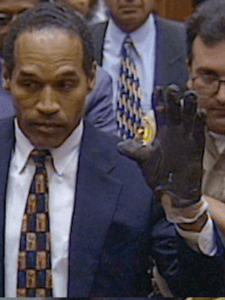
                         (The instrument herein described

                         as a photograph of glove was

                         marked for identification as

                         Defendants' Exhibit No. 2309.)


                         (The instrument herein described

                         as a photograph of glove was

                         marked for identification as

                         Defendants' Exhibit No. 2310.)


            MR. P. BAKER:  Okay.

            Q.    (BY MR. BAKER)  Do you see the cut on

     what would appear to be the top portion of the fourth

     finger?


                        (Witness reviews photograph.)


            A.    Not really.

            Q.    Right there.

            A.    Yes, I do see that.

            Q.    And that cut does not go through the

     lining of the glove, does it?

            A.    Actually, from what I recall, there was a

     rock that was -- a piece of rock or something that was

     stuck in the glove, like someone had hit it, the

     glove -- was wearing the glove, hit it real hard, and

     a piece of concrete or something from a wall had

     embedded into the finger.

            MR. BAKER:  You want to get the --

            Q.    (BY MR. BAKER)  Whatever happened to the

     rock?

            A.    It was with the glove when I booked it.

     I don't know.

            Q.    And it just kind of -- like the lens,

     it's just kind of gone?

            MR. LAMBERT:  Objection, argumentative.

            THE COURT:  Sustained.

            Q.    (BY MR. BAKER)  Now, does it look like a

     rock in that picture?

            MR. P. BAKER:  Next in order would be 2311,

     close-up of top of fourth finger.

                         (The instrument herein described

                         as photograph of close-up of

                         fourth finger of glove was marked

                         for identification as Defendants'

                         Exhibit No. 2311.)

            MR. BAKER:  Do you want to put that on the

     Elmo.


                         (Exhibit 2311 displayed on Elmo.)


            Q.    Now, does that look like a rock to you or

     does that look like a cut?

            A.    There's a damaged area on the finger

     that -- there you go.

            Q.    That area?

            A.    This area here could be -- could be that

     rock that I remember.

            Q.    Well, that's exactly the same area I

     pointed to on the other two exhibits, isn't it, sir?

            A.    Yes, it is.

            Q.    And you're telling me that's not a cut?

            A.    Well, there's an area of damage on there.

     I don't know if it's a cut or if it was caused by a

     rip.

            Q.    Now, are you telling this jury that there

     was a rock in that exact area, and you have a

     recollection of that when you collected the Bundy

     glove on June 13, 1994?

            A.    Yes.

            Q.    And you didn't see the damaged area

     because a rock was on it; is that what you're telling

     this jury?

            A.    I'm telling you that damaged area was

     where a rock was.

            Q.    And you couldn't see the damaged area

     because there was a rock on top of it; is that your

     testimony, sir?

            A.    I'm saying it was embedded in that

     damaged area.

            Q.    So it was embedded in the damaged area?

            A.    Yes.

            Q.    And you couldn't see the light-colored

     lining through the damaged area; is that your

     testimony, sir?

            A.    I don't recall seeing the lining.  I -- I

     believe I left the rock in the glove.

            Q.    Now, when you collected that glove at

     Bundy, the glove was with the palm up, correct?  In

     other words, that portion of the fourth finger would

     have been down in the dirt area at the crime scene

     next to the sidewalk, correct, or walkway?

            A.    I don't recall if the palm was up or the

     back hand was up.

            Q.    Does that look like that could be a -- a

     bite mark from possibly a dog?

            MR. LAMBERT:  Objection, calls for speculation.

            THE COURT:  Sustained.

            Q.    (BY MR. BAKER)  Did you ever look at Mark

     Fuhrman's notes where he noted that the area was

     possibly a dog -- a bite mark, that the suspect was

     possibly bitten by a dog?  Did you look at those

     notes?

            MR. LAMBERT:  Objection, hearsay.

            THE COURT:  Sustained.

            MR. BAKER:  Asked if he looked; doesn't call

     for hearsay.

            THE COURT:  I sustained it.

            MR. LAMBERT:  Ask that the question be

     stricken, too, Your Honor.

            THE COURT:  Stricken.

            Q.    (BY MR. BAKER)  In doing your work as a

     criminalist, did you look at any of the detectives'

     notes that were at the crime scene on June 13, 1994,

     Lange, Fuhrman or anybody else?

            A.    I was never given access to those notes.

            Q.    You don't know whether Fuhrman's notes

     indicate that the witness was -- that the suspect may

     possibly have been bitten by a dog because of that

     bite mark?

            MR. LAMBERT:  Same objection.  Ask that the

     question be stricken.

            THE COURT:  Sustained.  Stricken.

            Q.    (BY MR. BAKER)  And if --

            A.    You know, I'm sorry, looking at the

     photograph more closely now, it's in the knuckle area

     instead of the fourth finger area that the rock was

     in.

            Q.    You said that's the knuckle area?

            A.    Yes.

            Q.    That's a cut in the glove?

            THE COURT:  No, that's not his testimony.

            A.    No, I'm sorry --

            Q.    (BY MR. BAKER)  I'm sorry?

            A.    It's this area here that I was talking

     about, and this very well could be a -- I was

     mistaken.

            THE COURT:  Okay.  Ladies and gentlemen, take

     ten.  Don't talk about the case; don't form or express

     any opinions.


                        (Recess.)


                         (Jurors resume their respective

                         seats.)


            MR. BAKER:  Would you put that up?

            Q.    (BY MR. BAKER)  I want you to indicate to

     the jury where you believe -- where you believe you --

            MR. P. BAKER:  This is 2308.


                         (2309 displayed on Elmo.)


            Q.    (BY MR. BAKER)  This is the area we've

     determined was a damaged area, correct?

            A.    Yes, that is a damageed area.

            Q.    And your earlier testimony here was there

     was a rock in there and you couldn't see any of the

     light colored area underneath it, correct?

            A.    That's correct.

            Q.    And your present testimony is -- where

     was the rock?

            A.    I'm not sure now whether it was the right

     glove or the left glove, but there was an area of

     damage which would be analogous to the knuckle area

     instead of the finger.

            Q.    So there was an area of damage found --

     how big was this -- was this rock, sir, eighth of an

     inch, quarter of an inch?

            A.    Small.  It was like a piece of debris

     that would come off a stucco wall or something.

            Q.    And did -- did you make any effort to

     ensure that that wasn't lost?

            A.    I booked it with my -- with the evidence.

            Q.    I mean you didn't put any piece of tape

     or book it separately or put it on scotch tape or

     anything like that?

            A.    No, I didn't.

            Q.    Okay.

                  Now, I put before you the earlier two

     photos that I had asked you to review, sir.

            A.    Yes.

            Q.    Now, does that appear to you to be the

     left glove or the glove that was located at Bundy?

            A.    Yes, it does.

            Q.    Okay.

            MR. BAKER:  And let me have --

            MR. P. BAKER:  On the screen is 2309.

            THE CLERK:  It was misidentified as 2308.

            MR. BAKER:  The left glove is which number?

            MR. P. BAKER:  That, I believe, is Civil

     Exhibit 129.

            THE CLERK:  If you want to mark that glove by

     reference and have a new case right now, we have a

     photograph of that glove -- I mean exhibit number.

                  Would you like to mark that as a new

     exhibit number by reference or --

            MR. BAKER:  Yeah, that's fine.

            THE CLERK:  New exhibit number by reference is

     2312.


                         (The instrument herein referred to

                         as a left-hand glove was marked

                         for identification by reference to

                         Criminal Case Number BA097211 as

                         Defendants' Exhibit No. 2312.)


            Q.    (BY MR. BAKER)  I'm putting before you

     2312 which was Evidence No. 77 in the criminal trial

     that, at least I was told, was the Bundy glove.

                  Where is the damage area on the fourth

     finger of that glove; do you see any damaged area at

     all on that?

            A.    I do not.

            Q.    Now, there's some markings down here with

     some lines on the glove pointing to some stains in the

     glove, correct?

            A.    I'm not sure this is the same glove.

            Q.    Well, I'm pretty sure it isn't, aren't

     you?  I mean there's no damaged area on the ring

     finger of that glove, is there?

            A.    No, there is no damage on this.

            Q.    All right.

                  Now, you didn't do any criminalist work

     on the gloves after you collected them, did you, sir?

            A.    No.

            Q.    So let me ask you this, because I'm

     obviously confused, is the area, pointing to the

     stains, is that commonly done when a criminalist is --

     is examining something like a glove?

            A.    I didn't put those marks on there, so I

     can't comment as to why they marked them in the

     fashion that they did.

            Q.    Okay.

                  There is a letter -- it would appear to

     me at least that there's a letter A, correct, on the

     palm of the left glove, true?

            A.    Yes.

            Q.    And it would appear to me that there is a

     stain above that where the arrow is, correct?  Right

     there.  You got better eyes than I do.  Come on.

            A.    There's some type of mark on there, yes.

            Q.    And over on the surface there is a

     letter O, it would appear, and two stains, correct?

            A.    Yes.

            Q.    All right.

                  Now, this picture of Mr. Fuhrman pointing

     at the glove --

            MR. P. BAKER:  That's a blowup of Exhibit 40.

            Q.    (BY MR. BAKER)  -- taken somewhere around

     4 o'clock in the morning.

            MR. LAMBERT:  Object to that, Your Honor.

            THE COURT:  What are you objecting to?

            MR. LAMBERT:  Object, assumes facts not in

     evidence.

            THE COURT:  Sustained.

            MR. BAKER:  On what fact is allegedly not in

     evidence.

            MR. LAMBERT:  Time of the photo.

            MR. BAKER:  Mr. Rokahr's testimony from the

     deposition is that, sir.

            MR. PETROCELLI:  There's evidence going in

     different directions on that, Your Honor, so --

            MR. BAKER:  Let me say something.  This

     photograph was taken at nighttime, okay.

            MR. LAMBERT:  Object even to that, Your Honor,

     assumes facts not in evidence.

                  Why didn't he ask the question?

            THE COURT:  Are we going to go through and

     search the record to see when that photograph was

     taken, if that's your objection.  You have some

     objection to that photograph?

            MR. LAMBERT:  No.  Why doesn't he ask a

     question about the photograph instead of making an

     argument about when it was taken.

            MR. BAKER:  When I need legal advice from my

     adversary, I'll ask for it in writing.

            THE COURT:  Go ahead and ask the question.

            Q.    (BY MR. BAKER)  That picture of Fuhrman

     pointing to the glove shows the palm up, does it not?


                         (Witness reviews blowup.)


            A.    Yes, it does.

            Q.    If, in fact, the glove had a mark and was

     noted as a damage cut on the ring finger of the left

     hand noted by Mr. Fuhrman in his notes, would he have

     had to have picked the glove up to have seen that cut

     because it's not visible as it lies on the ground

     there, true, sir?

            MR. LAMBERT:  Objection, hearsay,

     argumentative.

            THE COURT:  Argumentative, sustained.

            Q.    (BY MR. BAKER)  There's no way to see

     where the damaged area is on that glove in the

     position that it is in, you would agree with that,

     sir?

            MR. LAMBERT:  Objection, calls for speculation,

     conclusion on the part of witness.  He wasn't even

     there when that photograph was taken.

            THE COURT:  You may argue that.

                  Sustained.

            Q.    (BY MR. BAKER)  You collected the glove,

     didn't you?

            A.    Yes, I did.

            Q.    You couldn't see the damaged area before

     you picked the glove up, could you?

            A.    When I picked up the glove I didn't look

     at it for damage.

            Q.    This is this high state of vigilance and

     you didn't look at it for damage?

            MR. LAMBERT:  Objection, argumentative.

            THE COURT:  Sustained.

            Q.    (BY MR. BAKER)  You were trying to

     collect evidence from a crime scene, that evidence was

     within feet of both of the bodies of the victims, was

     it not, sir?

            MR. LAMBERT:  Objection, argumentative.

            THE COURT:  Sustained.

            Q.    (BY MR. BAKER)  Did you look at the glove

     before you put it in a bag?

            A.    I did look at the glove before I put it

     in the bag, yes.

            Q.    Was it in this position when you

     collected it?

            MR. LAMBERT:  Objection, this has all been gone

     into in length the first time around.

                  I do have a page reference.

            THE COURT:  Give me a page reference.

            MR. LAMBERT:  Page 10, November 5, you want me

     to bring it up.

            THE COURT:  Bring it up.


                         (Counsel hands transcript to

                         Court.)


            THE COURT:  Sustained.

            MR. BAKER:  Your Honor, may I be heard on that?


                         (The following proceedings were

                         held at the bench with the

                         reporter:)


            MR. BAKER:  We have never heard of this pebble

     before.

            THE COURT:  That's fine.  You can ask about the

     pebble.

            MR. BAKER:  My point --

            THE COURT:  Blasier went through four pages of

     examining this witness as to how he observed it at the

     time.

            MR. BAKER:  My point is that he now can't tell

     us which glove this pebble was allegedly embedded in

     and whether it's indigenous to the area is where I'm

     going.  I want to know if it was in that position when

     he believes that that glove was found.

            THE COURT:  So ask that.

                  You can ask about the pebble.

            MR. BAKER:  All right.


                         (The following proceedings were

                         held in open court in the presence

                         of the jury.)


            Q.    (BY MR. BAKER)  Now, when you collected

     the right hand glove at Rockingham, was there any cut

     on it?

            A.    I don't recall if there was or not.

            Q.    Have no recollection of that?

            A.    Not at this point in time, no.

            Q.    Did you -- was the -- was the pebble

     embedded in that glove when you picked it up,

     whichever glove it was?

            A.    Yes, it was.

            Q.    As if somebody had stepped on the glove

     perhaps and embedded it into the leather?

            MR. LAMBERT:  Objection, calls for speculation.

            THE COURT:  Sustained.

            Q.    (BY MR. BAKER)  Well, it was pushed into

     the leather and you saw this little pebble that you

     say would be consistent with something being knocked

     off a stucco wall, correct?

            A.    Yes.

            Q.    And did see whether there was any cuts or

     tears in the glove, right?

            A.    I don't recall.  I know that there was

     damage to the gloves.  I don't know where they were

     though and or which one it was.

            Q.    Where's the damage if this is the Bundy

     glove, you would agree with me there isn't one bit of

     damage to that glove, correct?

            A.    If that is the Bundy glove.

            Q.    It's a left-handed Aris Isotoner glove.

            MR. BAKER:  Put it on the Elmo and show us the

     whole thing.


                         (Glove displayed on Elmo.)


            MR. P. BAKER:  I need to take down this.

            MR. BAKER:  I'm sorry.  I apologize.


                         (Counsel removes blowup.)


            A.    No evidence there.

            Q.    (BY MR. BAKER)  No evidence of a tear,

     correct?

            A.    I -- there is none, no.

            MR. BAKER:  Turn it over.


                         (Glove is turned over.)


            MR. BAKER:  Pull it the other way, please,

     Phil.

            A.    This is the A -- there's a spot that's

     discernible but barely.

            Q.    If you can pull it over there's an O here

     spot here, correct?

            A.    Yes.

            Q.    Now, the gloves were taken, after you as

     a criminalist picked them up, and maintained by Los

     Angeles Police Department until they were introduced

     into evidence, right?

            A.    Can you repeat that again?

            Q.    The gloves, after you picked them up at

     Bundy and Rockingham, were maintained by LAPD, true?

            A.    If they were -- they were booked into

     evidence in the evidence control unit.

            Q.    Now, on the right-hand glove, cuts on

     that, sir, did you notice those?

            A.    There may have been cuts.  I don't --

            Q.    Have no recollection of that either?

            A.    No.

            Q.    And you don't know if the pebble was in

     the right or the left, correct?

            A.    I don't recall at this time.

            Q.    And what color was the pebble?

            A.    It was a light color.

            Q.    So it kind of like -- it showed -- that

     is, it was visible because of the contrast of the

     color of the pebble in the glove?

            A.    Yes.

            Q.    Now, would you have made any notations on

     your records anywhere if you saw cuts on those gloves?

            A.    No.

            MR. BAKER:  Could we just pass this glove to

     the jury, please.

            THE COURT:  You may.


                         (Jurors review glove.)


            Q.    You will certainly agree, Mr. Fung, that

     the glove that was booked into evidence and the glove

     that is pictured as Items 301 and 302 are not the

     same, correct?

            MR. LAMBERT:  Objection, calls for speculation,

     conclusion.

            THE COURT:  Sustained.

            Q.    (BY MR. BAKER)  Well, the glove didn't

     miraculously get the hole repaired, did it?

            MR. LAMBERT:  Argumentative, same thing.

            THE COURT:  Sustained.

            Q.    (BY MR. BAKER)  Can you tell from

     visualizing this glove if that was the glove that you

     picked up at Rockingham?

            MR. LEONARD:  Excuse me.  For the record, do we

     have a --

            MR. BAKER:  What's the number on that, please.

            THE CLERK:  Do you want to mark it by reference

     2313.

            MR. LEONARD:  That is the Criminal Trial

     Exhibit No. 164A.

            THE CLERK:  Correct.

            MR. LEONARD:  Which is the right glove?


                         (The instrument herein referred to

                         as the right-hand glove was marked

                         for identification by reference as

                         Defendants' Exhibit No. 2313.)


            THE WITNESS:  This appears to be.

            Q.    (BY MR. BAKER)  And did the other appear

     to be the glove that you picked up at Bundy?

            A.    It was very similar to it, yes.

            Q.    This one you say appears to be, and that

     one you say is similar, and the reason that you can't

     say that that was the glove that you picked up at

     Bundy is that there are pictures taken by the LAPD

     that show a hole in the ring finger of the glove that

     was picked up at Bundy and the glove booked into

     evidence has no hole in it, correct?

            MR. LAMBERT:  Objection, argumentative, Your

     Honor.

            THE COURT:  Overruled.

            A.    The photo appears to have a defect in it

     and that glove does not.

            Q.    (BY MR. BAKER)  There's no doubt in your

     mind there's a defect from the photograph; isn't that

     true, sir?

            A.    Yes.

            Q.    All right.

                  Now, relative to the glove that you have

     no doubt that you picked up at Rockingham, is there

     cuts on the top of that glove?

            A.    Yes, there are.

            Q.    Are there cuts on the bottom or wear

     marks on the bottom of that glove?

            A.    There's damage to the palm side, yes.

            Q.    Now, on any of these either -- of these

     gloves, did you compare whether those cuts would match

     any cuts on Mr. Simpson's hand?

            A.    That was not my duty, no.

            Q.    So you didn't?

            A.    I did not.

            Q.    And the glove that we've seen in evidence

     that has cuts on it is the right glove, correct?

            A.    Yes, it is.

            Q.    Okay.

                  And Mr. Simpson had no cuts on his right

     hand.

            MR. LAMBERT:  Objection, argumentative.

            THE COURT:  Sustained.

            Q.    (BY MR. BAKER)  Now, this glove certainly

     looks like it has a fair amount of wear; you would

     agree with that?

            MR. LAMBERT:  Objection, Your Honor, calling

     for speculation on the part of the witness.

            THE COURT:  Overruled.

            A.    It appears to have been worn, yes.

            Q.    (BY MR. BAKER)  And the left glove

     doesn't appear to have virtually any wear on it; isn't

     that true?

            A.    Well --

            Q.    You need to look at it again?

            MR. BAKER:  May I borrow that for a minute.


                         (Indicating to juror.)

                                                    (Counse

                         l retrieves glove from juror.)


            A.    They're about the same.

            Q.    (BY MR. BAKER)  So in your estimation the

     wear on both of these gloves is the same?

            A.    Approximately, yes.

            Q.    Okay.

                  I'd just pass those gloves to the jury,

     Your Honor.

            THE COURT:  Do you want to start from seat No.

     1 again since you're going to pass two instead of one?

            Q.    That looks -- those look like

     approximately the same amount of wear, you say?

            A.    From -- I'm not a glove expert.

            Q.    I understand.

            A.    But --

            Q.    There may not be such a -- never mind.

            MR. BAKER:  I don't think I have anything

     further at this time.


                       CROSS-EXAMINATION

     BY MR. LAMBERT:

            Q.    Just a couple of questions, Mr. Fung.

                  First, in regard to this trash bag that

     was used to transport the blood vial, is it uncommon

     for criminalists to use something like a trash bag to

     transport some evidence?

            A.    No, it is not.

            Q.    In this instance, in addition to

     transporting the blood vial, were there any other

     items of evidence that were also put inside the trash

     bag to be transported?

            A.    I believe there may have been.

            Q.    So you transported several items of

     evidence plus these cards that you picked up off the

     ground in the trash bag; is that your best --

            MR. BAKER:  Argumentative, speculation and

     leading as well.  That whole area was gone into, Your

     Honor.

            THE COURT:  Sustained.

            Q.    (BY MR. LAMBERT)  Is it your best

     recollection, sir, that when you took out the blood

     vial in the trash bag, you also took out some other

     items of evidence in that trash bag?

            A.    To the best of my recollection, yes.

            Q.    Thank you.

                  You were also asked some questions by

     Mr. Baker relating to your prior testimony in this

     case as to when you picked up the socks and Mr. Baker

     read you a part of that testimony.

                  I'd like to read the rest of it to see if

     that accurately reflects your recollection.

                  These are questions that -- by

     Mr. Blasier.

            MR. BAKER:  Well, Your Honor, I would object

     that he's not impeaching him.  Ask him questions and

     that's what he can use the transcript for, nothing

     else, other than argument.  I don't think.

            THE COURT:  I don't think -- the plaintiff is

     entitled to have the entire statement read in rather

     than just part.

            MR. LAMBERT:  This is from page 50, line 28,

     Your Honor.

            Q.    (BY MR. LAMBERT)  (Reading:)

                         Now, what do your records show in

                  terms of the time that you processed

                  number 12?

                         A.     Number 12 has the time

                  of -- I'm referring to my notes -- 4:30

                  in the afternoon.

                         Q.     You have that in your

                  notes?

                         A.     Well, on the evidence

                  collection, item number 12 --

                         Q.     Oh, I'm sorry.  Item

                  number 12.  4:30, correct?

                         A.     Correct.

                         Q.     Item number 14, what

                  was -- was at what time?

                         A.     Item 14 was at 4:40.

                         Q.     And you collected the --

                  or at least labeled the socks between 12

                  and 14, correct?

                         A.    Yes.

                         Q.     What time did you

                  physically collect the socks?

                         A.     The socks were collected

                  within -- somewhere within that time

                  frame there.

                  So you did not intend to imply that those

     times were precise times, did you?

            MR. BAKER:  Objection, leading, suggestive.

            THE COURT:  Sustained.

            Q.    (BY MR. LAMBERT)  Did you intend those

     times to be precise times, Mr. Fung?

            MR. BAKER:  Same objection.

            THE COURT:  Go ahead and answer it.

            A.    They are ballpark figures; they're not

     exact.

            Q.    (BY MR. LAMBERT)  Well, in regard to

     these gloves that are somewhere with our jury now,

     after you collected those gloves, were you involved in

     much further work with them at LAPD?

            A.    Once I had booked them into evidence, I

     did not see them again until the trial.

            Q.    So you weren't really that familiar with

     what happened to those gloves afterwards?

            A.    No, I'm not.

            Q.    Okay.

                  And when you collect items of evidence

     like the gloves or the socks, is it your purpose at

     the time of collection to inspect them for whatever

     evidence they may contain?

            A.    I collect them so that they can be

     analyzed at a later date, and if there's some evidence

     that -- that I see that needs to be further collected,

     I will make that another item number and collect it

     separately.

            Q.    But other than that, you don't purport to

     be closely examining those items of evidence for

     additional evidence at the time of their initial

     collection; is that what you're saying?

            A.    That's correct.

            Q.    Okay.

            MR. LAMBERT:  I have no further questions.


                      REDIRECT EXAMINATION

     BY MR. BAKER:

            Q.    Now, why don't you explain to this jury

     how the stone and the hole that was in the -- that was

     in the glove when you collected it just disappeared.

     Tell us how that happened.

            MR. LAMBERT:  Beyond the scope, Your Honor.

            THE COURT:  Overruled.

            A.    I can't explain.

            MR. LAMBERT:  Argumentative, as well.

            Q.    (BY MR. BAKER)  You have no explanation

     whatsoever why that hole is not there now, right?

            MR. LAMBERT:  Objection, argumentative.

            THE COURT:  Sustained.

            Q.    (BY MR. BAKER)  What other items --

     Mr. Fung, tell this jury every item you removed from

     the trash bag other than the reference vial of O.J.

     Simpson's blood.  Tell them.

            A.    Excuse me?

            Q.    What other items -- you said to

     Mr. Lambert you removed other items from the trash bag

     besides Mr. Simpson's reference blood.

                  Tell this jury what it was.

            A.    I can speculate.

            Q.    You have been.

            MR. LAMBERT:  Move to strike the comment as

     argumentative.

            THE COURT:  It's stricken.

            Q.    (BY MR. BAKER)  Mr. Fung, let's -- have

     you got it there, you got anything there that tells

     you if there was one other item in that trash bag?

            MR. LAMBERT:  Objection, argumentative.  Let

     him answer the question.

            THE COURT:  Overruled.

            A.    There may have been items 15 and 16 in

     that trash bag.

            Q.    (BY MR. BAKER)  And there may not have

     been, right?

            A.    I don't specifically remember.

            Q.    So you don't know of any other -- as you

     sit here now, you know of no other items in the trash

     bag except the trash, the little numbers on the

     driveway and the reference vial of Mr. Simpson, right?

            MR. LAMBERT:  Objection, argumentative, use of

     the word trash.

            THE COURT:  Trash is stricken.

            Q.    (BY MR. BAKER)  Correct?

            A.    To the best of my recollection, 15 and 16

     were in the plastic bag along --

            Q.    That would be speculation?

            MR. LAMBERT:  Objection, argumentative.  He

     said to the best of his recollection.

            THE COURT:  Overruled.

            A.    That's the best of my recollection.

            Q.    (BY MR. BAKER)  You don't know if -- what

     was in the trash bag.  The only reason you know

     Mr. Simpson's blood vial was in there was there was a

     videotape showing you put it in there, correct?

            MR. LAMBERT:  Objection, argumentative.

            THE COURT:  Overruled.

            A.    That helps refresh my recollection.

            Q.    (BY MR. BAKER)  You didn't have any

     recollection to be refreshed, you just couldn't refute

     what was on the videotape; isn't that correct, sir?

            MR. LAMBERT:  Objection.  Went into the last

     time as well.

            THE COURT:  Sustained.

            Q.    (BY MR. BAKER)  In your -- in your prior

     testimony, you were asked what time did you physically

     collect the socks, and your answer was the socks were

     collected within -- somewhere within that time frame

     there, referring to the time frame between 4:30 and

     4:40, correct, sir?

            A.    Within the ten-minute period either way.

            Q.    Well, you didn't say in your testimony

     when you visited with us on November 5 anything about

     ten minutes either way.  You said, after you reviewed

     your notes --

                  (Reading:)

                         Q.     What time did you

                  physically collect the --

                  Let me read it all.  (Reading:)

                         Now, what do your records show in

                  terms of the time you processed number

                  12?

                         A.     Number 12 has the time

                  of -- I'm referring to my notes -- 4:30

                  in the afternoon.

                         Q.     Have you that in your

                  notes?

                         A.     Well, on the evidence

                  collection sheet, item number 12 --

                         Q.     Oh, I'm sorry.  Item 12.

                  4:30, correct?

                         A.     Correct.

                         And item 14 was at what time?

                         Item 14 was at 4:40.

                         Q.     You collected the or at

                  least labeled the socks between 12 and

                  14, correct?

                         A.     Yes.

                         What time did you physically

                  collect the socks?

                         The socks were collected

                  within -- somewhere within that time

                  frame.

                         And that time frame that you

                  referred to, sir, was the time frame

                  between 4:30 and 4:40, was it not?

            A.    The times on the -- written on this sheet

     are approximate.

            Q.    Maybe you didn't understand my question.

     I'll give you another opportunity.

                  In your answer that I just read, "The

     socks were collected somewhere within that time frame

     there," you were referring to the time frame between

     4:30 and 4:40, were you not, sir?

            A.    Perhaps you didn't understand my answer.

            Q.    Well, that's not the test, Mr. Fung.

            A.    May I finish?

            Q.    No, you may not.  Answer my question.

            MR. LAMBERT:  Your Honor, I ask that the

     witness be able to answer.

            THE COURT:  The witness is not answering.  The

     witness is arguing with counsel.

            MR. LAMBERT:  Counsel is being argumentative.

            MR. BAKER:  I don't need your comments about my

     comments.

            THE COURT:  Mr. Baker, we don't need that

     either.

                  Go ahead and answer.

            Q.    (BY MR. BAKER)  You were referring to the

     time between 4:30 and 4:40 when Mr. Blasier asked you

     when you collected the socks, were you not?

            A.    No, I was not.

            Q.    You weren't referring to that?

            A.    I was referring to what I just explained

     to you.

            Q.    You were referring to -- in your answer

     to that question, you weren't incorporating the time

     frame between 4:30 and 4:40, right?

            A.    The time frame I'm referring to is a

     ballpark figure.

            Q.    You were referring to the time frame that

     you had just mentioned in the previous questions of

     between 4:30 and 4:40; yes or no?

            A.    And those, between 4:30 and 4:40, they

     could go either way --

            Q.    And you never --

            A.    -- in time.

            Q.    You never mentioned in any of your

     testimony about the time of the socks, either in this

     courtroom on November 5 or in the criminal trial in

     your testimony for days, that you were talking

     ballpark figures.  Today is the first time you have

     mentioned your terminology of ballpark figures, ten

     minutes either way, true?

            MR. LAMBERT:  Objection, argumentative.

            THE COURT:  Sustained.

            MR. BAKER:  I don't have anything further.


                      RECROSS-EXAMINATION

     BY MR. LAMBERT:

            Q.    Mr. Fung, let me read to you from one

     other page of your testimony.

                  This is a question --

            MR. BAKER:  I'm going to object to this.

            THE COURT:  Sustained.

            MR. LAMBERT:  Let me show you the quote.

            THE COURT:  I think we've done this enough.

            MR. LAMBERT:  He just said --

            THE COURT:  Sustained.

            MR. LAMBERT:  -- in front of the jury --

            MR. BAKER:  You're arguing.

            THE COURT:  Sustained.

                  You're excused.

            THE COURT:  Okay.  We'll adjourn till 1:30.


                         (The following proceedings were

                         held at the bench with the

                         reporter:)


                         (The notes of the proceedings at

                         this point were ordered sealed by

                         the Court, not to be opened,

                         Transcribed, or destroyed except

                         upon order of a Judge of the

                         Superior Court.)


                         (The following proceedings were

                         held in open court in the presence

                         of the jury.)


            THE BAILIFF:  Is the jury excused, Your Honor?

            THE COURT:  Jury is excused to 1:30.

                         (At 12 P.M. a recess was taken

                         until 1:30 P.M. of the same day.)


     SANTA MONICA, CALIFORNIA; WEDNESDAY, JANUARY 8, 1997

                         1:40 P.M.

     DEPARTMENT NO. WEQ    HON. HIROSHI FUJISAKI, JUDGE.

            APPEARANCES: (Per Cover Page)

            (REGINA D. CHAVEZ, OFFICIAL REPORTER)


                         (The following proceedings were

                         held in open court outside the

                         presence of the jury.)


            MR. PETROCELLI:  Your Honor, before lunch

     during Mr. Fung's examination by Mr. Baker, he asked a

     series of three questions which I just had the

     reporter find and read back, which indicates that Mark

     Fuhrman's notes indicated in the notes that there was

     a dog bite mark on the glove.  And I went and checked

     Mark Fuhrman's notes which were briefly identified by

     Mr. Baker as Exhibit 847 in the examination of

     Detective Ronald Phillips, and there is absolutely no

     mention whatsoever of any dog bite mark on any glove,

     and Mr. Baker's question directly represented that

     there was such a marking.

                  The only reference to dog bites in the

     notes is at page 3 of the notes where it says at rear

     gate of Nicole Simpson's residence two blood spots at

     bottom inside of cage area might have been where the

     dog was kept, suspect ran through this area suspect

     upon being bitten by dog.

                  There is nothing in these notes about any

     marking on a glove caused by a dog bite as reflected

     in Mark Fuhrman's notes.

                  And we ask that the jury be admonished

     that there is no such evidence in the notes of Mark

     Fuhrman, there is no such mention, just like this

     Court admonished the jury with regard to, for example,

     Mr. Gelblum was asking Mr. Groden about photos which

     allegedly were taken, and the Court specifically told

     the jury that that was innuendo and to be disregarded.

                  And we believe that was highly

     prejudicial because Mr. Baker knew that the notes

     didn't say that and yet he so represented they did.

                  I can show you the notes, Your Honor.


                         (The instrument herein described

                         as a notes of Mark Fuhrman was

                         marked for identification as

                         Defendants' Exhibit No. 847.)


            THE COURT:  I believe you objected, Court

     sustained it and struck it, so there's no point in

     doing anything.

            MR. PETROCELLI:  There was no good faith basis

     for asking the question, Your Honor, and that's the

     test.  When we have a document and the document is

     being absolutely misrepresented to the jury, and it's

     highly prejudicial.

            THE COURT:  Bring the jury.

            MR. BAKER:  Your Honor, I have one other thing.

                        That is that we had called the LAPD

     to get Officer Donald Thompson back, who is the -- the

     officer you may recall who was about a foot taller

     than my son, and he's the -- we asked him to come

     back.  The LAPD says we're not going to have him come

     back unless you resubpoena him and pay us more money.

                  What I would like from this Court is just

     an order he was not excused, he was placed on call.  I

     would just like an order from this Court requiring

     LAPD to produce him here at 8:30 Monday morning.

            THE COURT:  So ordered.

            MR. BAKER:  Thank you.


                         (Jurors resume their respective

                         seats.)


                         (The following proceedings were

                         held in open court in the presence

                         of the jury.)

            MR. LEONARD:  Your Honor, at this time we'd

     like to read the deposition of Jim Merrill taken on

     May 28, 1996, in Chicago.


                          JIM MERRILL,

     called as a witness by the Defendant via deposition

     testimony, testified as follows:

                         (Reading of selected portions of

                         the deposition transcript.)

                         Mr. Leonard reads the questions

                         and Mr. P. Baker reads the

                         answers.)

                         Q.    Would you state your name,

                  spelling your last name for the record.

                         A.    Jim Merrill, M-e-r-r-i-l-l.

                         Q.    How old are you,

                  Mr. Merrill?

                         A.    28.

                         Q.    Are you presently employed?

                         A.    Yes.

                         Q.    What do you do for a

                  living?

                         A.    A mortgage broker.

                         Q.    How long have you been at

                  your present employment?

                         A.    Since January of this year.

                         Q.    Prior to that, where were

                  you employed, sir?

                         A.    Hertz Corporation.

                         Q.    What was your position at

                  Hertz Corporation?

                         A.    I was a commercial sales

                  representative.

                         Q.    How long did you work for

                  Hertz Corporation?

                         A.    Just over two years.

                         Q.    Were you a commercial sales

                  representative during your entire tenure

                  at Hertz?

                         A.    Yes.

                         Q.    And in very general terms

                  what did your job involve as a

                  commercial sales representative?

                         A.    Basically, keeping

                  accounts, established accounts, that we

                  had, happy, and actively pursuing

                  accounts.

                         Q.    Now, drawing your attention

                  to June 13, 1994, did you have occasion

                  to meet O.J. Simpson that day?

                         A.    Yes.

                         Q.    And where did you meet him?

                         A.    At O'Hare Airport.

                         Q.    And without discussing

                  anything anyone told you, how was that

                  meeting arranged, why was it that you

                  were there?

                         A.    Well, he was in town for a

                  golf outing that we were having that day

                  and I -- I don't know whether I was

                  chosen or whether I chose to go out

                  there to help participate in the

                  planning of this event, went to go pick

                  him up.

                         Q.    Was there anyone else with

                  you to pick Mr. Simpson up?

                         A.    Bombay Shaw.

                         Q.    Was he also an employee of

                  Hertz?

                         A.    Yes.

                         Q.    And where did you go to

                  pick up Mr. Simpson?

                         A.    At the gate where he

                  arrived.

                         Q.    This would be at the

                  airport?

                         A.    Yes.

                         Q.    That would be O'Hare

                  Airport?

                         A.    O'Hare.

                         Q.    What did you do after you

                  first saw Mr. Simpson at the gate?

                         A.    Well, he came walking out

                  of the gate, we shook hands and had a

                  mild discussion about the flight and

                  then walked down the corridor to the

                  baggage claim department.

                         Q.    Can you describe his

                  demeanor as he walked out the passageway