Logo
 
 
Updated June 5, 2004, 12:28 p.m. ET

O.J. Simpson: Week-by-week

Week 34

Sept. 11 - 15, 1995

SEPTEMBER 11 - The prosecution began presenting its rebuttal case even though the defense has not finished its case.

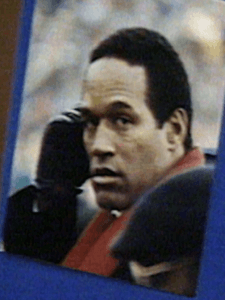
The first rebuttal witness was a photographer who took a picture of O.J. Simpson in 1990 during a Chicago Bears football game. In that photograph, Simpson is wearing dark gloves that the state contends are the same as the gloves found at the murder scene and at Simpson's home after his ex-wife and her friend were killed.

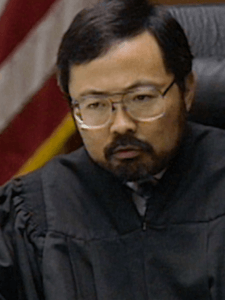
Judge Lance Ito ordered the prosecution to start its rebuttal case after the defense was left scrambling for final witnesses. Earlier in the day, the judge rejected a number of defense proposals aimed at getting Mark Fuhrman back on the witness stand.

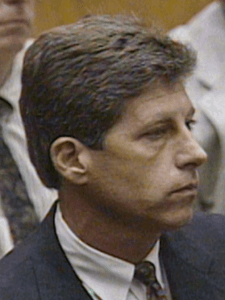
The judge said he would not strike Fuhrman's testimony of how he found a bloody glove on Simpson's estate the morning after the murders. He also turned down a defense request that the jury be instructed to forget the glove had ever been found.


Story continues
advertisement

In addition, he said he would not order the prosecution to offer limited immunity to the now-retired detective. The judge also turned down a defense request that he determine which questions Fuhrman could refuse to answer by invoking his right against self-incrimination.

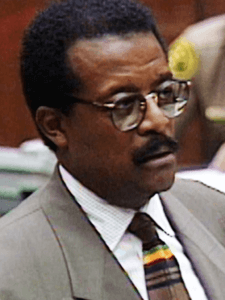
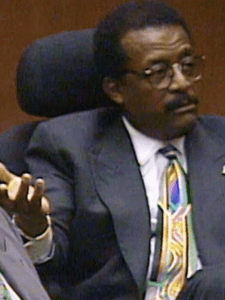
After conferring with defense attorneys during the lunch break, defense attorney Johnnie Cochran Jr. returned to say that the defense decided to ask an appeals court to intervene on the Fuhrman matter.

"We cannot rest at this point," Cochran told the judge.

"These are extraordinary issues," the judge said of the defense's concerns. In a rare but not unprecedented solution, he said he wouldn't force the defense to rest but ordered prosecutors to begin calling rebuttal witnesses immediately.

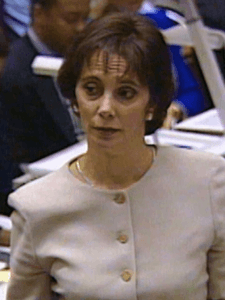
Deputy District Attorney Marcia Clark objected that this would put her at a disadvantage because the defense could return with witnesses while rebuttal is under way.

"It's time for the court to tell him it's over," Clark argued, referring to Cochran. "This is another filibuster proposed by the defense."

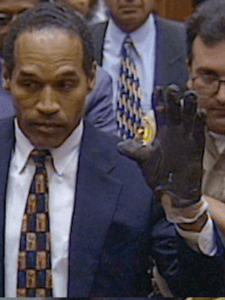
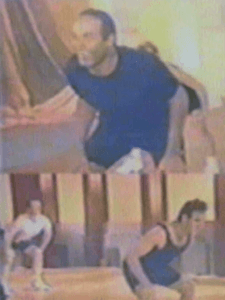
Clark then reluctantly began the state's rebuttal case with a series of photos of a glove-clad Simpson, microphone in hand, doing TV commentary on football games in the early 1990s.

Some of the pictures showed Simpson wearing brown gloves, similar to those that are critical to the case. Other pictures showed him wearing black gloves. Clark said the black gloves showed "a very short and tight fit," which was important in judging how Simpson wore his gloves.

Video clips, although shown without sound, provided a mini-retrospective of Simpson's TV career, showing him doing interviews with Cincinnati Bengals then-coach Sam Wyche and quarterback Boomer Esiason and talking with his former NBC colleagues.

The glove presentation was the prosecution's attempt to erase the impact of an earlier demonstration that failed when Simpson struggled to pull on the evidence gloves and told the jury they were too small. Monday was the first time the jury saw the prosecution photos of Simpson wearing gloves.

Glove expert Richard Rubin was in the courtroom waiting to testify about similarities between the murder gloves and those that Simpson wore on the football field sidelines.

Defense lawyers fought to keep out the pictures, saying that prosecutors had them before they rested their case last July and should not have been allowed to hold them back for dramatic effect until the rebuttal case.

Even though the prosecutors received some of the pictures before resting their case, Judge Ito ruled they had no obligation to introduce them into evidence before they could be analyzed.

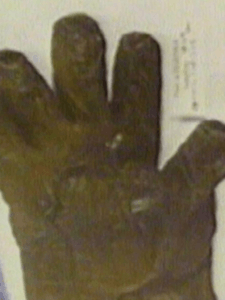
SEPTEMBER 12 - A glove expert testified that the gloves worn by O.J. Simpson in videotapes of football games were identical to the bloody gloves found at the crime scene and at Simpson's home.

Richard Rubin, a former executive of Aris Isotoner, identified the gloves worn by Simpson during his broadcasting days as extra-large Aris Lights, a model featuring a lighter weight leather and special stitching.

Rubin, testifying for a fourth time in the trial, said that only 300 pairs of the gloves were manufactured, and that between 200 and 240 were sold, in 1990, all of those at Bloomingdale's.

The state contends that Nicole Brown Simpson bought her husband two pairs of Aris gloves -- color and size unspecified by the sales slip -- in December 1990.

But on cross-examination, Rubin conceded that he could not say the gloves from the videotapes were the same as those retrieved from South Bundy Drive and North Rockingham Avenue. Defense attorney Robert Blasier also suggested that Rubin was prejudiced against Simpson. He produced a letter from the witness to prosecutors saying, "Maybe I can make it to the victory party."

Blasier also suggested that Rubin did not try to determine whether similar gloves could have been made elsewhere, such as in Europe.

Meanwhile, Judge Lance Ito again grappled with juror problems after the defense demanded that one juror be dismissed and suggested that the judge end sequestration.

The problems began when the defense revealed that the judge indicated that he might offer a juror financial held to a juror who apparently stands to lose $1,500 a month in rental income from her property because of her long sequestration.

Defense lawyer Robert Shapiro argued the juror should be dismissed because the judge's offer "gives the appearance special treatment is being given." He also suggested that the juror be dismissed if the offer of assistance is withdrawn.

The juror has not been identified, but is one of two white women on the panel. Attention focused immediately on the older and, presumably, wealthier of the two, a 60-year-old retired gas company clerk. Defense lawyers believe she is hostile to Simpson, and charge privately that were a black female juror to face similar financial problems, she would not be similarly accommodated.

Defense attorney Johnnie Cochran then suggested that Judge Ito think about allow the jurors to go home at night. The request prompted a sarcastic reply from Deputy District Attorney Marcia Clark.

"This takes the cake for the most transparent motion ever made the defense," she said, adding the defense wants the jurors to be exposed to the furor over retired detective Mark Fuhrman.

The judge withheld any rulings on the jury.

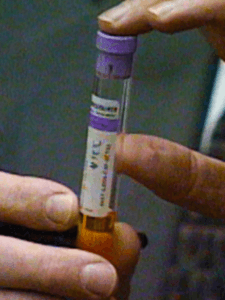
He did rule on a prosecution request to show the jury a videotaped interview with Thano Peratis, the police nurse who drew blood from Simpson shortly after the killings. Based on a primitive experiment that he performed at home -- re-enacted on his living room couch and shown in court Tuesday -- Peratis said he now believes he removed only 6.5 milliliters of blood, not the 8 milliliters he originally said.

What Peratis called a "goof-up" would account for a missing milliliter of Simpson's blood. Defense lawyers contend that corrupt police officers sprinkled that missing blood around anything incriminating in their conspiracy to frame Simpson. Ito ruled that prosecutors could show Peratis, who is indisposed after heart bypass surgery, making his point, but minus the homemade demonstration.

SEPTEMBER 13 - On their third day of rebuttal, prosecutors countered defense attacks on its scientific evidence that placed Ronald Goldman's blood in O.J. Simpson's Ford Bronco.

After Judge Lance Ito overruled defense objections to the introduction of new DNA tests, prosecution witness Gary Sims testified the genetic markers of O.J. Simpson and murder victim Ronald Goldman were found in a bloodstain in Simpson's Bronco.

Sims, a criminalist for the state Department of Justice, testified that the recently arrived results came from the established and mostly accepted form of DNA testing called RFLP. He said to get an RFLP result he had to combine three bloodstains from the console so that there would be enough DNA for the test.

Sims previosuly testified that PCR tests on a stain on the Bronco's console was consistent with Simpson and Goldman's blood. The defense had attacked that testimony, arguing the PCR test was not reliable. And defense witness Dr. John Gerdes criticized Sims interpretation of the PCR results as inaccurate.

"What's the impact of your RFLP results...on Dr. Gerdes' criticism?" asked Deputy District Attorney Rockne Harmon.

"I think they -- the RFLP results -- do tend to undermine that because they do show consistency (with PCR)," said Sims.

On cross-examination, defense attorney Barry Scheck revisited the conspiracy theory. He suggested Goldman's blood was planted in the Bronco and that Simpson's blood was the result of the cut to his finger. Scheck also reminded Sims that the bloodstain, consistent with Simpson and Goldman, was collected August 26, 1994, after the Bronco had been left unprotected since June 14. Scheck got the witness to admit that he didn't know the order in which the blood was deposited on the console.

After Sims' testimony, the prosecution played a videotape in which Thano Peratis, a police department nurse, said he had overestimated the amount of blood he drew from Simpson shortly after the killings. If true, that would mean there was no missing blood for police officers to plant on evidence to incriminate Simpson.

The day's testimony followed an angry exchange between Judge Lance Ito and Deputy District Attorney Marcia Clark .

Prosecutors failed to show up for an early hearing today and the judge fined them $250. When Clark complained that defense attorneys have showed up late to other hearings without a fine, Judge Ito increased the fine to $1,000. Los Angeles District Attorney Gil Garcetti berated Judge Ito at an afternoon press conference, calling his conduct "outrageous, petty and uncalled for." Garcetti said his office would not pay the fine and sent another lawyer to court to appeal it. Judge Ito finally backed down and reinstated the original $250 penalty.

In other developments:

  • California's 2nd District Court of Appeals denied the defense team's writ of mandate seeking relief on the issue of whether the jury should hear something about why Mark Fuhrman is unavailable for further testimony. The court said the defense can't seek appellate relief in the middle of a trial on issues dealing with the exclusion of evidence. Such issues, the court ruled, only can be reviewed on appeal after a conviction.

    There are "very limited circumstances" for which a mid-trial appeal would be granted, the court ruled., "Those very narrow circumstances involve a unique situation where the rights to counsel and to present a defense are at issue. No such unique circumstances are present in this case."

  • The defense confirmed reports it wants to call FBI agent Frederic Whitehurst, who claimed he was pressured to change his testimony to favor the prosecution in the 1993 World Trade Center bombing. The Simpson defense apparently expects Whitehurst, who used to work with Special Agent Roger Martz in the toxicology lab, to testify that federal agents typically slant their testimony in favor of prosecutors. Martz testified in July that blood on a sock from Simpson's bedroom and from the crime scene showed only vague signs of a preservative, which, he said, could have come from any number of sources. The defense maintained the blood was planted and said the presence of the preservative proved it.
  • Judge Ito rejected a defense motion to un-sequester the jury.

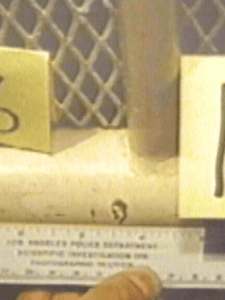
SEPTEMBER 14 - Two FBI agents retook the witness stand to refute the defense contention that police investigators failed to find bloody footprints of a second assailant at the murder scene.

Special agents Douglas Deedrick and William Bodziak, who testified in mid-June and early July, were recalled to counter the testimony of defense expert witness Dr. Henry Lee, who identified imprints on Ronald Goldman's jeans as well as an envelope and a piece of paper found near Goldman's body as possible shoe prints.

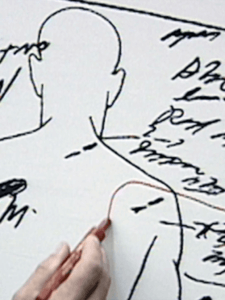
Deedrick said it was more likely the imprints were not made by a shoe. Goldman could have made a "swiping motion" and his shirt could have brushed against his jeans and left an imprint there, Deedrick said.

The imprints on the piece of paper and the envelope could have come from Goldman's jeans, Deedrick said.

Deedrick, a hair and fiber forensic expert, said he conducted tests with imprint patterns from Goldman's shirt, shoes and jeans and determined that it would be improper to exclude Goldman's clothing as the source of the imprints, as Dr. Lee did.

Under cross-examination from Barry Scheck, Deedrick admitted he is not a blood pattern expert and that the parallel line imprints on Goldman's jeans could have come from the heel of a shoe.

Scheck attacked Deedrick's lack of experience at crime scenes and suggested that he wasn't the most qualified agent at the FBI to examine bloody imprints on fabric, having never conducted such an examination.

Deedrick said that while he has examined imprint evidence in about 100 cases, most of the time he dealt with dust prints from hit-and-run vehicular accidents.

Following Deedrick, special agent Bodziak, a footprint expert, said that the imprints on the piece of paper and envelope could not have come from a shoe. The imprints are too small and the patterns didn't resemble any design he had ever seen, Bodziak said.

Bodziak testified in June that he had traveled to Italy to find the manufacturer of Bruno Maglias, the designer shoe that he said the killer wore.

Other than the imprints on the lower right and left legs of Goldman's jeans, which he has already been identified as coming from the Bruno Maglias, none of the other imprints were shoe prints, Bodziak said.

Other developments Thursday:

  • Lawyers reported they had settled the issue concerning the juror who had money problems regarding a rental property. The details have not been released.
  • Judge Lance Ito granted the defense an application for certificate of materiality and necessity for special agent Frederic Whitehurst, who is expected to be arrive in Los Angeles over the weekend. Whitehurst testified in the World Trade Center bombing that FBI forensic experts are routinely pressured to tailor evidence to favor prosecutors and that their lab techniques are sloppy.

SEPTEMBER 15 - An FBI expert poked holes in the defense theory by testifying that defense expert Dr. Henry Lee erred when he claimed to have discovered unrecognizable bloody imprints at the murder scene.

The defense has suggested that the imprints Lee said he found on the walkway outside Nicole Brown Simpson's home were left by shoes of a second assailant.

But FBI Special Agent William Bodziak, who analyzes footprints at the agency's crime lab, testified that what Lee characterized as impressions on the walkway actually were tool marks and footprints left by the workmen who originally poured it.

Under questioning by Deputy District Attorney Marcia Clark, Bodziak also criticized Lee for basing his observations on his examination of photographs taken of other photographs.

Bodziak also testified that a second impression, identified by Lee as a footprint in a photograph taken June 25, 1994, was not present in a photograph taken on June 13. Bodziak speculated that the stain Lee found was left by someone who walked through the crime scene in the intervening days.

WEEK 35

E-mail | Print


Full coverage


advertisement


Contact us
©2007 Turner Entertainment Digital Network, Inc. A Time Warner Company. All Rights Reserved.
CourtTV.com is a part of the Turner Entertainment New Media Network.
Terms & Privacy Guidelines

 
advertisement