
INDIANAPOLIS (Court TV) — Attorneys for convicted killer Richard Allen will head back to court this fall as they work to overturn the jury’s findings and his 130-year prison sentence.
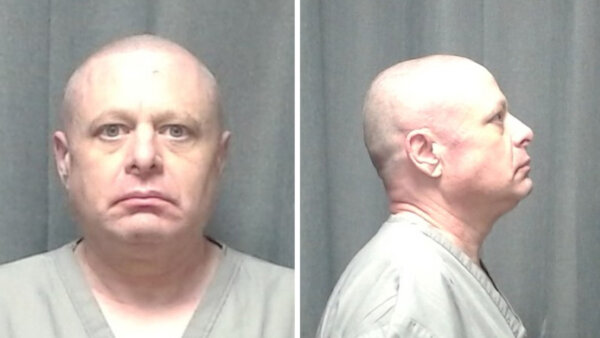
This July 18, 2025, booking photo provided by Oklahoma Dept. of Corrections shows Richard Allen. (Oklahoma Dept. of Corrections)
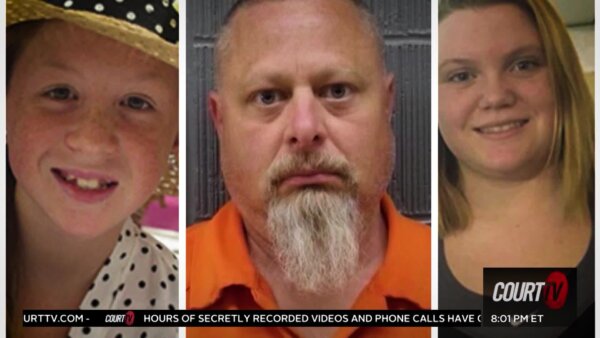
Richard Allen, 71, was convicted on all charges relating to the murders of 13-year-old Abigail “Abby” Williams and 14-year-old Liberty “Libby” German. The two girls were killed on Feb. 13, 2017, after they were abducted from an abandoned railroad trestle known as the Monon High Bridge. Their bodies were found the next day, approximately a quarter-mile away on private property.
In a brief filed with the Court of Appeals of Indiana and reviewed by Court TV, Allen’s appellate attorneys point to a list of issues they say merit a new trial.
Detective Liggett’s Testimony
Allen’s attorneys argue that Carroll County Sheriff Tony Liggett lied in the affidavit to gather evidence in the case and again on the stand when he testified at trial.
Liggett’s affidavit, attached to a search warrant in the case, was “built on deliberate falsehoods and material omissions,” Allen’s defense said. One of those falsehoods, they said, included a statement that Allen admitted to wearing clothing matching a suspect caught on video and known as “Bridge Guy” in the case. Allen’s attorneys say that is inaccurate and from the beginning, Allen maintained he could not remember what he was wearing that day. Liggett relied on descriptions of “Bridge Guy” from eyewitness Sarah Carbaugh, who was walking her dog on the Monon High Bridge Trail on Feb. 13.
At trial, Liggett testified that Carbaugh described the man she saw as “muddy and bloody” and wearing a “blue-colored jacket.” But, Allen’s defense says, in 2017, Carbaugh never said the man was “bloody”; she said he was “muddy” and was wearing a “tan jacket.”
“Liggett did not just represent what Carbaugh said, he represented when she said it, swearing she gave her description ‘in 2017,'” the defense said in its brief. “The temporal representation added a veneer of respectability because a description given close in time to the murders carries obvious weight.”
Richard Allen’s Confessions
While prosecutors told the jury that Richard Allen had confessed multiple times while in custody, his defense said those confessions should have been inadmissible because of Allen’s state of mind.
While awaiting trial, Allen was held in isolation at a maximum-security prison. His defense described him as living in the “most restrictive strip cell in the most restrictive unit of a maximum-security prison. For more than a year, he was recorded, caged, and chained on every movement. He lost forty pounds. He hit his head on his cell door until he had two black eyes. He ate his own feces.”
The defense was allowed to show video of Allen in his cell to rebut the prosecution’s evidence and try to show his state of mind, but the audio was removed from the videos. “Allen offered the videos to show he was screaming, speaking incoherently, quoting scripture, singing, and making delirious statements about being King Michael, being cryogenically frozen, and starting WWIII,” his defense argued, making the case that the sound was critical for the jury to understand the videos.
Evidence of Odinism
Describing the trial, Allen’s defense said, “The State’s case was a paper tiger, and the trial court systematically barred Allen from lighting a match.” Judge Fran Gull, who presided over the trial, barred the defense from introducing evidence that the murders had been carried out as part of a religious ritual. “The ritual killing theory was not Allen’s invention,” the defense argued. “It was law enforcement’s own theory, developed from the first day at the scene, pursued for years, and supported by multiple independent sources.”
Failing to allow the evidence in, Allen’s attorneys argue, violated his right to present a complete defense or impeach the investigation into the victims’ deaths.
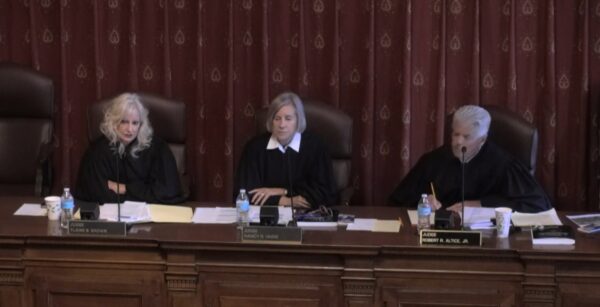
The Court of Appeals of Indiana will hear oral arguments in the case on Sept. 21, 2026.