
AKRON, Ohio (Court TV) — A court has denied Chad Cobb’s request to withdraw his guilty plea in the murder of his ex-girlfriend.
In 2013, Cobb pleaded guilty to multiple charges, including aggravated murder, in the 2012 death of Ashley Biggs. He was sentenced to life in prison without parole.

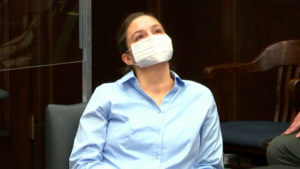
Chad Cobb appeared at an Oct. 2024 hearing at which he requested to withdraw his guilty plea in the death of Ashley Biggs. (Court TV)
Cobbs and Biggs shared a daughter together. At the time of her death, the former couple was embroiled in a bitter custody dispute. Biggs, who was working as a delivery driver for Domino’s, was lured to an empty office parking lot by Cobb’s then-wife, Erica Stefanko, and murdered. Stefanko is also serving a life sentence with the possibility of parole after 30 years.
Court TV’s Trial Archives: OH v Erica Stefanko (2020)
At a hearing in October 2024, Cobb testified he was misled by his attorney. He said he only pleaded guilty in order to save his kids. According to Cobb, his lawyer told him that if he didn’t plead guilty, his children would be put up for adoption and “lost” in the system. He said he feared the kids’ names would be changed and that they’d be cut off from him forever. Cobb said he was led to believe that a guilty plea would allow him to maintain contact with the kids. He emphasized that his motivation was less about remaining in their lives himself and more about ensuring his parents and grandparents could stay connected to them.
During the evidentiary hearing, Cobb’s family testified, corroborating his claims of coercion and pressure around his parental rights. The prosecution did not present any witnesses, focusing instead on the argument that Cobb had not met the burden required to demonstrate ineffective assistance of counsel.
In a recent ruling, Judge Jennifer D. Towell denied Cobb’s motion to withdraw his guilty plea.
In the Court’s analysis, Judge Towell noted that when a defendant seeks to withdraw a guilty plea after sentencing, they must establish the existence of “manifest injustice.” The ruling emphasized that a mere change of heart is insufficient to constitute such injustice, reiterating that Cobb must provide credible evidence that his counsel’s performance was deficient and led to prejudice against him.
The Court found that Cobb failed to establish that his counsel’s performance fell below the standard of reasonable representation. Furthermore, despite Cobb’s argument regarding coercion, the testimony from his plea hearing suggested he was fully aware of the circumstances and had affirmed satisfaction with the representation of his attorneys at the time.
Parts of this story were converted to this platform with the assistance of AI. Our editorial team verifies all reporting on all platforms for fairness and accuracy.