
LAS VEGAS (Court TV) — A former gang member testifying at the Tupac Shakur murder trial in Las Vegas declared himself a hostile witness and refused to answer questions on Tuesday.
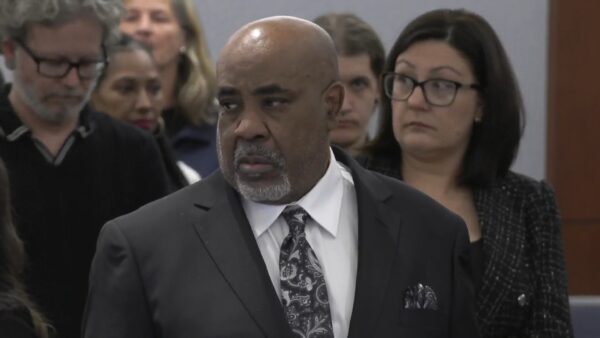
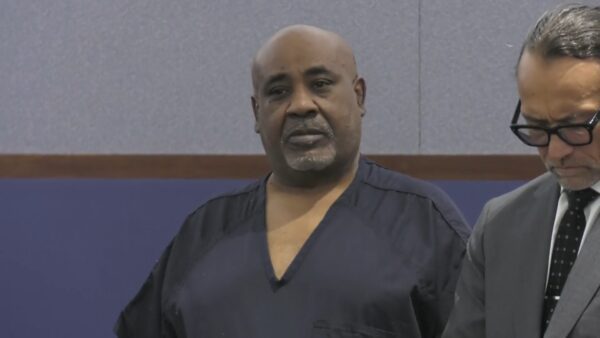
Duane ‘Keffe D’ Davis appears in court on Aug. 18, 2026. (Court TV)
Duane “Keffe D” Davis, 63, has pleaded not guilty to murder with a deadly weapon in the 1996 drive-by shooting that killed the rap star and led to a gang war. Davis is the only surviving person who was in the white Cadillac with the person who fired the shots, investigators said. Davis is not accused of pulling the trigger; prosecutors said that he passed the murder weapon used to kill Shakur to the back seat of the car before the shots were fired.
At the time of his death, Shakur was one of the biggest names signed to Death Row Records, which was run by Marion “Suge” Knight. In the 1990s, gang violence was prevalent in California; Death Row Records aligned itself with the Mob Piru Bloods gang, while Bad Boy Records aligned itself with the South Side Compton Crips.
James “Mob James” McDonald, who worked as head of security for Knight, said that the entrance of the record labels into the gang war deepened an already volatile rivalry. “When the two record companies got into it, Bad Boy went to Keffe D, and Suge came to us. So that intertwined everything, and yes, we had issues.”
Those issues escalated until Sept. 7, 1996, when McDonald said he had been at work at Club 662 in Las Vegas, preparing for Knight and Shakur to arrive. At some point, word came in that Shakur had been shot. “Everybody was in an uproar,” he said.
McDonald’s testimony directly contradicted allegations that another member of Knight’s security team, Reggie Wright Jr., had been involved in Shakur’s death. “If Reggie killed Tupac, then Death Row is over with. Tupac was the money source. Tupac was that guy at Death Row.”
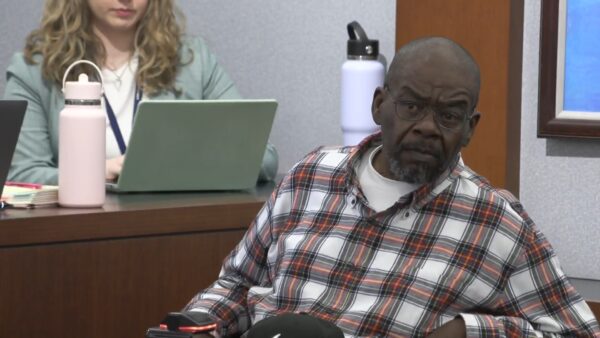
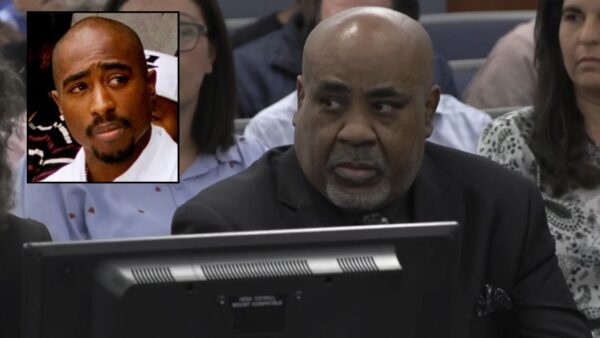
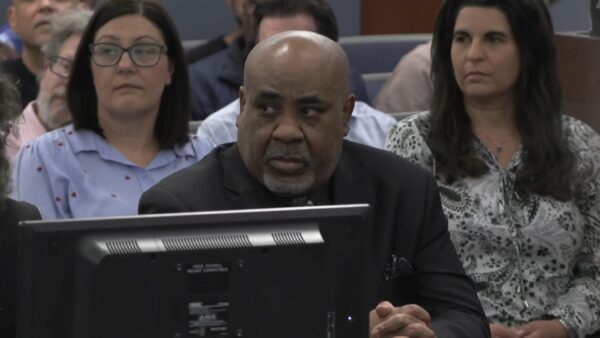
James ‘Mob James’ McDonald testified at Duane ‘Keffe D’ Davis’ trial on Aug. 18, 2026. (Court TV)
When pressed about what led up to the shooting, McDonald refused to answer questions. “I’m aware of a lot of things that was going on. People ain’t talked about it in 30 years. Today ain’t one of them. I don’t mean to be funny, but here’s the thing: a lot of things happened that night. A lot of things happened weeks and weeks after that night. Me or anybody else bringing up the dead is wrong. … I told every attorney in here to try to get me to come here, you better treat me as a hostile witness and I think that’s where I’m about to go now cause you’re asking me questions. I can’t answer those questions.”
Davis’ attorney, Michael Sanft, tried to question McDonald further about what he remembered happening in Compton after Shakur’s death.
Sanft: “There was a lot of tension. Can you describe that for us, when you went back, in terms of what kind of tension we’re talking about?”
McDonald: “You sure you want me to answer that?”
Sanft: “Oh, is it going to be graphic?”
McDonald: “You asking me a question. I don’t, and what I explained to them, I don’t want to send him to prison. Sure, even though we don’t like each other sure, I don’t want to send you to prison.”
Sanft kept asking the question, and McDonald refused to answer, saying, “No, because you’re asking something that’s gonna hurt this dude.” Eventually, McDonald turned his attention directly to the defendant and said, “Talk to your lawyer, man. This dude is tripping.”
While prosecutors claim that Davis has admitted to his role in Shakur’s death in interviews and a book he published in 2019, Davis’ defense maintains that he fictionalized all the accounts.