Week by Week in the O.J. Simpson Criminal Trial

Week 30 (August 14 - 18, 1995)

AUGUST 14 - The trial sidetracked into the re-litigation of a case called Sconce, in which a man was convicted of poisoning his victim.

And as often has happened in the case, Judge Lance Ito called the Sconce issues "collateral," but nevertheless allowed prosecutors to bring up the poisoning case, in which a key defense witness allegedly made mistakes about the cause of death,.

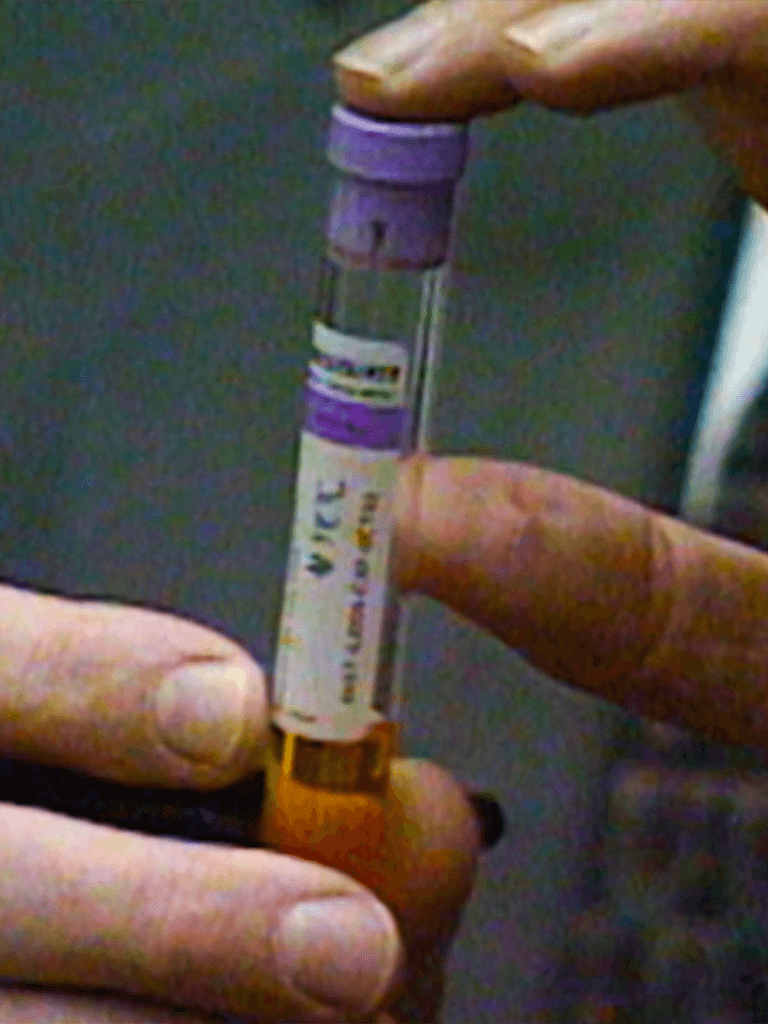
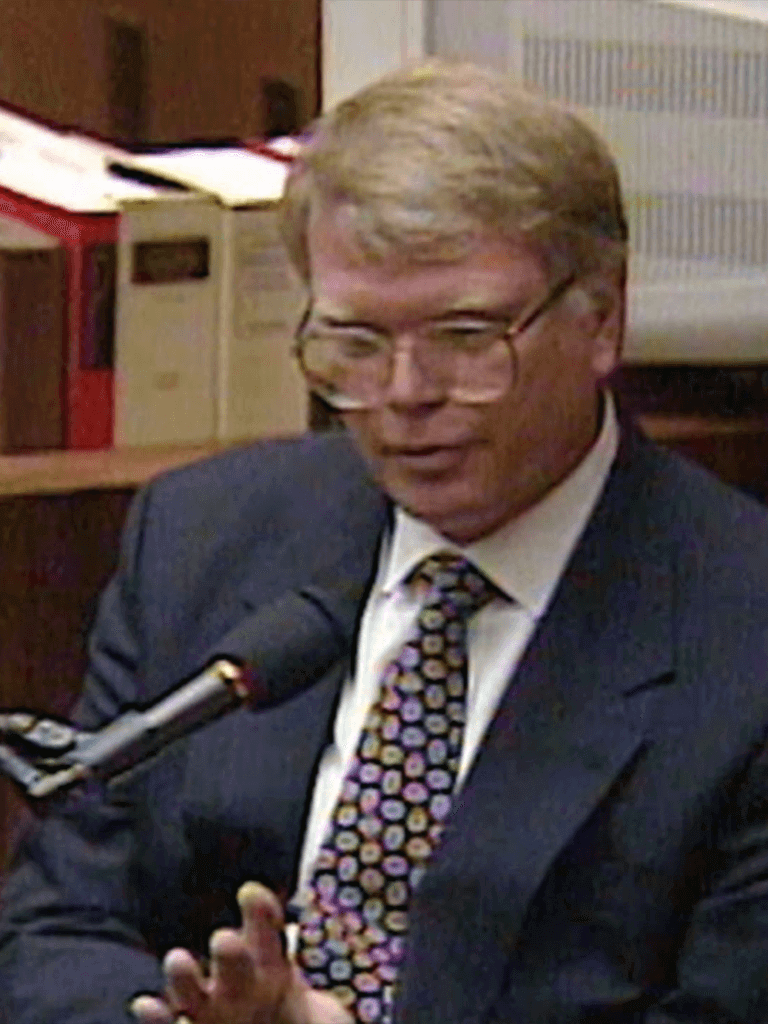
The witness, Dr. Fredric Rieders, testified for the defense several weeks ago about traces of EDTA blood samples found at the Bundy and Rockinghamcrime scenes. His cross-examination was interrupted July 25, when he had to leave the country.

So when Prosecutor Marcia Clark continued her cross-examination Monday, she immediately attacked Rieders about the Sconce case. In that case, Rieders tested the victim's blood and discovered the presence of oleandrin, a poison. Clark tried to show that another doctor on the case performed a similar test on the victim's blood and did not find any poison. Rieders angrily explained that the doctor tested a completely different tissue, and that the two doctors findings were not inconsistent.

As Clark and Rieders wrangled back and forth about the case, Judge Ito tried to put an end to the fracas by declaring, "Let's try the Simpson case...sometime today."

Clark then questioned Rieders whether an abnormal amount of the preservative EDTA was found in blood stains at the Bundy back gate and on socks found in Simpson's bedroom. She reminded the witness that he did not do any of the testing (Rieders analyzed FBI test results) and won a concession from Rieders that he could not exclude all other compounds as a source for the EDTA traces.

Clark reminded Rieders that EDTA commonly is used as a food preservative. She also pressed him about the average level of EDTA found in a healthy person--suggesting it would not be abnormal to find EDTA in the blood samples. But Rieders insisted that not only was EDTA present, but the amount was consistent with having come from a tube of preserved blood.

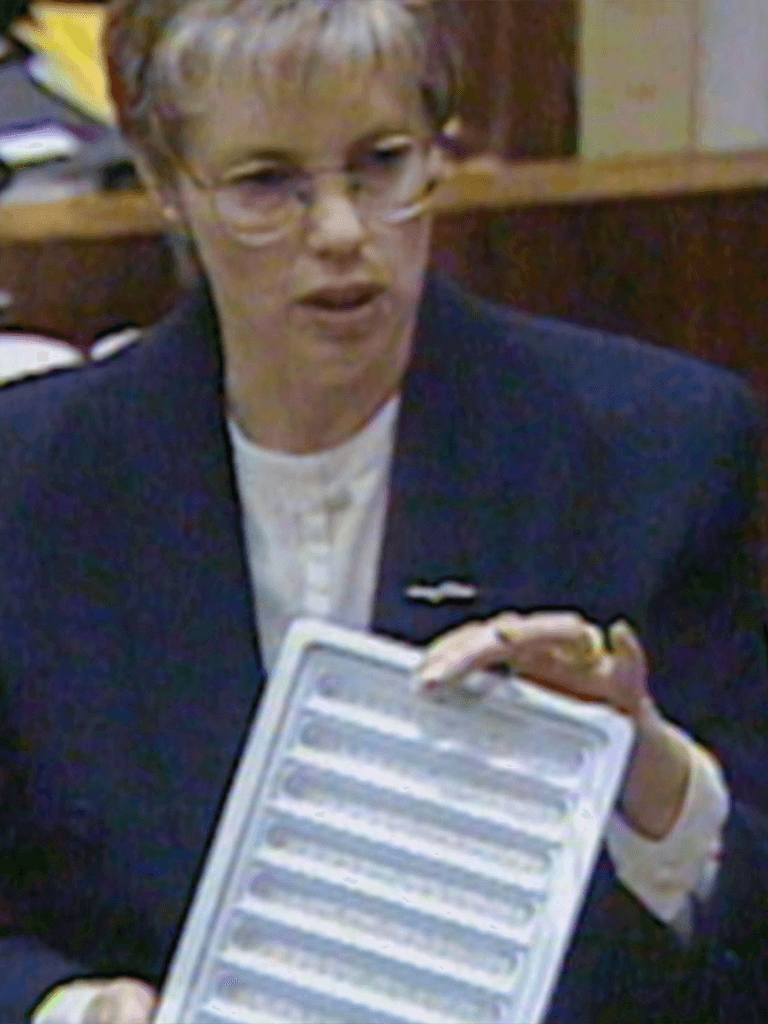
Meanwhile, the familiar theme of police incompetence resurfaced when the defense called Michelle Kestler to the witness stand. Kestler is director of the Los Angeles Police Department crime lab and was assistant director at the time of the murders. Defense attorney Peter Neufeld questioned Kestler about her role in the investigation. Kestler said that she oversaw some of the Simpson case but that Gregory Matheson oversaw most of it.

In other developments: @ The attorneys for detective Mark Fuhrman asserted the detective's right to tape recordings that defense lawyers say will prove he is a liar. Fuhrman's attorneys said the tapes belong in part to Fuhrman because they contain his voice.

Attorney Laurie Butler also said Fuhrman could be harmed by public release of the tapes and can't defend himself without hearing them.

"There could be further injury and defamation to Detective Fuhrman, and he has no ability whatsoever to rebut any of this because he's been denied any access to his own voice," Butler argued.

On the tapes, which the defense subpoenaed from a North Carolina screenwriting professor, Fuhrman reportedly makes racially derogatory remarks and utters an offensive slur 27 times. Robert Tourtelot, another Fuhrman attorney, has said the detective was acting in the role of consultant on a fictional work and was not speaking for himself.

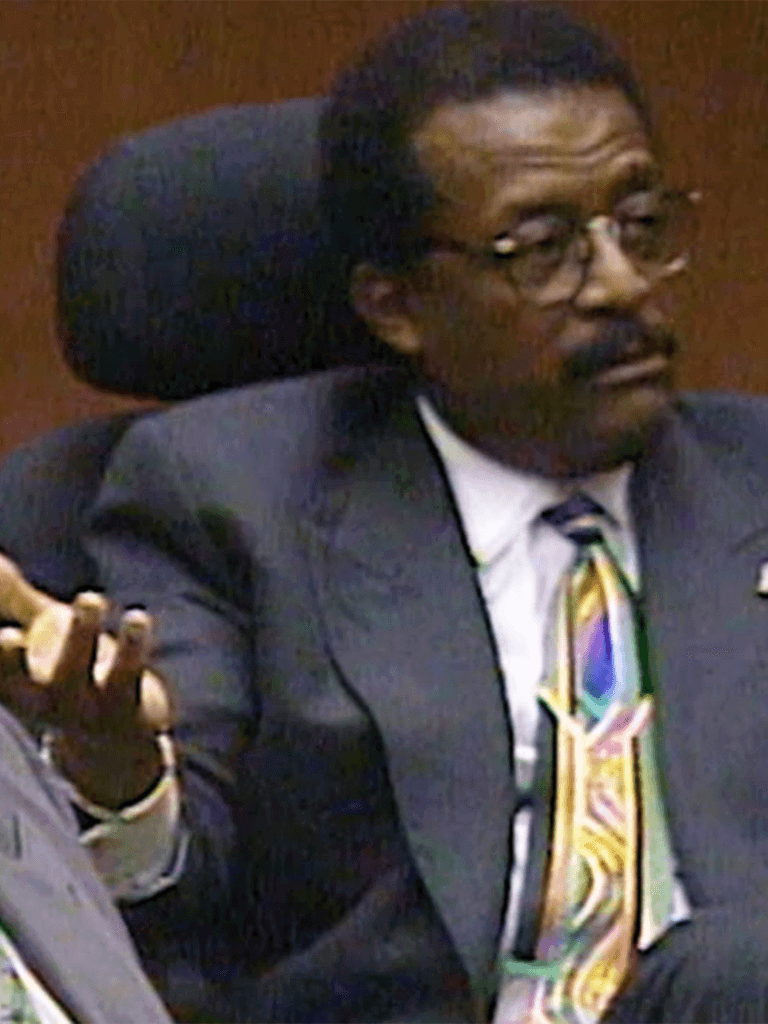
Defense attorney Johnnie Cochran Jr. angrily opposed Fuhrman's request, saying the defense doesn't have to share information it plans to use to discredit a witness.

"They don't have a right to those tapes," Cochran argued. "It's not a screenplay....They can talk to their client if they want to know what he said."

Laura Hart McKinny, who recorded the tapes, won a protective order from Judge Ito limiting the number of people allowed to hear them, and Fuhrman was not given access. Judge Ito suggested that McKinny be asked to give Fuhrman a copy without requiring a court order.

The judge is expected to rule sometime this week on how much of the material is admissible. Cochran suggested that up to six of the 12 hours of taped conversation may be relevant.


AUGUST 15 - The issues of race and alleged police misconduct catapulted the O.J. Simpson trial into utter upheaval.

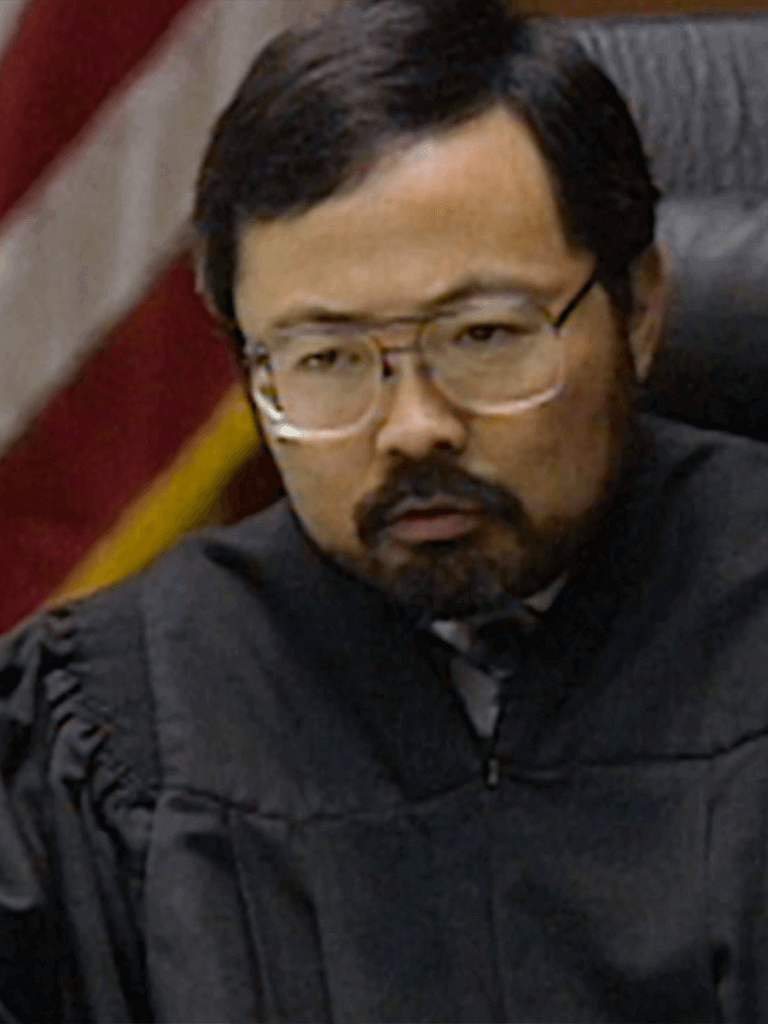
The issues ultimately forced Judge Lance Ito to disqualify himself from one of the most crucial rulings of the case and could end his reign over the trial.

The district attorney's office is expected to ask the judge on Wednesday to disqualify himself from the remainder of the trial, the balance of which could center on ugly racial epithets and the alleged corruption of the Los Angeles Police Department.

The issues came to a head when the prosecution told Judge Ito that his wife, Los Angeles Police Captain Margaret York, was one of the alleged victims of detective Mark Fuhrman's rancor, revealed on a series of taped conversations with a North Carolina professor and screenwriter.

"I love my wife dearly, and I am wounded by criticism of her, as any spouse would be," Judge Ito told lawyers with the jury absent. His voice faltering and choked with emotion, the judge detailed his reasons for removing himself from making any decisions about the tapes. He said he was wounded by Fuhrman's disparaging remarks about his wife, and that a reasonable person could perceive any ruling on the admissibility of the tapes as unfair.

Prosecutors proclaimed that if the defense insists on playing the tapes for the jury, they would be forced to call York to in some way rebut the tapes.

Since Judge Ito knows that disparaging remarks were made about his wife, regardless of whether the remarks are deemed relevant, any ruling at all about the tapes may appear to be unfair. If he allows the tapes in, he could be perceived as doing so to punish Fuhrman. If he does not allow them in, he could be seen as doing so to avoid the embarrassment of issues regarding his wife coming before the jury.

The standards of judicial ethics in California hold that regardless of whether a judge can be fair, the appearance that he might not be is enough legal ground to have him removed from a case.

The prosecution contends that a judge may not remove himself piecemeal on some issues and not from the entire case.

But for now, Judge John Reid, a former prosecutor, will take charge of the issues surrounding the Fuhrman tapes. Judge Reid presided over a hearing last week regarding the release of statements made by potential defense witnesses in the course of an Internal Affairs investigation of press leaks. Judge Ito disqualified himself because York heads the internal affairs department.

Defense lawyers said Fuhrman is heard on the tapes making racist and sexist comments that contradict his earlier testimony regarding the police investigation of the murders of Nicole Brown Simpson and Ronald Goldman in June 1994.

Fuhrman gave the tape-recorded interviews to a screenwriter between 1985 and 1994, laying out his inside knowledge of police brutality and misconduct, while consulting for a movie screenplay about the underside of police life. Fuhrman's attorneys insist he was only helping create dialogue for screenwriter Laura Hart McKinny.

Defense attorneys contend Fuhrman is expressing his own racist views on the tapes, which they say contradict Fuhrman's sworn testimony that he never used an offensive racial term for blacks in the last decade.

The tapes reportedly show Fuhrman used the word dozens of times, and recount numerous episodes of police harassing black suspects, contriving evidence against them and acknowledging he participated in such activities himself. In addition, Fuhrman purportedly took repeated sexist shots at York, who was once his supervisor in the Los Angeles Police Department.

No concrete evidence has been offered that Fuhrman planted the glove. But defense lawyers told Judge Ito that the detective is heard on the tapes describing incidents in which police planted weapons on criminal suspects, stopped black people driving expensive cars for no reason and ripped up the driver's licenses of black people showing "attitude."

"This is a blockbuster! This is a bombshell!" defense counsel Johnnie Cochran Jr. exclaimed in describing the tapes. "This is perhaps the biggest thing that's happened in any case in this country in this decade!"

He complained about sealed and hidden personnel files regarding Fuhrman. He said over and over that "all of America" show know what Fuhrman said on the tapes and that there may be a cover up from Los Angeles to Sacramento by people trying to protect Fuhrman and the police department.

"This court, this jury and this country is going to hear these tapes," he vowed.

In arguing for the tapes' inclusion and against the judge removing himself from any aspects of the case, Cochran complained that another judge would not be able to decide fairly the issue of materiality of the tapes. He told the judge that only he knew the facts of the case well enough to make such a determination.

Clark conceded that Fuhrman's comments were offensive, but she nevertheless argued vehemently against allowing the jury to hear them. She maintained that the defense was only seeking to inflame the jurors' passions and thereby distract them from the central issue of who killed Nicole Brown Simpson and Ronald Goldman.

She also maintained that she wanted the trial to go on. But, by seeming to back Judge Ito into a corner it appeared the prosecutor might prefer to start over with a different jury and, presumably, a new judge.

Clark offered to concede to the jury, in a stipulation, that Fuhrman had made racist remarks in the late 1980s. But Cochran, apparently foreseeing more impact from the tapes themselves, turned down the idea -- spurring Clark to accuse him testily of wanting to present the jury with "the biggest red herring there ever was."

But unless the defense team abandons the tapes, Clark said she would have to call York to the stand. York would presumably testify, as she stated last fall in an affidavit, that she barely recalled Fuhrman.

Cochran argued that York's testimony was irrelevant, and could even be redacted from the transcripts that Judge Ito would have to consider. At most, he said, Judge Ito should yield only the comparatively narrow question of whether his wife can be called as a witness.

"This man has committed perjury," Cochran said. "Your wife has nothing to do with that at all."

Even as Judge Ito pushed Clark on whether she wanted to press the question of whether he should continue presiding over the case, he seemed to add fuel to her arguments. He said, for instance, that "a reasonable concern this court could impartially rule on these material issues is there" because of Fuhrman's comments about his wife and her possible participation as a witness.

"All rulings involving Fuhrman witnesses would become suspect," Clark told the judge, who appeared alternately irritated and upset by the latest twist in the case.

In transcripts released Tuesday of a closed-door conference with Judge Ito on Monday, Clark acknowledged that on the tapes Fuhrman makes racist remarks about blacks, Mexicans, women and Jews.

Fuhrman also was quoted as saying: "I am the most important witness in the trial of the century. If I go down, their case goes bye-bye." Seeking to downplay Fuhrman's role, Clark said in court Tuesday, "I'm not saying Mark Fuhrman should be painted as a god or a hero, but he is certainly not a critical witness."


AUGUST 16 - Marcia Clark withdrew her request that Judge Lance Ito disqualify himself completely from the trial and announced the state's desire for him to rule on all but one matter.

She said that Judge Ito should rule on the admissibility of the taped interviews of Detective Mark Fuhrman but that Judge John Reid should determine the materiality and relevance of the testimony of Captain Margaret York. York is a high ranking officer in the Los Angeles Police Department's Internal Affairs Division and Judge Ito's wife.

On the tapes, Fuhrman disparages and insults Captain York.

After Judge Ito said Tuesday that he could not be impartial about evidence and testimony involving his wife, Clark called for him to be disqualified completely.

But when Wednesday's session began, Clark said, "We have determined that full recusal is not the appropriate course. Our faith in this court's wisdom and integrity has not been and will not be misplaced."

While Clark declared the prosecution's desire to have the current jury reach a verdict in Judge Ito's court, she attacked the prosecution for injecting race issues into the case. "The 'N' word has become their cornerstone," she said.

Defense lawyer Gerald Uelman attacked the prosecution for using the disqualification issue but accepted the proposal that Judge Reid hear only the Captain York issue.

Uelman told Judge Ito that the defense only wants to introduce specific portions of the Fuhrman tapes. According to reports, Fuhrman slurs African-Americans with the so-called 'N' word at least 30 times and speaks of police misconduct, perjury and planting evidence 17 times.

Judge Ito ordered the defense to submit an offer of proof in regard to the tapes, detailing what portions they want to play for the jury. After the prosecution files its opposition, the judge will hold hearings on the matter.

Following the ruling, lawyers vented their frustrations at one another in a verbal slugfest.

Defense lawyer Robert Shapiro accused Prosecutor Christopher Darden of raising the recusal issue as a ploy to pay back Judge Ito for harsh treatment in court. He called the matter "prosecutorial misconduct."

In recounting an off-the-record conversation in chambers Wednesday, Shapiro said Darden told Judge Ito the prosecution was angry with the judge for cutting short some prosecutors, ridiculing some of their questioning and embarrassing them before the jury.

The desire for more favorable treatment led the prosecution to seek judicial disqualification, Shapiro said. "We want the record to reflect our absolute and joint feelings that this is unethical conduct at its highest and we will pursue all remedies the law allows," he said.

Darden answered with sharp criticism of the defense for using racial issues to manipulate the media. "This case is a circus and they've made it a circus," he said.

If the defense plans to refer him to the state bar, Darden said they can "take a number" behind all the police officers he has prosecuted for perjury and evidence planting. He also threatened to refer the entire defense team to the U.S. Attorney's office.

In the afternoon, Michele Kestler, LAPD crime lab director, completed her testimony. It was the first testimony the jury had heard since Monday.

Defense lawyer Peter Neufeld, who had asked to have Kestler declared a hostile witness in the morning, continued his attack of the labs collection methods and the possibility of contamination.


AUGUST 17 - The jury will pay a nighttime visit to the scene where O.J. Simpson allegedly killed his ex-wife and Ronald Goldman.

Ruling in favor of the prosecution, Judge Lance Ito ordered a Sunday evening trip over the objections of defense lawyer Carl Douglas who said the lighting, foliage and weather are different now than they were on June 12, 1994, the night of the killings.

The jury has already been to the crime scene and O.J. Simpson's home, and it has viewed numerous pictures of those locations, Douglas said. He also complained of the cost Los Angeles would have to pay for the visit.

But prosecutor Bill Hodgman convinced the judge that a nighttime trip would be "illuminating" and that the conditions as they existed can be replicated.

Judge Ito and lawyers will perform a "dry run" before the jury viewing, to check for changes in the landscaping and lighting at the crime scene. From there, the tour will proceed a few miles away to O.J. Simpson's house.

Should changes in conditions, including the height of certain foliage, be impossible to replicate, Judge Ito indicated he would cancel the viewing.

The court session ended at 2pm when the defense said it had to wait on Judge Ito's ruling on the Fuhrman tapes before calling witnesses pertaining to that issue.

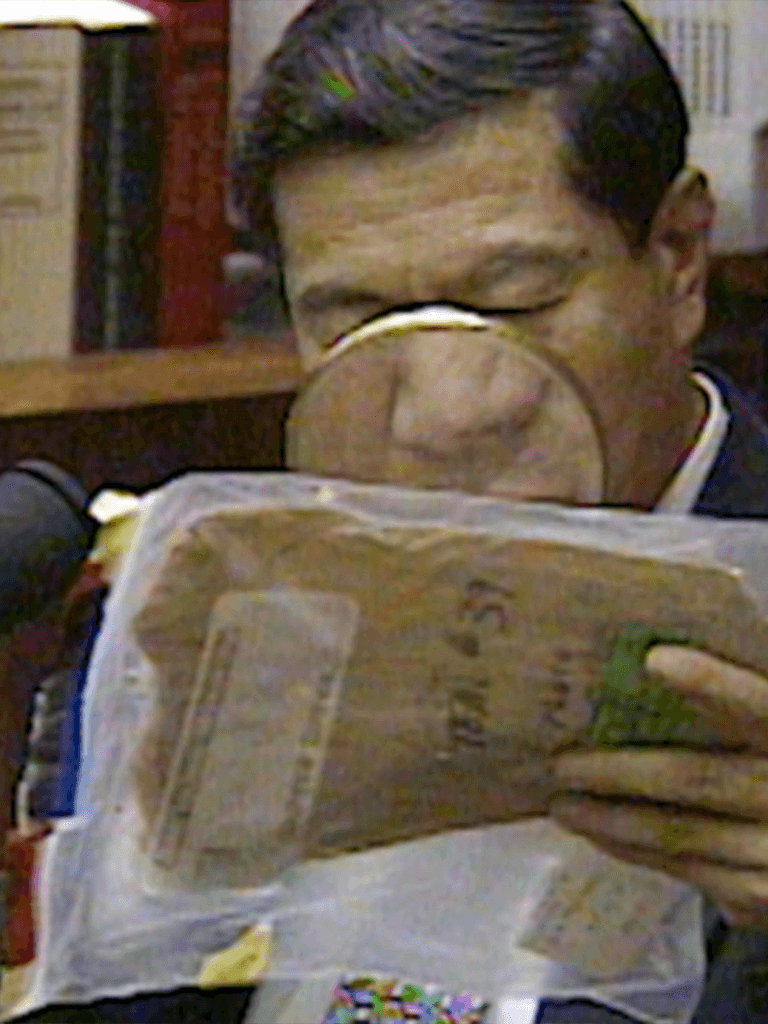
Earlier, Gilbert Aguilar, a finger print specialist with the Los Angeles Police Department, testified that he examined 17 crime scene prints and none of them belonged to Simpson.

Twelve of the prints were identified to no one. Nine of these were capable of identification and three were unidentifiable, Aguilar said.

Defense lawyer Johnnie Cochran Jr. used this testimony to suggest that Simpson was not at the crime scene and that unidentified prints point to the possibility of a unknown killer.

Prosecutor Christopher Darden tried to show the irrelevance of Aguilar's testimony by suggesting that anyone from a babysitter to a window washer could have left the unidentified finger prints.

Anguilar also testified that he did not compare any of the 17 prints to Simpson's children and other family members, nor was he aware if a maid, groundskeeper or babysitter worked at Nicole Brown's house.

Prints are hard to lift off of stucco, concrete, cloth or human skin, and they might not be left by a person wearing leather gloves, Aguilar said.


AUGUST 18 - Judge Lance Ito canceled plans for a second jury visit to the crime scene and O.J. Simpson's house after prosecutors abruptly withdrew their request for the tour.

"After the lawyers have reviewed all of the conditions out here, the lawyers for the prosecution are not convinced that the conditions are substantially similar," Deputy District Attorney Alan Yochelson said Friday night.

The jury's planned Sunday night visit was called off after an entourage of about 20 people involved with the case visited the Brentwood scene where the slashed bodies of Nicole Brown Simpson and Ronald Goldman were found.

Simpson's lawyers had strongly opposed the field trip, contending that jurors would only be confused because the lighting and foliage had changed.

Prosecutors had argued that it was the only way to give a true sense of how the murders were committed and had even asked to have a man and a woman pose as murder victims lying on the pavement -- an idea the judge rejected. The jury's first visit to the crime scene took place in daylight last February.

Meanwhile, Judge John Reid ruled that Judge Ito's wife, Los Angeles Police Captain Margaret York, could not be called as a witness. Had she been called, the judge would have had to disqualify himself as the trial judge, raising the possibility of a long delay. York was once the supervisor of detective Mark Fuhrman and reportedly is the subject of insulting remarks made on the tapes by Fuhrman.


Copyright 1996 by American Lawyer Media, L.P. All Rights Reserved. No parts of this site may be reproduced without permission of American Lawyer Media. Nothing in this site is intended to constitute legal advice.