PUBLIC NOTICE RE: ELECTRONIC TRANSCRIPT COPY CERTIFIABILITY
WARNING: This electronic transmission of the official transcript of proceedings is deemed certifiable only to the extent that the reader of this message is viewing a first-generation authorized transmission. All subsequent transmissions of this first-generation electronic copy and all copies printed therefrom are unauthorized and non-certifiable, and the Official Reporter assumes no responsibility for consequences stemming from the use of such unauthorized non-certifiable copy. Responsibility for such consequences is that of the person or organization whose use of a non-certifiable unauthorized transmission or printed copy creates those consequences, including civil liability arising therefrom. No portion of this file may be redistributed or resold without permission, pursuant to California Government Code Section 69954(d). Authorized certifiable transcript copies are protected by digital signature. If you would like to purchase an official transcript of the proceedings, contact NetCourt, 1316 Harding Place, Charlotte, North Carolina, 28204 or click here.


           SUPERIOR COURT OF THE STATE OF CALIFORNIA

                 FOR THE COUNTY OF LOS ANGELES

     DEPARTMENT NO. WEQ        HON. HIROSHI FUJISAKI, JUDGE


     SHARON RUFO, ET AL.,                     )
                                              )
                                 PLAINTIFFS,  )
                                              )
               VS.                            )NO. SC031947
                                              )
     ORENTHAL JAMES SIMPSON, ET AL.,          )
                                              )
                                 DEFENDANTS.  )
     _________________________________________)


                  REPORTER'S DAILY TRANSCRIPT

                        JANUARY 27, 1997

                           VOLUME 49


                  REGINA D. CHAVEZ, CSR #8446
                       OFFICIAL REPORTER

     APPEARANCES:


     FOR THE PLAINTIFFS: DANIEL M. PETROCELLI ESQ.,
                         THOMAS LAMBERT, ESQ.,
                         PETER GELBLUM, ESQ., and
                         EDWARD MEDVENE, ESQ.
                         Firm:  MITCHELL SILBERBERG & KNUPP
                                11377 West Olympic Blvd.
                                Los Angeles, CA 90064-1663
                         For: Plaintiff Goldman


                         JOHN QUINLAN KELLY, ESQ.
                                330 Madison Ave.
                                New York, NY 10017-5090.
                         For: Plaintiff the Estate of
                              Nicole Brown Simpson


                         MICHAEL A. BREWER, ESQ.
                         Firm:  HORNBERGER & CRISWELL
                                444 South Flower St.
                                Los Angeles, CA 90071.
                         For:  Plaintiff Rufo


                        PAUL F. CALLAN, ESQ.
                        Firm:  CALLAN, REGENSTREICH,
                                KOSTER & BRADY
                                One Whitehall St.
                                New York, NY 10004
                        For:  Plaintiff Estate of
                              Ronald L.  Goldman


     FOR THE DEFENDANTS: ROBERT C. BAKER, ESQ.,
                         MELISSA BLUESTEIN, ESQ., and
                         PHILIP BAKER, ESQ.
                         Firm: BAKER, SILBERBERG & KEENER
                               2650 Ocean Park Blvd., #300
                               Santa Monica, CA 90405-2936.

                                       -and-

                         DANIEL LEONARD, ESQ. and
                         ROBERT D.  BLASIER, ESQ.
                         Firm:  BAILEY, FISHMAN & LEONARD.
                                6355 Riverside Blvd.
                                Suite 2-F
                                Sacramento, CA 95831

     SANTA MONICA, CALIFORNIA; MONDAY, JANUARY 27, 1997

                          8:52 AM

     DEPARTMENT NO. WEQ    HON. HIROSHI FUJISAKI, JUDGE


     APPEARANCES:

                  (PER COVER PAGE)

                  (REGINA D. CHAVEZ, OFFICIAL REPORTER)


            THE COURT:  Morning, ladies and gentlemen.

            JURORS:  Good morning.

            ALL COUNSEL:  Good morning, Your Honor.

            THE COURT:  Okay.


                  CLOSING ARGUMENT (continued)


            MR. BAKER:  Good morning, ladies and gentlemen.

            JURORS:  Good morning.

            MR. BAKER:  I apologize to you for taking so

     long.  And I apologize to you because this flu hangs

     on a long time and I still have it.  But we'll get

     through this.

                  One of the things that has required us to

     take a little longer than we anticipated is I

     certainly hadn't anticipated that Mr. Petrocelli would

     get up here last week and tell you -- and say to you

     that there was no -- absolutely no evidence of

     planting, there was no evidence of contamination, and

     there was absolutely no evidence of tampering.

                  Because he says it, it doesn't make it

     so.

                  There's evidence all over the place.

     It's been demonstrated to you.  And we will go through

     it a little bit more as the morning wears on.

                  Just the same, when he says there's

     absolute proof to a moral certainty that OJ Simpson

     committed these murders, it doesn't make it so.

                  It's his rhetoric that is, I would

     suggest to you, hollow, and we are going to

     demonstrate that for you.

                  The thing that is amazing to me is that

     in a day and a half, the plaintiffs never touched upon

     the crime scene at all.

                  They didn't tell you how these people met

     their demise, they didn't tell you about what the

     police did.  They totally ignored it as if this never

     occurred, as if it didn't happen, as if what we do is

     we go from the fact that the bodies were found at

     12:10 on June 13, 1994, and we go directly to

     Cellmark, SID, lab tests, and that's all the

     information you need to know to determine whether or

     not Mr. Simpson committed these murders.

                  I want to -- pardon me.

                  I want to talk about what happened the

     night of June 13 as it relates to the Los Angeles

     Police Department, what they did, and equally

     importantly, what they didn't do, and how they went

     about justifying their conduct on the night of

     June 13, 1994.

                  Now, what we do know about that night is

     we know that Ron Goldman was contacted after Karen

     Crawford was called by Nicole Brown Simpson at around

     10 o'clock.  And we know that Nicole and Ron had at

     least friendships before June -- June 12, 1994.  He

     had her phone number, and she, of course, after she

     talked to the manager, Karen Crawford, had asked to

     talk to Ron Goldman there at the Mezzaluna.

                  And then what happened?

                  Well -- I am really dry.  Can you get me

     some water.

                  Pardon me.

                  So what we know happens is that Ron

     Goldman goes to his house, presumably showers, changes

     clothes, comes over to 875 South Bundy.

                  And the other thing that we know is he's

     got the envelope, and he's got the glasses.  We know

     that once he gets there, the buzzer on the front gate

     doesn't work.  We know that from Lange's notes,

     because Lange went and tested it, and determined that

     it didn't work, and put it in his notes.  And so this

     would necessitate Nicole coming out, opening the gate,

     and allowing Ron Goldman in the front gate.

                  So now we have both of the victims at the

     front gate.  When she opens it he comes in with the

     envelope, and the glasses contained in that envelope.

                  Now, what happens after that at the front

     gate, where it swings open, we have showed you the

     blood smears, and we'll put that picture back up on

     the Elmo.


                         (Board entitled Blood Stains From

                         Closed-In Area at Bundy.)


                         (Photograph displayed on Elmo.)


            MR. BAKER:  Vertical or parallel line pattern

     on the gate post, and interestingly enough, the hat

     underneath, almost as if it's placed there, underneath

     the rail of the fence.

                  How does it get there without any dirt on

     it?

                  How does it get there without being

     kicked?

                  Do you recall Werner Spitz up here on the

     stand, looking like he was a rocket, trying to kick

     his legs saying how it kicked underneath there.

                  Ladies and gentlemen, that virtually

     looks like it was placed there.

                  And then, of course, you've got the glove

     at the initial stage, the shoe print right there is

     within six or so inches of the front gate.  And we

     know that there are no Pautauqua shoe prints at all on

     the walkway.  And we remember the Pautauqua shoe

     prints are the shoe prints of Ron Goldman.

                  Now, what does that tell us in trying to

     reconstruct what went on that night of June 12, 1994?

                  Well, one thing we know is that Nicole

     Brown Simpson was killed first, because if she wasn't

     killed first, you'd have Chautauqua shoe prints in the

     blood on the walkway.

                  And there are absolutely none.

                  So she is killed.

                  Let's examine that for just a moment.

                  Werner Spitz testified to you that it

     took 15 seconds for her to be killed.

                  15 seconds.

                  Now, he did some pretty interesting

     physical maneuvers up here to try to justify to you

     that that death could have occurred in 15 seconds.

                  You will recall that there are four

     vertical knife marks on the left side of the neck of

     the body of Nicole brown Simpson, with the blunt part

     of the knife up, and the sharp part of the knife down,

     and I hate to remind you of this, but it's important,

     and those went in a vertical line down the left side

     of her neck.  The perpetrator, the assailant, whoever

     it was was in front of Nicole Brown Simpson -- and

     that took some time.  And that took some time.

                  At the same time, concurrent with that

     happening, Ron Goldman had to have been inside the

     closed-in area, and he had to have been in there

     because we know the glasses are there, and he brought

     the glasses.

                  Then the assailant gets behind Nicole

     Brown Simpson and does the final, heinous act of

     putting a knife through both jugular veins.  Her

     carotid arteries.  I apologize.  Through both carotid

     arteries.

                  Then what happens?

                  The carotids are very close to the heart.

     Blood is going everywhere.

                  And superimposed upon all this

     information that we have is the information that we

     absolutely know, that it's quiet and sounds can be

     heard.  And we know that because we know that

     Mr. Heidstra, at 10:40, was directly opposite the

     condominium of Nicole in the alley, and he heard the

     hey, hey, hey, and that's all he heard.

                  He didn't hear any other voices at all.

                  He didn't hear any screams.

                  He didn't hear any shrieks.

                  He didn't hear any cries for help.

                  And nobody else did.

                  You'll recall, relating to the noise,

     that after the bodies are discovered at 12:10, LAPD

     gets people -- police officers, and they door-knock.

     They door-knock up and down Bundy.

                  Not one person heard a scream.

                  Not one person heard a cry for help.

                  Not one person heard any kind of noise,

     except for barking dogs.

                  So we have -- we know that it took some

     period of time for Nicole to be killed.

                  And we know that Ron Goldman was there

     when it occurred.

                  And we know that not a sound was emitted.

                  And as Dr. Baden said to you from the

     witness stand, that to me says there had to be at

     least two assailants.

                  How could you keep them quiet?

                  How could you keep -- how can you keep

     Ron Goldman off of a single assailant?  If it's

     OJ Simpson or the biggest football player who played

     in the Super Bowl yesterday?

                  How can you keep him from beating on him,

     from trying to inhibit him from doing this horrible,

     horrible thing?

                  The answer is clear.

                  It couldn't if, in fact, there was any

     truth in the accusation that one person did this and

     it was OJ Simpson, of what Simpson would have looked

     like -- I mean Ron Goldman if his back was turned to

     him while he was gouging with a knife Nicole's neck.

     He have had body blows to his back.  He would have had

     a choke hold around his neck.  He would have had -- he

     would have had whatever.

                  People would have done one of two things:

     They would have run out of that gate to get help, or

     they would have had a horrendous assault on this

     single assailant.

                  And Mr. Simpson had not a bruise on his

     body.  Nothing.  Not a bruise.  Not one mark on his

     body.

                  The plaintiffs tried to assert that this

     mark underneath his right -- on his biceps of the

     right arm, was some sort of a bruise.

                  That's been part of his physique since

     his football playing days.  And believe me, that's a

     long time ago.

                  And let's be very clear.  The reason --

     the reason Werner Spitz is here and testifying that

     it's a minute and 15 seconds is because they have to

     have an absolute quick double murder because there's

     no time -- there's simply no time for Mr. Simpson or

     anybody else to commit these crimes, given when

     Mr. Simpson was seen.

                  So they've got to make them virtually

     instantly occur.  And the point of that is the more

     you do that, the more you make them quick, the more I

     would suggest to you it would appear it would have to

     be a professional killer or professional killers.

                  Not somebody who's in an uninitiated

     blind rage as they want to you believe.

                  Let's examine further the crime scene,

     because it has been ignored by the police, but it

     can't be ignored in arriving at your decision, which

     is to arrive at the truth.  Not a sympathetic version

     of reality painted by the plaintiffs.

                  And we're going to get into that in a

     little bit.

                  We know that there was blood spatters all

     around the closed-in or caged-in area.

                  Have we got that other one that shows the

     Bundy as well?

                  Once you get by the gate, and you have

     blood spatters at 3 feet, and LAPD took no pictures

     higher than that, we don't know if there are blood

     spatters higher than that or not.

                  We certainly know that Ron Goldman was

     upright for a period of time.  He stepped into blood

     and dirt which is all in the caged-in area, because

     there's not a shoe print of his on the walkway.

                  We know that there are an immense amount

     of -- of physical evidence that indicates how long

     this struggle took once Ron Goldman was the target to

     be killed.

                  Blood smears at different locations.  And

     we have them all over.


                         (Counsel indicates to board

                         entitled Blood Stains From

                         Closed-In Area at Bundy.)


            MR. BAKER:  Blood drops at different locations.

     His blood spatters at different locations.

                  You've got Ron Goldman's shirt where

     there were buttons yanked off, buttons pulled off, and

     the thread still on, indicating that a struggle took

     place, and he was grabbed and his shirt pulled.

                  The evidence that he was upright at least

     three minutes after his jugular vein was cut, the left

     jugular vein, that he was upright.  And, of course, he

     was upright because you have blood here, the pool of

     blood down in this area, on the back, on the north

     side, that he had to be basically upright for that

     blood to have pooled there.  He was there a long

     period of time.

                  The cut on his boot.

                  Remember the cut on his boot where he had

     a -- it was a fresh cut on the toe of the boot,

     indicating that he was kicking around the knife?

                  The hole that was dug.  Now, that's a

     pretty good size hole.  Both Lange, Spitz, and Lee,

     agreed that that was a product of the struggle.

                  Now, that takes some period of time.

                  That dirt isn't soft.

                  Werner Spitz says it's soft.

                  Dr. Lee says I was out there, that was an

     area that took a while to dig.

                  And, of course, it's right where the

     blood is pooled beeper is found, we have the keys

     found at a different area.

                  And ladies and gentlemen, we have 30

     wounds in the body of Ron Goldman.

                  30 wounds.

                  Including wounds, defensive, to his

     hands, including bruises to his knuckles.

                  Now, where on Mr. Simpson are the results

     of him inflicting punishment upon his assailant?

                  It's not there.

                  Doesn't exist.

                  Doesn't exist because Mr. Simpson,

     OJ Simpson, didn't do it.

                  You've glove, got vegetation with blood

     on it.  You have indications that this took a fair

     amount of time now.

                  Now, Werner Spitz, interestingly enough,

     said, well, I know it took a minute and 15 seconds.

                  When we started to cross-examine

     Werner Spitz, did you notice how he then started

     testifying I'm not a criminalist, I'm a forensic

     pathologist.

                  On direct examination he could stand up

     here and he could show you exactly what happened, and

     he could demonstrate with absolutely no hesitation

     about how these murders occurred, about where everyone

     was standing.

                  And all of the sudden, when you start to

     get into the details, when you start to press him,

     then he was a criminalist.

                  He didn't do the crime scene

     reconstruction because his testimony doesn't fit.

                  It doesn't make any sense.

                  Sure, if nobody was fighting back, and a

     hole wasn't dug, if blood spatters weren't everywhere,

     if blood hadn't pooled, you could probably inflict

     those wounds in a minute and 15 seconds.

                  But you couldn't when you have two young

     people who are fighting back.

                  So how long did it take?

                  Well, we know a couple of things; we know

     that the assailants weren't in too big of a hurry.

                  They walk.


                         (Board entitled Blood Drops at

                         Bundy June 13, 1994 displayed.)


            MR. BAKER:  We'll have the shoe print board

     here in a minute.

                  They walked back up towards the front

     door, turned around, and there are steps going back

     towards the bodies.

                  They were not rushing through the murder

     of these two individuals.

                  You heard Bodziak say -- well, that he

     had testified in the criminal trial, and it was his

     belief that the -- let's put that one up.  You can

     leave that one up, too -- that the assailant or

     assailants had walked back into the bushes to perhaps

     not be seen, towards -- from the front of house, there

     are steps going down here (indicating), shoe prints

     going back down here, there are shoe prints over by

     the bodies, and there's a shoe print four feet in

     front of the body of Nicole Brown Simpson; four feet

     in front or east towards Bundy.

                  There's 23 sets of unidentified --

     unidentified shoe prints.  There's a shoe print that

     was found by Henry Lee, back here, a parallel line

     pattern that was found after the LAPD had already

     allowed the scene to be run amuck by the media and

     Looky-loos.

                  And Mr. Medvene would have you believe

     that Dr. Henry Lee cannot tell whether or not that

     print was put on subsequent to the murders.

                  And, of course, Henry Lee is a very

     honest man.  He said I can't tell if it was put on

     after the murder scene was released.

                  But what he did tell you, and what he

     did -- put the overlay -- that that is a shoe print,

     that was positive for blood, the whole scene had been

     washed down, they had missed that, that was positive

     for blood.

                  So was it a shoe print that just happened

     to be there as a result of somebody having blood on

     their feet after the murders, or did it, in fact,

     occur during the murders?

                  Were there two assailants?

                  And does it make more sense that there

     were two assailants?

            MR. BAKER:  Phil, have you got that?


                        (Photo is displayed on Elmo.)


            MR. P. BAKER:  That one?

            MR. BAKER:  I want to zero in on the shoe --

     zero in on the shoe prints.


                        (Elmo is adjusted)


            MR. BAKER:  We know that, although Bodziak

     wouldn't agree to this one as a shoe print, this is

     four feet in front of the body of Nicole Brown

     Simpson, precisely the same shoe prints as he has

     identified as being Bruno Magli.

                  Now, what is -- these assailants were in

     such a hurry to get out in a minute and 15 seconds,

     what is the assailant doing four feet in front of the

     body of Nicole Brown Simpson, and towards Bundy?

                  And, ladies and gentlemen, there is --

     then there is another photo that turns up, and that

     photo turns up after the criminal trial and it has --

     shows seven blood drops out on the walkway in an area

     where a dog has gone.

                  The prosecution in the criminal case did

     not -- can you zero in on these (indicating to Elmo).

     Over here.

                  There's blood -- oops, up a little bit,

     please.

                  These blood drops -- the prosecution

     cropped the photo.  That photo was never in existence

     during the criminal trial.  It was.  But it wasn't in

     the hands of the defense.

                  And there's seven blood drops, vertical

     blood drops, going the same direction that the dog

     went, same exact direction that the dog went, south on

     Bundy.

                  No efforts to ever take any of -- any

     smears from any of those blood drops, no efforts to

     determine what is the significance of this by the

     LAPD.

                  But this indicates to you, ladies and

     gentlemen, that the assailant was dropping blood out

     on the sidewalk.

                  This crime -- these heinous crimes took

     time.  They weren't accomplished in a minute and 15

     seconds.  They were accomplished in 10 to 15 minutes.

                  And why can't the plaintiffs agree with

     that?  Because if the plaintiffs agreed with what is

     reasonable, they have eliminated OJ Simpson as the

     perpetrator, and God knows, they don't want to do it,

     the LAPD never wanted to do it.

                  They had their man.  They had the big

     fish from basically the initial reporting of these

     crimes.  They had the big fish, and the big fish was

     OJ Simpson.

                  Keep in mind, ladies and gentlemen, the

     LAPD and the District Attorney's office, this is the

     same duo, this is the same duo that couldn't win the

     McMartin case after a year and a half.  This is the

     same duo that couldn't win the first Menendez case,

     even though they had a confession.

                  And this case they were going to win.

     They were going to get OJ Simpson and they were going

     to get a conviction.

                  And let's examine what happened at 12:10

     on the night of -- or early morning hours of June 13,

     1994.

                  At that time, Riske discovers the -- and

     Rossi are there at the scene.  Riske goes in, as was

     indicated to you by Bob Blasier, picks up a phone and

     destroys any last number dialed.

                  And then what happened?

                  This becomes a cause celebre.  Everyone

     in West L.A. division has to come by 875 South Bundy.

     Everybody in the LAPD has got to be a part of this

     double homicide involving -- involving the ex-wife of

     OJ Simpson.

                  There's one man that wants to be, more

     than anybody, the linchpin of that case, and that's

     somebody who you've, I'm sure, now felt there has been

     an effort to keep out of this trial.  Mark Fuhrman.

            MR. PETROCELLI:  Objection.

            THE COURT:  Sustained.

            MR. PETROCELLI:  Violates the Court's order.

            THE COURT:  Jury to disregard that comment.

            MR. PETROCELLI:  In bad faith.  And he knows

     better.

            MR. BAKER:  I know the truth.

            MR. PETROCELLI:  You know better.

            MR. BAKER:  12:10, 12:10 in the morning,

     Fuhrman and Phillips arrive, and they're the lead

     detectives from West L.A., and they walk through, they

     see the glove, they -- does Fuhrman see more than one

     glove?  Is there another glove over back by the body

     of Ron Goldman that later ends up at

     360 North Rockingham?

                  You bet.

                  After they arrive, they are the

     detectives on the scene from -- approximately from

     2:10 to 2:45, and they are then notified at 2:45 that

     robbery/homicide division is taking over, and

     robbery/homicide division is Lange and Vannatter and

     that's the downtown group, and they then stand down.

                  They cannot do any investigation, they

     cannot do any detective work.  They then are relived

     of all of their duties.

                  This Fuhrman had to get in his car and

     drive home.

                  And what happens from 2:45 to 4:00?

     Nobody seems to know the whereabouts of Mark Fuhrman.

                  We know his jacket was off at one point.

     We know Spangler says it was on at one point and we

     know that Lange and Vannatter say it was off at one

     point at Rockingham.

                  We also know that by 4 o'clock in the

     morning, still absolutely no detective work has been

     done on this crime scene whatsoever.  Nobody has done

     anything.  This is a double homicide.  There are 25

     LAPD detectives, sergeants and officers at the scene,

     including all the brass.  They're standing outside.

     Not one sole is doing any detective work.

                  Why not?  Why, in a crime scene that's

     rich in evidence, are they doing nothing?

                  So then -- so what then occurs?

                  Vannatter gets there about 4:10 and he

     takes a walk-through, and he walks through and he

     determines that, yes, there is a double homicide,

     which has been known since 12:10, and what then

     happened?

                  Lange comes about 4:25 and he makes the

     same interesting revelation, that this is a double

     homicide, that there's a hat and glove that they see

     and that there's two bodies and there's an immense

     amount of blood.

                  And what do they then do?

                  This is the most incredulous thing I have

     ever heard.

                  Then they decide, with 25 -- with 25 LAPD

     officers, administrators, sergeants, detectives, they

     decide that the four lead people -- the four lead

     people are going to go to Rockingham, that is the two

     lead detectives who had the job of doing detective

     work from 2:10 to 2:45, Detectives Phillips and

     Fuhrman, they're going to go, and the two now lead

     detectives from robbery/homicide division, Lange and

     Vannatter, are going to leave this crime, rich -- this

     evidence-rich crime scene, 875 South Bundy, and they

     are going to go to 360 North Rockingham.

                  Isn't that incredible?

                  And think of the reasons they gave for

     their having to leave this crime scene and go to

     Rockingham.

                  One was personal notification.  And you

     heard Phillips testify.  Well, we like to personally

     notify people of the death of a loved one.

                  And that sounds very good and it makes a

     lot of sense, it's very considerate and it's very

     compassionate.

                  So they -- do you think any of the 21

     people at LAPD who were at 875 South Bundy could have

     gone to 360 North Rockingham, so that they could have

     investigated that crime scene?  You think one person

     could have?

                  And if they're so damn interested in

     personal notification, why is it they didn't notify

     Fred Goldman until 5 o'clock in the afternoon on the

     13th?

                  And then the LAPD didn't even do it.  It

     was -- it was the county coroner's office.

                  Does that tell you how interested they

     are in personal notification?

                  And then the second reason.  Second

     reason is we wanted Fuhrman and Phillips because we

     may need help with the kids, OJ may need help with the

     kids.  That's what they testified to.

                  I agree with you.  That makes no sense at

     all.

                  And of course once they get over there,

     did they give OJ any help with the kids?  Did they

     give Arnelle, who was there, any help with the kids?

     Absolutely not.  She had to call A.C. Cowlings, and he

     helped her.

                  LAPD did nothing.

                  And I think you can interpret and I think

     that you're bright people and I think you understand

     that was absolute pretextual nonsense as to why they

     went to Rockingham.

                  They went to Rockingham for one reason,

     and one reason alone, and that was the big fish was

     OJ Simpson.  He was a suspect.  He was always a

     suspect.  And he was the only suspect.

                  And anybody who doesn't believe that

     believes in the Easter bunny and the tooth fairy.

                  Because they went over there with one

     idea in mind, and that is to get evidence and to get

     OJ Simpson.

                  So let's follow it through.

                  They get over there -- two cars, they get

     over there about 5 minutes after 5 in the morning.

                  And what do they do?

                  The rogue Fuhrman's wandering off on his

     own, and he finds that little-bitty speck above the

     left door handle and says, why, that must be human

     blood.

                  He didn't know if it was human blood.

     They didn't know what it was.

                  And they say that the Bronco is parked at

     such an angle that it's just unusual, it's weird.

                  Well, I've seen it in the pictures.  It's

     parked about 4 to 5 inches at an angle, which doesn't

     look weird to me at all.  But interestingly enough,

     interestingly enough, Astin testified that it was 2 to

     3 feet out in the street.  2 to 3 feet out in the

     street.  Which might make some degree of sense when OJ

     pulled it out after dropping off his golf clubs, he

     went around and got in his car before the gate was

     closed.

                  Did somebody move this?  Did somebody

     move this vehicle?

                  Certainly that does not appear anything

     close to 2 to 3 feet.

                  But at any rate, there is absolutely no

     reason to go over the wall.

                  Happened as a conversation with six

     police officers.  Fuhrman, Phillips, Lange, Vannatter,

     Gonzalez, Lange and Astin.  They're all there.

     Gonzalez and Astin, as you recall, are in the

     black-and-white.

                  Everybody agrees that, gosh golly, gee

     whiz, there could be something heinous going on

     inside.  It could be an extreme situation in

     360 North Rockingham.

                  And so they decide that they are

     justified in going over the wall onto Mr. Simpson's

     property.

                  One officer won't go along with it.

     Astin.  He wouldn't say it didn't occur.  He wouldn't

     say -- he's standing right there.  He says, I didn't

     hear no evil, I didn't hear the conversation.

                  And who goes over the wall?

                  Fuhrman.

                  Again, the same gentleman, who is the

     only one to find justification for going over the

     wall.

                  Fuhrman.

                  Fuhrman goes over the wall after they've

     made telephone calls, nobody's answered the phone,

     they've heard the phone ring from outside the gate.

     They know nobody's going to answer the phone.

                  They go in, they ring on the door bell,

     and lo and behold, nobody comes to the door.  What a

     shock.  Nobody answered the phone.  Nobody's going to

     come to the door.

                  They wander around the back of -- they

     come in after Fuhrman climbs the wall, they come in,

     go to the entrance.

                  As I say, nobody answers the door, which

     is not exactly a news flash.

                  And then they go down around the north

     path and around -- Phillips goes back, checking this

     door, the back door on the east side, and they go and

     knock on Kato Kaelin's door.

                  Now, think about it.  Two minutes before

     they went over the wall, they were concerned -- at

     least they want you to believe they were concerned

     about criminal activity, that this crime scene was

     linked with the 875 South Bundy crime scene and that

     they were worried about Mr. Simpson, he could be dying

     inside, bleeding to death.  Not one of them pulls

     their side arm.  Not one of them.

                  And they go around and they get to Kato's

     room and they knock on the door.  Kato comes to the

     door.  First thing Kato says, and Vannatter's standing

     right there, "Did OJ's plane go down?"

                  And of course the significance of that

     will become apparent momentarily.

                  The other three go down to Arnelle's

     room, get Arnelle, and they leave Fuhrman with Kato

     Kaelin, and he goes inside and he looks at Kato's

     clothes, into the bathroom, and he goes and chats with

     him about -- does a drug test on Kato, Kato Kaelin,

     wants to know what he's been doing, because, even

     though Vannatter has testified here in this courtroom

     that OJ Simpson wasn't a suspect when they went over

     the wall, OJ Simpson was no more a suspect than Bob

     Shapiro, one of his lawyers, Kato Kaelin was a

     suspect, they didn't even know who he was.

                  I mean it's absolute nonsense.

                  So they go down, they get Arnelle,

     Arnelle gets clothed, and they tell you that they all

     go in this door.  Every officer tells you they go in

     that door.  And why?  There isn't even a key lock on

     it.  When in truth and in fact, they couldn't have

     gone in that door.  It was locked.  Kato Kaelin had

     set the alarm from the night before.

                  And they go out the north pathway and

     they come around and they go in the front entrance.

                  The reason they told you, they want --

     and lied to you on the witness stand, and Phillips did

     it, Vannatter did it, and Lange did it, and the reason

     they did it is because, you'll recall, they want you

     to believe that OJ Simpson never asked about what

     happened and they want you to believe that they have

     already called OJ Simpson inside the house before

     Arnelle had ever been told what was going on.

                  And it just isn't true.

                  Because Arnelle comes out of the driveway

     to get her address book to find out exactly where OJ

     is.  She knows her dad's out of town.  She doesn't

     know exactly where he is.  She knows Kathy Randa will,

     in fact, know exactly where he is.

                  And so she says, I'm scared, you've got

     to tell me what's going on.  And they do.  They say,

     did you know Nicole?  Of course she knew Nicole.

     She's been murdered along with another victim.  And

     she breaks down.  That's viewed by Officer Daniel

     Gonzalez and it's heard by him and he puts it in a

     report.

                  And then they go back in and they call

     Kathy Randa.  They find out the exact whereabouts of

     OJ Simpson and they call him and, he, ladies and

     gentlemen, is given the phone from Arnelle and asked,

     what is going on, what is happening.  And she tells

     him.  And they didn't want you to know that.

                  Do you remember Phillips right here on

     the witness stand, he testifies to you, he testifies,

     he never asked, he never asked what was wrong.

                  And what is that meant to convey to you?

     Consciousness of guilt.  That he already knows what

     went on.

                  In fact, he didn't know what went on, and

     he asked.

                  And it's even in Phillips's report.

                  And Dan Leonard said, did you try to

     mislead the jury by leaving this out?  You put it in

     your report.  Did you try to just mislead the ladies

     and gentlemen of the jury?

                  Of course he did.

                  So then what occurs?  I mean, think about

     it, ladies and gentlemen:  This is where they have

     just told you they want you to believe that they,

     truthfully, in their heart of hearts, believe that

     there was something going on in this house, and they

     let Arnelle walk in the door first; they let Arnelle

     lead them into the maid's room.  Not one of them has

     their sidearm drawn.

                  I mean, it is absolute, unadulterated

     nonsense.

                  They say they never went upstairs.  No,

     we didn't go upstairs.  They're all by themselves,

     with the exception of Arnelle and Kato, who are being

     taken care of, in a couple rooms.  They've never been

     upstairs to view -- to see whether anybody was up

     there injured.  Of course they didn't, because they

     didn't believe anybody was up there.

                  And then, Fuhrman, who had been

     interrogating Kato Kaelin, all of a sudden says, I'm

     not going to interrogate him anymore; you do it,

     Vanatter.  I'm going to go look around.

                  Now, here we have, according to their

     version of events -- that is, the LAPD's version of

     events -- we have this -- again, a possible linkage to

     a crime scene, could be murderers, criminals on the

     premises -- what does Fuhrman do?  He doesn't ask for

     backup.  He doesn't ask for anybody to go with him.

     He doesn't ask for somebody to be right at his side,

     and his partner to be there in case they meet up

     against somebody with a -- armed or somebody with a

     knife.  No.  He wanders off all by himself.

                  And what does he find?  He finds a glove

     back by the air conditioner.

                  Phil, you want to put up the picture of

     Fuhrman pointing to the glove?


                         (Mr. P. Baker displays photograph

                         on the Elmo screen.)


                  That discovery can only be viewed in

     context of this picture.

                  With the hat underneath Mark Fuhrman

     pointing at the glove -- it's at night; it's before

     they ever went back -- ever went to Rockingham.

                  You heard Rokahr, the photographer, 40

     years, that was taken at night.

                  Why -- why would there be one picture out

     of all the pictures taken at 875 South Bundy,

     Mark Fuhrman within a couple inches of the glove, and

     he just happens to find another glove that matches it

     at Rockingham, linking the two crime scenes.

                  I believe in serendipity, ladies and

     gentlemen, this is not serendipity.

                  Mark Fuhrman is the only person that

     is -- that is shown in any photograph, whatsoever,

     pointing to any piece of evidence.  And it's a piece

     of evidence that he's pointing to before there is any

     linkage to Rockingham whatsoever.

                  Now, the plaintiffs brought in somebody

     who said this:  Well, gosh, golly.  Rokahr and I were

     sitting in a car.  She never even saw Fuhrman.  And

     Rokahr is a photographer of 40 years.  If he had seen

     this exact scene at night, he would have been in this

     court telling you he had made a mistake.

                  They twisted everybody else, why not

     Rokahr?  He would have been in this courtroom.

                  But, in fact, he took that picture at

     night.  And it is so telling, it's unbelievable.  So

     what happens?

                  To get back to 306 North Rockingham,

     Fuhrman sees this -- and I suggest to you it's a glove

     that he sees because he has planted it there earlier,

     or at the same time that he accidentally discovered

     it, one or the other.

                  That glove is wet, it's moist, it's

     tacky.  It has absolutely no insect activity on it,

     and it has not one -- not one blood spot around it

     anywhere.

                  If, in fact, that had been dropped by

     OJ Simpson at 10:50 the night before, it would have

     been dry, not wet, not tacky, and have insect activity

     all over it.  It had none of the above.

                  And isn't it strange, ladies and

     gentlemen, that there is not a blood drop around it?

     Here you have this bloody glove that's -- that's got

     blood all over it, not a piece -- piece, a drop, a

     scintilla, a minute speck of blood on a leaf, on the

     concrete, on nothing.  And, interestingly --

     interestingly, with their theory -- theory of him

     coming over the Cyclone Fence and running into the

     wall and hitting the wall three times at 10:51,

     instead of at 10:40, as Kato earlier testified to.

     There is not any residue, any hole in the shrubbery

     about him coming through.

                  In fact, Vannatter said, I looked and I

     didn't see any.  And Phillips said I didn't look.

                  Can you imagine this?  They have all seen

     a glove at Bundy; every one of them took the

     walk-through and saw the glove -- that's what they

     testified to -- now they see a glove at Rockingham,

     sitting out in the middle of a small concrete walkway

     on the side of somebody's house, and they don't look

     to see if there is any residue from somebody coming

     over that way.

                  Ladies and gentlemen, that's absolutely

     not credible.

                  Phillips said, I didn't look.  And then

     he said -- he said, I didn't have any glasses on.

                  A detective without his glasses on.

     That's a pretty interesting concept.  I mean, he's

     there to do detective work.

                  And Lange said, I didn't get closer than

     six or eight feet; I didn't look.

                  And we didn't have the benefit of

     Fuhrman's testimony here.

                  One thing we do know:  There is not one

     iota of evidence that anybody came over that wall.

     There's absolutely nothing to indicate, actually, at

     the Cyclone Fence.  There's nothing that indicates

     that the hedge, which is incredibly grown, was broken

     in any regard whatsoever.  It just isn't there, so it

     couldn't have occurred.

                  How does this glove get back here if it

     isn't planted?

                  That's planted evidence; there's no

     question about it.  That's planted evidence, for one

     reason, to link 875 south Bundy and

     360 North Rockingham.  And it's done by Fuhrman.  And

     there's no question about it.

                  You think of the blood drops on the

     driveway that go towards Mr. Simpson's front

     entranceway.  How do you do this, ladies and

     gentlemen?

                  Under their theory of the case, how does

     it work?

                  We know that we -- we cut ourselves, we

     bleed more at the beginning.  So we have five drops at

     Bundy, we have eleven drops at Rockingham, not one of

     them down this 180 feet or 30 feet or whatever.  There

     is not a single blood drop.  And then of course, the

     blood drops stop in the foyer; they don't go up the

     stairs, they don't go into the bedroom, they don't go

     into the bathroom.  There is no such thing.

                  Does he bleed and not bleed at will?

                  It doesn't fit, ladies and gentlemen.

     The evidence doesn't mesh at all.  It doesn't mesh any

     more than the fact that in the closed-in area at

     Bundy, you have no blood of OJ Simpson.

                  You have no prints of OJ Simpson.

                  What you have is, you have blood

     transfers from Nicole Brown Simpson to Ron Goldman.

     There's her blood on his clothing and his blood on her

     clothing, so they were together.  But there is no

     blood of Mr. Simpson's in that area.

                  There is no blood of Mr. Simpson's that

     goes up into his bathroom.  There is no blood that

     goes up the stairs.  I guess if you were to use their

     theory, he can turn on and off the ability to bleed or

     not to bleed.

                  But one thing we do know for sure:  That,

     after the glove was discovered, Fuhrman, who already

     knows it's a match -- he's planted the glove; he's put

     it there -- he gets in his vehicle and he goes back to

     875 South Bundy to determine whether or not it's a

     match, and comes rights back and says it's a match.

                  And guess what?  And he stays at

     Rockingham all day.

                  The one guy that discovered virtually all

     the evidence that's incriminating is Mark Fuhrman.

                  Where is he?

            MR. PETROCELLI:  Same objection:  Improper

     argument, violates the Court's order.

            THE COURT:  Sustained.

            MR. BAKER:  We further know, ladies and

     gentlemen -- we further are well aware that when they

     left Bundy at 5 o'clock to come over for this

     pretextual [sic] notion -- this pretextual helping

     Mr. Simpson with his kids, that they never called the

     coroner, they never called the criminalist; they

     didn't do one thing to allow the 875 South Bundy crime

     scene to be processed at all.

                  Do you think that's just happenstance?

                  Do you think that after five hours -- and

     Vannatter gets on the stand and says, we were only

     going to be there five minutes -- they're only going

     to be there five minutes, why don't they call the

     criminalist?

                  Why don't they call a coroner?

                  No.  No.

                  Vannatter called the criminalist to

     Rockingham.  And he then, ladies and gentlemen, after

     Fuhrman comes back to Rockingham, he allows the

     criminalist and the coroner to be called.  And then

     Vannatter, the lead detective, the most senior,

     detective 3 for this investigation, what does he do?

     He leaves the scene and he has -- fills out an

     affidavit, under penalty of perjury, to obtain a

     search warrant for Simpson's estate, and he lies to

     the judge.

                  Do you want to put that up, Phil?


                         (Mr. P. Baker displays document on

                         the Elmo screen.)


            MR. BAKER:  It says there appears to be what is

     human blood -- later confirmed by Scientific

     Investigation personnel -- to be human blood on the

     door handle of the vehicle.

                  That never happened.  To this day, that

     has never happened.  SID has never determined that

     what appeared to be human blood on the door handle

     was, in fact, human blood.

                  And then he says, it was determined that

     Simpson left on an unexpected flight to Chicago during

     the early morning hours of June 13, and he says by

     interviewing Simpson's daughter and a friend, Brian

     Kaelin.

                  Now, ladies and gentlemen, that is an

     absolute fabrication, and Vannatter knew it when he

     said it.  He lied under penalty of perjury.  And you

     can disbelieve everything Vannatter said pursuant to

     the instructions of this Court because -- think about

     it for a second.  If, in fact, he knows anything about

     OJ Simpson's flight -- which he had to, because Kato

     Kaelin says instantly, did OJ's plane go down -- he

     knows that it's scheduled, and he knows that he was on

     an American Airline flight, and he knows that OJ went

     to Chicago on a Hertz outing, or he doesn't know he

     got on an airplane at all.

                  Where did he ever come up with an

     unexpected flight to Chicago?  The fact is, it wasn't

     unexpected; it was expected for weeks.  And Vannatter

     knew it.  And Vannatter would do whatever it takes to

     make OJ Simpson the target, the suspect, the only

     suspect.

                  And think about it, ladies and gentlemen.

     If you go through the investigative process in this

     case, there was never any effort, not an iota of

     effort to find anybody other than OJ Simpson as a

     suspect.

                  Consider just Tallarino, the

     roller-blader who roller-blades by at 9 o'clock and

     sees a man in a suspicious pose right there where the

     seven drops of blood were, right there at 875 at

     9 o'clock.  Lange goes out, interviews Tallarino, and

     does absolutely nothing with it.  Doesn't follow up,

     doesn't do anything.  Any lead that didn't lead to

     OJ Simpson was discarded.

                  Think about the phone call to

     Sergeant Merrin between 10:00 and 10:30.

                  The woman says, are you sitting on two

     bodies in West L.A.?

                  Incredible stuff, isn't it?  That's

     before the murders had taken place.  Somebody knew

     those murders were going to take place.  Some female

     knew those murders were going to take place before

     they ever happened, and LAPD does nothing.  Because it

     doesn't fit.

                  It can't be a rage killing.  It can't be

     a rage killing.  Somebody knows it's going to take

     place before they ever happen.

            MR. BAKER:  Is this a good point, Your Honor?

            THE COURT:  Okay.

                  Ten-minute recess, ladies and gentlemen.

                  Don't talk about the case.  Don't form or

     express any opinions.


                        (Recess.)


                         (Jurors resume their respective

                         seats.)


                  CLOSING ARGUMENT (continued)

            MR. BAKER:  Ladies and gentlemen, we left off

     and before the break, and I wanted to take you back up

     to where we are at Rockingham.


                         (Diagram of 360 North Rockingham

                         Avenue displayed.)


            MR. BAKER:  Vannatter leaves Rockingham.  He

     goes over to Bundy and gets the search warrant, based

     upon the lies that I just showed you that he put in

     the search warrant.  Fuhrman remains at Rockingham.

                  And during this period of time, as we

     know, LAPD Detective Ron Phillips called OJ Simpson in

     Chicago, and told him that his ex-wife has been

     murdered and they want him back in L.A. for

     questioning.

                  Mr. Simpson then does whatever he can do

     to get on the first plane that he can get on, and he

     gets on a plane in about -- under an hour from the

     hotel to the airport.

                  It's during that period of time that he

     cuts the middle finger of his left hand.  You've seen

     the pictures in Chicago, you've seen the towel, you've

     seen the glass in the sink, you've seen that.

                  And you have also seen that there is not

     one person who saw a cut on his hand, either hand,

     before the cut that he got in Chicago when he was

     rushing around on the -- phone, and half they're

     trying to piece together what had happened and trying

     to get out of town.

                  So OJ Simpson flies back.  He's met at

     the airport by Skip Taft and Kathy Randa, and he goes

     to Rockingham.  At Rockingham he has his duffel bag

     when he gets out of Skip's car and he goes into

     Rockingham.

                  And that's all he has.

                  Kathy's got the Louis Vuitton bag.  The

     police won't even let her inside Mr. Simpson's place,

     nor will they take the bag.  So she's there with the

     bag.  Skip's car is locked, and subsequently that bag

     is given to Bob Kardashian.  The police absolutely

     never asked for it.

                  Never asked for it at all.

                  It is subsequently brought to the

     criminal trial along with the golf bag, along with the

     bag that Mr. Simpson had golf balls in; not at the

     request of the LAPD, not at the request of anybody

     else, but the request of OJ Simpson.

                  He then goes into the compound.

                  Well, let me just back up one minute.

                  If any one of those items had any blood

     in them at all, you would have heard about it.  You

     know they were tested by the LAPD, and you know there

     was absolutely not one drop of blood in any of those

     items, or it would have been in this case, in the

     criminal case.  You would have heard from the witness

     stand.

                  You didn't because there was none.

                  So OJ Simpson gets into the compound.

     Vannatter tells Thompson to cuff him.

                  Vannatter lied.  He said he didn't tell

     Thompson to handcuff him.

                  Thompson said, yes, he did.  I wouldn't

     have done it on my own.  You can rest assured.

                  Why do you think Vannatter wanted OJ

     handcuffed?

                  He wanted him handcuffed so he could take

     the handcuffs off and be the good guy, and he could be

     OJ's pal; and then we'll go down and we'll get a

     statement from you, OJ, and oh, don't have to worry

     about a lawyer, you don't have to worry about

     anything, we just want to get through this.

                  Remember him saying that on the tape?

                  We just want to get through this and let

     you go, OJ We just want to get through this.

                  This was their guy.  This was their big

     cahuna.  This was the guy they wanted to blame for

     this crime.  And they were going to do it.

                  So they get the handcuffs off of OJ

                  Obviously, he agrees to go down to Parker

     Center.  He agrees to have a statement taken without

     his attorneys being present; says I've got nothing to

     hide.

                  This is not the consciousness of guilt,

     ladies and gentlemen, this is the consciousness of

     innocence.

                  What does he say?

                  Mr. Petrocelli indicated to you that he

     never mentioned that he was cut in Chicago.

                  Phil, put that up.  Page 158, I think.

            MR. P. BAKER:  You have the statement.

            MR. BAKER:  I thought you had one too, Phil.

     Sorry.


                         (Document displayed on Elmo.)


            MR. BAKER:  Put it down.


                         (Indicating to Elmo.)


            MR. BAKER:  How did you do it in Chicago.  Oh,

     I broke a glass.  It was -- I just was -- you had

     what -- one of you guys had just called me.  I was in

     the bathroom.  I kind of went bonkers for a little

     bit.  I cut it, it was cut before.  I think I just

     opened it.

                  Obviously, he isn't sure exactly where,

     but he certainly mentioned that he has cut his hand in

     Chicago and tells him.  And he is certain that he has

     had blood on his little finger when he's in his house

     the night before, just before he's leaving.

                  Think about it, ladies and gentlemen.

                  When he has this blood on his finger

     and -- he sees a drop of blood and he takes a paper

     towel and wipes it off, think about it for an

     instance.  That's just after he's gotten back in from

     getting his phone equipment out of the Bronco.

                  That is the only thing that makes any

     sense to explain blood drops down the driveway,

     exactly what Mr. Simpson was doing.  He cut himself in

     the Bronco and he dropped some blood coming down the

     driveway.

                  It makes no sense, absolutely none, for

     him coming over the Cyclone fence, going down the

     south walkway, without any blood whatsoever, and then

     all of the sudden, going -- being seen going in the

     entranceway.

                  There's no blood.

                  None whatsoever.

                  And yet there is blood here, which is

     fully explained by Mr. Simpson's cut -- going out just

     before he's leaving to get his charging equipment out

     of the Bronco.

                  I want to go back to Parker Center.

                  Back at Parker Center the interrogation

     without Mr. Simpson's lawyers goes on.

                  And you heard Mr. Simpson tell you that

     they stopped and started that tape before they ever

     restarted it and tape-recorded it.  And the point

     being that they interrogated him first, then they

     interrogated him again.

                  And he told them, ladies and gentlemen,

     he told them, besides the cut, he said -- although

     Vannatter and Lange testified he never asked what

     happened, what went on, what was going on -- Phil, put

     up page 23.


                         (Document displayed on Elmo.)


            MR. BAKER:  He said (reading:) You guys haven't

     told me anything.  I have no idea what happened.  When

     you said to my daughter -- said something to me today

     that somebody else might have been involved, I have

     absolutely no idea what happened.  I don't know how,

     why or what.

                  You guys haven't told me anything.  Every

     time I ask you guys, you say you're going to tell me

     in a bit.

                  Vannatter says, well, we don't know a lot

     of answers to those questions yet ourselves, OJ

                  Of course, they knew the answers to the

     questions.  They were lying to him because he was the

     primary suspect.

                  But OJ had asked them, and asked them,

     and asked them; and they wouldn't tell him.

                  Then they come in here and say it's

     consciousness of guilt.

                  Ladies and gentlemen, that is a fraud.

                  He asked them.

                  They wouldn't admit it so that they could

     use it in a courtroom to convict OJ Simpson.

                  It doesn't work then.

                  It's not going to work now.

                  Then they talk about blood.

                  Phil, you'll want to go up to the same

     page.  I guess it's down.  I'm sorry.

                  Phil, you take mine.  (indicating to

     document.)

                    We got blood on and in your car.  We

     got blood in your house.  It's sort of a problem.

                  OJ says, well, take my blood test and

     we'll see.

                  Is that a guilty man?

                  Immediately they mention blood, he says

     take my blood, we'll see.

                  And so, of course, they do, ladies and

     gentlemen.  They do take his blood.

                  And we're going to talk about that in a

     minute.

                  One other thing.  If he has such

     knowledge that he had been to Nicole's house, he had

     killed these two people in cold blood that evening,

     and he was asked, as he was asked --I think page 22,

     Phil -- about whether he had ever left any blood at

     Nicole's house, what would he have said?

                  Sure.  I'm over there, the dog and I, we

     got in a scuffle, and I may have dropped some blood

     someplace.

                  What did he say?

                  Do you recall having cut your finger last

     time you were at Nicole's house.

                  "A.     A week ago.

                          Yeah.

                  "A.     No.

                  Now, he could have -- if he had been the

     killer, wouldn't he have conformed his testimony --

     wouldn't he have said, gee, I think I did cut my hand.

     I was over there picking up the dog last week and I

     cut my hand.

                  But no, he didn't.  He said, no, I didn't

     cut my hand, because he didn't cut his hand, and

     because he wasn't the killer, and he wasn't over

     there.

                  Now, let's chat just a little bit

     about -- let's discuss what -- you can pull that down.

                  Let's discuss the -- oh, I'm sorry.  One

     more thing.

                  I apologize for going back, but page

     15 -- I'm sorry, the --

            MR. P. BAKER:  382?

            MR. BAKER:  Go to 31 on there.


                         (Elmo adjusted.)


            MR. BAKER:  When they're asking about how he

     cut himself.

                  I didn't -- here's a man giving his

     statement, had very few hours sleep, absolutely

     distraught, and they ask him about the cuts.

                  Again, I wasn't aware -- wasn't aware

     that I, you know, I was trying to get out of the

     house.  I didn't pay any attention to it.

                  I saw it when I was in the kitchen.  I

     grabbed a napkin or something that was there.  Then I

     didn't think about it after that.

                  That was -- that was last night after you

     got home, after the recital when you were running

     around.

                  That was last night when I was -- I don't

     know what I was -- I was in and out of the car getting

     junk out of the car.  I was in the house.

                  I was throwing hangers and stuff in my

     suitcase.  I was doing my little crazy -- what I do.

     I mean I do it.  Everybody's ever picked me up says

     that OJ's a whirlwind at the end, he's running, he's

     grabbing things, and Vannatter says yeah.

                  And when they asked him about going to

     the Bronco, he says, I went to the Bronco to get my

     phone or whatever, that is, meaning, of course, the

     phone apparatus, because he already had his phone, he

     called at 10 o'clock at night right next to his

     Bentley to Paula Barbieri and will you'll recall that

     Mr. Petrocelli had said he was in his Bronco -- he was

     in his Bronco when he made that 10:03 phone call to

     Paula Barbieri.

                  And you know and I know that if he had

     been in the car when that call was made at 10:03,

     there would have been somebody on this witness stand

     who would have said, I analyzed the sound from the

     tape that was on Paula's answering machine when he

     left the message --

            MR. PETROCELLI:  Objection, zero evidence of

     any tape being in evidence in this case.  There is no

     such tape and he knows it.  And he is going way out of

     bounds.

            MR. BAKER:  That's not true, Your Honor.

            MR. PETROCELLI:  Your Honor, make him point to

     the evidence where there's such a tape.  Make him

     point to it.

            THE COURT:  Approach the bench.

            MR. PETROCELLI:  Point to it.


                         (The following proceedings were

                         held at the bench with the

                         reporter:)


                         (Reporter reads the record as

                         follows:)


                          . . . you'll recall that

                         Mr. Petrocelli had said he was in

                         his Bronco -- he was in his Bronco

                         when he made that 10:03 phone call

                         to Paula Barbieri.


            MR. PETROCELLI:  They didn't analyze anything

     Let's stay within the record.

            MR. P. BAKER:  There was a tape made by Paula

     Barbieri's answering machine.  It was analyzed by the

     LAPD and they couldn't identify whether there's a

     Bronco.

            MR. PETROCELLI:  Shhh.  Keep your voice down.

            MR. P. BAKER:  You're the one.

            MR. PETROCELLI:  Can you control this guy, he's

     trying to make an argument to the jury.

            MR. BAKER:  It's not your turn.

            THE COURT:  Excuse me, folks.  Would you step

     out in the hallway.


                         (Indicating to jurors.)


                         (Laughter from audience.)

                         (Jurors leave courtroom.)


                         (The following proceedings resume

                         at the bench:)


            THE COURT:  Okay.  Go ahead.

            MR. PETROCELLI:  There is no such tape.

                  There's been no evidence of any tape.

     He's referring to a tape in the possession of the

     LAPD.  There's never been a drop of evidence in this

     case that they ever had a tape, that they ever

     analyzed it.  It's not true.  And it's certainly not

     in this record.

                  They are trying to imply to the jury that

     there was a tape that the police looked at it, they

     analyzed it, and they determined that the call didn't

     come from the cell phone.

                  That's exactly what he's arguing.

                  I want this jury admonished.

            MR. BAKER:  Oh, be quiet.

            MR. PETROCELLI:  There's no evidence in this

     record.

            MR. P. BAKER:  There is a tape that was made

     from a 10:03 call left on Paula Barbieri's answering

     machine.  It was analyzed the by the LAPD.  They

     couldn't identify whether there were any car noises in

     it.  That information was leaked to CNN in October of

     1994.

                  Mr. Petrocelli knows he gets on the stand

     he doesn't want to cross-examine OJ Simpson about the

     letter on 732 and it's only limited --

            THE COURT:  Excuse me.

            MR. P. BAKER:  I'm hot.

            THE COURT:  What's the matter with you?

            MR. P. BAKER:  I'm hot.  There's a portion in

     this tape that was made, he knows it, that was leaked

     to the LAPD.  There was no Bronco sounds.  That

     evidence should be in front of the jury.

            MR. PETROCELLI:  Should be?

            MR. P. BAKER:  They talked about the other

     evidence which --

            MR. PETROCELLI:  Excuse me.

            THE COURT:  Excuse me.  Where is such a tape?

            MR. P. BAKER:  The LAPD maintains the tape.

            THE COURT:  Was there a tape?

            MR. PETROCELLI:  To my knowledge -- excuse me,

     let me answer the Judge's questions.

                  If there was such a tape, I'd be all over

     that tape, and I'd bring it into Court, Your Honor.  I

     don't know about it.

                  But that's not the point.  It's not in

     evidence in this case.

            THE COURT:  All right.

            MR. PETROCELLI:  And I want the jury

     admonished.

            MR. P. BAKER:  If that's his standing I want

     all the portions of 732 --

            THE COURT:  Okay.  I'm ruling just on this

     issue.

            MR. P. BAKER:  Okay.

            THE COURT:  I going to rule that there is no

     tape in evidence.

                  Bring the jury back in.


                         (The following proceedings were

                         held in open court in the presence

                         of the jury.)


                         (Jurors resumed their respective

                         seats.)


            THE COURT:  Ladies and gentlemen, this is the

     end of the case.  This is closing argument, and like

     during the trial, even in the closing argument phase,

     it is improper for attorneys to interject themselves

     and make argument before you on questions that concern

     whether or not something exists or does not exist.

     That should be done out of your hearing because we

     don't know at the point they're making the argument

     whether or not there is or is not -- the particular

     subject matter that is being debated, exists or does

     not exist.

                  So I am admonishing both sides not to

     make speaking objections and speaking argument.  And

     even at side bench you heard voices raised.  That's

     improper.

                  There are certain allowances I am making

     because of the heat of the battle, but even making

     allowances for the heat of the moment, the heat of the

     battle, these are supposed to be lawyers who have been

     in practice for a long time, or even a short time, and

     it's totally inappropriate to carry on in that

     fashion.  It's getting evidence or argument before you

     that ought not be before you.

                  So whatever you heard at the side bench

     or from counsel table during the last interchange you

     are to disregard it.

                  Everybody understand that?

            JURORS:  Yes, sir.  Yes.

            THE COURT:  Okay.  There was an objection made

     with regards to Mr. Baker's argument about some tape.

     There's been no evidence of any tape.  You are to

     disregard any argument regarding any tape with respect

     to Ms. Barbieri.

                  Everybody understand that?

            JURORS:  Yes, sir.

            THE COURT:  All right.

            MR. BAKER:  There's no evidence, but the

     imagination of Mr. Petrocelli that OJ Simpson was in

     his Bronco at 10:03 driving the vehicle.

                  There is testimony from OJ Simpson that

     he was beside his car, in the area, hitting golf balls

     out of his car and chipping golf balls, a few of them,

     before he went out the gate, and around and back in

     his front door.

                  That's the evidence.

                  His figment of his imagination that he

     was in the Bronco is just that.

                  Now, let me go back to Parker Center and

     to the afternoon of June 13, 1994.

                  Now, we know that Lange and Vannatter,

     detectives of 40 plus years experience -- and they've

     got their guy, they've got the suspect they want right

     there, they've got OJ Simpson, and they've got a cut

     on the middle finger of his left hand.

                  They questioned him about it.  They then

     take him downstairs at Parker Center, draw blood, and

     have him photographed.

                  Now, Mr. Petrocelli would have you

     believe that these experienced detectives of 40 plus

     years didn't look at his hands.

                  They had tunnel vision.

                  They only looked at the cut on the hand

     that they could see, in the middle of the left finger.

                  Now, ladies and gentlemen, that is

     ridiculous and it's ludicrous.

                  They looked, as OJ said, at both of his

     hands, turned them inside out and looked at them, and

     inspected them, and there was one cut.  One cut,

     middle finger, on the joint.

                  You've seen the pictures.  They posed

     OJ Simpson for the pictures.

                  And the reason, of course, that he's got

     to have more cuts on his hands is because he's got no

     bruises.

                  If he's got no cuts, it's clear he didn't

     do it.  He's got to try to elevate you to believe that

     these cuts were there.

                  It just makes no common sense.

                  It makes no more common sense that these

     cuts were there than it makes for Werner Spitz to tell

     you, ladies and gentlemen, of this jury, that none of

     these are cuts; they are all -- every one of them are

     fingernail gouges.

                  And it's one that's on the inside of his

     hand that was there after he was arrested, the inside

     of the ring finger of the left hand, which seems to go

     from outward to inward.

                  In other words, it goes laterally, or the

     same direction as the finger.  And Werner Spitz

     couldn't figure out how grabbing like this would have

     (indicating) gouged that particular cut.

                  And the reason, of course, he couldn't,

     is because it didn't happen that way.  And the gouge

     that is down here on the hand that Dr. Spitz says is

     up here, and got totally confused -- but everything

     according to him is a fingernail gouge mark, and it

     just isn't so, he cut his hand, the middle finger of

     his left hand, in Chicago.

                  You've seen the glass.

                  You've seen the bloody linen.

                  You've seen the towels.

                  And that's what happened.

                  And you also heard that that's what

     occurred.  When he walked out of the hotel and asked

     to get a band-aid, when he's trying to get a cab in

     his fervent efforts to try to get back to Los Angeles.

                  And I suggest to you, ladies and

     gentlemen, the cuts as well as the bruises are a

     problem that the plaintiffs' try to work around.

                  They can't get around it because

     OJ Simpson simply is innocent.

                  At 3:30 they get the blood.  They get 8

     cc's of OJ Simpson's reference blood.  Vannatter, who

     we know has misrepresented the truth under oath on

     this witness stand, and to a Judge to get a search

     warrant, takes the blood.

                  He can book it right there.  He can book

     it in Parker Center.

                  He takes it.  He can book it at SID which

     is about a mile away.

                  He doesn't do either.

                  He testifies to you on the witness stand

     that he takes the vial, takes it upstairs to where his

     desk is, and gets an analyzed evidence envelope out of

     his drawer and places it in his drawer and -- or in

     the envelope, pardon me.

                  Wait a minute.

                  Did you ever take that envelope down to

     Thano Peratis?

                  No.

                  It's got his signature.

                  Oh, well I guess I made a mistake.  He

     never seals it.  Why not?  Why doesn't he seal the

     envelope leave it with Peratis or in the alternative

     book it right there at Parker Center or take it to

     S.I.D. and the reason is it's because he wants to take

     blood out of it and does.

                  You know you can get Thano Peratis after

     he's only done this for about 20 years because now

     they've got a big hole in their case.  There missing

     30,000 nanograms of DNA.  You can get him -- you can

     twist him, come in and say gee whiz, it wasn't 7.9 to

     8.1 as I testified under penalty of perjury on two

     occasions.  It was really only six and a half.  And

     low and behold, we are now not missing 30,000

     nanograms of DNA.

                  Ladies and gentlemen, it doesn't wash.

                  How could in one case all of this happen

     if there wasn't some effort being made by Vannatter

     and Fuhrman to frame OJ Simpson?

                  How could it have happened?

                  How could you have all of these problems;

     missing blood?

                  How could it be that after the autopsy,

     never happened before.  Siglar testified never

     happened before.  Vannatter gets the reference vials

     of Nicole Brown Simpson and Ron Goldman.  Never

     happened before.

                  And lo and behold on those vials, unlike

     the reference vial of OJ, there isn't even a semblance

     of how much blood was in those vials.

                  And think of all of the items of evidence

     from the coroner's office after the autopsies are done

     60, 70, every one, every one of those items of

     evidence is picked up by SID except the reference

     vials of blood of Nicole Brown Simpson and Ron Goldman

     who's picked up by Vannatter.

                   Happenstance?

                  I don't think so.

                  Then what happens, ladies and gentlemen?

                  Then what happens?

                  In this case, as you all know, it seems

     to be like a fine wine; the evidence seems to get

     better as the case goes on, for the prosecution.

                  We have blood in the Bronco.  We have a

     lot of blood in the Bronco.  We have blood at the most

     amazing places.  Back behind the console.  We have

     blood on the console.  Drops on the console that turn

     into smears, and nobody's been in it.

                  How does that happen?

                  It doesn't happen unless somebody smears

     it.

                  How are blood drops on the side rail of

     the driver's door of the Bronco seen by Daniel

     Gonzalez unless he opens the door?

                  You absolutely can't see it.

                  You saw where the -- like every other car

     door in, there's a little seal, it goes up, then

     there's a little seal so that water doesn't come

     directly into the automobile.  Just like every other

     automobile.

                  Absolutely can't be seen.

                  How does this all happen in this case?

                  And the socks, ladies and gentlemen,

     isn't it absolutely incredulous that of the 32 pieces

     of clothes found at Rockingham that purportedly

     incriminate OJ Simpson, both of them are found, and

     there isn't one blood drop on any surrounding area,

     the Rockingham glove and the socks.

                  Isn't it incredulous?  When you look at

     those photos, there isn't one piece of clothing around

     them.  They sit like a sore thumb in the middle of

     this rug, right in the middle of his bedroom, right

     aft -- right aft of his bed.  Didn't look like anybody

     sat on that bed to me.  And I think Bob Blasier proved

     it to you.  Those socks were planted after Willie Ford

     had been in that room.  He didn't see them.

                  How can you miss them?

                  He never saw them.

                  And think about the socks.  If you look

     at the recital tape, you'll see OJ isn't in any Bruno

     Magli shoes.  Goes home, changes, gets into Reeboks,

     goes and gets a burger."  Then he comes home and he

     changes into Bruno Magli shoes.  Give me a break.  And

     he changes into dress socks.  And then these dress

     socks, I mean that's what you want, I guess dress

     socks and then these dress socks, ladies and

     gentlemen, are planted.

                  And then to prove how much they're

     planted, you look at June 22, 1994, when Baden and

     Wolf are there.  These are two criminalists.  They

     have been requested to look at the evidence for the

     defense.  And Vannatter's standing over them and he

     won't let them take them out of the cellophane holder

     that they're in.  They look at them.  They can't find

     any blood.  That's what they're looking for.

                  On the 29th, when three experienced

     criminalists are looking, doing a blood search, those

     aren't my words, those are their words, they're doing

     a blood search on those socks, Colin Yamauchi,

     Michelle Kestler and Greg Matheson, "None obvious."

     Not any blood on those socks.  We wouldn't have held

     them up to the light, we're doing a blood search, and

     we put them on dark carpet so we can see it or

     something.

                  I mean, come on, it makes no sense.

                  Then, when they find them on August 14,

     there is copious amounts of blood.  It goes through

     side 1 to side 2 to side 3, and then when it gets to

     side 3, it is bonded in the fibers on side 3.

                  And I want to talk to you a little bit

     about the EDTA that's found on those socks, but I

     think first we've got to talk just a little bit about

     more planted evidence.  And that's the back gate.

                  Now, you went through with me when

     Detective Lange was on the witness stand, and Lange

     had notes of every blood drop down the walkway at

     Bundy, he had notes on every one of them.

                  He even draws a picture of the gate and

     indicates which way it opens.

                  Do you want to put that up, Phil.

                  Here we're going through the blood drops.

     Down here he puts the gate.  Finds not one drop of

     blood on the gate.  And the next thing we know,

     July 3, 1994, there's blood drops on the gate, and,

     ladies and gentlemen, they have more nanograms of DNA

     than anything else except the socks.

                  Why is that?

                  That is because it's planted.

                  And so when the allegations of planting

     come out, what happens?

                  You've seen the letter Rock Harmon writes

     to Roger Martz at the FBI to do a test to determine if

     in fact EDTA is on the samples of the back gate and

     the socks.

                  This to me, ladies and gentlemen, is so

     crucial, and I want to take my time and go through it

     with you.

                  He says we want you to determine the

     absence -- presence or absence of EDTA on the socks

     and the back gate to refute the allegations of

     planting.

                  So Roger Martz does that.  He does a

     test.  And he finds EDTA on both samples.

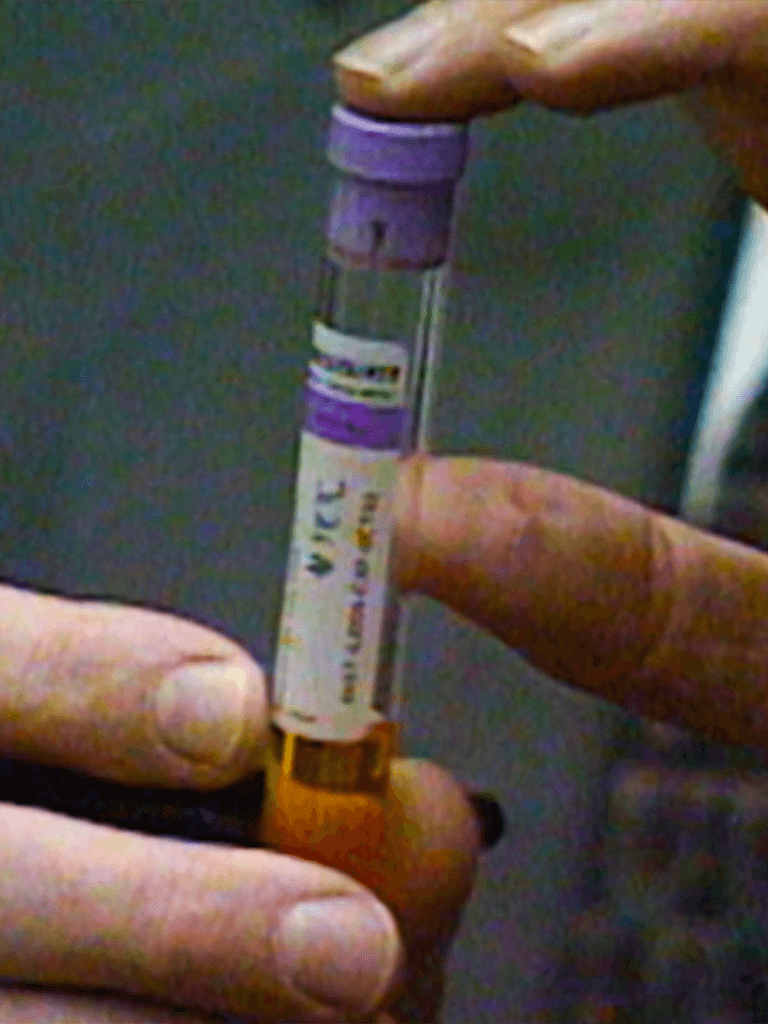
                  That could only come from a purple-top

     test tube.

                  This is obviously absolutely devastating

     to the prosecution.  It refutes what the prosecution

     says.

                  So what does the FBI do?

                  Roger Martz said, I tested my own blood,

     it came out with essentially the same reading.

                  But, contrary to FBI procedures, he

     erases his computer run so nobody can come back and

     look, and at the time that he -- that he says that,

     the time he says that, no one knows that EDTA is

     undetectable in the human blood.

                  Those tests haven't been devised yet.

                  So Martz believes he's got carte blanche

     to say, I tested my own blood and it was about the

     same levels.  That, therefore, explains why there was

     EDTA on the back gate and the socks.  They're the same

     levels, so it isn't planted, okay.

                  Now, think about it for a minute.

                  If he thought for one second there was

     any possibility of ghosting or this cross-over effect

     you heard Terry Lee testify to, if there was one

     second that he thought that that was, in fact, the

     reason for the reading of EDTA, what would he have

     done?

                  He would have gone back and retested

     those items or tested some other items, because he was

     19 years in the laboratory, and he knew this wasn't

     any cross-over effect, he knew that he had EDTA in

     these samples.  It was totally consistent with

     planting, because there was EDTA from a purple-top

     test tube, and both of those samples are dynamite

     evidence and they had to get rid of it somehow.

                  Now, Mr. Petrocelli -- we got that thing

     in opening -- there's a board in there, Phil.

                  This is what he told you in opening:  A

     man named Roger Martz, a scientist from the FBI, he

     has a machine called a mass spectrometer, he can test

     blood samples to see if it has EDTA.  We will call

     Mr. Martz.  He will testify he examined the blood

     taken from the socks and the blood taken from the back

     gate to see if there was EDTA in there that could have

     come from a reference sample that had EDTA in it, that

     is, if there were high dosages or high concentrations.

                  Mr. Martz conducted these tests on his

     machine and he determined conclusively, and will so

     testify, that the blood on the back gate and on the

     socks could not have come from an EDTA-treated test

     tube, and therefore could not have been planted.

                  Where was he?

                  Mr. Lambert told you that he was going to

     bring it.

                  Where was he?

                  He wouldn't come because of the fact that

     now it is known that you can't have EDTA in your

     blood.  And so his second test relative to his blood

     to try to explain away the planting is absolutely

     invalid.  And he knows it, and he wouldn't come

     because he wouldn't come in here and testify to you

     that a lab manager of 19 years got cross-over effect

     or ghosting, that is, residue from the machine, EDTA

     in the machine came out on the next test.

                  If these people were so confident that

     EDTA wasn't in those samples, why didn't they test

     everything?

                  Why?

                  They can get the FBI to jump through

     hoops.

                  We can't get them to return a phone call.

                  Why didn't they test everything?

                  They didn't test everything because they

     didn't want to know the answer.  They figured that

     they could get around this with you.  They figured

     they could get Dr. Terry Lee to come in here and tell

     you, ladies and gentlemen, that it was ghosting, it

     was a cross-over effect from the machine.

                  Remember what he put in his notes?  I

     thought it was very, very telling.  We've got to find

     a way to explain around it.  That's basically what he

     said.

                  And his way to explain around it was it

     was left over in the machine.

                  Ladies and gentlemen, the evidence in

     this case is simply not trustworthy.  It is not

     trustworthy.  It's not worthy of belief.

                  They had all the opportunity in the world

     to do that.

                  They did not do it.

                  They wouldn't do it.

                  And think about -- think about the gloves

     for a minute.

                  Mr. Petrocelli says, well, why didn't

     they have OJ Simpson put on the gloves?  You could see

     they were too tight.  You could see it on the video.

     He could have had him put on the gloves.  He didn't

     ask him.

                  Those gloves are too tight.  They

     wouldn't have fallen off.  They wouldn't have been

     dropped.

                  You know, isn't it absolutely incredible

     that they dropped one right at the beginning of the

     crime scene so everybody can see it in Bundy.

                  And the hat stuck underneath the rail.

     And doesn't it defy credulity that the other one just

     happens to be at their number one suspect's house, in

     an area where nobody would be, where it doesn't

     belong.

                  But it links the crime scene.

                  Incredible.

                  And you didn't see any scratches on

     OJ Simpson's hand.  How can you pull those things off?

     Do you think that some killer is going to be trying to

     pull off gloves or is he going to be trying to attack.

     How did they come off and fall at such convenient

     places, to link a crime scene?

                  And, you know, I didn't -- I didn't have

     Mr. Fung say that there were cuts on both of those

     gloves.  He said that.  When I switched subjects to

     the gloves, he said, well, there were cuts on them.

     And then he said that the cut was underneath this

     piece of stucco.  And there is no cut underneath the

     piece of stucco, the stucco's gone, there's no stucco,

     there's no cut on the glove that's here.

                  You look at the wear difference.

                  You make your own decision.

                  But I'll tell you something, ladies and

     gentlemen, the purported expert that they got in here

     to testify that the gloves were solid, and that's

     evidence that you ought to rely on, that man wanted to

     be in this case more than anybody.  I mean he flies

     out here, he wants to be invited to the victory party,

     he wants everybody's cards, he wants memorabilia from

     the case.

                  He's not to be trusted.

                  But the gloves do not link crime scenes,

     and the reason they don't is, it's clear, it's beyond

     the pale, the Rockingham glove is planted.  There's

     just no question about it.

                  Now, you know, the contamination of the

     evidence, Bob Blasier told you about that, and can you

     imagine how every bit of evidence in this case, you

     take item 5823, it's got a 1.3 allele, to them that's

     cross-hybridization.  I mean there's an explanation

     for everything that went wrong.

                  And everything went wrong.  And it went

     wrong because somebody was playing with the evidence.

                  Think about it.  OJ Simpson's reference

     vial, Nicole Brown Simpson's reference vial, Ron

     Goldman's reference vial, these are clean samples,

     there is absolutely no way contamination can get into

     those samples unless LAPD contaminates them.

                  And then you look at them, you have got

     OJ Simpson's alleles in both Nicole Brown Simpson's

     blood and Ron Goldman's blood.

                  How does this happen?

                  LAPD doesn't even have a manual at SID.

     They really don't -- you know, they say the substrate

     controls clear everything up.

                  That is our defense, we couldn't have

     contaminated everything because the substrate controls

     were all clean.

                  Now, isn't that incredible?  Isn't that

     absolutely unbelievable?

                  This is a lab that has no set rules at

     all.

                  For example, brings OJ Simpson's

     reference vial out as the first thing they work on,

     spills that, doesn't wash the table with bleach,

     doesn't change paper, doesn't know when they change

     gloves.

                  This lab contaminated both reference

     vials of blood, and we've told you, ladies and

     gentlemen, once it's contaminated, it doesn't matter

     who tests it.  I don't care if the FBI tests it,

     Cellmark tests it, Department of Justice tests it,

     it's contaminated and it's going to remain

     contaminated thereafter.

                  And the substrate controls that they say

     all were clean, they were all perfect, there was

     nothing on them whatsoever.

                  Now, can you imagine that?

                  You saw the tape of Mazzola, how she

     collects samples.  You saw on the board, if there was

     one substrate control, it was meaning not unlike

     diluted blood, and yet everything wasn't just without

     any DNA, it was perfect.  It was immaculate, as if it

     had never been done, as if it had never been

     accomplished at all, because it's their savior.

                  And, ladies and gentlemen, you can't

     trust it.  If you can't trust the messenger -- and

     believe me, the messenger in this case -- we have one

     messenger that came to testify.  We have one messenger

     that didn't.

                  The messenger that came to testify is

     named Vannatter, and Vannatter is not to be trusted,

     and he had all the blood.  Every bit of it.

                  And if you can't trust the messenger, you

     can't trust the message.

                  And then, ladies and gentlemen, and I'm

     taking a lot of your time, and I apologize, it is

     absolutely ridiculous to think that if Dennis Fung is

     at SID and Phil Vannatter wants to get into SID and

     wants Dennis Fung out of there and Dennis Fung is

     going to hold his ground and protect the evidence of

     the People, that's absolutely ridiculous to assume

     that.

                  This evidence is contaminated, it's

     tampered with and it's planted, it's not at all worthy

     of belief, it's not at all worthy of belief to destroy

     a human being's life, and that's what the LAPD and the

     plaintiffs want to do in this case.

                  Now, one thing you ought to put in

     perspective about the LAPD and the SID crime lab,

     you've heard early on, within two days of these

     murders, OJ Simpson makes available, at his cost,

     Dr. Henry Lee and Dr. Michael Baden, two renowned

     criminalists -- one is a forensic pathologist, rather,

     and Henry Lee, perhaps the most famous criminalist in

     the world, is relied upon by the government of Taiwan,

     by virtually every governor in the 50 states and by

     the FBI.

                  Let the chips fall where they may.  Look

     at the evidence, examine the evidence, analyze the

     evidence, and come to some conclusions.

                  And LAPD turns them away.

                  LAPD wouldn't even let Henry Lee in the

     lab, wouldn't even give him a microscope that he can

     see anything with.

                  Why?  Why, if they have nothing to hide?

     Why?

                  And the reason is, they have a lot to

     hide.

                  This evidence was contaminated early on.

     They knew it was contaminated early on.  And they

     didn't want anybody finding out about it.

                  They knew that they had tampered with,

     contaminated, planted evidence.

                  If not, why not let your lab and all of

     the evidence be exposed to the light of day?

                  Maybe they can tell you.

                  Now, I want to, just for a moment, talk

     about reality, and it may seem somewhat harsh to do

     this, but this is a lawsuit.  I just want to talk a

     little bit about the parties in this lawsuit.

                  Fred Goldman is obviously a party, and

     you've heard that he has a wrongful death claim and a

     battery claim, and the battery claim is the

     springboard to try to get to the punitive damages

     phase or the second phase of the trial against

     OJ Simpson.  He stipulated that there's $100 in

     damages.  That is the amount of clothing that Ron

     Goldman was wearing.

            MR. PETROCELLI:  He has not stipulated to $100

     in damages on all counts, Your Honor.  That's

     incorrect.

            MR. BAKER:  On the battery count.

                  And Mr. Petrocelli got up here and told

     you in a very emotional appeal that Ron Goldman would

     probably be opening his restaurant now and he would be

     going into his restaurant.

                  Let's examine reality.

                  Fred Goldman, for reasons that he called

     tough love, didn't help his son go through bankruptcy,

     and he had to go through bankruptcy.

                  Ron Goldman wouldn't have a restaurant

     now.

                  He'd be lucky to have a credit card.

                  Don't buy into this emotional idea,

     because it isn't reality.

                  Mr. Petrocelli's well aware that

     sympathy, passion and prejudice are not to be

     considered, and yet he very dramatically wanted to

     read a poem to invoke your sympathy.

                  That's not part of your deliberations.

                  I'd like to introduce Mr. Kelly to his

     real client.

                  He got up here before you and said it was

     Nicole.

                  His real client, ladies and gentlemen, as

     was testified to correctly by Judy Brown on the

     witness stand, is the estate of Nicole Brown Simpson.

     The two beneficiaries and the only beneficiaries of

     that estate are Justin Simpson and Sydney Brooke

     Simpson, Mr. Simpson's children.  Children who he just

     got back.

                  That's who his real client is.

                  But he wanted to talk about Nicole and to

     talk about sympathy.

                  And Sharon Rufo, Sharon Rufo hadn't seen

     her son in about 12 to 14 years.  She was -- and she

     suffered a loss.  I'm not saying she didn't.

                  First time in the history of my being in

     a trial that a plaintiff hasn't got on the witness

     stand and testified.

                  Sharon Rufo was here the other day.  She

     was here for final argument.  She wasn't here to

     testify, to tell you about her loss.  She did that by

     way of deposition.

                  She was here for opening statement.  But

     she didn't come to testify about what her loss was.

                  Hadn't had a phone call, talked to her

     son in a couple of years.

                  Now, those are the parties, those are the

     people suing OJ Simpson.

                  And it is interesting that -- you talk

     about not helping your son through bankruptcy, not

     getting him out of jail, and that's tough love.

                  And it's interesting that you vilify

     OJ Simpson, Mr. Petrocelli does, for trying to get his

     wife to pay her taxes so that his ex-wife -- her house

     can never be taken away.  That's something to be

     vilified.

                  That's just what has happened.

                  What allows that to occur, ladies and

     gentlemen, what allows that to occur is that the media

     has told the world that it is politically correct to

     be anti-OJ Simpson.

                  And you, ladies and gentlemen, are the

     buffers, you are justice by the people, you have the

     job of analyzing the evidence in this case and

     weighing that evidence and whether it makes any common

     sense, in determining whether or not OJ Simpson

     committed these crimes.

                  And, you know, we talked about -- we

     talked about the week after the 12th, OJ Simpson is

     heavily medicated and he's at his friend Kardashian's

     house and -- and he writes this suicide note.

                  And Mr. Petrocelli would have you

     conclude that he was guilty, that he was trying to

     escape.

                  And what I was able to conclude from

     that, and you can as well, is, fortunately for

     Mr. Petrocelli, he has never experienced the kind of

     grief that Mr. Simpson was experiencing.  It kind of

     wraps around your skull and it presses on it and it's

     an omnipresent headache and it drops to the pit of

     your stomach and you're depressed and it comes in

     waves and you don't know if will ever leave and you

     don't know what to do and you don't know how to do it,

     you don't know how to act, you don't know what to do

     and you don't know if it will ever go away.

                  And then superimposed upon the grief from

     losing his ex-wife is the media, convicting him in the

     court of public opinion of killing two people that he

     had nothing, absolutely nothing to do with.

                  And all of that has been brought onto

     Mr. Simpson.

                  And so he says to his friend, take me to

     Nicole, and they get in Al Cowlings' Bronco and they

     go down to the cemetery, and they can't get in, and OJ

     doesn't kill himself, thank God.

                  Mr. Petrocelli would have you believe

     that it was Detective Lange who saved his life.

                  Detective Lange didn't even go upstairs

     to see if he was bleeding to death when he was there

     on the 13th.

                  Detective Lange didn't save his life at

     all.

                  What saved his life were two things,

     ladies and gentlemen:  One is faith, and two is

     innocence.

                  And that's what saved his life.

                  That was not a man trying to escape.

     That was a man who was in total despair, who wanted to

     end, as he told you, the pain.

                  And, fortunately, he didn't kill himself.

                  I want to just discuss two final points

     and then -- you've indulged my speaking long enough.

                  On the issue of motive, which we have to

     go back to because they simply haven't proved any

     motive, and they've taken an immense amount of your

     time, I want to remind you of one other thing relative

     to that issue.

                  And that is, Nicole had close friends,

     she ran with them every morning, she had nannies and

     housekeepers all her life, you didn't see one of them

     come in here and testify to these what they would have

     you believe to be seriatim abuses.

                  And the reason that they didn't come in

     here and testify is because they never occurred.

                  They got people who wanted their 15

     minutes of fame.  And we certainly would never deny

     the '89 incident.

                  But that '89 incident does not, five and

     a half years later, manifest itself into a double

     murder, when there's absolutely no motivation.

                  And we have to go back and discuss

     briefly -- briefly, the time line.

                  And we have to discuss that because

     before -- before it was politically correct to -- to

     be anti-OJ, Heidstra testified that at 10:40 is when

     he was across the alley from Nicole's condo.

                  (Reading:)

                         Q.    So that we're clear,

                  Mr. Heidstra, is there any doubt in your

                  mind that you were in that alley and was

                  walking parallel to Bundy on the night

                  of June 12, 1994?

                         A.     No doubt.  I'll never

                  forget that.

                         Q.     Any doubt in your mind

                  that when you stopped behind the house,

                  it was approximately 10:40?  Any doubt?

                         A.    No, no doubt about it.

                    And so from 10:40, if it took to 10 or

     15 minutes, that it obviously had to take to do these

     heinous crimes -- you're at 10:50, 10:55, and another

     six minutes, and you're at 11 o'clock, to get from

     Bundy to Rockingham.

                  And, of course, OJ Simpson is seen, at

     the latest, 10:54, 10:55, walking into his house,

     after he came down and dropped his garment bag, after

     he'd been upstairs and dropped his garment bag over

     his golf bag.

                  And that's when he is seen.  And there is

     absolutely no time --

                  And, ladies and gentlemen, the car, the

     Blazer-like vehicle that turned right on Bundy that

     had no relationship to the crime one way or the other,

     certainly, Mr. Simpson would never have gone that way.

     And it was too early for the crimes to have ever been

     completed.

                  There simply wasn't any time whatsoever

     for him to do it, because we knew, according to the

     plaintiffs' theory, giving them -- we knew at 10:40,

     when you hear the "hey, hey, hey," Ron Goldman's

     alive.  The gate clangs, and he's alive.

                  There is no time, if it were Mr. Simpson,

     for him to do it, go through all of that caged-in area

     and tussle, keep Ron Goldman quiet while he allegedly

     murders Nicole, keep himself away from Ron Goldman so

     he doesn't get a bruise on him.  Not while he's

     murdering Nicole and not while he's in this horrific

     struggle with Ron Goldman's life, without a bruise,

     and then speed off in the wrong direction, with no

     time to get to his house.

                  And then, ladies and gentlemen, follow

     through with -- follow with me, and let's go through

     it.

                  If he goes over the cyclone fence, and he

     got -- allegedly changed clothes -- what, in God's

     name, has he changed into?  If his clothes are already

     going into his bag, they're going to be placed into

     the Bentley, what has he changed into, and where did

     they go?  Where would you leave the bag?  In the

     direct light of the parking lamps that were on of

     Allan Park?

                  And how, in God's name, ladies and

     gentlemen, did OJ Simpson, if he were the murderer,

     come back from Bundy in this huge white elephant

     called a Bronco, drive it up to Rockingham?

                  And Allan Park, who is extra vigilant,

     tying to find OJ Simpson, never hears the noise of

     that vehicle, never hears -- never sees any lights,

     never hears a door slam, nothing.

                  How did it happen?

                  Well, it doesn't happen, because that car

     was sitting there the whole time, because Mr. Simpson

     had been upstairs, taking a shower.

                  And think about it.  If he'd taken a

     shower, and he had to take a shower after he came

     back, they didn't find any blood in his plumbing, not

     one drop in the sink, no.

                  They took away the plumbing in his house.

     They did it in his wash room.  They scoured the

     sewers.  They had every inch of the route from Bundy

     to Rockingham scoured for clothing.  They couldn't

     find any.

                  Why not?  Because Mr. Simpson is

     innocent.  He didn't do it.

                  How could he have possibly killed these

     people and dropped all his stuff around, got rid of

     the murder weapon, the shoes, the clothes -- kept the

     socks, though, kept the socks -- and how could it have

     happened?

                  It clearly didn't.

                  It clearly didn't.

                  And, ladies and gentlemen, Mr. Petrocelli

     has said to you, Mr. Goldman, Fred Goldman, can't get

     his son back; he can't get his life back.

                  That's very true.  He can't.

                  And that's sad, and that is something we

     all feel for him.

                  You can't give him his son back.  You

     can't give Ron Goldman's life back.

                  But you can give back Mr. Simpson his

     life.

                  He has been ridiculed.  He has been tried

     in the press.  And it's only the jury -- it's only

     justice by the people who will listen to the facts of

     this case without an agenda -- without an agenda to

     sell magazines, newspapers, or air time -- that can

     render a verdict, like was done before, and give him

     his life back, and give Justin and Sydney their dad

     back.

                  Thank you very much.

            THE COURT:  Ladies and gentlemen --

                  Yes?

            MR. KELLY:  If we can take a five-minute break,

     I'll complete my part.

            THE COURT:  Five minutes, ladies and gentlemen.

     Don't talk about the case.  Don't form or express any

     opinions.


                        (Recess.)


            THE BAILIFF:  Quiet in the audience.


                         (Jurors resume their respective

                         seats.)


            MR. KELLY:  Thank you.

                  If it please the Court.

                  Morning, ladies and gentlemen.

            JURORS:  Good morning.

            MR. KELLY:  Right now, what I'm getting up here

     for is to take part of what we call rebuttal; that is,

     I just want to touch on some of the arguments that

     Mr. Baker has made over the course of a couple days

     here.  And after I touch on these certain things in a

     more general sense, Mr. Petrocelli and Mr. Lambert

     will be getting up and responding in kind to the

     comments he made, and responding in some detail to

     things he put out to you during the course of his

     argument.

                  The first thing I want to touch upon is

     the outrage that Mr. Baker expressed by the fact that

     the first time around in our closing arguments, that

     we, the plaintiffs, did not address the issue of

     police malfeasance.

                  Then Mr. Baker went on to implore you

     people to simply look at the evidence and use your

     common sense.  And the fact of the matter is that, if

     you do look at the evidence and you use your common

     sense, there is absolutely no indication of police

     malfeasance.

                  What we did hear from Mr. Baker and his

     cohorts, both during their cross-examination of a

     number of witnesses and during their closing argument,

     you heard a lot of what-ifs, could have beens, maybes,

     possibles.

                  But that's not evidence.

                  You people know you are not to engage in

     speculation, you are not to engage in conjecture, and

     you are certainly not to engage in sheer fantasy.

                  And that's what the defense is asking you

     to do.

                  Now, a couple other things with regard to

     the Flammer photographs, which the defense claim was a

     fake.

                  The other line in the sand they drew was

     this issue of Vannatter, with the blood, that it is --

     it has been planted.  And they felt that because he

     had handled Mr. Simpson's blood exemplar, and that he

     had handled Nicole's blood exemplar, and he had

     handled Ron's blood exemplar, that there was something

     extraordinarily sinister and wrong with what he did.

                  And Mr. Baker then complained that while

     we did, right up front -- we put Vannatter on the

     stand and we took this issue head on.  We wanted you

     to see exactly when, and under what circumstances,

     Mr. Vannatter came to be in possession of

     Mr. Simpson's blood exemplar.  And then we moved on.

     And we wanted to let you know when, why.  And when he

     transported that blood in the evidence envelope,

     straight out to Rockingham to Dennis Fung, and lo and

     behold, you -- and people were treated to a video of

     Detective Vannatter walking into Rockingham with that

     vial in an evidence envelope in front of the entire

     world.

                  Also, when he was on the stand, we put

     the other issues right out there.  You heard about

     when he picked up Ron and Nicole's blood exemplars.

     You saw the logbook, exactly when and under whose

     supervision he signed out both of those blood

     exemplars.

                  And only minutes later, you also saw the

     logbook when he signed in and under whose supervision,

     those blood exemplars at SID.

                  Now, Mr. Baker would prefer to talk about

     Rockingham in terms of Mr. Vannatter in this jumping

     over the wall to you people, till you people are

     dizzy.  But it has nothing to do with the case.

                  Couple other observations, also.

                  I will agree with Mr. Leonard that he is

     a hard-headed Irishman, but even Mr. Leonard could not

     look you right in the eye and say those 30 photos are

     a fake.  What he did was work around it, punch around

     the edges.  And he coined a catchy phrase.  He said,

     they came too late and they cost too much.

                  Well, ladies and gentlemen, they came

     just in the nick of time, and those pictures are

     priceless.  They're priceless.  And in their

     evidentiary value to you, that you people, as

     fact-finders of the case, get to consider and weigh

     during your deliberations.

                  And Mr. Leonard, himself, after all that,

     indicated that if you don't believe those photos are a

     fake, then you're free to conclude that it was

     Mr. Simpson who waded through those victims' blood

     that night on Bundy.  Because --

            MR. BAKER:  I object.  That was not said at all

     by Mr. Leonard.

            THE COURT:  Overruled.

            MR. KELLY:  Mr. Baker also urged you not to be

     guided by sympathy, prejudice or passion.  He said

     we've subjected you to a ploy played upon your

     sympathies.

                  Well, you know, ladies and gentlemen, we

     have, and we have in a certain sense.  We have in the

     sense that this case and the facts of this case are

     sad.  They're very, very, very sad.

                  And it's a fact, it's a true -- true fact

     that, when Sydney and Justin wake up in the middle of

     the night, frightened, they won't have Nicole to hold

     them.  And when they're sick or they're lonely or

     they're having trouble in school, it's a fact that she

     won't be there to touch them or stroke their hair.

                  And Ron Goldman, what a great kid.  It's

     a fact that he was cut down in his prime, just trying

     to protect this woman, this mother.

                  The only sympathy being sought in this

     case is by the defense for Mr. Simpson, because in the

     face of overwhelming evidence -- physical evidence,

     forensic evidence, and testimonial evidence -- he's

     asking you to simply feel -- feel that his client did

     not commit these murders.

                  They want to you be blinded to the

     evidence.

                  Another thing Mr. Baker commented upon

     was that this courtroom was not a level playing field.

                  He wants to you believe that.

                  Well, Mr. Simpson had his battery of

     talented lawyers in here.  And they brought back any

     witnesses they wanted.  And they put up any experts

     they wanted to challenge any part of our case.

                  Not the Flammer photos, mind you, but any

     other part of their case that they wanted to

     challenge, they wanted those experts in.

                  But I'll tell you:  This courtroom is a

     level playing field; it's only the score that's

     lopsided right now.

                  Well, Mr. Baker addressed five specific

     incidents that we presented where Mr. Simpson lost his

     self-control, where sometimes he was physical, other

     times simply frightening to Nicole.

                  He talked about '83, India Allen.  That

     wouldn't have happened because she would have called

     the police.  Well, I think we know by now what would

     have happened -- the police came in here and testified

     about that -- it would have been a conspiracy; it

     would have been a frame-up.  And this guy would have

     been lying.  Because in '84, Nicole did call security,

     and Mark Day responded to the house, and he did come

     in here.  And he was lying.

                  In '86, on Victoria Beach, Aguilar was

     lying.

                  And in '89, New Year's Eve morning,

     Nicole was lying.

                  And in '93, the tapes are lying.  The

     tapes are lying when Nicole says she was scared.

                  Now, Mr. Baker did something else.  He

     alludes to the fact that we should have brought in

     Nicole's friends or housekeepers or people to talk

     about other incidents.

                  Now, just a little aside.  If you people

     haven't figured out by now, I'm from New York, and

     Mr. Baker sort of, I think, suggested that in itself

     had some sinister connotations.  Yeah, I'm from New

     York.  I grew up in the midwest.  And we had a saying

     there.  The saying was, you can't ride the same horse

     going in two different directions.

                  That's what Mr. Baker wants to do:  He

     wants to tell you two different things out of each

     side of his mouth.

                  On the one hand, he wants to say you

     should have brought in every witness you had, every

     piece of evidence you had; you should have brought in

     one more witness.

                  But no matter how many witnesses we

     brought in, how much proof, he says they were lying;

     they wanted their 15 minutes of fame; it was a

     frame-up; it was a conspiracy.

                  Now, if we wanted to start with Nicole's

     friends that certainly where we would manufacture

     witnesses if we wanted to.

                  But it also will suggest that if

     Mr. Baker was so confident that Nicole's friends

     wouldn't say these things, these were other people he

     could have brought in.  He knew how to do that.  He

     knew how to do it, just the way we knew how to do it.

                  But what did we do?  We didn't bring in

     Nicole's friends; we brought in Mr. Simpson's very

     best friend, his life-long friend.  And what did he

     tell you?  He wasn't lying.  He told you that Nicole

     had told him -- this is Al Cowlings I'm talking

     about -- Al Cowlings got on the stand and finally

     admitted -- finally admitted that Nicole had told him

     that Simpson had hit her and pulled her hair.

                  So, once again, either Mr. Cowlings,

     Simpson's best friend, is lying about that, too, or

     Nicole was lying, and that it never happened.

                  And by the way, about these --

     everybody -- how everybody gets on the stand and lies.

     You even heard how Judy Brown was, in Mr. Baker's

     words, busted.  She was busted.  The mother of her

     murdered child being referred to as being busted.

                  I think that speaks volumes of the

     defense's attitude in this case.

                  But what we did, ladies and gentlemen,

     is, we presented you with the most unbiased witnesses

     you could hear from:  Mr. Simpson's closest friend,

     Nicole, in her writings, in her letters, in her

     diaries, in her tapes.  And from her photographs.

                  Now, importantly Mr. Baker keeps

     referring to the lack of a motive here.  And

     Mr. Petrocelli is going to address that in some detail

     in the future, too.  But what I think Mr. Baker was

     trying to say is, what we have here is the absence of

     a good reason to kill, and that this presumes that

     there was a logical mind inside the head of someone

     who committed a most illogical act.

                  He's saying there should be some sort of

     cause and effect.

                  Well, I'll tell you, we've heard of many

     times where Mr. Simpson was moved to violence, was

     moved to frightening actions, with no reason

     whatsoever.

                  In '83, he slapped Nicole in the face.

                  Did he have a good reason?

                  In '84, he cracked her windshield.  Did

     he have a good reason?

                  In '86, he slapped her in the face.  Did

     he give you a good reason?

                  In '89, he beat and battered her.  Did he

     give you a good reason?

                  And in '93, he scared her; he frightened

     her.  Did he give you a good reason?  No, he did not.

                  In '93, Nicole was scared.  Scared to

     death.

                    And for good reason.

                    Keep in mind that as of June 12, 1994,

     Nicole was rejecting Mr. Simpson.  She was keeping the

     kids away from him at the recital.  She publicly

     embarrassed him in front of family and in front of

     friends.

                  Now, I'm not saying that you would -- I'm

     not saying that he would -- you know, I'm saying --

     nor am I saying that anybody would kill for that

     reason.

                  But the bottom line is here, ladies and

     gentlemen.  You heard it was a problem relationship

     with the history of violence; that Mr. Simpson was

     emotionally entangled with this woman; he was angry at

     her.  He had a reason to be angry at her, in his mind,

     and he had the opportunity to kill.  And lo and

     behold, Nicole was found dead.

                  And he wants us to give you a reason.

                  When, since the beginning of time, has a

     man killed a woman with a good reason?

                  When, since the beginning of time, has a

     husband killed a wife or an ex-husband killed an

     ex-wife and had a good reason?

                  There's not a scintilla of evidence that

     Nicole had any problem relationship with anybody else,

     that anybody else was violent towards her, that

     anybody else was angry with her.

                  And there's only one person that she

     feared, and that fear was escalating, right up to the

     last days of her life.

                  The person she feared, the person that

     caused her to call a shelter, was Mr. Simpson.

                  Now, one other thing.  I'm a little

     surprised Mr. Baker brought it up.  But like he said,

     we can't tip-toe around these things; we have to

     address them.  This was about this cause of action, my

     client -- Mr. Baker indicated that he wanted to

     introduce me to my client.

                  Well, just a little bit about that.

     You'll hear from the Court that this is what we call a

     survival action, meaning that if Nicole survived the

     battery that night, she would have had the right to

     bring this action herself.

                  Mr. Baker's right:  His client murdered

     my client.  She didn't survive, so she's not my client

     right now.

                  That sort of reminds me of that old story

     about the young man who's getting ready to be

     sentenced for the murder of his parents, and he's

     standing before the judge, and when asked if there's

     anything else to say, the one thing he comes up with

     is, Judge, be lenient with me; I killed my parents,

     but forgive me.  I'm now an orphan.

                  That's basically what Mr. Baker was

     saying.

                  The estate brought the action; the

     children are the beneficiaries.

                  Since the beginning of time, one of

     nature's most lasting lessons has been that a mother

     protects her young.

                  In life, Nicole couldn't do enough to

     love, protect and cherish these kids.

                  And she went one step further, though:

     She made provisions in the event she died or was

     killed --

            MR. BAKER:  I'll object.  This is not rebuttal;

     this is outside the scope.

            MR. KELLY:  He brought it up.  He talked about

     the cause of action.  I have a right to explain a

     little.  He mentioned the kids and the estate.  And

     I'll be done in a minute.

            MR. BAKER:  Your Honor, this isn't evidence,

     Your Honor.

            MR. KELLY:  The estate is Nicole's legacy.

     It's her final effort to protect these children.

                  These children will never kiss their

     mother goodnight again.

                  Mother's Day will only mean putting

     flowers on Nicole's grave.

                  And all we're asking you now is for you

     to give Nicole that eternal comfort, let her rest in

     peace, knowing that her children are provided for in

     this one small way.  Just bring these children under

     Nicole's wing; let them be protected by an angel.

                  Thank you very much.

            THE COURT:  1:30, ladies and gentlemen.

                  Don't talk about the case.  Don't form or

     express any opinion about the case.


                         (At 11:58 a.m., a recess was taken

                         until 1:30 p.m. of the same day.)


     SANTA MONICA, CALIFORNIA; MONDAY, JANUARY 27, 1997

                         1:40 PM

     DEPARTMENT NO. WEQ    HON. HIROSHI FUJISAKI, JUDGE

     APPEARANCES:


                  (REGINA D. CHAVEZ, OFFICIAL REPORTER)


                         (The following proceedings were

                         held in open court outside the

                         presence of the jury.)


            MR. BAKER:  Your Honor, relative to the

     rebuttal argument, there's a couple boards in the back

     that the plaintiffs apparently intends to use, and it

     says "Simpson says," and then it has certain lines in

     there put in quote marks.

                  These are not what Mr. Simpson said.

     There has been no testimony in all of the thousands of

     pages that Mr. Simpson said these things.

                  They are trying to essentially, I guess,

     put these words in his mouth.

                  I would object to any new boards

     whatsoever in their rebuttal argument.

            MR. PETROCELLI:  It's completely appropriate,

     Your Honor, a board listing his defense, his argument,

     and there's no way anybody could ever think he said

     those things.  I will make it absolutely clear he

     didn't say those things.

                  Those are his seven points.  I would

     never tell a lie, et cetera, the things that he said

     that we're going to run through in our rebuttal.

            THE COURT:  All right.  As long as you make it

     clear.

            MR. PETROCELLI:  Absolutely.

            THE COURT:  There's not quotations from any

     testimony or any other source.

            MR. PETROCELLI:  Will do.

            MR. BAKER:  One other thing, Your Honor.

                  I would object to Mr. Lambert arguing.

     He didn't argue at the beginning.  And it seems to me

     in the rules that we have from September of 1996, that

     only one person can argue that did the argument in the

     opening argument.

            THE COURT:  Mr. Blasier argued.

            MR. BAKER:  I know.  He argued in our argument.

     This is rebuttal.

            THE COURT:  It's rebuttal, I assume, to

     Mr. Blasier.

                  You may resume.


                         (Jurors resume their respective

                         seats.)


            MR. PETROCELLI:  Thank you.

                  Good afternoon everyone.

            JURORS:  Good afternoon.