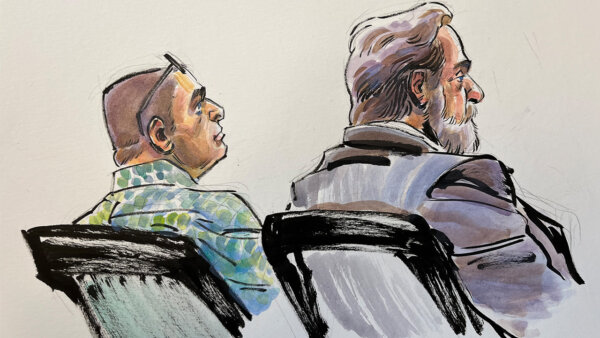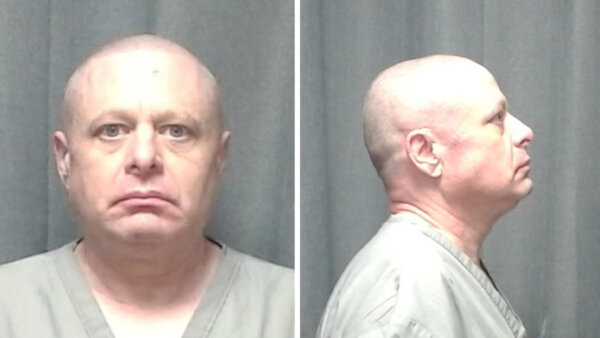

INDIANAPOLIS, Ind. (Court TV) — Three judges at the Indiana Court of Appeals heard arguments from the state and the defense of convicted murderer Richard Allen, who is arguing that he deserves a new trial.
During the appellate hearing on Monday, Judges Nancy Vaidik, Elaine Brown, and Robert Altice Jr. heard from Allen’s appellate attorney, Mark Leeman, who argued that his client was unable to present evidence during his trial that would have proved his innocence. Arguing for the state was Ellen Meilaender, who reiterated that Allen confessed to killing 13-year-old Abigail “Abby” Williams and 14-year-old Liberty “Libby” German on Feb. 13, 2017.
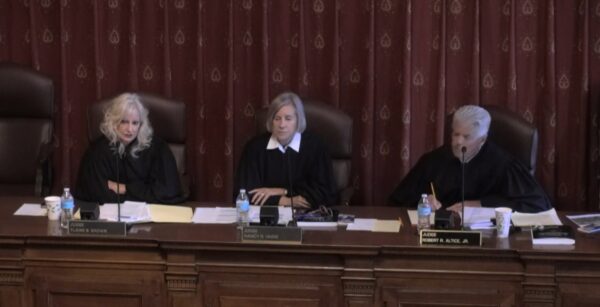
Judges Elaine Brown, Nancy Vaidik, and Robert Altice Jr. (Court TV).
The teens were walking across the Monon High Bridge in Delphi, Indiana, before they were reported missing. Libby captured video of a man, later referred to as “Bridge Guy,” telling the girls to walk “down the hill.”
The judges, however, seemed to question how Allen was treated while he was in the middle of psychosis and how certain pieces of evidence were excluded during the trial, which concluded in 2025. Allen, who suffered from mental illness, was being housed at a maximum-security facility after his arrest because his exposure to the general jail population was deemed too risky for an accused child killer. However, his time at the facility apparently led to a worsening of his mental illness. His defense attorney argued, “For more than a year, he was recorded, caged, and chained on every movement. He lost forty pounds. He hit his head on his cell door until he had two black eyes. He ate his own feces.”
During Monday’s hearing, Meilaender argued that the arrangement was meant to protect Allen from becoming a target. Judge Brown responded, “You protected him into psychosis.” Meilaender countered that Allen’s condition “suddenly began to change” when he experienced a religious conversion behind bars and was faced with “legal discoveries” by his attorneys.
The judges also questioned why the notorious suspect sketches, which were drastically different from each other, were not entered into evidence during the trial. Meilaender argued that such sketches are merely an investigative tool and not reliable as evidence during trial. She also said Allen was identified by eyewitnesses based on the video footage taken by Libby’s phone.
Meilaender also told the judges that some guards believed that Allen was “feigning” his symptoms so he could be moved into a better facility. She attempted to clarify that Allen’s confessions came when he was not in active psychosis. Leeman argued during his statement that anyone who watched the videos of the confessions would see that Allen was not coherent at the time.
The possibility of a new trial now lies in the judges’ hands.