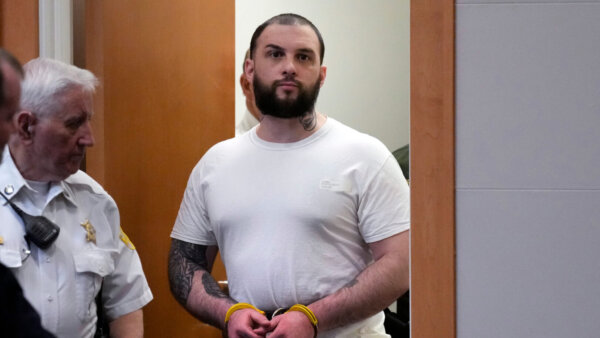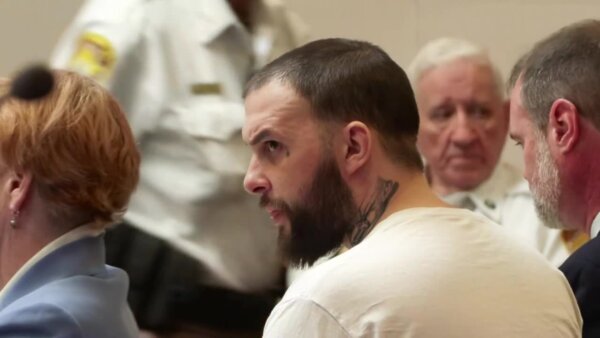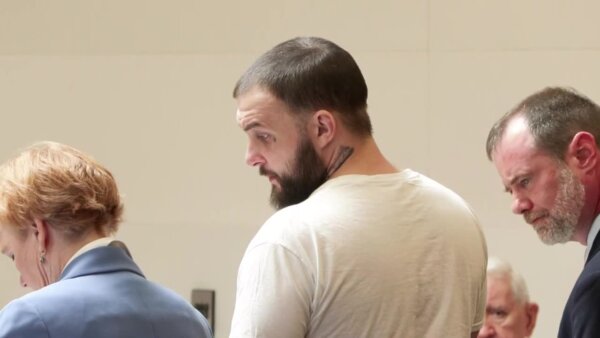

CONCORD, N.H. (Court TV) — Prosecutors are asking the New Hampshire Supreme Court to deny Adam Montgomery’s request for a new trial after his conviction for murdering his daughter.
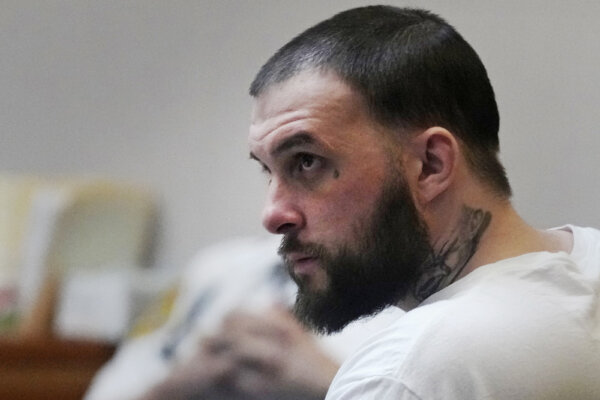
Adam Montgomery listens during his sentencing hearing at Hillsborough Superior Court, Thursday, May 9, 2024, in Manchester N.H. (AP Photo/Charles Krupa, Pool)
A jury found Adam guilty of killing his 5-year-old daughter, Harmony Montgomery, and then dismembering and disposing of her body, which has never been found. Harmony was murdered on Dec. 7, 2019, months after her father had gained custody of her.
In an appeal filed earlier this year, Adam cited three errors with his trial: the court’s failure to sever assault and murder charges, evidence of past abuse that was admitted, and video evidence of Adam’s interaction with police in 2021 was shown to the jury.
“Even if the trial court erred in any or all of the ways the defendant argues … the errors were harmless beyond a reasonable doubt,” prosecutors said in their response.
MORE | Judge pushes for federal investigation into Harmony Montgomery case
Before his criminal trial, Adam had unsuccessfully sought to sever charges that he assaulted Harmony in July 2019 from the allegations that he murdered her in December. But prosecutors successfully convinced the trial judge to allow the same jury to consider both crimes. “The State acknowledged that the charges were spatially and temporally separate. However, the charges involved a common defendant and victim, and both involved the defendant hitting [Harmony] in the head when he was angry with her. Further, the ‘witnesses establishing both crimes [were] similar.'” Jurors were instructed to consider the charges separately, and evidence of the two crimes was presented at trial separately.

Harmony Montgomery. (Crystal Sorey)
Adam’s attorneys successfully had some evidence of abuse and neglect against Harmony suppressed before trial. Prosecutors noted in their response to his appeal that they were not given “carte blanche” and were only allowed to show evidence from a limited time frame between Nov. 12, 2019, and Dec. 7, 2019, to establish a pattern of neglect and abuse.
Likewise, the video of Adam’s interaction with police officers on Dec. 31, 2021, was not shown to the jury as prosecutors intended, but was shown silently with evidence of any questions asked to the defendant or his demeanor excluded.
Adam was sentenced to 56 years to life after his murder trial. That is in addition to the 30-60 years in prison he was sentenced to for unrelated weapons charges. Adam has filed an appeal in that case as well.