LEXINGTON, S.C. (Court TV) — Alex Murdaugh’s defense wasted no time accusing prosecutors of making “secret agreements” with a potential witness — the defense’s first court move since Murdaugh’s murder convictions were overturned ahead of his upcoming retrial.
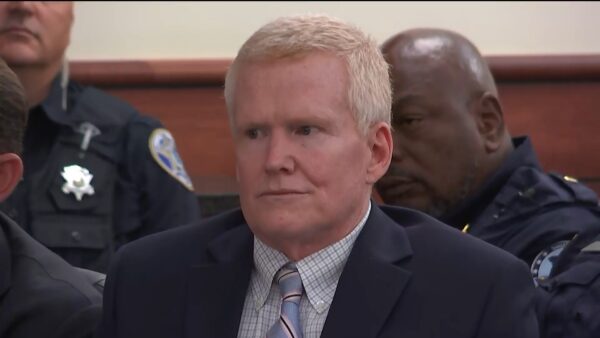
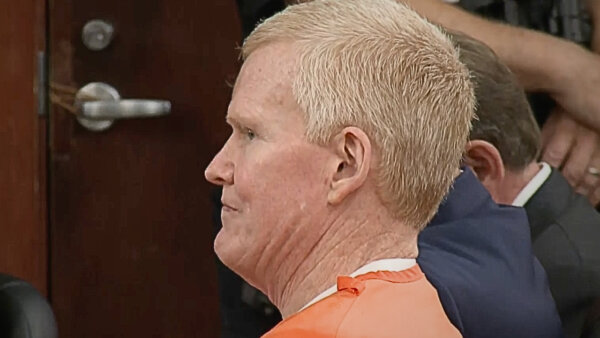
Alex Murdaugh appears in court on Aug. 14, 2026. (Court TV)
The South Carolina Supreme Court struck down Murdaugh’s conviction and two life sentences in the deaths of his wife, Maggie Murdaugh, and son, Paul Murdaugh, after finding that the clerk of court at his first trial made inappropriate comments to the jury.
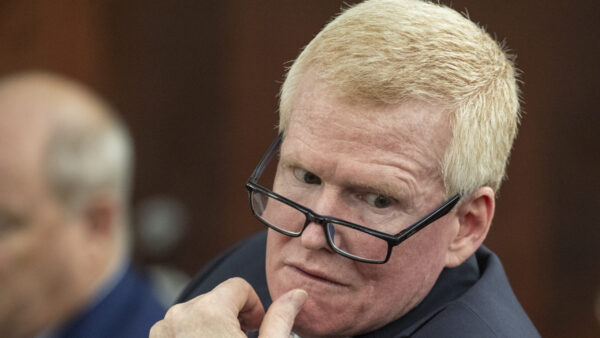
On Friday, Murdaugh appeared in a Lexington County courtroom, dressed in a suit and tie as his attorneys battled with the state over issues central to the defendant’s retrial.
Secret agreements?
When Judge Debra McCaslin asked whether there were any discovery issues that needed to be addressed, Murdaugh’s attorney, Jim Griffin, accused prosecutors of making “secret agreements” with a co-defendant in the first trial. Curtis “Eddie” Smith, described by Griffin as a “distant cousin” of Murdaugh’s, was allegedly hired by the defendant to shoot him in the head as part of a botched suicide-for-hire plot. In November 2021 and June 2022, Smith was indicted by state grand juries on multiple charges, including money laundering and drug charges. “Four-plus years have gone by and those cases have not been disposed of. Every other case that we’re aware of have been disposed of, and it begs the question, why not?” Griffin asked. “Do they have a cooperation agreement with Mr. Smith? If so, what are those terms?”
“There are no secret agreements,” solicitor Creighton Waters countered.
Another of Murdaugh’s attorneys, Dick Harpootlian, brought up Smith again in an argument over the admissibility of polygraphs. Harpootlian claimed that Smith had a proffer agreement with the state that would have led to a deal, but it was conditional on Smith passing a polygraph. But when the technician asked Smith, “Did you kill Paul and Maggie?” he allegedly failed the test. “And so they, relying on that, cancelled his proffer agreement,” Harpootlian argued.
“There’s never been any sort of deal with Eddie Smith,” Waters said. “A proffer is not a deal. It says in big, bold letters: ‘This is not a cooperation agreement.'”
Access to DNA
Murdaugh’s defense won its battle to gain access to untested DNA in the case, over the prosecutor’s objections. Waters said he wanted the state lab to run tests quantifying how much DNA evidence was available before giving it to the defense, but Harpootlian said he didn’t trust the lab of the South Carolina Law Enforcement Division (SLED) to test the evidence, citing the way the agency handled a bloody T-shirt before the first trial. “SLED violated every rule known to man and destroyed the T-shirt in the process of processing,” he said. “Now, it turns out, they also, when they processed it, determined it wasn’t human blood and we didn’t find out about it until very late. … I don’t have any faith they won’t screw this up.”
MORE | Prosecutors accuse Alex Murdaugh’s defense team of lying about polygraph
McCaslin ordered the DNA be given to the defense to analyze. “I’ll let you pay for it — that’s a given,” she said.
Change of venue
Citing the national and international attention the first trial received, Murdaugh’s defense team urged McCaslin to move the upcoming retrial to Charleston, where the defense lawyers said it would be the easiest to find an impartial jury. While prosecutors initially signaled that they agreed the trial should be moved, Waters said they no longer supported the move. “We actually tried to negotiate, without conceding anything, and were basically told ‘Charleston,’ and there were no other counties that they were willing to consider,” Waters said. “I’m always happy to have a reasonable discussion. What I can’t do is have the defense just dictate the most expensive and what we consider the most logistically difficult county in the state. That’s the point that we’re making.”
“The Murdaugh case is a local freak show,” Harpootlian said as he urged McCaslin to move the trial. “Colleton County is poison.”
Harpootlian called his own co-counsel, Phil Barber, to the stand. Barber testified that Charleston was the most reasonable option because it is a large city with the capacity to host not only the key players in the trial, but also the media and other onlookers who will look to attend.
McCaslin immediately ruled that the trial would be moved out of the 14th Judicial Circuit, meaning it will not be held in Colleton County or the neighboring counties of Allendale, Beaufort, Hampton or Jasper. She said she would take the exact location under further consideration.
The parties are scheduled to return to court for another pretrial hearing in November. The trial is scheduled for April 2027.