|
Congregation's faith in black minister will be tested at racketeering trial
By Bryan Robinson
Court TV
Updated January 21, 1999
7:10 p.m. ET
Rev. Henry Lyons lost more than a home to a 1997 fire.
A respected and revered leader of the nation's largest black Baptist group, the National Baptist Convention USA, Rev. Lyons was travelling in Africa when he received word that his wife Deborah had burned down a $700,000 waterfront Florida home that he owned with his organization's public relations director, Bernice Edwards.
 |
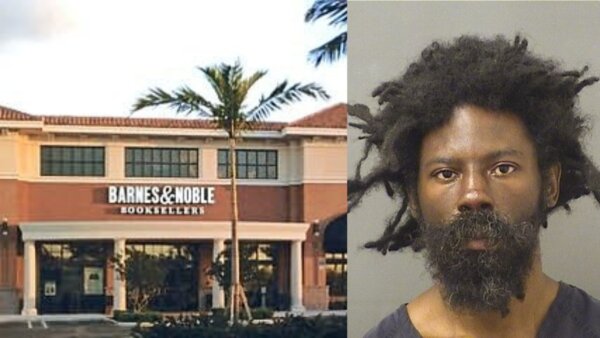
The Rev. Henry Lyons has been charged with racketeering. (AP Photo)
|
The local media suspected Lyons had engaged in an affair with employee Brenda Harris and that Deborah lashed out at him in a jealous rage. But Mrs. Lyons later proclaimed her love for her husband and said her alcoholism drove her to accidentally burn down the house.
Rev. Lyons did not know at the time that his wife's actions would spark an investigation that would incinerate his reputation and perhaps shatter the faith of his congregation.
An investigation by state prosecutors and a series of reports by the St. Petersburg Times revealed a trail of records that suggested Lyons had swindled several corporations out of millions of dollars intended for the National Baptist Convention and used the funds to feed his lavish lifestyle.
|
No Blacks on Lyons' Jury but Lyons Doesn't Mind
The Henry Lyons' case has received enormous pretrial publicity in St. Petersburg, Fla. and Circuit Judge Susan Schaeffer refused to grant a change of venue requested by Lyons' co-defendant, Bernice Edwards. A jury was picked the week of January 11: not one African-American was selected. The jury pool of 100 had only two African-Americans.
Surprisingly, Lyons' defense team was pleased and one jury consultant claimed this could help his case.
"Men of the cloth tend to be put on a pedestal and tend to be held to a higher stand than 'John Q' normal citizen," said a staffer at Florida-based Trial Consultants Inc., who did not wish to be identified. "Potential jurors from the Baptist church, people with religious beliefs and convictions, may not look kindly on Lyons' defense once they hear the evidence. Someone who has been screwed in a business deal would better understand the state's case and may not be good for Lyons."
The jury consultant claimed that in cases like Lyons', race is not a predominant factor. Jurors, said the consultant, make decisions based on their values, beliefs and life experiences. People without a lot of experience in business dealings and those who do not emphasize religion in their lives may be the ideal jurors for Lyons.
"The ideal juror for Lyons has no morals, no scruples, no religious conviction," said the consultant. "The reverend becomes just a man in that juror's eyes and is not put on a pedestal. Lyons could then be judged fairly and not have to deal with the stigma of being held to a higher standard like doctors normally are in suits."
The consultant dismissed the race factor in the case, but acknowledged that many National Black Convention members have remained loyal to the reverend and expected that black jurors might have sided with Lyons after all.
"There is evidence that black jurors tend to side with black defendants," said the consultant.
Despite their loyalty, it remains to be seen whether Convention members will stay by Lyons' side as they see evidence suggesting he took money out of their own pockets. State evidence indicates that Lyons used millions in donations intended for the Convention to support his own luxurious lifestyle. Prosecutors believe that, in addition to the white-owned companies, Lyons also bilked his followers they just don't realize it yet.
-Bryan Robinson |
|
In February 1997, Lyons and Edwards were arrested and charged with racketeering and grand theft. Investigators allege that Lyons and Edwards siphoned millions of dollars intended for the National Baptist Convention into secret bank accounts and used the money to buy diamonds, designer clothes, luxury cars and the ill-fated $700,000 waterfront home.
Now Lyons is set to face trial on Jan. 25. If convicted of the state charges, he could face up to 30 years in prison and lose his ministry.
According to the affidavit against Lyons, part of his "get-rich scheme" with Edwards involved misrepresenting the number of Convention members to companies that paid to market their products to members. Prosecutors say Lyons boasted that his group's members totaled 8.5 million when the membership total was far less.
A mailing list that Lyons provided to companies is now being called a complete hoax. The state says that, with the exception of a few thousand names in a computer database, no mailing list of Convention members even existed. Lyons, prosecutors allege, asked his employees to use names from other groups and old business cards to make up the list. Some of the members on Lyons' list were not even African-American; according to the affidavit, one was a member of the Ku Klux Klan.
Lyons' dealings with Globe Accident and Life Insurance Co. of Oklahoma City outline how he managed his alleged swindling. In 1995, Globe officials met with Lyons and Edwards about marketing its insurance to Baptists. Claiming that he wanted to help his congregation because it saddened him when Convention members did not have enough insurance for proper burials, Lyons struck a deal: Globe paid $400,000 for an list of names and addresses.
Globe became disturbed when black Baptists did not receive their promotional mail. Not only were mailings not reaching Convention members, but literature was received by Globe employees and an Imperial Wizard of the Ku Klux Klan. When confronted, Lyons allegedly told Globe officials that the mix-up was not his fault and claimed that someone had sabotaged his membership list after his 1994 election as president of the Convention.
In an effort to salvage the contract, Globe gave Edwards and Lyons a second chance and paid them an additional $600,000 for exclusive use of a new list over the next three years. The project failed once again.
But no other organization was more victimized than the Loewen Group, a large Canadian funeral company. According to the affidavit, in 1995 Loewen paid Lyons $70,000 for a "Christian Education Fund," and $100,000 for a new drug rehabilitation program in exchange for the reverend's help in marketing their products to Convention members.
Loewen's money never went to the appropriate programs, prosecutors say. Instead, Lyons and Edwards allegedly used the contributions for personal gain. After one $30,000 contribution, Lyons transferred $25,000 to his personal savings account; after one $70,000 donation, Lyons wrote checks out to himself for $50,000, to Edwards for $10,000 and to a company owned by his alleged mistress for nearly $9,000. A $100,000 contribution was never used for Lyons' drug rehab program. Rather, the minister allegedly used that money to pay for jewelry, hotel bills and school tuition for his daughter.
In late 1995, a $500 million judgment for illegal business dealings threatened to bankrupt Loewen. Lyons allegedly offered to help the company find lawyers who could get the verdict reversed. According to the state, Lyons told the company that the legal help would cost around $2 million.
A few days after Loewen resolved its legal troubles, Lyons allegedly called and asked for his $2 million reimbursement. Although prosecutors said there was no evidence that the reverend hired any lawyers or investigators to help Loewen, the group sent $500,000 to a bank account in Milwaukee set up by Lyons and Edwards. When Lyons failed to present receipts, Loewen refused to send more money. However, when Lyons allegedly threatened to hold a press conference to denounce the already beleaguered company, Loewen buckled and eventually sent another $1 million. According to prosecutors, Lyons and Edwards eventually used the Loewen contributions to buy clothing, jewelry, and their $700,000 home.
Lyons is also accused of stealing more than $200,000 entrusted to him by the Anti-Defamation League to help rebuild Southern black churches that were burned down in 1996. As with Loewen and Global, prosecutors claim Lyons used most of the money himself and gave almost nothing to the churches.
Since his indictment, Lyons has denied mishandling church funds, but admitted to his congregation that he made "some serious errors in judgment" and displayed "human frailties." Defense lawyers won't reveal Lyons' defense, but have suggested they may blame the companies for their own negligence.
During jury selection, the defense asked prospective jurors about due diligence in business practices and inquired whether they thought the government should be involved in church affairs. Lyons' defense team may suggest that the corporations can only blame themselves for not being more diligent in handling their dealings. His lawyers may also argue that the investigation into church dealings violated the separation between church and state.
Regarding alleged mishandling of Anti-Defamation League funds, Lyons' lawyers have claimed he acted in "good faith," showed no criminal intent in failing to distribute the proceeds, and raised money for the black churches through national appeals for donations.
Lyons' wife and congregation have remained remarkably loyal to him. Some of Lyons' loyal followers have accused the local media of demonizing him and have accused prosecutors of indicting not just Lyons, but the whole Convention. Insisting that the organization is a pillar of the black community in St. Petersburg, some members have, in interviews with the St. Petersburg Times, accused the companies of trying to exploit the African-American community and trying to "blame everyone, including Lyons" for their business failures.
Moreover, Lyons' lawyers will likely contend, the companies allegedly bilked by Lyons were willing and perhaps gullible in turning over hundreds of thousands of dollars to Lyons and Edwards without requiring receipts or researching the Convention's background. While Lyons will have to explain his practices, Loewen and Global also may have to defend theirs.
Lyons' trial is not expected to focus on his alleged infidelity. While he admitted his weaknesses, his apparent dalliances aren't relevant to the case. Instead, prosecutors will take jurors down a long paper trail of extensive records that may illustrate Lyons' alleged mishandling of donations and lack of accountability.
Rev. Lyons is up for re-election as Convention president in September, assuming he hasn't been convicted. He also faces a federal trial on similar charges in the spring.
Loewen officials have said they trusted Lyons and considered him a "black Pope." Lyons' trial will reveal whether he is truly a man of religious cloth or a disgraced minister better suited for prison stripes.
|