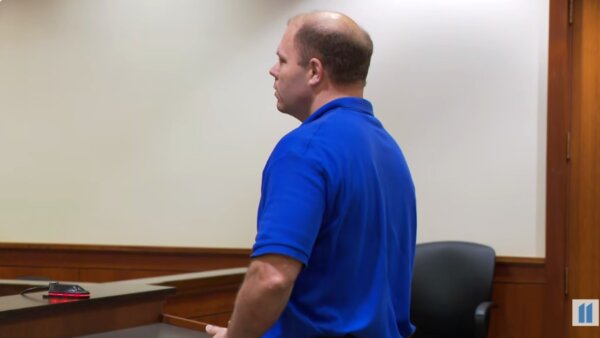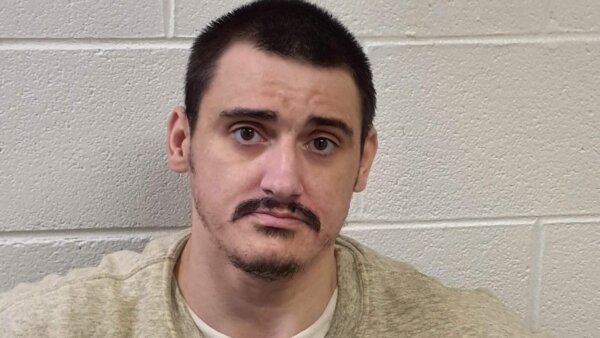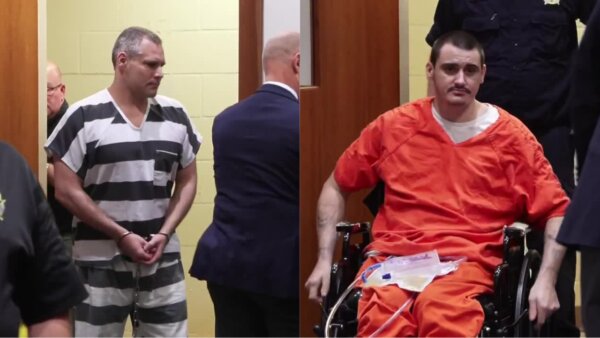

BARDSTOWN, Ky. (Court TV) — Less than a month after a jury found them guilty in the murder of Crystal Rogers and days before their scheduled sentencing, her former boyfriend, Brooks Houck, and his co-defendant, Joseph Lawson, are fighting their convictions, claiming their joint trial was fundamentally unfair and that prosecutors built a case on insufficient evidence.
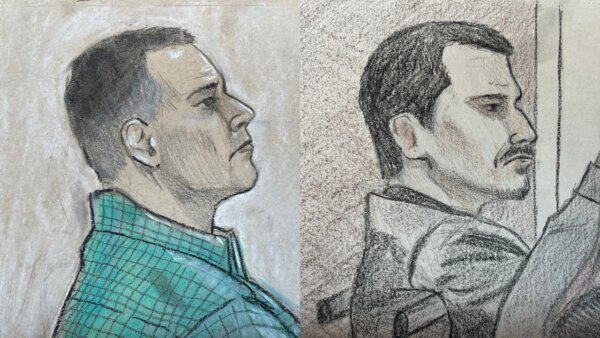
Courtroom sketches show Brooks Houck (L) and Joseph Lawson (R) in court. (Sketches by Sydney Young)
In new court filings, attorneys for both men have filed motions asking for a judgment notwithstanding the verdict — essentially asking the judge to overrule the jury — or, in the alternative, for a completely new trial. The prosecution has fired back, filing lengthy responses arguing the jury’s verdict was sound and supported by a mountain of circumstantial evidence presented over the weeks-long trial.
Houck’s attorneys argue that prosecutors failed to prove Rogers is actually dead or that her death was the result of a crime, citing the absence of her body. Lawson claims his case was unfairly prejudiced by being tried alongside the high-profile Houck and that key testimony linking him to the crime should have been excluded. Prosecutors maintain that the evidence was overwhelming, detailing Houck’s pattern of lies to police, his suspicious actions after Rogers’ disappearance, and a web of phone records and incriminating statements connecting him to the Lawsons.
MORE | Brooks Houck, Joseph Lawson sentenced for Crystal Rogers’ murder
In their motion, Houck’s attorneys argue he was entitled to a directed verdict of acquittal because the Commonwealth failed to prove the corpus delicti of murder: that a death occurred as a result of criminal agency. Without Rogers’s body or any physical evidence of death or injury, the defense claims the conviction cannot stand.
The Commonwealth countered that both death and criminal agency can be established by circumstantial evidence. In their response, prosecutors pointed to Rogers’s abrupt disappearance, leaving behind her children, purse, keys, and phone. They highlighted Houck’s “own inconsistent statements” and actions as the best evidence of his guilt, including his false claims about Rogers playing a game on her phone after its battery had already died, his lies about his whereabouts on the day she vanished, and his complete lack of concern for her welfare. Prosecutors called Houck’s suggestion to police that Rogers may have gone to a “fantasy party,” an explanation “so preposterous that it does not warrant argument.”
MORE | Defense challenges witness credibility in Crystal Rogers murder trial
In response to Lawson’s arguments, prosecutors noted that both defendants operated under a “joint defense agreement” and that joinder of defendants is favored by the courts. The Commonwealth argued that Houck’s statements did not implicate Lawson and, if anything, were helpful to his defense by offering an explanation for the night’s events that did not involve criminal conduct.
Prosecutors also revealed for the first time that they had filed a sealed proffer agreement from 2024 in which Lawson made key admissions to the Commonwealth. According to the filing, Lawson admitted to “moving Rogers’s vehicle with Steve Lawson and that the plan to murder Rogers began many weeks before she was killed.”
Both men also challenged the jury selection process, the venue of the trial, and the final instructions given to the jury before deliberations. The Commonwealth has asked the court to deny the motions from both defendants in their entirety.
Sentencing for both men is scheduled for Sept. 17.
This story was reported by a journalist and has been converted to this platform with the assistance of AI. Our editorial team verifies all reporting on all platforms for fairness and accuracy.