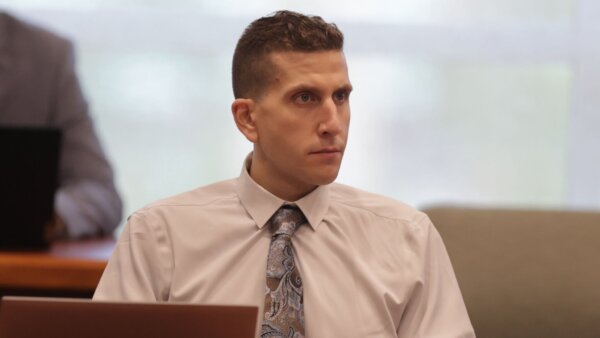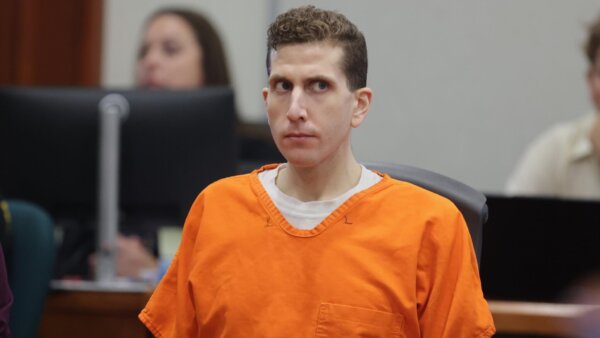

MOSCOW, Idaho (Court TV) — Hours after Bryan Kohberger was sentenced to life in prison for the murders of four University of Idaho students, law enforcement and prosecutors gathered for a press conference to reflect on the case, detail investigative challenges, and emphasize the closure now granted to victims’ families.
While this marks the end of a long and challenging journey through the criminal justice system, Moscow Police Chief Anthony Dahlinger said, “…the grief does not end.” He expressed deep gratitude to the victims’ families and praised the multi-agency teamwork that led to the conviction of Kohberger.
A Sentence for Life—and Death

Prosecutor Bill Thompson speaks at the post-sentencing press conference after Bryan Kohberger’s sentencing hearing at the Ada County Courthouse, Wednesday, July 23, 2025, in Boise, Idaho. (Court TV)
Latah County Prosecutor Bill Thompson, who oversaw the case from the start, confirmed that Kohberger’s guilty plea came with no bargaining. “He pleaded guilty to all five counts of the indictment,” he said. “And he admitted to Judge Hippler, under oath, that the allegations are factual. He has also received a life and death sentence.”
Although the families were not unanimous in supporting the plea deal, Thompson said their voices were heard: ‘This isn’t a popularity contest. We made what we thought was the most appropriate decision under the law and the facts – to give this case closure.”
The Unanswered Question: Why?
Despite months of investigation, authorities said they still don’t know why Kohberger chose that house or those victims.
“There was a reason—possibly the location, the layout—but we may never know,” said Cpl. Brett Payne of the Moscow Police Department.
Idaho State Police Lt. Darren Gilbertson echoed that uncertainty: “Only one person knows why—and that’s the person who committed the crime.”
MORE | Bryan Kohberger moved to solitary confinement in Idaho prison
Thompson urged the public not to give Kohberger more attention by demanding answers that may never come. “Focusing on the why only gives him more power,” he said. “Even if he spoke, how would we trust it wasn’t self-serving?”
Investigators confirmed that Kohberger had no known ties to the victims, despite deep dives into social media, employment records, and digital communications.
“We hoped for a link—we didn’t find one,” said Cpl. Payne. FBI officials backed that conclusion, noting their expansive analysis of both the suspect’s and victims’ online activity.
Missing Murder Weapon, Digital Evidence
Officials also revealed that the murder weapon—a KA-BAR knife—has never been found, and Kohberger used advanced software to effectively wipe his digital devices before arrest.
“It wasn’t for lack of trying,” said Lt. Gilbertson. “We searched everywhere his phone indicated he had been.”
FBI agents confirmed that Investigative Genetic Genealogy (IGG)—the same tool used in the Golden State Killer case—was key in identifying Kohberger through DNA left on a knife sheath at the crime scene.
Calm During Arrest, No Help from Family
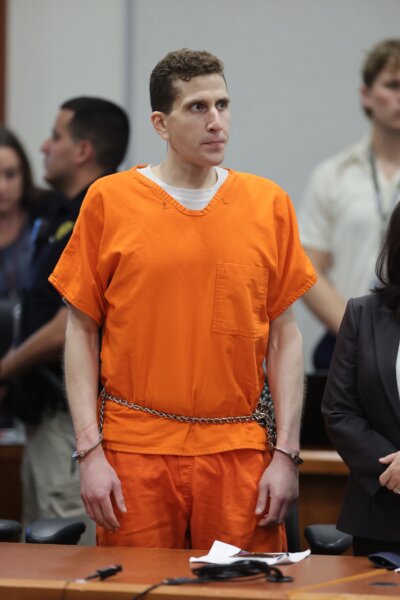
Bryan Kohberger appears at the Ada County Courthouse for his sentencing hearing, Wednesday, July 23, 2025, in Boise, Idaho, for brutally stabbing four University of Idaho students to death nearly three years ago. (AP Photo/Kyle Green, Pool)
Investigators described Kohberger as calm and relaxed when arrested in Pennsylvania. Cpl. Payne said the interview was pretty surface-level at first, but once detectives tried to drill down into specific details, Kohberger ended the interview. When asked about Kohberger’s demeanor, Cpl. Payne said, “Calm, relaxed.” Lt. Gilbertson said, “I’d say very similar to what you see whenever you see him in court.”
Authorities also confirmed his family provided no tips or evidentiary assistance during the investigation.
Signs of a Serial Killer?
While information on Kohberger’s childhood remains under seal, Cpl. Payne said it was Kohberger’s education that led him down a path “focused on forensics, crime scenes, that sort of thing,” which investigators quickly zeroed in on.
Psychological testing was conducted during the process, Thompson said, but the results did not indicate any condition that would warrant a legal defense. Prosecutors said no evidence pointed to a predisposition for violence or signs of being a “serial killer in waiting.”
Redacted Records and Moving Forward
Chief Dahlinger said redacted police records from the Moscow Police Department would be released to the public soon. Prosecutor Thompson noted some documents would remain sealed to protect the victims’ families.
MORE | Police release documents detailing Idaho student murders investigation
“We now have real closure,” said Thompson. “And when that prison door closes behind him, that’s where he will stay—until the day he dies.”
This story has been converted to this platform with the assistance of AI. Our editorial team verifies all reporting on all platforms for fairness and accuracy.