


Ivy League ‘Golden Boy’ who killed his father appears in first interview behind bars
Prosecutors said that Thomas Gilbert Jr. killed his father because he was upset that his weekly allowance was being cut. More
May 23, 2026


Prosecutors said that Thomas Gilbert Jr. killed his father because he was upset that his weekly allowance was being cut. More
May 23, 2026

Eugene Louis-Jacques was convicted of murder and other charges in the death of his girlfriend, roller-skating influencer Beauty Couch. More
May 22, 2026

Da'quel Collins shot and killed himself after getting a hold of a gun that his uncle, Quintell Collins, had been using in a rap video. More
May 22, 2026

Martina Esqueda pleaded guilty to kidnapping and felonious assault after brutally beating a victim for days at an Ohio home. More
May 22, 2026

Alicia Andrews was convicted of manslaughter after traveling with her boyfriend and others to kill rapper Julio Foolio. More
May 22, 2026

Alysia Adams pleaded guilty to murder and other charges in the death of 4-year-old Athena Brownfield, who was found weighing just 23 pounds. More
May 21, 2026

Tyler Brown has pleaded not guilty to multiple charges, including armed assault with intent to murder, after allegedly firing at cars. More
May 21, 2026

Judge Rebecca Robinson dismissed charges against Ebony Parker before the defense presented its case to the jury. More
May 21, 2026

Ebony Parker, the former assistant principal at Richneck Elementary School, had pleaded not guilty to eight counts of child abuse. More
May 21, 2026
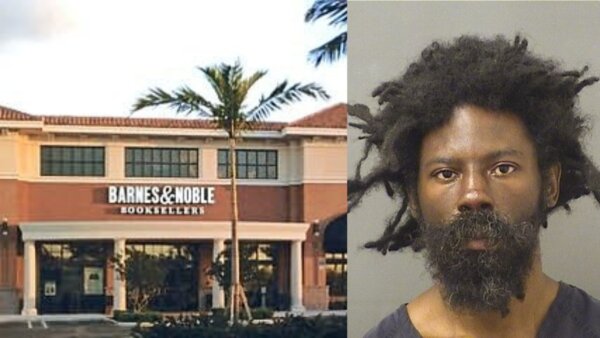
Antonio Moore is charged with murder in the death of Rita Locharich, who was stabbed in the back at a Barnes & Noble while shopping. More
May 20, 2026

Ross Johnson has pleaded not guilty to charges of manslaughter and aggravated battery in the death of Dayvon Larry. More
May 20, 2026

Gabriela Gonzalez, her ex-boyfriend, and her father are all charged with plotting the murder-for-hire of former boy band member Jack Avery. More
May 20, 2026

Eugene Louis-Couch has pleaded not guilty to the murder of his girlfriend, roller skating influencer Beauty Couch. More
May 20, 2026

Christopher Horne pleaded guilty to second-degree murder and three counts of attempted robbery as part of an agreement with prosecutors. More
May 19, 2026

Francisco Gonzalez and his daughter, Gabriela Gonzalez, are facing charges for an alleged murder-for-hire plot targeting Jack Avery. More
May 19, 2026

Abigail Zwerner was the first witness called to testify against Ebony Parker, three years after she was shot in her classroom. More
May 19, 2026

Paul Caneiro was convicted of four counts of first-degree murder and arson for the deaths of his brother, sister-in-law, niece and nephew. More
May 19, 2026

Jury selection was scheduled to start on Monday in the case of Cynthia Khaleel, who is accused of killing her ex-boyfriend. More
May 18, 2026
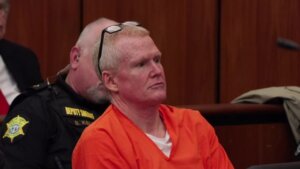
Alex Murdaugh's attorneys say the Supreme Court of South Carolina's ruling made it clear that Becky Hill violated his civil rights. More
May 18, 2026

A judge ruled that a loaded magazine will stay out of Luigi Mangione's trial, while a gun and notebook will come in. More
May 18, 2026

Ross Allen Johnson, a former MMA fighter, is charged with manslaughter after allegedly killing airman Dayvon Larry with a punch to the head. More
May 18, 2026

Kouri Richins was sentenced to life in prison without the chance of parole after she was convicted in the death of her husband, Eric Richins. More
May 17, 2026

Richard Allen was sentenced to 130 years in prison for the murders of Abby Williams and Libby German in February 2017. More
May 16, 2026

The newest episode of Court TV's 'Interview With a Killer' prompted host David Scott to comment, 'It's my darkest killer interview yet.' More
May 16, 2026

Austin Drummond has pleaded not guilty to killing four people and kidnapping an infant who was found on a stranger's lawn. More
May 15, 2026

Investigators said the victims, who were shot to death and also stabbed, may have been left in a house for days before they were found. More
May 15, 2026
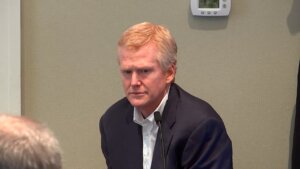
Alex Murdaugh's defense told Court TV they look forward to a retrial as their client continues to maintain his innocence. More
May 15, 2026

Josie Dikeman is charged with first-degree intentional homicide in the death of 6-year-old Alexavier 'AJ' Pedrin. More
May 15, 2026

Isaiah Chance, Sean Gathright, Rashad Murphy and Davion Murphy faced a potential death sentence for the murder of rapper 'Julio Foolio.' More
May 15, 2026

Timothy Burke has pleaded not guilty by reason of insanity in the killings of Davido and Karen Koep, who owned the home where he lived. More
May 14, 2026

