
Logo
 
 
Updated April 14, 2004, 9:50 a.m. ET

Mich. v. Randolph: Lawyer tried for wife's murder
Photo
Prominent lawyer Thomas "Tony" Randolph Jr. poses with his two children and fourth wife.

(Court TV) — Thomas Randolph Jr.'s early years were a rags-to-riches story that typify the American dream. Growing up in Harlem, he used to go to bed hungry, but he later went to law school and became a prominent Detroit lawyer and educator.

But Randolph faced a lifetime in prison after being charged with paying someone in 1982 to murder his young police officer wife.

It wasn't until December 1999 that Sarah Hutsell-Norwood called police and claimed that her uncle, Sanirell Shannon, committed the fatal shooting on Randolph's behalf. Unlike Randolph, Sanirell is a down-and-out, mentally ill drifter.

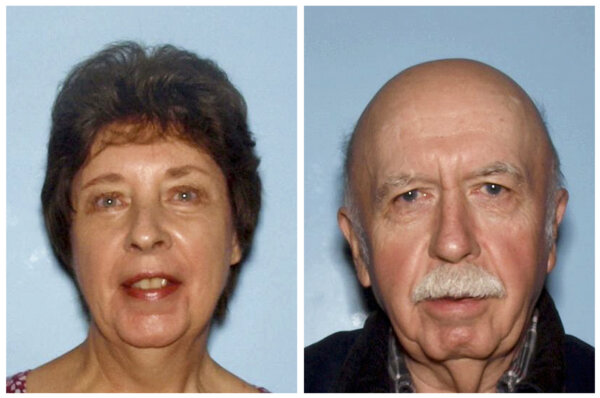
Victim Sharron Randall

Randolph had maintained for almost 20 years that he was struck by a robber that evening and rendered unconscious, waking up to find his wife shot twice in the head.

Thomas Randolph Jr. and Sanirell Shannon faced trial for first-degree murder in October 2001, almost 20 years after Sharron Randolph was gunned down. Though Randolph and Shannon sit side-by-side at the defense table in Judge Deborah Tyner's Oakland County courtroom, separate juries will decide their fates.

Convictions would land them both in jail for life.

The Thomas "Tony" Randolph Story

Thomas Randolph Jr. grew up in Harlem, New York, with a struggling single mother and seven siblings. He has told his son, Thomas Randolph III, about nights he went to bed hungry and about hustling in the streets to raise grocery money for his mom. He eventually dropped out of high school, got in trouble with the law and was incarcerated.

When he got out, Randolph began what would be a very long — and productive —education.

In college, Randolph quickly proved himself not only academically, but also as an athlete. He was a four-time All-American and earned a place as an alternate on the 1968 Olympic track team.

He earned undergraduate and graduate degrees, got his law degree from Detroit's Wayne State University, and earned a doctorate in education. In 1971, he joined the faculty of Wayne County Community College as a counselor and instructor. He remained at the college until 1993, and was by most accounts an extremely dedicated educator who took a personal interest in his students.

Randolph met Sharron Banks when they both were students at Wayne State. Both had children from previous marriages — Sharron had two young sons and Thomas had a son and a daughter. The couple married in Las Vegas in 1979, and shortly after Sharron graduated from the police academy in Detroit.

By 1982, Sharron had been laid off, and was working as a court clerk while waiting to get back on the police force.

The Murder

On Jan. 8, 1982, Sharron and Thomas had just come from Thomas' son's ninth birthday celebration. They dropped the children off at their grandparents' house and went to dinner at one of their favorite restaurants in Harvard Row, a small shopping center anchored by a Farmer Jack's grocery store.

On that evening, which was extremely cold and snowy, the couple parked in a sheltered parking lot behind the mall.


Story continues
advertisement

When Thomas Randolph rushed back into the restaurant a short while after leaving, he pleaded with witnesses to call for an ambulance. He said his wife had been shot. According to some witnesses, Randolph collapsed shortly thereafter.

Randolph gave several statements to police the night of the killing. He said consistently that a man came up from behind as he and his wife exited the mall, pressed something hard and cold against his neck and forced the couple toward their car. While Randolph never saw the attacker's face, he claimed he detected an Arabic accent.

Randolph said that he got into the driver's seat of his car and that his wife was pulled into the rear. He said that the attacker demanded money and said he wouldn't harm them if they didn't resist. Randolph said he took his wallet out of his overcoat pocket and gave it to the attacker.

He then described hearing the rear passenger door open, and said that when he instinctively turned around to look, he was hit over the head twice and passed out for a few minutes. As he descended into unconsciousness, Randolph heard what he described as "distant fire-crackers" — the gunshots that killed his wife.

Patrolman Ronald Griffin was the first officer to arrive on the scene. According to Griffin, Sharron Randolph was leaning against the car window, bleeding from a gunshot wound to her temple and another to her jaw. Griffin does not remember how, but he somehow found out that the woman was a fellow police officer.

Detectives who interviewed Randolph say he was clearly emotional after the event, but they still immediately became suspicious of him. For starters, the way in which the attacker had supposedly approached the couple was odd. Randolph specifically stated he was certain nobody had followed him and his wife out of the mall, and said he hadn't "flashed any money."

Police thought it would be impossible for someone to "come out of nowhere" behind the couple, and that it would make little sense for a would-be robber to lie in wait for victims in the desolate back parking lot of a closed mall.

According to Thomas Randolph, the attacker got into the car first and pulled Sharron Randolph in behind him — which investigators found odd since it would be difficult to forcibly pull anyone in that way, let alone a trained police officer.

Even more puzzling was the fact that the supposed attacker had left many valuables behind. Sharron Randolph's purse was found in the car along with food stamps and other items, and she was still wearing her gold jewelry.

Her wallet, containing several credit cards, was found outside the car, although no cash was left in it. Randolph's empty wallet was also recovered, but there is no documentation of where.

Randolph claimed he had $312 in the wallet when he handed it to the attacker, and police wondered why, if he had so much cash on him, he charged their $12 meal to an American Express card and left no tip.

As detectives interviewed Randolph at the hospital, he showed them the injury to his head, and several officers noted that they found only one small bump. After an X-ray, an emergency room doctor told officers it was indeed possible for a person to have lost consciousness after such an injury.

One of the investigators noticed Randolph's overcoat in the room from the breast pocket of which he'd told three different officers that he took his wallet before handing it to the attacker. When the investigator picked up the coat, he found the pocket buttoned and containing a dollar bill.

In addition, the investigation revealed signs of a tumultuous relationship between Sharron and Thomas Randolph Jr. When Sharron began her job as a Detroit police officer, she had a romantic relationship with her partner.

She and Randolph were apparently temporarily broken up at the time, but a short time after they reconciled and got married, she resumed the affair. Randolph suspected the relationship and called his wife's lover to confront him, threatening to call their superiors at the police department.

A few months before the murder, in August 1981, Sharron Randolph called police twice after her husband allegedly became violent toward her. On the second occasion Randolph admitted to the responding officers that he'd struck his wife but said she had been coming after him with her gun, a jackhammer, or her car in the previous six months. Sharron Randolph chose not to file charges on either occasion.

Finally, a number of insurance policies taken out on Sharron Randolph's life within the year or two of her death provided police with another possible motive — money. Insurance policies on Sharron's life amounted to approximately $318,000, although some of the money was slated for a fund for her children. At least two policies had been obtained through Wayne County Community College where Randolph worked. Those two policies amounted to $140,000, and neither had apparently required Sharron Randolph's signature.

Investigators claim they followed up on other leads. Because Randolph had told them the attacker had an Arabic accent, they checked out a man of Arabic descent in the area who'd been involved in other crimes. The man's alibi was determined solid, however. They lifted fingerprints inside the car, but were unable to get a match, and canvassed the area looking for any helpful information. They found nothing. The murder of Sharron Randolph was reclassified as a "cold case" — and remained so for a very long time.

The Aftermath

Thomas Randolph Jr. fought for and won custody of Sharron's sons after her death, but the two only remained in his care for a short time before they went back to their respective fathers. Randolph also successfully sued the Harvard Row mall where his wife was shot, claiming that the security and lighting was inadequate. The suit was settled in 1983 for $72,000.

Randolph remarried less than a year after Sharron's 1982 death, also in Las Vegas. His new wife, Marie Jackson, a colleague at Wayne County Community College, served on the Detroit School Board and operated a string of successful 24-hour day care centers. Jackson received awards from cosmetics companies Clairol and Avon for her achievements in the business arena.

The couple moved into an upscale Detroit neighborhood, and Thomas Randolph Jr. opened a law practice with his son. Thomas Randolph III says his father earned the nickname "pro bony-Tony" in legal circles because he couldn't bring himself to charge his impoverished clients. Thomas and Marie both made bids for public office and rose to prominence in business, social and political circles.

The couple was doing very well by any standards, until their success began to unravel with a federal investigation into Marie Jackson-Randolph's business practices. At the time of Thomas Randolph's arrest, his wife had begun serving a nine-year sentence for convictions on 63 counts of fraud and money laundering, and the couple lost their businesses.

The Shannon-Randolph Connection

At 2 a.m. on Dec. 2, 1999, the Detroit police department received a call from Sarah Hutsell-Norwood. The caller told them that she and her brother had information regarding the shooting of a police officer years earlier. Sarah's brother David said he had, in fact, witnessed the murder.

Sarah and David Hutsell told police that Thomas Randolph had visited their Ohio Street home many times before the killing, and that they repeatedly heard him offer their uncle money to kill Sharron Randolph.

Both Sarah and David Hutsell claim they saw Sanirell Shannon receive money from Randolph at various times, although the amounts vary between statements.

Co-defendent Sanirell Shannon

David Hutsell told police he drove his uncle, Shannon, to the Harvard Row mall the night of the shooting, without knowing anything about Shannon's murderous plan. He claims that Shannon got out of the car and went inside the mall, coming out with Thomas Randolph. After the two had a brief conversation, Randolph went back inside, and Shannon returned to the car.

A short while later, according to David Hutsell, Randolph came back out with his wife. According to Hutsell, Shannon jumped out of the car, yelled "Die, bitch, die!" and shot Sharron Randolph. He claims that Randolph then handed Shannon his wallet and asked him how they were going to "make this look good." Shannon hit Randolph over the head with the gun.

David Hutsell says his uncle then returned to the car, put a gun to Hutsell's head, and told him to drive away — "and don't burn no rubber."

Sarah Hutsell claims she recalls her uncle returning home that night with blood covering his face and shirt. She says he went into the bathroom and ran the water, emerging later clean and carrying a garbage bag of clothes to throw away.

Both of the siblings told police they heard conversations about Shannon's payment after the night of the incident and that Randolph told Shannon to stop bothering him and wait until the insurance money came through. David also claims to have witnessed the gun being thrown away during a fishing trip on their grandfather's boat.

Though the various statements of Sarah and David Hutsell were inconsistent on several points, they were enough for police to arrest Sanirell Shannon at his Mississippi home on July 20, 2000.

The same morning, an officer wearing a wire arrived at the law practice of Thomas Randolph Jr. and showed the attorney a photo lineup, which included two photographs of Sanirell Shannon. On the tape, Randolph claims not to recognize any of the men in the pictures. As he left his office after the conversation, he was arrested by awaiting officers.

Thomas Randolph first came in contact with Shannon, as well as Sarah and David Hutsell, at Wayne County Community College, where they were taking classes. Randolph often counseled Shannon and became acquainted with the rest of Shannon's family.

He eventually began helping Shannon's grandparents with their taxes and gave them legal representation after obtaining his law license.

While Randolph was living the good life, Shannon was living with his parents, sister and the Hutsells. By many accounts the home was dysfunctional. The family had a history of mental illness, and Sanirell Shannon, his sister, and his niece Sarah and nephew David have all been hospitalized in psychiatric institutions.

Shannon was voluntarily admitted in 1976, after the mother of a girlfriend claimed he'd harassed her daughter. Records show he was "experiencing feelings of helplessness and
hopelessness."

When Sanirell Shannon's mother, Sarah Lee Shannon, became ill and died in 1997, an apparent struggle ensued over the house. For awhile, the homeless Shannon lived in a neighbor's garage. Randolph represented Shannon in the probate case. Although the Shannons apparently had been scammed into selling the family home for a couple thousand dollars, Sanirell Shannon got what was left — $3,000, minus Randolph's fee and "loans."

He eventually caught a Greyhound to Mississippi, where he rented a room at a boarding house and worked as a painter.

Prosecutors say that Thomas Randolph paid for Shannon's bus ticket to Mississippi, and drove him to the Greyhound station.

The Prosecution's Case

Prosecutor Steven Vitale does not deny that there have been some inconsistencies in the statements of his key witnesses. He points out, however, that memories always fade with time, and says the inconsistencies are evidence that their story is not a recent fabrication.

Sarah and David Hutsell waited so long to come forward for specific reasons, says the prosecution. First, they wanted to protect their grandparents. In fact, the siblings say their grandparents made them promise not to turn their uncle in — and by the time the siblings came forward, the grandparents were both deceased.

Another reason to wait, according to prosecutors, was their intense fear of their uncle, who they characterized as an extremely violent and unreasonable man who threatened their lives on many occasions. When the Hutsells contacted the police in 1999, Shannon had already moved to Mississippi and hadn't been in touch with them for months.

A final reason given by Sarah Hutsell for coming forward was a diagnosis of terminal cancer in October 1999. After seeking a second and third opinion, Sarah accepted her condition, but said she wanted to die with a clear conscience.

Vitale says that the state's evidence of motive is also compelling. For a woman who made little money and had few assets, it makes no sense to have so much life insurance, he says. Also, the two policies that had not required Sharron Randolph's signature are conspicuously absent from her will, says Vitale, implying that Sharron never knew about those policies on her life.

In addition, Sharron called police twice shortly before her death, claming that her husband had struck her, which proves that the marriage was stormy and that Thomas Randolph has a volatile temper, says Vitale.

Prosecutors also question why a man in Thomas Randolph's position, being part of the academic community and Detroit's upper social circles, would associate with someone like Sanirell Shannon. The only reason Randolph would become involved with Shannon, and eventually put him on a bus to Mississippi, is that he needed someone to kill his wife, claims
Vitale.

David Hutsell says Randolph even gave him and his uncle grades for a class they never attended at Wayne County Community College, as a "favor" to Sanirell Shannon. The grade sheet for the class shows the names of Shannon and Hutsell added in handwriting to the typed list of students, but it appears they never enrolled in, or attended, the class. Also, when Shannon was arrested, he was in possession of a note with Randolph's home telephone number.

Vitale says the prosecution of the case, even after so long, is important. "With a crime like this, as egregious as it was and the way Sharron Randolph was killed, I think the message is that it'll always be prosecuted if the evidence is found and supports the prosecution," he said.

The Defense's Case

Defense attorneys for both defendants scoff at the "key testimony" of Sarah and David Hutsell. The siblings are, according to the defense, upset with their uncle because of being overlooked during the disposition of their grandparents' estate — and upset with Thomas Randolph because he represented Sanirell Shannon during the dispute. And, more importantly, say the attorneys, they are mentally ill people who lie frequently.

Randolph's son Thomas III — his most fervent supporter and a member of his defense team — calls the Hutsells "manipulators" and "lowlifes" and says that any good investigator confronted with their story would have responded, "Get the hell out of my office."

On a Web site in his father's defense, Randolph III wrote that the case "will make you realize that every person, in spite of a life-time of righteous living, is one false allegation away from a jail cell."

The defense points out that the pair has given statements riddled with inaccuracies and inconsistencies. The most glaring may be David Hutsell's claim that the shooting took place in the fall or late summer, and that there was definitely no snow on the ground. Other witnesses have confirmed that the January evening was extremely cold, and crime scene photographs show snow on the ground.

Another issue is the location of Harvard Row, because David initially gave police the wrong intersection for the mall.

How Sharron Randolph was shot is yet another question. David Hutsell has given several versions of the events that all place the victim outside the car at the time the first shot was fired. According to the defense, this is completely inconsistent with the bloodstains in the car, lack of blood on the ground, and downward angle of the gunshot wounds.

As to the disposal of the gun, David, Sarah and their mother have all given varying accounts of when and where it was thrown overboard, and of who was present on the boat.

As to Sarah's claim that she waited so long to come forward because she was afraid of her uncle, defense attorneys point out that Sanirell Shannon was out of state and even out of the country for long periods of time, providing ample time to contact authorities. In addition, the grandparents Sarah Hutsell claimed she wanted to protect were both deceased by 1997 — quite a while before she called police.

Prosecutors ask why Randolph would associate with Shannon, and the defense says the answer is simple — Thomas Randolph Jr. is known for his generosity, and has always been quick to help anyone who needs it.

Sanirell Shannon was declared mentally incompetent to stand trial in early 2001. Once medicated and treated, he was deemed able to assist in his own defense. Terry Price, who represents him, was retained after Shannon was declared incompetent, though it remains unclear who was paying his legal fees.

The Verdict

 
Inadmissible statements motion

 
Order dismissing conspiracy charge

 
Follow-up police report


advertisement


Contact us
©2007 Turner Entertainment Digital Network, Inc. A Time Warner Company. All Rights Reserved.
CourtTV.com is a part of the Turner Entertainment New Media Network.
Terms & Privacy Guidelines

 
advertisement