Message Boards
Backgroud
Documents
Video
Who's Who?
Chronology
map
Prosecution Witnesses
Defense Witnesses
 
Updated January 15, 2001, 5:30 p.m. ET
Defense: "Where's the evidence?"  
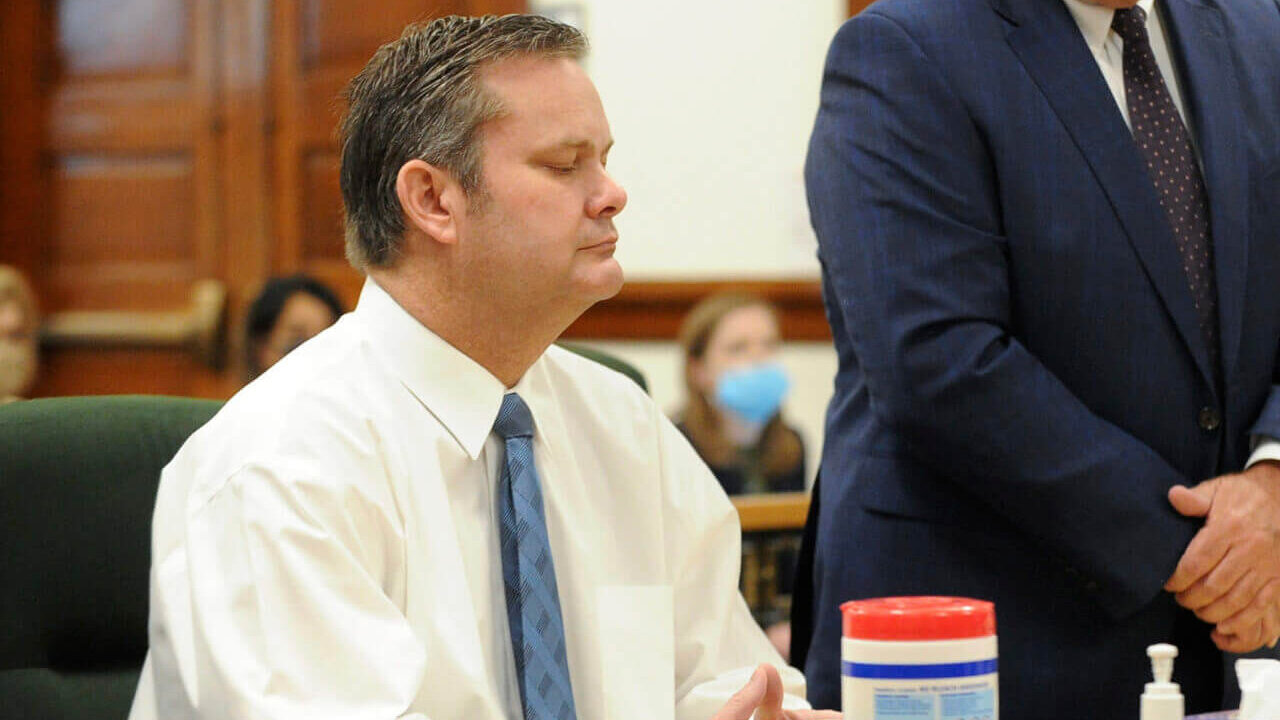
photo
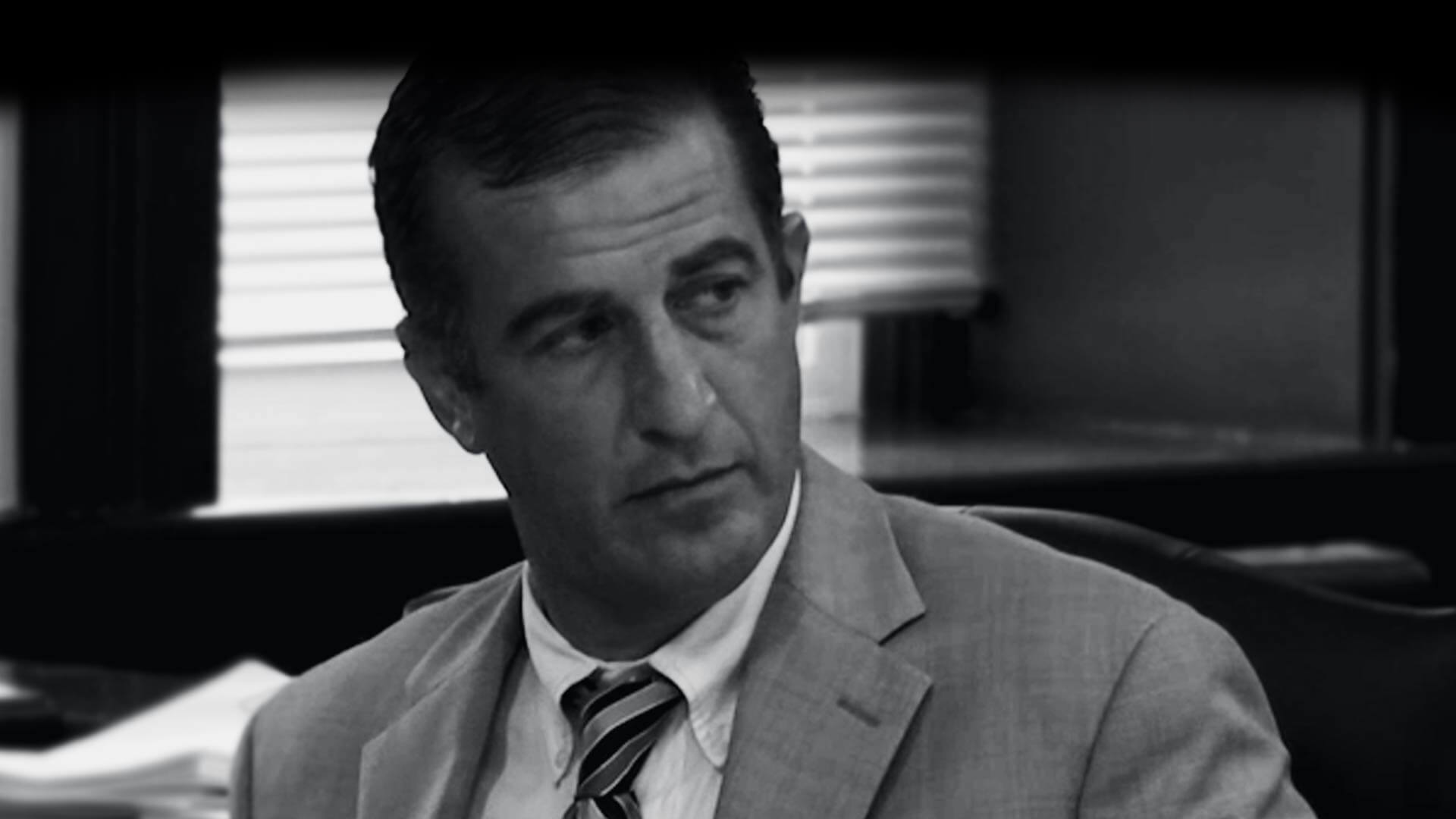
David Rudolf, defense attorney for Rae Carruth, asks the jury to acquit the former Carolina Panther of capital murder

CHARLOTTE, N.C. (Court TV) — The prosecution's capital murder case against Rae Carruth "just doesn't make sense," the ex-Carolina Panther's defense attorney, David Rudolf, charged during his closing argument Friday afternoon.

"Where's the evidence?" Rudolf asked the jury he is hoping will acquit the former professional athlete of masterminding the drive-by shooting of his pregnant girlfriend, Cherica Adams.

"Let me just say loud and clear and from my heart," Rudolf said, "Rae Carruth is innocent of the charges. He is innocent of the charges."

The defense attorney took the entire afternoon to walk the jury through a list of 10 points of reasonable doubt, any of which were sufficient to acquit Carruth, he argued.

Among them was the prosecution's theory of the crime — that Carruth commissioned Van Brett Watkins and Michael Kennedy to kill Adams. According to Rudolf, phone records show that Carruth didn't contact co-defendants Kennedy and Watkins on the day before the Nov. 16, 1999, shooting until just hours before the incident took place.

If this was a contract killing, as the state contends, then why did Carruth wait until just several hours before the murder to arrange for a car, a weapon and date with Adams? Rudolf posited.

"Can we really believe that he was just going to start on this plan at 7:30 that night? It makes no sense," he said.

"The whole purpose of a contract killing is to separate yourself from the act," Rudolf said. "Why would you put yourself in a position where if the victim survived she could say he was there?"

Rudolf suggested that had Carruth really masterminded a contract killing, it would have made more sense to have it take place two days earlier when he was in St. Louis for a game "in front of 16,000 people sitting on a bench."

He also attacked the prosecution's theory on the motivation for the crime. Although prosecutors were originally expected to contend that Carruth had Adams killed to avoid child support, Caudill said in his closing argument that money was only part of the picture. Carruth didn't want any obligation, financial or otherwise, to a child of a woman he considered a nuisance, the prosecutor argued.

But Rudolf denied that Carruth considered Adams a nuisance, and called "the pest motive" absurd.

"Isn't it extraordinary, it's a capital murder case, he's accused of murdering this woman and having her killed, and they can't come up with a single witness [to testify] that he ever said a negative thing about her?" Rudolf argued.

The defense attorney, who promised in his opening statement to show that the shooting stemmed from a drug dispute, also noted that some evidence for the drug deal theory exists — enough to create reasonable doubt.

He pointed to the testimony of Sgt. Shirley Riddle, the sheriff's deputy who guarded confessed triggerman Van Brett Watkins, as cause enough to acquit Carruth. Riddle testified that Watkins admitted to her that Carruth never commissioned him to kill Adams, but that he did it in a fit of rage.

Watkins, a career criminal who cut a deal with the state to avoid a possible death sentence but was never called to the stand by the prosecution, was subpoenaed by the defense. But when he testified, Watkins denied the jailhouse admission and reverted to his original story.

This denial never seemed to bother Rudolf, however, who argued that Watkins' testimony demonstrated that the mentally ill ex-convict is capable of anything — including opening fire on Adams' car when she made an obscene gesture at him.

"You don't need to be a psychiatrist to figure that one out," Rudolf said.

To cap off his powerful summation, Rudolf addressed one piece of evidence whose absence from the state's case was so loud it was like "a drum banging" — Carruth's third co-defendant, 19-year-old Stanley Abraham, who never testified for the state.

"They made a deal with the devil," the attorney said referring to the prosecution's deal with Watkins, "and meanwhile Stanley Abraham sits and rots in jail."

Abraham, who was seated in the passenger seat of the car driven by Kennedy as Watkins pumped four bullets into Adams, has been painted as a clean kid who was just in the wrong place at the wrong time.

Rudolf suggested that, had Carruth really orchestrated the murder, Abraham would have made a much better witness than either Kennedy or Watkins, both of whom have criminal records. But Abraham didn't make a deal, Rudolf suggested, because prosecutors "don't like what he had to say."

Addressing arguably the most compelling evidence against his client, Rudolf gently discussed Adams' 911 call and notes she scrawled while lying in the hospital mortally wounded. In both, she placed Carruth at the crime scene.

Having just heard the 911 call played aloud earlier in the day — while Adams' family members wept behind the prosecution bench — Rudolf was clearly attempting to tread lightly on the subject, not wishing to seem critical of the victim. He told the jury that Adams was not intentionally lying, but was traumatized when she said that Carruth's car was stopped in front of hers when the shooting occurred.

"It's not a question that she's trying to say something wrong. What we're saying is she's a human being," Rudolf said, noting that it was the 911 medic who first suggested that the man whom Adams referred to as her baby's father was responsible for the shooting. The attorney also said that, although Adams wrote in her notes that Carruth stopped his car in front of her, in the 911 call she only said he slowed down.

"How do we get from slow down in the 911 call to stop in front?" he said, before launching into an explanation of how a heavily medicated Adams may have incorporated suggestions made by emergency and hospital personnel, police and relatives already aware that investigators were looking for Carruth.

This was not the first time the defense attorney accused police of having planted the idea of Carruth's guilt in other's minds. In fact, Rudolf launched an all-out attack on investigators, claiming they had formulated a theory, then selectively collected evidence to bolster that theory instead of seeking out the truth.

"Within the very first hour, based on the 911 call ... the police decided Rae Carruth was involved," Rudolf said.

"Police were looking for confirmation of their theory, not just information of what happened," he said. "There's a big difference between confirmation and information. It's tunnel vision. You tend to ignore or don't even look for the evidence that isn't consistent with your theory."

Even prosecutors closed their eyes to facts, Rudolf charged, claiming that prosecutor David Graham didn't have investigators question witnesses deeply enough about Kennedy's drug-dealing past because he didn't want to be obligated to present that information to the jury.

Kennedy, the wheelman who bought the gun used in the shooting, testified without immunity that Carruth masterminded Adams' murder. Though Rudolf promised to cross-examine Kennedy "until the cows came home," Kennedy appeared unflappable on the stand — and even Rudolf admitted in his closing argument that there was "no Perry Mason moment" in his cross-examination.

But Rudolf said he later discovered Kennedy had lied to jurors when he testified that charges against him in an unrelated shooting were dropped when the real culprit was caught on videotape. Rudolf called the assistant district attorney on that case to the stand, who testified that no such videotape ever existed — and accused prosecutors of not taking an aggressive approach to verify Kennedy's claim of a videotape.

"How can we trust the evidence that was presented to you in this case under those circumstances?" he said to the jury. "There needs to be a message sent that that is unacceptable in a capital murder case in America."

Continuing to hack away at police conduct during the investigation, Rudolf raised the specter of a cover-up regarding the confession obtained from Watkins by Sgt. Riddle. The detention officer claimed her superiors discouraged her from reporting Watkins' confession.

Prosecution witnesses who work with Riddle testified that the deputy is an attention-seeker. One colleague, Detention Officer Kimberly Young, claimed that Riddle had asked her not to record a visit Riddle made to Carruth in the log.

But Rudolf surprised the jury with the log entry, showing that Riddle's visit had indeed been recorded.

Rudolf also noted that Riddle's superior officer ordered defense witnesses under her charge to wear civilian clothes on the stand but allowed those testifying for the prosecution to take the stand in uniform.

"It's a petty thing I guess, but it tells us something about a mindset. It tells us something about fairness and impartiality and impressions that are trying to be created," Rudolf said of Major Felicia McAdoo.

Rudolf further accused the police of tainting the testimony of Carruth's ex-girlfriends Amber Turner and Candace Smith, suggesting that their stories changed as time went on because they were being given information to help the state.

"How dangerous is it for people like this to get fed information from the police and incorporate it into their statements?" he said.

Rudolf lingered over the testimony of Turner, who astonished the courtroom by claiming Carruth threatened to kill her if she didn't abort his baby. Turner also produced a letter Carruth had written her from prison, instructing her on what to tell investigators.

Rudolf didn't deny that his client wrote the letter — a critical piece of evidence for the prosecution — but asserted that the list of talking points were all true. And Turner had lied about at least one issue on the stand, he asserted. Turner testified that Rudolf had referred her to an attorney with whom he was friends, but Rudolf later proved otherwise when he surprised his witness and the jury with a transcript of the conversation in question.

"If she lied about me and what I did, she had no motive to do that ... think about whether she'd be willing to lie about Rae," he said.

Rudolf also pointed to character testimony to show that orchestrating a killing would be inconsistent with Carruth's personality.

"They all used the same adjectives to describe Rae Carruth — calm, laid-back, gentle, good-natured, nonviolent. They always said the same thing," he said.

In fact, the only evidence of violence in Carruth's past was a dispute with a neighbor over a parking spot, Rudolf noted. The neighbor, Donald Kim, testified that Carruth charged at him. But Rudolf countered by saying that Carruth had removed Kim from his apartment by the lapels after Kim had barged in and begun berating Carruth's cousin.

Rudolf's closing statement took nearly four hours, prompting one juror prone to nodding off throughout the nine-week trial to appear like she was again drifting to sleep. Other jurors displayed the same attentive interest in Rudolf's closing as they had in Caudill's.

Caudill will have the opportunity Tuesday morning to rebut the defense's closing before Judge Charles Lamm instructs the jury on the law and deliberations begin.


Read about the state's closing argument


Defense's 10 Reasonable Doubts

1. Sgt. Shirley Riddle's testimony about Watkins' alleged confession
2. Van Brett Watkins' testimony proves consistent with Riddle's and shows he's capable of the crime
3. Pattern of phone calls
4. State's theory of the crime is implausible
5. Rae Carruth's character inconsistent with the crime
6. Carruth's demeanor in the hours before and after crime inconsistent with committing a murder
7. Carruth had no motive
8. State's witnesses Michael Kennedy, Amber Turner and Candace Smith lacked credibility
9. Reliability of Cherica Adams' statements in the 911 tape and notes she had written is questionable
10. Where was Stanley Abraham?


Read the defense's motion outlining its drug deal theory
Hot
Document


Listen to the 911 tape
video

Read 911 transcript
Hot
Document


advertisement
©2007 Courtroom Television Network LLC. All Rights Reserved.
Terms & Privacy Guidelines

Small Court TV Logo