
- Eye Doctor Murder Plot
- •May 3, 2006:
Defendant found guilty - •April 27, 2006:
Jury deliberates - •April 13, 2006:
Medical examiner admits error - •April 5, 2006:
DNA not a definitive link, expert testifies - •April 3, 2006:
Defense attacks state's timeline - •March 28, 2006:
Possible DNA link on car radio? - •March 23, 2006:
Jurors visit crime scene - •March 22, 2006:
Defense calls for mistrial - •March 17, 2006:
Claim: Man asked lover's husband to attack rival - •March 16, 2006:
Doctor talked about killing rival, say witnesses - •March 10, 2006:
Jury gets lesson in 'whacking' - •March 9, 2006:
Doctor killed in car, witness says - •March 8, 2006:
Opening statements - •Case background
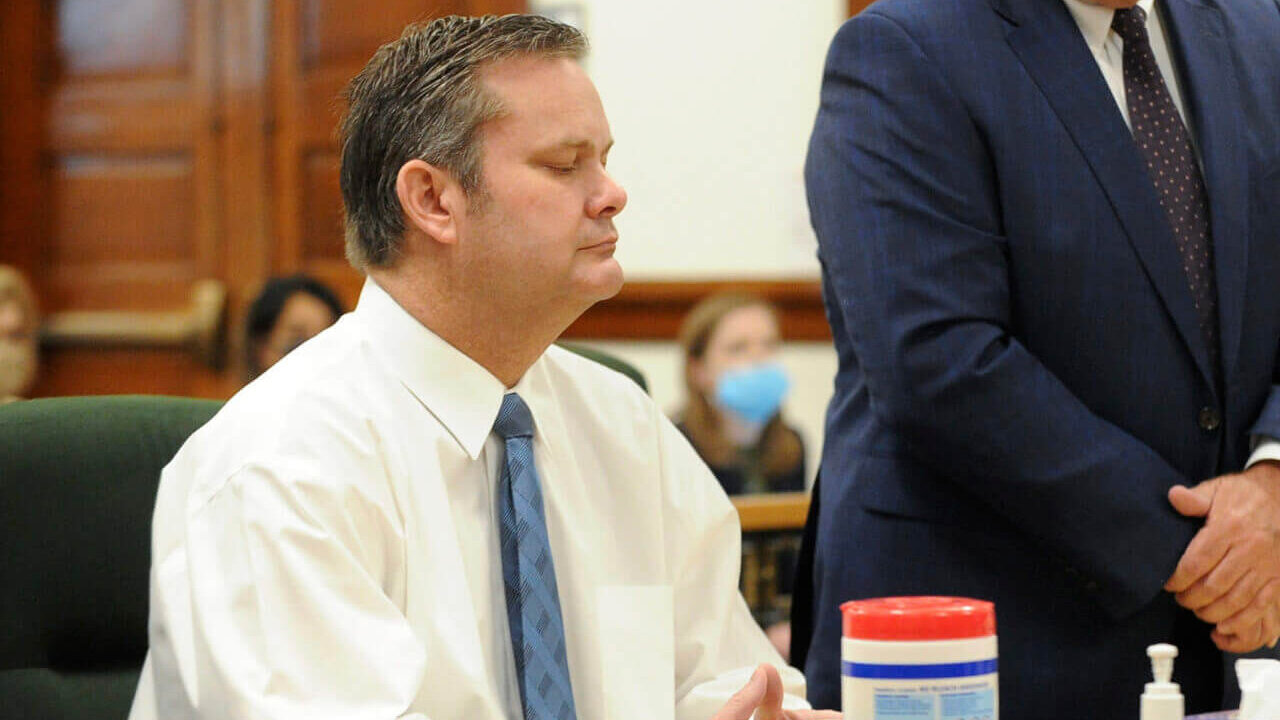
TUCSON, Ariz. — His own defense attorney labeled him "a loudmouth doctor" and a "jerk" who talked big to impress women, and the prosecutor likened his behavior to a "homicidal energizer Bunny that kept going and going."
Neither portrait of the defendant was flattering as both sides presented their closing arguments after eight weeks of testimony from scores of witnesses in the first-degree murder trial of Dr. Bradley Schwartz.
Schwartz, a 41-year-old pediatric ophthalmologist, stands accused of hiring a hit man to kill his former business partner Dr. Brian Stidham, whom prosecutors say he blamed for the downward spiral of his life after he was busted for writing fake prescriptions to feed an addiction.
"The defendant had plummeted to the bottom and lost the thing he loved more than anything, and in the defendant's mind, Brian Stidham was to blame," prosecutor Sylvia Lafferty told jurors as she recounted the case against Schwartz.
Brick Storts, Schwartz's defense attorney, conceded that his client did talk to several of his numerous girlfriends about framing, physically harming and even killing Stidham. But Storts said that jurors should look past those statements to both the prosecution's tight timeline and discrepancies by experts about Stidham's time of death. Both, they say, would make it impossible for the alleged hit man, Ronald "Bruce" Bigger, to be the killer.
"If Dr. Stidham wasn't killed in the period of time where we have roughly 19 minutes and 23 seconds to deal with, by Mr. Bigger, this case is over," Storts said.
The panel began deliberating Wednesday morning, and deliberated five and a half hours before recessing for the day.
The prosecution's case against Schwartz relied largely on circumstantial evidence tying the doctor to Bigger, a patient he treated for an injured eye about a month before the murder.
Stidham's body was discovered in the parking lot of his practice the night of Oct. 8, 2004. The 37-year-old was stabbed more than 15 times and his skull was fractured when he fell after being attacked, according to the testimony of a medical examiner.
Prosecutors allege that Schwartz, 41, hired Bigger to kill Stidham after patients began gravitating toward the younger doctor's practice while Schwartz was in rehab. Bigger will be tried separately, though both men are charged with first-degree murder and conspiracy to commit murder.
From witnesses putting Bigger near the scene of the crime to telephone records between the alleged hit man and Schwartz, the prosecution presented extensive circumstantial evidence linking the two to Stidham's murder.
Prosecutors also brought half a dozen of Schwartz's former lovers to the stand to testify about the doctor's obsession with maiming or killing his perceived enemy, Stidham.
Surveillance photos of Schwartz and Bigger entering a hotel together the night Stidham was murdered were also entered into evidence. The photos showed Bigger wearing Teva-style sandals.
Previous witnesses testified that a man wearing blue medical scrubs and similar sandals loitered in the parking lot near Stidham's office the night he was killed.
Despite those facts, there were no known witnesses to the murder, and Lafferty admitted in a hearing outside the jury's presence that the prosecution's DNA evidence linking Bigger to Stidham's car was "gutted" by a defense DNA expert who said the findings of two experts for the state was biased and miscalculated.
Schwartz's defense also presented a strong challenge to the state's tight timeline.
Stidham's last known act was to activate his office alarm system at about 7:26 p.m. on the night of his murder. Bigger is alleged to have called Schwartz from a payphone in a Denny's restaurant about six miles away from the crime scene at 7:46 p.m.
In just those 20 minutes, prosecutors say Bigger attacked Stidham, stole his car, disposed of the murder weapon and bloody scrubs he was wearing, called Schwartz, then hailed a taxi from a strip club across the street from the Denny's.
Maricopa County medical examiner Dr. Philip Keen, testifying for the defense, said that his review of the autopsy notes made him believe Stidham died between 9 p.m. and midnight. Because both Bigger and Schwartz have alibis for that time, Storts said it would make it impossible for either to have killed Stidham.
Jurors asked only one question Wednesday, to revisit the testimony of Jennifer Dainty, a convenience store clerk and the only witness to identify Bigger and testify that he was in the area of the murder at the time of the attack.
Both the first-degree murder and conspiracy to commit first-degree murder charges carry sentences of 25 years to life.
Court TV Extra will stream the verdict live.
CourtTVnews.com is a part of the Turner Entertainment New Media Network.
Terms & Privacy guidelines