

Legal News
nav buttons

Click here to save 20% on Blind Love

Texas v. Karla Faye Tucker

"A Question of Mercy"

Should Karla Faye Tucker die? This was the question that the Texas Board of Pardons and Paroles and Gov. George W. Bush faced in the weeks leading up to Tucker's execution. However, on February 3, 1998, Gov. Bush and the Texas Board of Pardons answered that question when Tucker was executed by lethal injection.

In 1984, Tucker was convicted of the brutal murders of her ex-lover, Jerry Lynn Dean, and his companion, Deborah Thornton and sentenced to the death penalty. During her trial, Tucker admitted that on June 13, 1983, she and her boyfriend at the time, Daniel Ryan Garrett, took a pickax and hacked Dean and Thornton to death while they were sleeping. (Garrett was also convicted of murder and sentenced to the death penalty. However, he died of liver disease while in prison in 1994.)

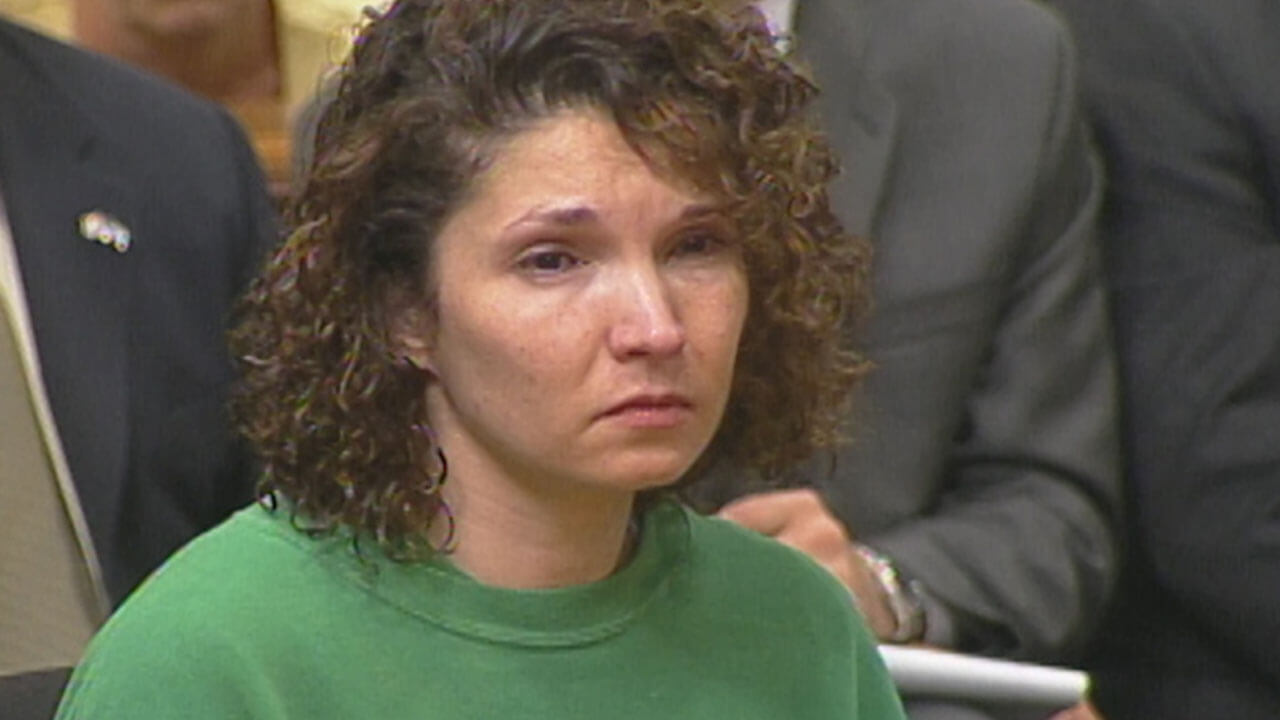
Karla Faye Tucker
Karla Faye Tucker: Executed by lethal injection on February 3, 1998
At the murder scene, investigators found the pickax still embedded in Thornton's chest. Tucker even boasted at her trial that she experienced an orgasm each time she plunged the ax down upon her victims. Back then, Tucker was a drug addict and prostitute who seemed unrepentant, and even proud, of her actions.

In various pleas to save her life, Tucker's supporters and lawyer claimed that Tucker, 38, was not the same woman who committed those brutal murders nearly 15 years ago. She was a born-again Christian, and with her "girl-next-door" attractiveness, sometimes it may seem hard to believe that she could have committed such gruesome murders. But Tucker and her lawyer, David Botsford, freely admitted her guilt. Because of her conversion to Christianity, apparent rehabilitation and virtually spotless disciplinary record while in prison, Botsford and other supporters believed that Tucker should be spared the death penalty. Tucker's detractors said that religious conversions for inmates are common and are not a legitimate basis for a pardon from the death penalty.

A Plea for Mercy


On January 20, 1997, attorneys for Tucker filed a petition to the Texas Court of Criminal Appeals and state district court in Houston to postpone Tucker's execution so that they could have more time to challenge the constitutionality of the state's clemency procedure. In the 155-page court document, Tucker's lawyers reportedly stressed that Tucker was fully rehabilitated and demonstrated during her 14-year imprisonment that she posed no future threat to society. In seeking a pardon from the death penalty, Tucker asked that her sentence be reduced to life imprisonment. Under that sentence, Tucker would have been eligible for parole in 2003.

Reportedly, Tucker's petition was also accompanied by approximately 200 pages of exhibits supporting her plea. Among the exhibits was a letter Tucker wrote to Gov. Bush and members of the Texas Board of Pardons and Paroles, telling them that her crime was "the most horrible nightmare of my life" and that she is no longer a threat to society.

Tucker's Supporters and the Odds Against Her


flyer
A flyer from Tucker's supporters, asking people to "WRITE NOW TO HELP SAVE HER LIFE"
According to court papers, Tucker and Garrett killed Jerry Lynn Dean and Deborah Thornton when they broke into Dean's apartment to steal motorcycle parts. Garrett was surprised to find Dean home, asleep in his bed, and proceeded to beat him over the head with a hammer. Tucker then struck Dean with a three-foot ax more than 20 times to stop the gurgling sound he was making. Seeing that Thornton was under the bedsheets next to Dean, Tucker then turned the ax on her.

A pardon from a death sentence in Texas reportedly has never been granted to anyone based on a religious conversion. And of the 36 pardons that have been granted to Texas death-row inmates since 1976, not one has been granted solely for humanitarian reasons. In addition, Gov. Bush, who would have had to approve the pardon with a majority vote by the parole board, publicly said that in evaluating Tucker's case, he would only consider whether there was any doubt she committed the crime and whether she had a fair trial.

Karla Faye Tucker's case attracted a group of supporters that include Rev. Pat Robertson, the homicide detective who recommended that she get the death penalty in the first place, thousands of citizens, and even some support from her victims' siblings. Tucker married a prison chaplain, Dana Brown, two years ago, and he remained by her side until her execution. Tucker was the first woman executed in the United States since 1984, coincidentally the year of her conviction.

A Series of Appeals Rejected


Karla Faye Tucker's appeal to halt her execution was rejected by the Texas Criminal Court of Appeals on January 28, 1998, less than a week before her scheduled execution. Tucker's lawyers had argued Texas's procedure for commuting death sentences, claiming that the law provides no guidelines for parole board members in considering clemency for death row inmates. The following week, on February 2, 1998 (the eve of Tucker's scheduled execution), the Texas Board of Pardons and Paroles, which could have recommend a pardon for Tucker to Gov. George Bush, rejected her request to have her death sentence changed to life in prison.

On February 3, Tucker's last chance to avoid the death penalty lied with the U.S. Supreme Court, which considered her petition for a stay of the execution. But the Supreme Court denied the request, clearing the way for Tucker's execution later that day.

Excerpts of Karla Faye Tucker's letter to Gov. Bush (as published in The Houston Chronicle)
Karla Faye Tucker's Writ of Habeas Corpus
The Public's Views on Karla Faye Tucker


HOMEPAGE | VERDICTS | FAMOUS CASES | TRIAL TRACKING | LEGAL DOCUMENTS | PROGRAM GUIDE | CTV STORE | GAMES/CONTEST | LEGAL TERMS | SEARCH | INDEX | HOW TO GET CTV | COMMENTS


Copyright© 1998 by the Courtroom Television Network. All Rights Reserved.
No part of this site may be reproduced in any form without permission of Court TV. Nothing in this site is intended to constitute legal advice. COURT TV is a registered trademark and COURT TV ONLINE is a service mark of the Courtroom Television Network.