|
CHARLOTTE, N.C. (Court TV) Phone calls made between Rae Carruth and his co-defendants were more consistent with planning a drug deal than plotting a murder, Carruth's defense set out to prove Friday.
"It's nothing but a classic, classic drug transaction," defense investigator Ronald Guerette told jurors near the close of his day-long testimony.
Attorney David Rudolf also used the tedious, detailed questioning of Guerette to imply that many important phone calls were selectively omitted by the prosecution in the course of its case.
According to Guerette's analysis, Carruth and co-defendants Michael Kennedy and Van Brett Watkins exchanged numerous phone calls in the weeks leading up to the Nov. 16, 1999, drive-by shooting of Cherica Adams, who was carrying the former Carolina Panther's baby. Carruth was charged with murder one year ago today.
During their case, prosecutors had called to the stand several telephone representatives to outline calls placed between the home or cellular phones of Carruth, Adams, Watkins and Kennedy. The witnesses were asked to write those calls on a chart, which was entered into evidence.
Rudolf made it clear, through Guerette's testimony, that the complete records showed many more phone calls than were recorded on the chart.
While the prosecution's chart shows a spate of calls made from Carruth's phone to the motel where Watkins lived and to Kennedy, many calls not on the state's chart were those that Watkins or Kennedy made to Carruth shortly before he called them, suggesting that Carruth was returning their calls, not initiating contact with them.
The complete records also showed that in some instances, Carruth had checked his voice mail just minutes before calls made to his co-defendants, implying that the messages were likely left by them.
Watkins, who pleaded guilty to shooting Adams but has not yet been sentenced, cut a deal with prosecutors to avoid the death penalty in exchange for his testimony that Carruth masterminded the murder to avoid paying child support.
|
|
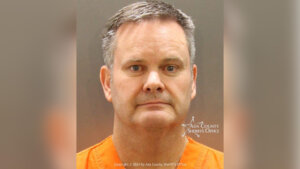
Van Brett Watkins
|
Before the deal was hatched, however, a sheriff's deputy said that Watkins admitted to him that he killed Adams in a fit of rage after a drug-related dispute with Carruth. The prosecution never called Watkins, a career criminal with a history of mental illness, to the stand.
The defense maintains that Carruth's last-minute refusal to finance a drug deal for Watkins and Kennedy led them to orchestrate Adams' murder on their own.
Out of the presence of the jury, Rudolf attempted to have Guerette, a former police officer and undercover narcotics officer, qualified as an expert in drug investigation. His request was denied by Judge Charles Lamm.
However, Lamm seemed to relent later in the day. He allowed Guerette to testify that pagers and rental cars both used by Carruth's co-defendants were tools of the drug trade. The judge also permitted Guerette to offer his personal opinion about the pattern of calls between the co-defendants. Over prosecution objections, the private investigator testified that the flurry of calls indicated a drug deal. He said they were consistent with dealers trying to work out last-minute details like meeting places and times.
"These are also normal things that happen in a drug transaction," he said.
Guerette's testimony may prove valuable to the defense in closing arguments, when Rudolf will likely argue that the weeks of additional phone calls were inconsistent with the murder plot theory for a shooting that was so poorly and hastily planned, why would there have been so many phone calls weeks before the event?
For one thing, Kennedy purchased the gun less than two hours before the shooting, while Carruth and Adams were already sitting in a movie theater watching "The Bone Collector."
Guerette, who charges $175 an hour, said it took him five weeks of working 12- to 16-hour days to plow through 25,000 to 35,000 calls by hand, since there is no computer program available to perform the analysis.
"There's no such animal, so I figured the only other animal left was myself," the private investigator told the jury.
The hours of slogging through the phone records did seem to score some points for the defense. Some of the records introduced Friday highlighted an inconsistency in the testimony of Candace Smith, according to Guerette's testimony.
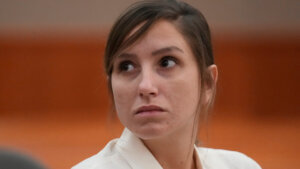
Smith, another ex-girlfriend of Carruth, testified for the prosecution. She said that Carruth admitted involvement in Adams' shooting and said he wished Adams would die as the two stood in the hospital waiting room hours after the shooting.
Smith also testified that Carruth called her later that afternoonNov. 16, 1999but she told him she didn't want anything more to do with him and slammed the phone down. Guerette testified that the records do not show a call made by Carruth to Smith.
The defense has painted Smith, who admitted lying to investigators earlier in the case, as a scorned ex-lover who is lying again. Implying she was obsessed with Carruth, Guerette highlighted two dozen calls from Smith to him in the days before the shooting.
In a brief cross-examination, prosecutor Jack Knight responded to the defense suggestion that the state unfairly tailored the phone records. Knight pointed out that the defense had done their own editing of the records, leaving out, for example, calls Carruth made to Watkins from a car wash after the murder.
Testimony is scheduled to resume Monday morning.
|