Message Boards
Backgroud
The Law
The Law
Documents
 
Updated March 30, 2001, 7:00 p.m. ET
After tearful pleas, Williams receives compromise sentence  
photo
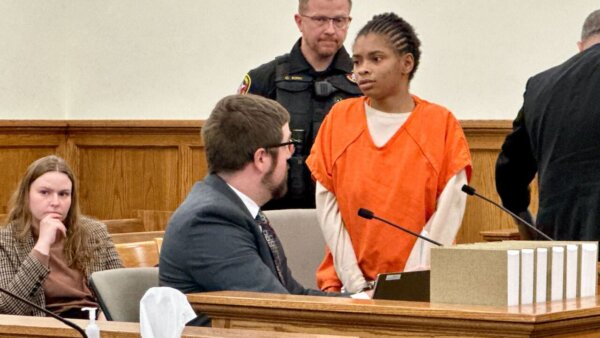
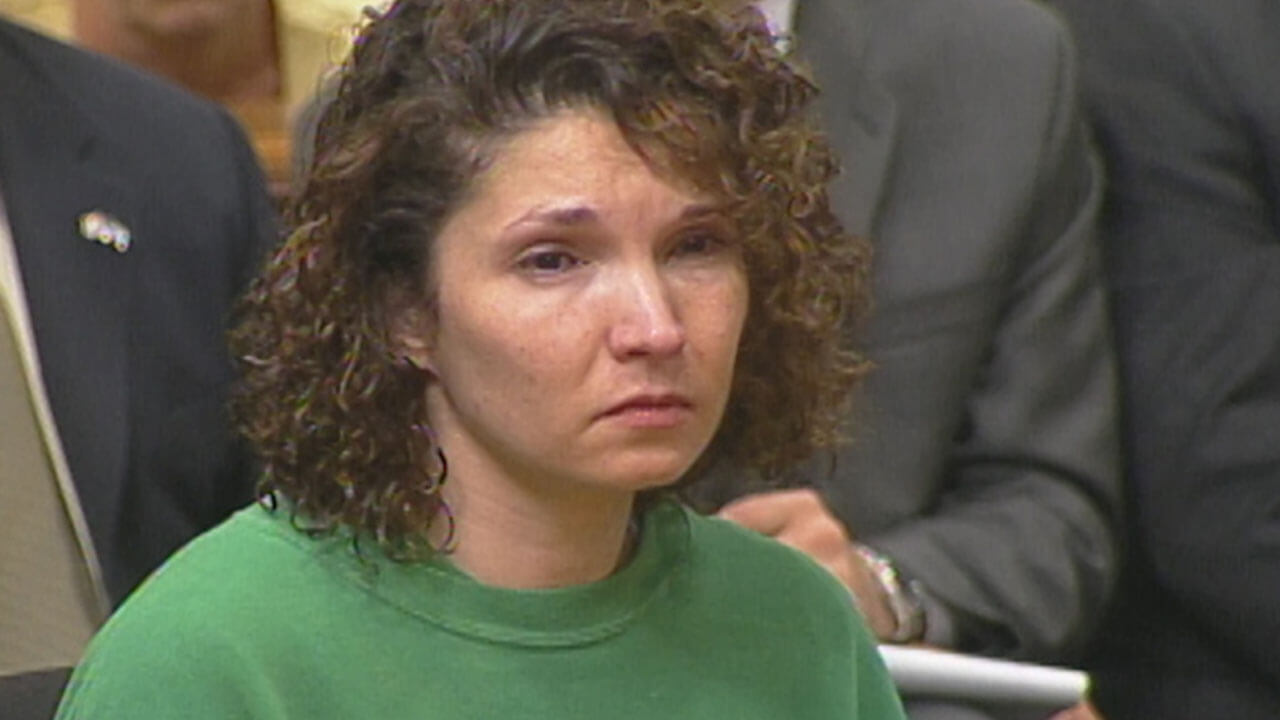
Jessica Williams listened emotionally to the testimony of 15 family members of the teens she killed with her car.

A former stripper who ran down six teens as they picked up trash alongside a Las Vegas highway on March 19, 2000, was sentenced to 18 to 48 years in prison Friday, a verdict the judge said "neither sides will be happy with."

Jessica Williams, now 22, faced up to 120 years in prison after being convicted on Feb. 16, 2001, of six counts of driving with a prohibited substance in her blood, one count of use of a controlled substance and one count of possession of a controlled substance.

But after tear-drenched testimony from family members of all the victims except one, Rebeccah Glicken, and Williams' father, mother and sister, Clark County Judge Mark Gibbons sentenced Williams to a minimum of 36 months and a maximum of 96 months for each prohibited substance charge. She was also fined a mandatory $12,000 and forced to pay more than $48,000 for medical costs.

"I've never had a case like this before," said Judge Gibbons before handing down Williams' sentence. "It's a huge range here that the court has to take into consideration. Even in murder cases the law usually prescribes the sentence."

Williams was the first person convicted under a 1999 Nevada law making it illegal to drive with more than 2 nanograms of marijuana or 5 nanograms of marijuana metabolite per milliliter of blood in one's system. This, and the high number of victims, compounded Judge Gibbon's task.

During witness impact testimony, all but one family member asked the court to sentence Williams to the maximum possible sentence on each charge, to be served consecutively.

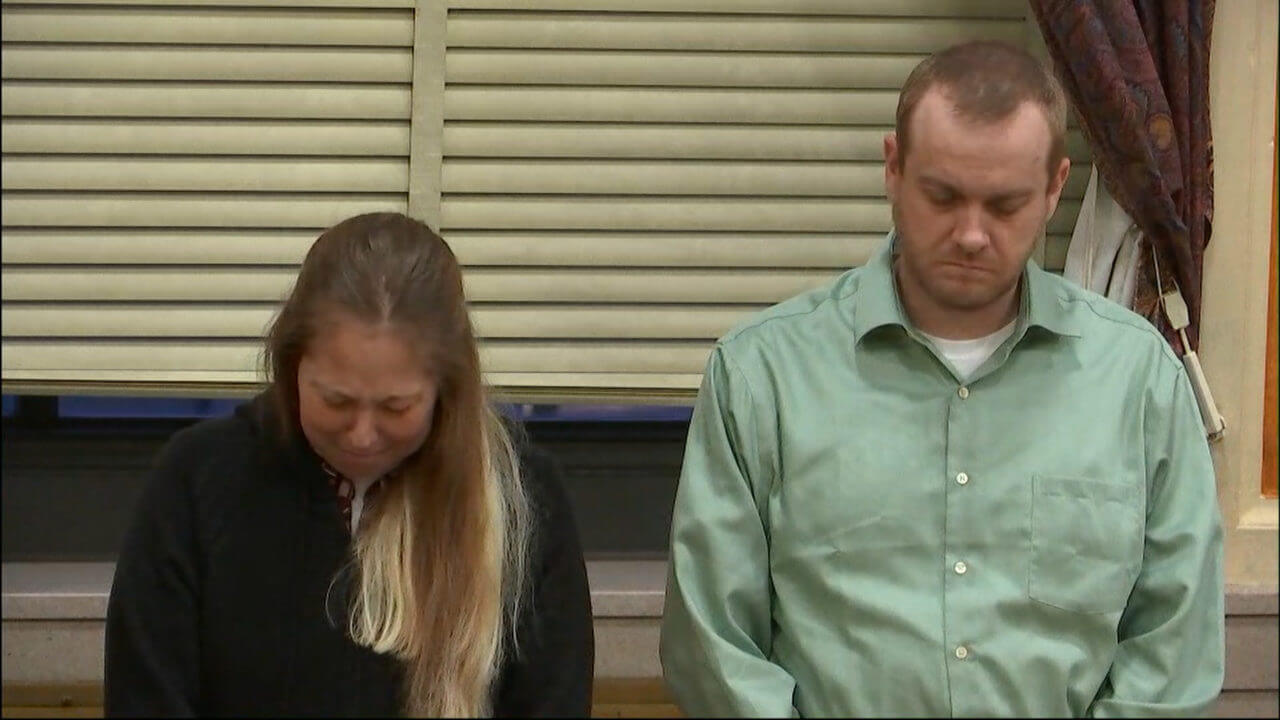
Family members, some wearing matching denim shirts with "Stop DUI" embroidered across the heart and others wearing T-shirts with the words "Our Special Angels" above a list of the victims, told the court how the accident cut short the dreams and hopes of their loved ones, how the day of the accident first hit them and how their families have been affected since the loss.

Doug Gould, Scott Garner Jr.'s stepfather of four-and-a-half years, said he was just getting to know his stepson when he died. "Two weeks before this he came up to me as I was working on my truck and asked if he could help," said Gould. "There was a connection with this child, for the first time."

Dale Booth (Court TV)
Harriet Booth, mother of 16-year-old Jennifer Booth, said her daughter "told me about the prom dress she had bought the week before, and could not wait to go to prom ... We buried her in the prom dress."

Dale Booth said he remembered sitting with Jennifer, who died the day after the accident, in the hospital. "Instead of tears coming down her eyes," he said, "she had tears of blood."

"Only mothers can comprehend this. In my house, happiness is lost," said Mercedes Puig, mother of 16-year-old Anthony Puig, through a tearful interpreter. "There are no more holidays, no Christmas. In a year I have not been able to sit my family at the table."

Some family members brought photos and memorabilia of those they lost. Joetta Burke, mother of 15-year-old Maleyna Stoltzfus, cradled a wooden box with her daughter's ashes inside during her testimony. Viola Gould, mother of 14-year-old Scott Garner, Jr., said she brought "the last flowers Scottie is going to give me." Barbara Puig, Anthony's sister, read a letter from his principal commending his work in school and recited the grades he received on his final report card. A number of witnesses showed the judge photos of their loved ones at the accident scene.

Joetta Burke (Court TV)
Williams' father, mother and sister turn their turn on the stand by asking the court to go easy on Jessica, and told the families that they, too, lost someone to the accident.

"I think this is properly the forum for the families that have lost loved ones," said Steven Williams. "Bless us all for the suffering we're going through.

Rosa Abbate, William's mother, told the victims' families, "I feel like I have grieved every part of the way with all of you." She addressed Mercedes Puig in Spanish, saying her testimony moved her the most. "I want to ask for God to help us both as mothers," she said, "to be able to heal our hearts and to take the decisions that are going to be made."

Williams' sister Stephanie, the most emotional of Williams' family, said "this will not ... be forgotten, not for any of us, not for the victims' families and especially not for Jessica who will be tormented by the thoughts, the memories — and that torture is enough."

Williams was the last to address the court.

"There's never been a day that I have not recalled details of the accident, and since that day there has never even been one day that I have not thought about those young people who are no longer alive," she said.

She stuck close to the details of her case and remained stoic during her brief testimony, accepting accountability for using marijuana and for driving the vehicle that struck the six teenagers. But she insisted that "while I was wrong for using marijuana or ecstasy, I would have never driven in an impaired state."

She closed her statement with a plea for leniency: "I beg this court to provide me with the hope and opportunity to have a future and, however slight, make peace with my soul."

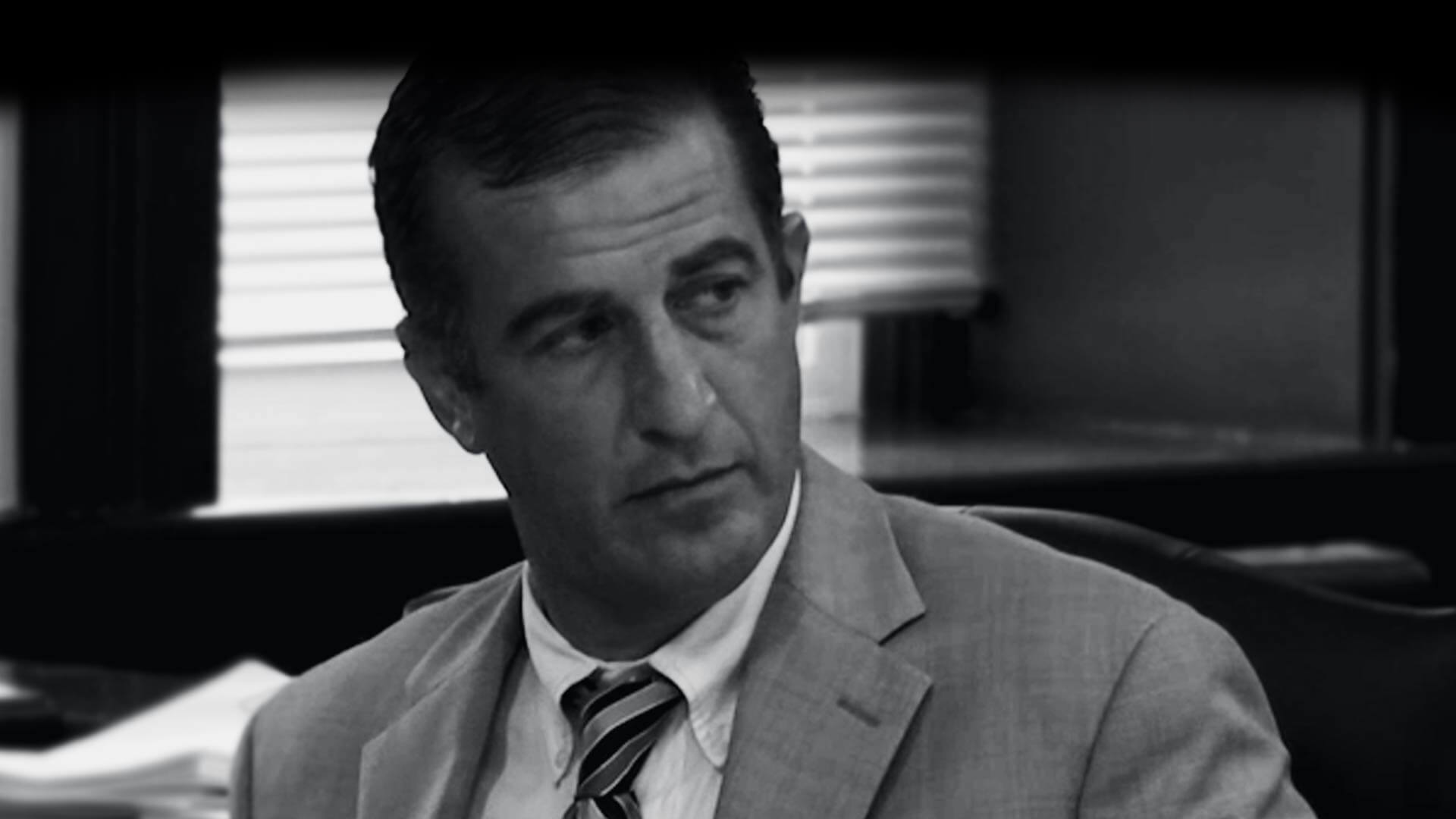
Prosecutor Gary Booker asked the court to exceed the recommended sentence, focusing on the losses, causes and accountability involved. He recounted testimony from the victims' families, focusing on what each family had lost, and highlighted the choices Williams made the night of the crash — choosing to smoke marijuana, take ecstasy and get behind the wheel of her van. And he contrasted the accountability of the victims — all of whom were performing community service in exchange for misdemeanor crimes — with that of Williams. After the accident, asked Booker, "What did she do? She had a cigarette."

Defense attorney John Watkins began his plea by reading from the preamble to the Constitution, and used arguments based on what he called "that ever-strong circle of justice" to counter the prosecution.

"This case is no different than one where the person is driving down the street and has a bag of marijuana in their pocket," he said, noting that while jurors found Williams guilty of driving while under the influence, they stopped short of saying she veered off the road because of the drugs in her system. "The state wants you to punish Jessica for what she didn't do."

Gibbons made few remarks before sentencing Williams. "Ms. Williams," he said, "at the scene of the accident you said to Ms. Smith, 'Is this real?' Well, it is real, and that's why we're here today." His sentence was a King Solomon-like split between the 48-to-120-year maximum and the 2-to-5-year minimum.

Williams, however, has another chance for reprieve. Her conviction will likely come before an appeals court, where her lawyers will argue that the law she was convicted and sentenced under is unconstitutional. Watkins had argued unsuccessfully during the trial that the law was unconstitutional because its low drug thresholds would allow unimpaired people to be convicted of driving under the influence.

The victims' families have filed a civil suit against Williams, the county agency that oversaw the trash pick-up program for probationary teens, and the company that financed it.


Comprehensive case coverage
 
Watch Williams' statement during the hearing


advertisement
©2007 Courtroom Television Network LLC. All Rights Reserved.
Terms & Privacy Guidelines

Small Court TV Logo