Logo


Saddam Hussein on Trial
  International law professor Michael Scharf, an advisor to the Hussein tribunal, discusses the trial
Dec. 6, 2005
 

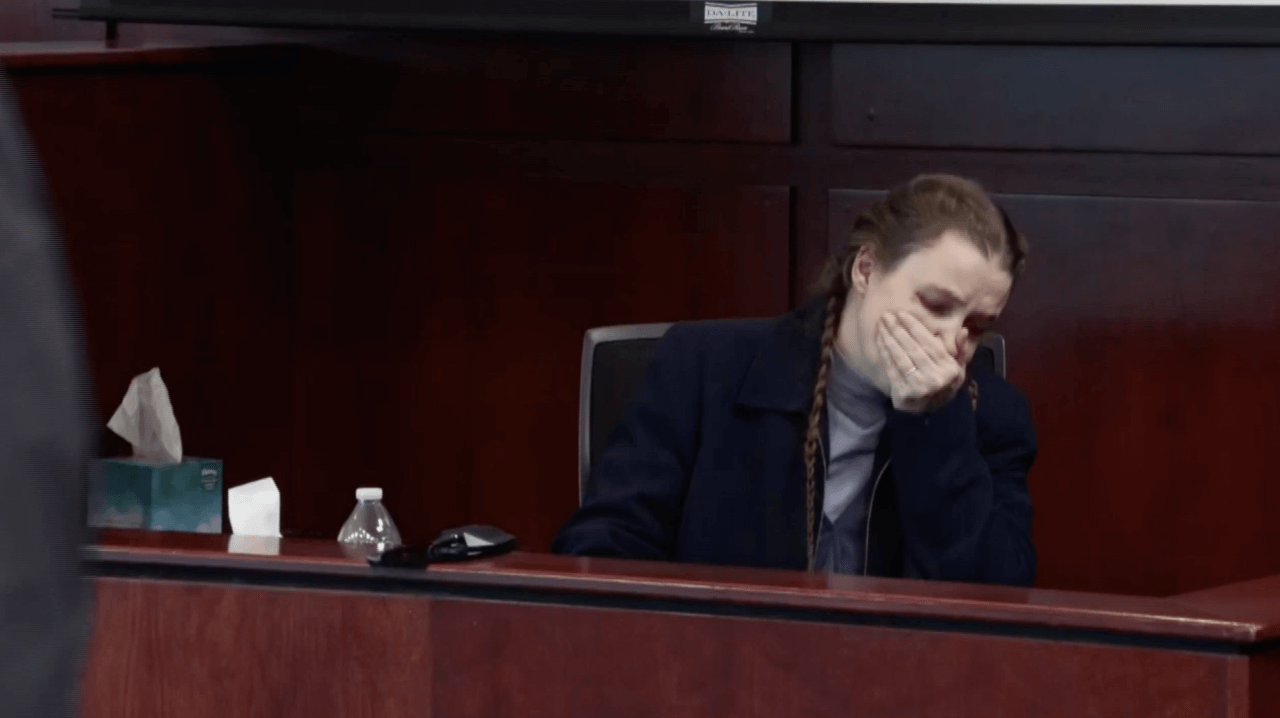
Court TV Host: The tribunal conducting the trial of Saddam Hussein and seven lieutenants heard dramatic testimony from a woman who said she had been beaten and tortured by the former president's agents. After the session, Saddam shouted that he would not attend tomorrow's proceedings. Discuss the Saddam Hussein trial with international law professor Michael Scharf, co-founder of Case Western's Public International Law and Policy Group, nominated for the 2005 Nobel Peace Prize for work in the prosecution of major war criminals, such as Slobodan Milosevic, Charles Taylor, and Saddam Hussein.

Court TV Host: Professor Scharf is here...so we'll go straight to questions...

Court TV Host: Thank you, Professor Scharf, for being our guest online today.

Michael Scharf: It's good to be with you today.

Question from RachelC: How does it play when a high-profile defendant urges the judge in his trial to "go to hell" and leaves the proceedings?

Michael Scharf: As your viewers might know, I participated in training the judges who are presiding over this trial, and one of the things we worked on was how to respond when the defendants or defense counsel become belligerent or disrespectful to the court. The problem for Judge Amin is that he has to walk a tightrope between controlling the proceedings and being seen as respecting the rights of the defendants. In the Milosevic case at The Hague, the presiding judge, Richard May, responded to Milosevic's outbursts by shouting back at him. Back in Serbia, this was seen as a sign that the presiding judges could not be fair. So Judge Amin is being very careful not to yell or lose his cool in the courtroom and to be firm but patient with the defense. And it's going to take him a while to figure out the right balance, but as the trial has progressed, he seems to be gaining a greater degree of control of the proceedings without seeming to be too heavy-handed. If the defense counsel are completely uncooperative, the judge can have them replaced or, as officers of the court, disciplined, including referring them to the Iraqi bar association for disbarment. So he does have some cards that he can play.

Question from Mrs_Ally_Claws: Are they going to drag a kicking and screaming Saddam into trial tomorrow?

Michael Scharf: Yes, as a defendant, Saddam Hussein has to be present in the courtroom, and he can be brought in against his will, if necessary. Or he can sign a waiver of his right to be present, and allow his lawyers to represent his interests in the courtroom -- something that he is unlikely to do.

Question from wn: I notice you say the trial should not be televised. How can a trial be improved by secrecy?

Michael Scharf: On my website, I suggested that televising this trial may be creating more trouble than it's worth -- in particular I was worried about the safety and security of the trial participants, and the fact that televised proceedings may encourage Saddam Hussein to act inappropriately and grandstand in the courtroom. And in fact these things have come to pass. But the judges felt that transparency was critical to the Iraqi acceptance of the legitimacy of these proceedings. It's also important to note that the 20-minute delay in the broadcast is not a vehicle for the court to edit out anti-government or anti-American statements. The representatives of the print media who are watching the trial can report on all such statements and therefore there would be nothing to be gained by editing them out from the broadcast. Rather, the 20-minute delay, which is the same delay that the Yugoslavia tribunal uses in its broadcasts, is used to edit out any identifying information about witnesses whose security is at risk.

Question from Alison: Michael, do you think Saddam would have a chance at surviving the present charges if he were charged in an another international tribunal or one run by the U.S.?

Michael Scharf: First of all, there was no international forum available for this trial. France and Russia made it clear that they would veto any efforts to have the Security Council create an ad hoc tribunal for war crimes. The permanent international court could not prosecute these cases because of the provision in its statute that says it cannot try any case that occurred before July 2002. Instead of simply having the Iraqi court system try to handle this on its own, the solution was to create an internationalized domestic tribunal that applies international law and rules but has Iraqi judges and prosecutors and takes place in Baghdad. The Iraqis that were selected to serve as the judges were screened and vetted by the Iraqi bar association from a list of 1000 judges. Those that were selected are committed to the concept of a fair trial and due process and the appearance of fairness. The evidence against Saddam Hussein in this first case is very strong. The Iraqi judges are no more or less likely to convict than international judges would be on the face of this evidence. Finally, I should note that the Iraqi standard of proof is proof to a moral certainty -- which is equal to or even higher than the international "beyond a reasonable doubt" standard.

Question from qdpie: "If" Saddam is convicted, when will the execution take place? Directly after or does he get to appeal like here?

Michael Scharf: The rules of procedure and statute of the Iraqi special tribunal say that enforcement of any sentence must occur within 30 days of the final disposition of all appeals. This means that Saddam Hussein will definitely get to appeal any judgment, including a potential sentence of execution, to the nine member appeals chamber of the tribunal. The judges of the tribunal know that one of the important functions of their court is to create a historic record of the worst atrocities committed by the Ba'ath regime. Since the statute does not allow for trials in absentia, this means that Saddam Hussein needs to be alive in order to be prosecuted for the Anfal campaign, the gassing of the Kurds, the crimes against humanity against the Marsh Arabs, the crimes of aggression against Kuwait, and the war crimes committed against Kuwait, and the other significant atrocities. Therefore I believe the tribunal will interpret its statute and rules in such a way as to allow them to stay any judgment of execution so that Saddam Hussein can stand trial for these other charges.

Question from OldHippy: What do you see that Ramsey Clark brings to Saddam's defense team?

Question from Mrs_Ally_Claws: What do you think of Ramsey Clark defending Saddam?

Michael Scharf: The arrival or Ramsey Clark in Baghdad immediately was accompanied by a more aggressive approach by the defense team. Ramsey Clark, who served as Milosevic's lawyer at The Hague, is well equipped to make a series of challenges to the legitimacy of the tribunal. And the process will be better for it. However, Ramsey Clark has also said that his main strategy is to put the U.S. on trial. I don't think that will help his client gain an acquittal, since international law holds that the "tu quoque" defense, meaning "you also" in Latin, is not legitimate. And I'm concerned that this tactic could increase violent opposition to U.S. troops in Iraq thereby lengthening rather than hastening the return of American troops home -- the very thing that Ramsey Clark says he wants.

Question from wn: Why have we seen so little evidence of whatever Saddam Hussein is accused of doing?

Michael Scharf: As of this writing, there have only been three witnesses out of 50, that have testified. So the great majority of evidence has yet to come. That will include documents signed by Saddam Hussein and the other defendants, videotapes, forensic evidence, and the testimony of both insiders and victims of the atrocities. This case was selected to be the first prosecuted because it is nearly an open-and-shut case, and, at the end of the day, I believe that most trial observers who objectively follow the proceedings, will be convinced of Saddam Hussein's guilt.

Question from Stephanie: Have we even heard a defense for Saddam?

Michael Scharf: Saddam Hussein's best defense is going to be that he was responding to a terrorist incident, an assassination attempt on his own life, in a town known to harbor terrorists, insurgents and enemy sympathizers, at the height of the Iran-Iraq conflict. He will argue that his actions are no different than what American troops are doing in countless towns throughout Iraq and Afghanistan, in an effort to root out terrorists and insurgents, destroy bases of opposition, and detain enemy combatants. For the U.S., this line of defense will raise some uncomfortable moral questions about the way we conduct our global war on terror. But, there is a world of difference between the two situations, as will be made clear by the prosecution at this trial.

Court TV Host: Is there any way, in your view, that Saddam Hussein can escape a death sentence, through the twelve trials?

Michael Scharf: While I was training the Iraqi special tribunal judges, they were concerned about public perceptions of the fairness of their court, and they asked me whether there were any acquittals at Nuremberg and before the Yugoslavia and Rwanda tribunals, and, if so, whether the perception was that those courts were ineffective or that the acquittals were a sign of their fairness. And I told them that most experts believe it was the latter. They responded that they are judges committed to fairness who desire to have their legacy discussed in future years, just as we were discussing the Nuremberg trials. They said that they would bend over backwards to ensure fairness and to require the prosecutor to prove the charges to their complete satisfaction, to a moral certainty. I believe that we will see some acquittals of some of the defendants, and that Saddam Hussein will be acquitted of some of the charges. But having viewed the evidence against Saddam Hussein, I would be very surprised, I would be very surprised if he walks away a free man. The crimes with which he is charged are so heinous that I do think the death penalty is likely, if he is convicted.

Chat powered by Conference Room by WebMaster, Inc.
Contact us
©2007 Courtroom Television Network LLC. All Rights Reserved.
Terms & Privacy Guidelines

Small Court TV Logo


advertisement