|
ctv_comment: Welcome to Court
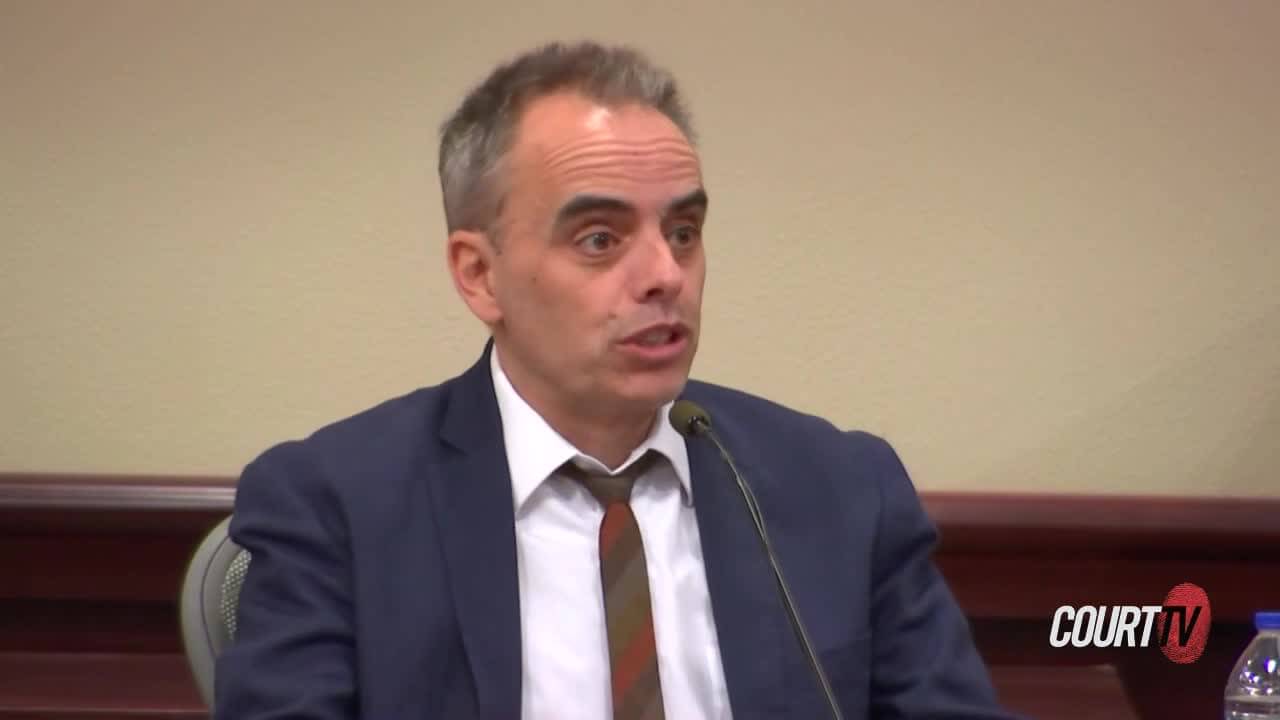
TV Online chats. Today we're talking to Columbia University law professor James S. Liebman. He's the author of a ground-breaking study on America's death penalty.
krizzy65 asks: Why does it seem that the only alternative to the death penalty is a short (isn't the average time served for capitol murder only 8 years?) prison sentence? Is life without parole POSSIBLE? If it is, why is the average
time served so low?
ctv_guest: In fact, most states that use the death penalty now have life without parole as an alternative, but many jurors are under the misimpression that the questioner in this email has and believe that people not given the death penalty will be back on the streets very soon. It is for this reason that it is important for capital jurors to be given accurate instructions about the actual alterative to a death sentence. Unfortunately, many states (Texas being one) don't now give such instructions.
ctv_comment: Joining us today is Columbia University law professor James S. Liebman, chatting about his ground-breaking study of the death penalty. To ask a question, type it into the box at the bottom of the screen and press ask.
tarantino_10012 asks: I have a question for Dr. Liebman. Your study concludes that many death penalty cases involve prejudicial error and other flaws. How do you feel generally about the death penalty, in a hypothetical case that suffers from no legal defects? Do you believe in it in principle?
ctv_guest: In our study, we tried to draw a sharp line between moral and personal views about the death penalty
on the one hand and its rationality and effectiveness as actually
practiced on the other hand. And we focused on the second of those two questions. It happens that if I were a prospective juror in a case, and I was asked (as all jurors are) what my views on the death penalty were, I would say that I am against the death penalty. But that view is irrelevant to the study which asks a different question: From the perspective of somebody who supports the death penalty, or simply wants government programs
of any sort to work is our death penalty system working well? We found that it was not working very well.
deputygirl1 asks: Does the cost of execution outweigh the cost of life in prison?
ctv_guest: Studies show that it costs two or three times as much to try a person capitally and then keep them on death row until they are executed and execute them than it does to incarcerate the same individual for the balance of his or her life. When, in addition, one considers the cost of appeals and court review, and especially when one realizes that two out of three death sentences will get reviewed but will never get carried out, it becomes clear that the cost of each death sentence is many times the cost of a life sentence without parole.
tarantino_10012 asks: What do you think could be done that might immediately improve the fairness with which the death penalty is administered?
ctv_guest: We are studying that question right now. We will be looking at hundreds of factors that might contribute to erroneous death sentences and trying to figure out which ones have the worst impact. Even now, however, it is clear that the general outline of a solution are to put more resources into assuring the accuracy of capital sentences at the trial stage, hoping thereby to save resources later on because fewer errors would be committed. A major reform, no doubt, is to improve the quality of defense counsel at trial.
brandylicious_ca asks: What percentage of death being carried out were a result
of incompetence in the defendants case?
ctv_guest: Our study shows that seriously incompetent defense lawyers were responsible for 37 percent of all errors committed where reasons are known. In order to qualify as a reason to overturn a death sentence, the incompetent counsel must not only have committed serious mistakes at the trial, but it must be shown that those mistakes are likely to have changed the outcome of the trial. It therefore is clear that this kind of incompetent lawyering is very serious, indeed.
yellow_rose_of_west_texas asks: What about requiring counsel appointed to capitol cases meet a heightened standard of competency, experience, etc.?
ctv_guest: The major problems with lawyers in capital cases are that they are under paid and unqualified. It is not surprising that the availability of very meager funds for these lawyers attract very poor lawyers. It would be important and helpful to insist, as a few states already do, that capital lawyers satisfy a strong requirement that they be qualified, but it will also be important to provide adequate compensation to attract qualified lawyers.
ctv_comment: Joining us today is Columbia University law professor James S.
Liebman, chatting about his ground-breaking study of the death penalty.
dianoam asks: Can you explain to me why by and large the american people are pro-death penalty? What is at stake behind this statistics?
ctv_guest: Recently, support for the death penalty has dropped somewhat from about 80 percent to about 65 percent. This drop has occurred in the last five years, and it is the first time support for the death penalty has gone down significantly since 1965. What this suggests to me is that Americans, who still mainly support the death penalty, are none the less insisting that the penalty be carried out in a fair and accurate
manner, and that there are rising concerns on that score. Many Americans, I think, including ones who support the death penalty still want it to work
properly and are becoming concerned that it is not working well.
munkyman79 asks: Living in the UK where the Death Penalty has been abolished for many years, i am not aware of all the facts to do with the death penalty in the us.......am i right in thinking a far higher proportion of blacks have been executed as opposed to the number of whites?
ctv_guest: Our study has considered the question of race, but in the part published so far, has not reached any firm conclusions on that subject. Other studies have shown, however, that there are significant racial disparities, not so much with the race of the defendant, but with the race of the victim. People who kill whites are four or five times more likely to get the death penalty than people who kill blacks. One place where blacks do seem to be over-represented among people
given the death penalty is in the federal system. That, in fact, is
why Pres. Clinton has decided to put off the first federal execution since the 1960s. The Justice Department will soon issue a study on the race question.
ctv_comment: Joining us today is Columbia University law professor James S. Liebman, chatting about his ground-breaking study of the death penalty. To ask a question, type it into the box at the bottom of the screen and press ASK.
songlady_ew asks: Professor, can you explain your study?
ctv_guest: We studied every death sentence imposed in the U.S. (over 5,000 of them) between 1973 and 1995 to see how reliable the courts that scrutinized those death sentences thought they were. We found that courts overturned 68 percent of all death sentences
that were reviewed fully during that period. In addition, we found that when the erroneous cases were sent back for retrial, where outcomes are known, the result was a lower sentence in 75 percent of the cases and a not guilty finding in 7 percent of the cases. We also found that very few states carry out more than 5 percent of the death sentences they impose, at least within
ctv_guest: 10 years of the imposition of sentence. Our ultimate conclusion is that this is a system that it is being crushed under the weight of its own mistakes.
louis7223 asks: Aren't we confusing two different issues - a justice system that needs reform versus the fairness and justice behind the death penalty?
ctv_guest: A number of people have suggested that our study is a condemnation of the criminal justice system as a whole. I don't draw that conclusion from the study. We found important reasons to think surprisingly that there is more error in capital cases than in non-capital cases. This suggests to us that many of the difficulties that are revealed by our study specific to capital cases.
ctv_comment: Joining us today is Columbia University law professor James S. Liebman, chatting about his ground-breaking study of the death penalty. To ask a question, type it into the box at the bottom of the screen and press 'Ask'.
maxmillian_robespierre asks: Professor, would you not agree that the THREAT of using the death penalty has an important strategic advantage, because then the accused could plea bargain for a life in prison, or a very long sentence. Also, we can get evidence on other criminals without giving them a "get out of jail free" pass, like the one given to Sammy "the Bull" Gravano. After he got out, Gravano committed other crimes.
ctv_guest: To the first part of the question, some prosecutors do use the death penalty to increase their bargaining power in the plea bargaining process. However, the bigger problem is the underuse of plea bargaining in capital cases. Once a case is charged capitally, it is difficult, often times, for prosecutors to accept any
other outcome. There is no plea bargaining in those cases, therefore, and a part of the process that otherwise might help the lawyers and the system to identify the fair and accurate outcome in the case does not function. This, by the way, is one of the reasons why capital cases may be more flawed than non-capital cases.
soapdisher asks: Do you think that a moratorium based on the argument of "imperfections" in the system undermines the cause of people who are truly against the death penalty as matter of moral conviction?
ctv_guest: Our study has been attacked from a variety of perspectives, mainly moral and ideological perspectives.
People who strongly support the death penalty take our study as an
attack on their deep convictions. People who strongly oppose the death penalty on moral grounds question the appropriateness of asking whether what in their view is an immoral system can be "fixed." What we try to do in this study is to put aside all moral questions and simply ask whether the system is working well within its own sense of rationality.
And according to its own goals. We think that most Americans tend to address issues of public policy from the same kind of pragmatic perspective.
ctv_comment: We only have time for a few more questions...
btjohnso asks: Does the death penalty deter violent crime statistically?
ctv_guest: We did find that the state's that impose the death penalty have higher homicide rates overall than do state's without the death penalty.
justsweet_2001 asks: Why does it take years for a death sentence to be carried out?
ctv_guest: Many people are frustrated by the time it takes to get from a death sentence to an execution. Often times, judges and lawyers are blamed for the delay. What we found was that "the delay" is mainly the result of how much error serious error there is
in American death sentences. When nearly 7 in 10 death sentences are too seriously flawed to be carried out, it is not surprising that it takes courts a long time to find and cure all that error.
ctv_comment: Time for one more question...
Wrangler010 asks: Isn't that normally because so much time has passed since the first conviction that witnesses are not available and a plea agreement is reached to a lesser charge?
ctv_guest: This is a common misconception. In fact, in order to overturn a death sentence, one almost always needs to identify evidence that the jury should have known about at trial. But did not learn about at trial. So when that case goes back to retrial, the fact is that there is more or better evidence available to the jury, not less. In most cases it will be possible to use all of the evidence
presented at the first trial when the retrial occurs. So, the addition of the new evidence discovered during the review process is likely to make the second jury better informed than the first one.
ctv_comment: To read a copy of the doctor's report, you can find it at http://justice.policy.net/ or 207.153.144.129/index.html Thank you professor.
ctv_guest: Thank you for your questions!
|