Updated April 13, 2001, 12:25 p.m. ET
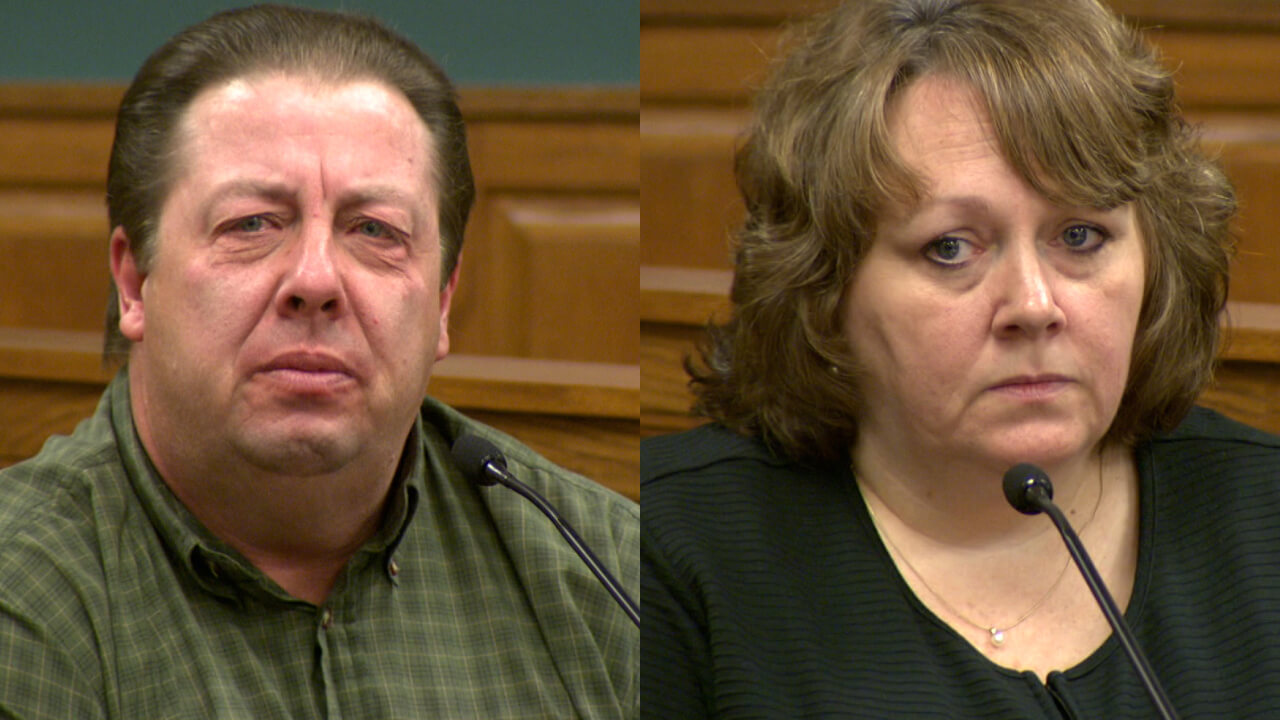
Transcript of an interview with Russell and Josephine McMillen for Court TV  
   
Interviewer: So Jo, you don't have all of Lois' paintings here? You have a lot of them still (INAUDIBLE)
Mrs. McMillen: (INAUDIBLE) in the Villa in Tortola (British Virgin Islands) Yes.

Interviewer: So you …

Mrs. McMillen: Her recent ones are down there.

Interviewer: Uh huh. So you have selected and framed quite a bit of her things now.

Mrs. McMillen: Yes I have.

Interviewer: Well take me around and show me some of these pictures that you've got of hers up now. Tell me about this.

Mrs. McMillen: Well, she did this at Parsons.

Interviewer: Uh huh.

Mrs. McMillen: And I would say she did that in one of her more whimsical moods.

Interviewer: What did she tell you about this?

Mrs. McMillen: Not a whole lot.

Interviewer: Yeah?

Mrs. McMillen: Just it it's something that she loved and liked to look at that. I just had this framed.

Interviewer: And this is one of the few watercolor's that she did, isn't it?

Mrs. McMillen: Yes, it is. She took a course in Watercolor and did a few of those. She didn't like that technique because she was quite meticulous. And liked to go over and over and over. And you can't do that with Watercolor.

Interviewer: Um hum.

Mr. McMillen: But I liked what she did.

Interviewer: Yeah. This is very interesting. Yeah. Now tell me …

Mr. McMillen: And there's another one out here in the same mood.

Interviewer: Uh huh.

Mr. McMillen: In the same sort of whimsical mood which is this. (PAUSE)

Interviewer: Well what is your reaction when you look at pieces like this? Of course knowing your daughter. Does it speak to you of her?

Mr. McMillen: Oh absolutely, because she did things to try to make people happy and to amuse them.

Interviewer: Yeah?

Mr. McMillen: In her art and in her clothes. Here is something she made for Christmas … a year ago.

Interviewer: Yeah.

Mr. McMillen: She was doing Christmas wreaths for some of my friends. So we just left that here. And then in the library here is a … a um … painting of our house that she gave us for Christmas. And this is a number of years ago. But you can recognize the snow and the Christmas tree in the window. And that's our dog that you met.

Interviewer: Uh huh. (PAUSE) And you told me, you told me about the Lab. He had a very difficult time when she died, didn't he?

Mrs. McMillen: Uh yes he did. She … he was sleeping in her room um for a couple of months prior to her death. Go, would go up there every night and stay. And then when we came home with Lois and buried her, the dog sort of went into a depression. And he wouldn't go up there. He still will not go up and go into that room. And he moped around for quite a while. And I said to Russ we got to get 'em to the Vet and get 'em on Prozac.

Interviewer: (LAUGHTER)

Mrs. McMillen: Because he was that bad.

Interviewer: Well tell me about the piece, this lovely piece here in the front entry.

Mrs. McMillen: Well, again, I can't exactly explain this. This is something she did at Parsons.

Interviewer: Uh huh. Well, it's interesting because this piece, as with several of them I notice, does seem to have in it a a religious theme or a religious reference.

Mrs. McMillen: It does. And in many of her paintings there's a Cross which is very significant. And as time went on you would see that Cross again and again and again in every painting. And for some reason, I suspect that the … that the red that is coming down is blood and not just all red paint.

Interviewer: Had she become very concerned with the issues of violence against women when she was still at Parson?

Mr. McMillen: Oh that's when it all started. With the Violence Against Women in Bosnia.

Interviewer: Um hum.

Mr. McMillen: And she took that to heart and joined the Women In Black which is actually an international organization.

Interviewer: Um hum.

Mr. McMillen: And women will dress in black shrouds. And in New York they would stand in front of the UN. It'd be all day long in front of the Public Library. As a silent vigil against violence.

Interviewer: And so you saw more and more of that expressed in her paintings?

Mr. McMillen: Absolutely. Yes. And that continued after the violence against women subsided in Bosnia. But just by listening to the news on television or reading the paper and she had picked up on that as an issue that she felt she wanted to fight personally.

Interviewer: But not all of them certainly have, had that sort of theme because you showed me a particular piece here in the dining room that has a very different feel, a very different flavor about it. Tell me about this piece.

Mr. McMillen: Um this is The Rastaman. And I would, at first I thought well, I'll take it to Tortola.

Interviewer: Uh huh.

Mr. McMillen: Because it would be so appropriate down there. But then I thought with the sea, cause we're just a two minute walk from the Ocean.

Interviewer: Um hum.

Mr. McMillen: That it would be spoiled. So I had it framed and I like to have it here to enjoy. But this is The Rastaman and this is sort of the feeling of the Island. The way perhaps it used to be?

Interviewer: Uh huh.

Mr. McMillen: That kind of laid back atmosphere that this man has. That sort of slouched to one side. Uh this is so typical.

Interviewer: Well tell me, you talked about the different pictures that she has in Tortola.

Mr. McMillen: Yes.

Interviewer: Um. Are most of them more this feeling? The the colorfully, lively? Or did she really make a transition in her art?

Mr. McMillen: They're all colorful. They're all colorful. But one has to do with violence against women. But the other are more Expressionistic paintings with a lot of color.

Interviewer: Uh huh.

Mr. McMillen: But they all have a lot of color including the Violence Against Women painting. Which is called, The World Is Killing Women.

Interviewer: Was that the last piece she did?

Mr. McMillen: I believe so, yeah. She did it two years ago.

Interviewer: Ok. Let's go upstairs. Well both my parents are Artists as sidelines.

Mr. McMillen: And you grew up in a house with (INAUDIBLE) by your mother, your father.

Interviewer: And I have a whole, a whole corner of my house where I …

Mr. McMillen: Well, this is something she did a number of years ago and this represents Christ's Shroud. The Bloody Shroud.

Interviewer: Um hum.

Mrs. McMillen: And as you see, you can look through and what you're looking at is Eternity. And here in the center is the Christ figure and then there are things here that that He believed … warmth, love, worth, world, love. Things that He believed in that would save mankind if they would listen to His philosophy. And this was down in the basement. And when I found a photograph of it after her death I looked at it and I realized the meaning of it. And she'd had it in her bedroom at one time and I didn't think it was suitable for a bedroom. So I took it down. And I felt quite sad about that. But to me it's a very meaningful collage is basically what it is.

Interviewer: Well interestingly it is, it is presiding over pictures of her?

Mrs. McMillen: Yes, exactly. Exactly.

Interviewer: Yeah. Yeah.

Mrs. McMillen: At different stages of her life when she was a baby and a little child.

Interviewer: And, as you said, very flamboyant. Very flamboyant. (INAUDIBLE) costumes.

Mrs. McMillen: But you can see what a shy person she was when she was 7 years old. I think you can tell by that. This is a Puppet that she had made. And she was so proud of that little Puppet.

Interviewer: Those are wonderful pictures. You've got some other pieces in your room as well?

Mrs. McMillen: I have one thing in here that I wanna show ya. This is Lois as a baby that we did. Now that is my grandmother. Did that … of her brother's dog of all things. So I had that framed. Now over here … this is something Lois was working on the week before she died. It's unfinished. I have no idea what it means. But she had torn pages out of The Bible. And pasted it up. And Russ said she worked on this in the dining room table in our Villa. And she would look down and then she'd walk around and then look down from this side. And kept walking around and working on it. And he was just observing the way she worked. And so then after her death it meant a very great deal because it was the last thing that he saw her actually working on. (PAUSE) So it's it's something that we don't quite understand.

Interviewer: In fact you told me that that last week there on Tortola, she did something unusual, in terms of The Bible.

Mrs. McMillen: She was carrying a small Bible with her in her … beach bag when she went down to the Beach. And she had never done that before.

Interviewer: Did she talk to you about that at all?

Mrs. McMillen: She talked to me about the fact that she didn't think that I think enough about God that week.

Interviewer: Yeah.

Mrs. McMillen: Yeah.

Interviewer: And in hindsight what do you think?

Mrs. McMillen: Hindsight I feel that her instincts were such that possibly she knew that she was going to die young and wanted to get a message across for me. And she wasn't afraid of anything down there. We didn't know there was anything to be afraid of. (PAUSE)

Interviewer: Is this the first piece or the only piece that you know of where she used uh pieces of the … pages of The Bible?

Mrs. McMillen: No. I have another collage here that she did.

Interviewer: Was it as she got older that there were more religious references? Or had she always used those references?

Mrs. McMillen: As she got older there were more and more and more. And in most all of her paintings you'll see a Cross .. and a Rose. She was interested in Horticulture also. Growing Orchids down there and Roses up here.

Interviewer: (WALKING) Now which room is it that contains the self-portrait? What's this?

Mrs. McMillen: This is just something I found after she died and I framed them.

Interviewer: 'This is perhaps with a lot of work, stitching and building and making, I can leave a bit of grace in this world that has made me so sad.'

Mrs. McMillen: Yes.

Interviewer: Did you realize she was so sad?

Mrs. McMillen: Well, I think she was sad about the condition of society. Very sad about that. And she looked back to what she thought were happier days. For example, the turn-of-the-century. She loved to get out old family portraits and say this is the way we ought to be now.

Interviewer: So it was much more the pain of the world around her.

Mrs. McMillen: Yes. Oh absolutely.

Interviewer: That broke her heart.

Mrs. McMillen: Yes.

Interviewer: Yes.

Mrs. McMillen: Absolutely.

Interviewer: Yeah. Show me her self-portrait.

Mrs. McMillen: Yeah. Well there are a couple of them. They're different. (PAUSE) Now do you want to see the one … she's a self portrait of Lois. And the cross was there with it. And I think … I think some of this expresses her feeling of wanting the kind of freedom that maybe she has in death. You know off in the clouds. Just totally free, clothes gone. But she was quite flamboyant. And there she is with that up there with the sequins.

Interviewer: She used the gloves?

Mrs. McMillen: Yes, yes.

Interviewer: Uh huh.

Mrs. McMillen: But I've always loved this. And she concocted this frame. It's not a real frame it's a board that she did … put some stuff on it.

Interviewer: Uh huh. So you think this was the first self-portrait?

Mrs. McMillen: I think anything where there's a woman with blond hair is a self- portrait.

Interviewer: (LAUGHTER)

Mrs. McMillen: But that was one of the first. I said well that's Lois.

Interviewer: And this is, this is one of hers.

Mrs. McMillen: Now this she did in high school. Get it out of the way here.

Interviewer: You have an extraterrestrial theme going on here.

Mrs. McMillen: Yeah. Those are like UFO's out there. And you wonder what that little sign is in the middle going around. She had a um … boyfriend from Switzerland at the time. And he had a tattoo on his arm and that's what that is.

Interviewer: Aha!

Mrs. McMillen: Yeah. And there's the ship you see, sailing out into … Eternity really. (PAUSE)

Interviewer: All right. We can talk about … are there any other … that reminds me so much of Salvador Dali. Don't you think?

Mrs. McMillen: Yes, I do. Very definitely. But you can see some of these are very happy, joyful, whimsical, make people happy kinda stuff.

Interviewer: Would she ever sit down and talk to you about what she intended with her work? Or did she just leave it as self-explanatory?

Mr. McMillen: Well, in retrospect I wish I had spent more time with her.

Interviewer: Yeah. Yeah.

Mr. McMillen: But she had an uncanny way of going to a Museum or an Art Gallery and she could explain what the Artist meant. She was marvelous at that.

Interviewer: Yeah.

Mr. McMillen: Did that for her classes at Parsons.

Interviewer: But did she ever have a hard time then, explaining to people what she was saying?

Mr. McMillen: Mmm probably. Because she wasn't very articulate in that sense.

Interviewer: Yeah. She saved it for her paintings.

Mr. McMillen: Yeah. That's the way she expressed herself. Want to go and squeeze in there. (OFF CAMERA COMMENTS) You want me in there?

Interviewer: Yeah.

Mr. McMillen: She collected dolls lately. So here they are. This is something I would think might be in a children's book. An illustration possibly for a children's book.

Interviewer: A Lion? Is it a Lion and a sort of a Griffin?

Mr. McMillen: This is a Lion here with …. what do you call that? Some sort of a Gargoyle that's alive coming down to eat the Lion. But she did some things for a specific purpose.

Interviewer: Uh huh.

Mr. McMillen: She used to do big things that might be a cover for um a photo or a um a video.

Interviewer: Uh huh.

Mr. McMillen: That kind of thing.

Interviewer: When did she begin collecting dolls?

Mr. McMillen: Um the last few years.

Interviewer: Really?

Mr. McMillen: Yeah.

Interviewer: Did she say why?

Mr. McMillen: Uh uh no, she didn't. But up here it's a big thing.

Interviewer: Yeah?

Mrs. McMillen: Yeah. (PAUSE) I guess maybe she was thinking that one of these days she was gonna get married and have her own children. But in the meantime she'd have these dolls. (CHUCKLES) And this is something else that she did .. that I haven't hung up yet. (CLEARS THROAT) I don't understand it. But there's a Cross here. (CLEARS THROAT) that dominates the painting.

Interviewer: Um hum.

Mrs. McMillen: And he's got the Rose here and then this draped figure here and in many paintings she had a door that went … where I don't know. (PAUSE)

Interviewer: The symbol of life.

Mr. McMillen: Symbol yes.

Interviewer: Now was this one of the recent pieces? No, she did this a few years ago. The time here. Another Cross in here.

Interviewer: Um hum.

Mr. McMillen: This is that Egyptian Cross.

Interviewer: Um hum.

Mr. McMillen: That shape? And down in the Villa I have a painting of this that she did that's that tall. Great big thing. (PAUSE)

Interviewer: And the colors are marvelous!

Mrs. McMillen: The colors are nice. That's what I love about it. Now (CLEARS THROAT) check in here. (CLEARS THROAT) I'm getting so I can't talk. (WALKING) Now (CLEARS THROAT) … this is the um … Lois lived in California for a number of years. And (CLEARS THROAT) when she came back she wanted to go back out there again which she did. But she became disenchanted with California. But this is called, The Road to California.

Interviewer: Hmmm!

Mr. McMillen: Didn't look like that when you went out there did it?

Interviewer: (LAUGHTER) But you certainly begin asking yourself the questions in what she is seeing and what she's portraying.

Mr. McMillen: Exactly. With the cracked eggs along the road.

Interviewer: Uh huh. Uh huh. And she got disillusioned and came back?

Mr. McMillen: Well she wanted to become a Movie Actress for a while.

Interviewer: Yeah?

Mr. McMillen: And became disenchanted. As many young women do.

Interviewer: Um hum. Not necessarily a bad decision either. (LAUGHTER)

Mr. McMillen: I don't think so. I thought it was a good one.

Interviewer: And that's when she came back and started Parsons?

Mr. McMillen: Uh yes. This was before she went to Parsons.

Interviewer: Ok.

Mr. McMillen: So it's the early 90's that she did them.

Interviewer: Uh huh. What are these pieces here?

Mr. McMillen: Now these pieces are religious. And they go together. This piece here should, it should be about an inch apart.

Interviewer: Um hum.

Mr. McMillen: Goes in with that.

Interviewer: Um hum.

Mr. McMillen: And you see she has … Scripture here that's … these are collages you understand.

Interviewer: Um hum.

Mr. McMillen: So the Scripture's there and some is over on the other side there. And what it all means I do not know. (PAUSE)

Interviewer: Revelations?

Mr. McMillen: Yes. I believe so.

Interviewer: Um hum. (PAUSE) (WALKING)

Mr. McMillen: Oh, the other self -portrait.

Interviewer: That's … yeah. There's one of them in here.

Mr. McMillen: Well maybe they both are. I'm sure, you see this again is like the one in the other room.

Interviewer: Um hum.

Mrs. McMillen: Here you have the woman. Total freedom. Total freedom. Her clothes are gone. She has nothing to restrict her. There she is looking into Eternity. (PAUSE) This was done at Parsons. And then that little watercolor I found among her things and I had that framed. And I took out a frame and hung it up I realized the similarity in the three. You see the seated woman and the colors. And I suspect maybe that's Lois too.

Interviewer: You mean she did a lot … you've shown us a lot of these collages with ..

Mrs. McMillen: This is a Valentine she did for me.

Interviewer: Ahhhh. (GASPS)

Mrs. McMillen: One year. So to say you know a little Angel and flowers.

Interviewer: Um hum.

Mrs. McMillen: It's a collage. But it was a Valentine. (PAUSE)

Interviewer: That's wonderful.

Mrs. McMillen: Yeah. As I say, everything in my house relates to something.

Interviewer: All right. You want to sit down?

Interviewer: So you knew Michael Spicer but you didn't know the other two?

Mrs. McMillen: I never heard of the others and I never saw them.

Interviewer: Ok. Even though one of them, what is it uh uh Bendetto, Bendetto who says he dated Lois.

Mrs. McMillen: Um hum.

Interviewer: For a couple of months anyway.

Mr. McMillen: I don't believe that that's so. He might have dated her but not for a couple of months. In that year, 1997, when he says that he met Lois down there? (PAUSE) that particular year she had a girlfriend with her. (CHUCKLES) Now Lois might have come down a few days before the girlfriend and met Michael and gone out with 'em. But the minute the girlfriend came, they were together the whole time.

Interviewer: Yeah.

Mr. McMillen: And the girlfriend was there for several weeks. Maybe even a month. And they met a couple of young men from New Jersey. One of them had just gotten a divorce. Had a 3-year old daughter. So it is not these men.

Interviewer: Yeah. (PAUSE) Was that sort of the way of things in Tortola? The kids would come down and they might meet someone for the month of January and they all would go to The Jolly Roger and other places?

Mr. McMillen: Yeah.

Interviewer: And then you'd go your own way.

Mr. McMillen: Exactly.

Interviewer: Did Lois ever spend time down there without the two of you?

Mr. McMillen: No.

Interviewer: So she never went to the Island …

Mr. McMillen: She never went alone down there.

Interviewer: And this had been going on for 20 years? How long had you had the place?

Mr. McMillen: Since 1979.

Interviewer: 79.

Mr. McMillen: It's 21 years. No. She never actually went down there alone.

Interviewer: How long had she spent … would she spend or the family? A month at a time?

Mr. McMillen: Well you see, all these years, she's been doing more than Michael Spicer. She was in California for those years. Got some parts. Little parts. Worked out there. Was at Parsons you see. Now that year she only … uh her um … her nephew came down and she was there like 4 days that year.

Interviewer: Yeah.

Mr. McMillen: The year before this she didn't even go down there. So she might have seen Michael you know this year, but might not see him for five years.

Interviewer: But you felt you knew the Spicer's. The Zebra House was right behind you.

Mr. McMillen: Yeah I know these people. Yeah. His sister is very nice.

Interviewer: Have they ever called you? Since this happened? Since Lois died?

Mr. McMillen: No. (PAUSE)

Interviewer: Are you surprised?

Mrs. McMillen: Absolutely shocked because … I'll tell you what happened. The night … that she went out. That was that Friday night. She'd been chauffeuring these fellas around. Ran into 'em at Bomba's that Wednesday and gave them a lift home. Thursday Michael called up and wanted her to come up at four in the afternoon for a drink and to go swimming in the pool. She declined because she was going off with Russ. To the beach. Go walking and swimming with him. Michael Spicer called back up at about 5:15 and he said they changed their mind and they wanted to go out to Pusser's. Which is at the West End and it's like across the inlet from The Jolly Roger. And would she like to pick 'em up and go out there with 'em. So now the first night there were three men. The second night there were three men. They didn't all go. The first night Mr. Labrador wasn't there. The second night Mr. Benedetto didn't go. So she picked 'em up and they went out … to um … they got some chicken wings and out to the West End. And then um this Mr. Labrador was with 'em and he paid the bill because he has a receipt. He put it on a credit card. And then he didn't wanna go into Roadtown so they dropped him off and So Michael and his boyfriend and Lois, she drove him into Roadtown. that was Thursday night. then Friday night, I'd been over in St. John (US Virgin Islands) with Lois all day. Did some shopping. She was looking to find someone to go sailing with. Other than painting she liked to sail. So I bought her the white pants that she was found it. A Versace blouse. But then another blouse to wear for nothing but sailing. And that straw that's in the other room. So we got home and she'd been sick the first week with the flu. And was, that second week feeling a little better and doing some things. So we had a late supper. And about 9 she said she was gonna go out for an hour and a half. An hour to an hour and a half. She did the dishes cause I'd fixed supper and changed her clothes. Put on the new outfit and went out to The Jolly Roger (noise in mike) Now when she didn't come in by a quarter of six in the morning, we'd been up all night.

Interviewer: You grabbed the …

Mrs. McMillen: I called up there. We called three times because we … there are only a couple of places you can go.

Interviewer: Yeah.

Mrs. McMillen: It's not like New York City. So … we waited before we called the Police so we talked to these fellas because we were sure they'd seen her somewhere. They say well yeah about 10 last night or 12 we saw her here, there. So … the first thing we did was try to get a hold of them. So then time went on. We called again. And called again. And soon we called the Police. And we reported that there'd been, probably an automobile accident. Because that's the only thing we ever worried about down there. Had there been a report? And .. the Police said just a minute we'll we'll come over. And they arrived at our Villa and told us about … that a body of a young woman had been found. And I was relating you know what we had done that previous evening. I said you know we've been trying to get a hold of Michael Spicer and his guest because we're just sure that they had run into her. And so the Policeman … it was Blackmon (PH) said to me, well I'll go up there. I said don't bother to go up there, they're not up there. They haven't been answering the phone. He said I'm going up anyway. And they went up and they were there. Now what … we're all together. The Villa's are very close. The Spicer house is like that house in the back. And all of our neighbors came over to support us both before we went to the station to identify her at the morgue and after. They all came. They all, every one of them, except those four men. And they never called. Ever. And we thought that was very strange because one of them is an old acquaintance of 20 years. And one of 'em saying that he dated Lois. And I just thought that was so odd.

Interviewer: Was Mrs. Spicer there at the time?

Mr. McMillen: No. She has not been down no.

Interviewer: Did you …

Mr. McMillen: She's ill.

Interviewer: Did you ever get to talk to any of those four?

Mr. McMillen: Only in the in the … then you know we've had all these Hearings. You're well aware of all that. Well the very … we've been to every Hearing. We've been to everything. We're there. At the first Hearing Michael Spicer … they have like a recess and I'd get up to go out of the room. And Michael … came up to me and said he was sorry about Lois. But I didn't respond I just walked out. Then this Mr. Benedetto … (PAUSE) um in Court he stares at me and I had caught him staring at me with this cold, hard stare. The first time he did that to me I just stared right back. And it was that day. And then and the recess was being adjourned, he came up and said he was sorry about Lois. But then he resumed this staring at me. But other than that I've never talked to them.

Interviewer: Do you think …

Mr. McMillen: Mr. Labrador has never even glanced our way. And at the first Hearing uh the the Magistrate has a small Court and the men, as you know, have to be in the box. Well you can't get four in so we're sitting there. And I'm here, and Russ is here. Right next to me. And the box with some of the men is back there. And there was a person here but we didn't know who it was. He was very intent, very nervous and perspiring and intent on every word that was being said by the Magistrate and the lawyers. that was Mr. Labrador. And since then, and we've been … he hasn't even glanced our way.

Interviewer: And yet he, didn't he say in Court that he had known her?

Mr. McMillen: It was Mr. Benedetto that said that he knew her. And Mr. Labrador said that he only met 'er down there. But we happen to know that he's met her prior to that.

Interviewer: Several years before?

Mr. McMillen: Yep.

Interviewer: Did she ever tell you that? Or how did you learn they knew each other?

Mr. McMillen: We found out.

Interviewer: Is that on Tortola or did they know each other from the United States?

Mr. McMillen: I think, well I don't know that they knew each other. You know … um... (PAUSE) when Lois was telling us about going out with these men it was understood down there that they're all gay. Now they're, now they're telling a different ... Two of 'em are telling another story about what their activities … else where in the world. But down there they were part of that community. So I'm telling you this off the record. (LAUGHTER) But this is the impression everyone has down there. (PAUSE) But I know that she had met this Mr. Labrador.

Interviewer: Well one of them, and I guess it's Benedetto had certainly said for the record that she'd expressed concern for her safety. that some of the local…

Mr. McMillen: He he made that up.

Interviewer: Think so?

Mr. McMillen: The first night that they, that she ran them down to Bomba's and … Michael Spicer was there with his … with um … this Evans, George. And Benedetto, Mr. Benedetto was there. And but Michael and his friend were carrying on down at Bomba's. And the local men didn't like that. And there was a scene that Lois reported to me. And she thought it was funny but she felt very sorry for them. She was very sympathetic to their cause. And so if anybody was threatened it's those two men. And not Lois McMillen.

Interviewer: Well what do you think, Jo. Because certainly when you read the reports they're saying no motive. No idea why. Do you have any feeling about that at all?

Mrs. McMillen: Um hum.

Interviewer: Why?

Mr. McMillen: I'll tell you that the case is still under investigation. And Mr. Plant said that had to do with money. that there was some awful heated argument. I think there might have been another reason for the argument, possibly.

Interviewer: Like what?

Mr. McMillen: Well is this off the record?

Interviewer: We can do it off the record if you want.

Mr. McMillen: Well it's got to be off the record because.

Interviewer: Just yeah. I want you to be very comfortable. This is off the record.

Mr. McMillen: Well now for example um …. These men have already admitted that they did a lot of drugs and drinking that night.

Interviewer: Yeah.

Mr. McMillen: My daughter was, had a boy she knew commit suicide. There were several, growing up, awful things because of drugs. She was … fought drugs as much as she did violence against women. If by any chance she had seen them, they could have … I know that that night they were in the same area. Because when she left The Jolly Roger she might have gone over to Pusser's to see what was going on. They had a band there, too. It's like right there. The whole thing. I think she probably went over there and run into them. But if she if she had … Mr. Labrador, Mr. Labrador or Benedetto in the car, or if she'd seen them over there buying drugs or dealing in drugs or doing anything with drugs. My daughter would have said, I'm going to report you to the Police.

Interviewer: Would she?

Mr. McMillen: Yes!

Interviewer: Would she turn them in?

Mr. McMillen: She was, that night, trying to get up to the Police. And as you read Mr. Plant's statement and I keep reading it and going over it in my mind, he couldn't have made that stuff up.

Interviewer: If it's Ok with you we will keep the stuff about the drugs and all that.

Mr. McMillen: Oh yeah absolutely.

Interviewer: I'm asking you to speculate and that's not evidence that's

Mr. McMillen: that's just speculation. that's all.

Interviewer: I've got it. But I do want to ask you, back on, is is about Plant. Because you know what the defense is gonna say that his own Probation Officer says, this guy is a rampant liar. He supposedly tried to flip somebody in in Hawaii on a murder change. And if that's the sold case the defense

Mr. McMillen: There there are other things too. Believe me. But … I was there when Mr. Plant made that statement. And um … now he's a business man and he's made a lot of mistakes. And he's a a 'con artist' is what he is. But we've had some politicians that are also con artists.

2


Full Coverage
 

Read Labrador's Affidavit


advertisement
©2007 Courtroom Television Network LLC. All Rights Reserved.
Terms & Privacy Guidelines

Small Court TV Logo